 Kovan Hainanese Curry Rice Lunch Picker: Heartland Plates
Restaurants
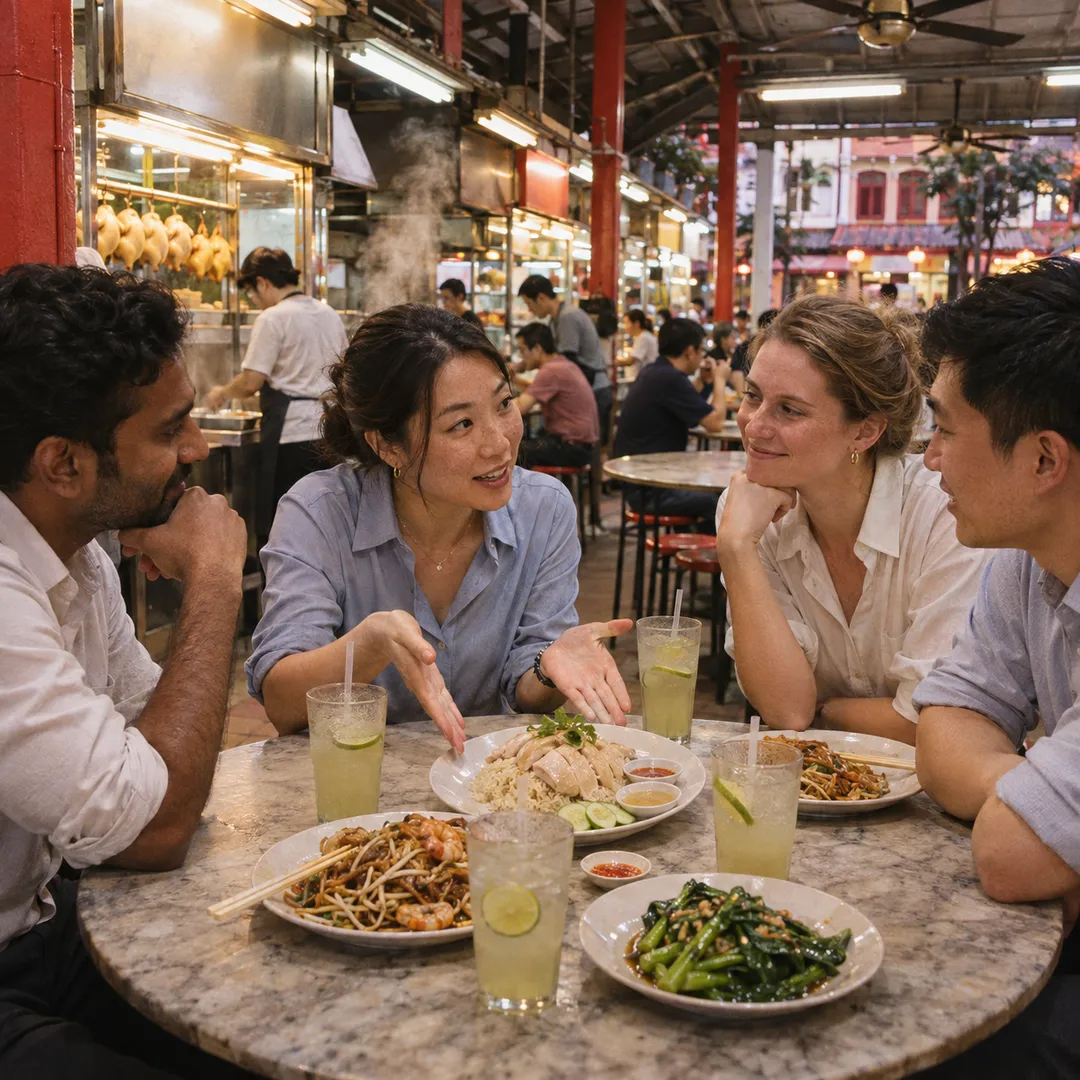
Hawker Centre Dinner Route Planner: Maxwell With Colleagues
Plan a Maxwell hawker dinner for visiting colleagues: a temple-street walk first, how to hold a table, split the order fairly and finish on Duxton Hill.
Maxwell is the hawker centre a Singapore office worker reaches for when colleagues fly in and ask to eat where locals eat. It sits right between Chinatown's temple streets and the shophouse lanes of Tanjong Pagar, so dinner can become a short evening walk with a shared table in the middle. This hawker centre dinner route planner shows how to host three visitors there without stress.
Why Maxwell Works for Visitors From Other Offices
Visiting colleagues usually have one free evening and a lot of curiosity. Maxwell answers both. The hall is compact, the stalls run in neat rows, and almost every classic Singapore dish is represented somewhere along them, from poached chicken rice to fish soup, rojak and sugar cane juice. Nobody has to commit to one cuisine, which matters when the group mixes tastes and appetites from three different countries.
It also sits in the right place for a route. Within a few minutes on foot you can reach a Taoist temple, a Buddhist temple, a Hindu temple, a mosque and two hills of restored shophouses. That density lets a host tell the story of the city before anyone sits down, so the meal lands with context. Visitors remember the plates better when they have just seen the streets that shaped them.
Start on Telok Ayer Street, Before Anyone Is Hungry
Meet the group on Telok Ayer Street rather than at the hawker centre itself. This road once ran along the shoreline, and the temple of Thian Hock Keng was where arriving sailors gave thanks for a safe crossing. Point out that the sea used to lap just beyond the temple steps; the land reclamation that pushed the coast away is one of the quickest ways to explain how Singapore grew.
Walk slowly south past the shophouse offices and the small Al-Abrar Mosque, then cut through toward South Bridge Road. Here the Buddha Tooth Relic Temple glows red after dark, and the Sri Mariamman Temple's tower of painted figures stands a short stroll further along. Keep this first leg to about twenty minutes. It gives everyone a sense of place and builds just enough appetite for what comes next.
How to Hold a Table the Local Way
Arrive at Maxwell as a group, then split up immediately. One person stays to hold a table while the others go out to queue. In Singapore a packet of tissues laid on a seat, or an umbrella, or a lanyard means the seat is taken, a habit locals call choping. Explain it to visitors before they see it, because otherwise the scattered tissues look like litter and someone sweeps them aside.
Be fair with the custom. Hold only as many seats as your group needs, and do not chope a whole table for four when you are two. If an older diner is circling with a tray, it is good manners to shuffle over and share. Shared tables are normal here, and a quick nod to strangers at the same table often leads to the most useful advice about which stall to try next.
Splitting the Order So Everyone Tastes More
The smartest way to eat at Maxwell with visitors is to treat the hall as one big shared kitchen. Send each person to a different stall with a simple brief: one plate of chicken rice, one bowl of fish soup or noodles, one stir-fried vegetable dish, and one sweet or fruit plate to finish. Ask stalls for an extra small plate and spoon, then let everything land in the middle of the table.
Chicken rice is the obvious anchor and a good first lesson. Show visitors how the rice is cooked in chicken stock with ginger and pandan, then how to add a little chilli, a little ginger paste and a drop of dark soy sauce on each mouthful. Rojak makes a fun contrast: fruit, vegetables and fried dough tossed in a dark, sticky shrimp paste dressing that people either love or never forget.
Queues, Trays and the Quiet Rules of the Hall
Long queues at a few famous stalls are part of the Maxwell story, and visitors often ask whether they are worth it. Make the call by time, not reputation. If the line is short, join it. If it stretches across the aisle, choose the neighbouring stall selling the same dish, because the difference will matter much less to a first-timer than a thirty-minute wait while colleagues sit hungry.
When you finish, return trays and crockery to the marked return points. Singapore made tray return a firm expectation in hawker centres, and leaving plates on the table is now seen as bad form. Wipe up anything you spilled with a tissue. It sounds small, but explaining this rule is one of the most useful things a host can do, and visitors tend to appreciate learning the local etiquette.
A Word on Drinks and Dessert
Drinks come from a separate stall, usually near the middle or the edge of the hall. Fresh sugar cane juice, iced lime juice and kopi or teh are the usual choices. Teach the visitors one phrase, kopi peng for iced coffee with milk, and they will feel brave ordering the next round on their own. For anyone avoiding sugar, ask for kosong, which means without sugar.
Many groups skip dessert because they are full. A better plan is to order one shared bowl of cold sweet soup or a plate of cut fruit and pass it around. It cools everyone down after the chilli and gives the table a reason to stay seated a little longer. That extra ten minutes is often when the most relaxed conversation of the evening happens.
Walking It Off on Duxton Hill and Ann Siang Hill
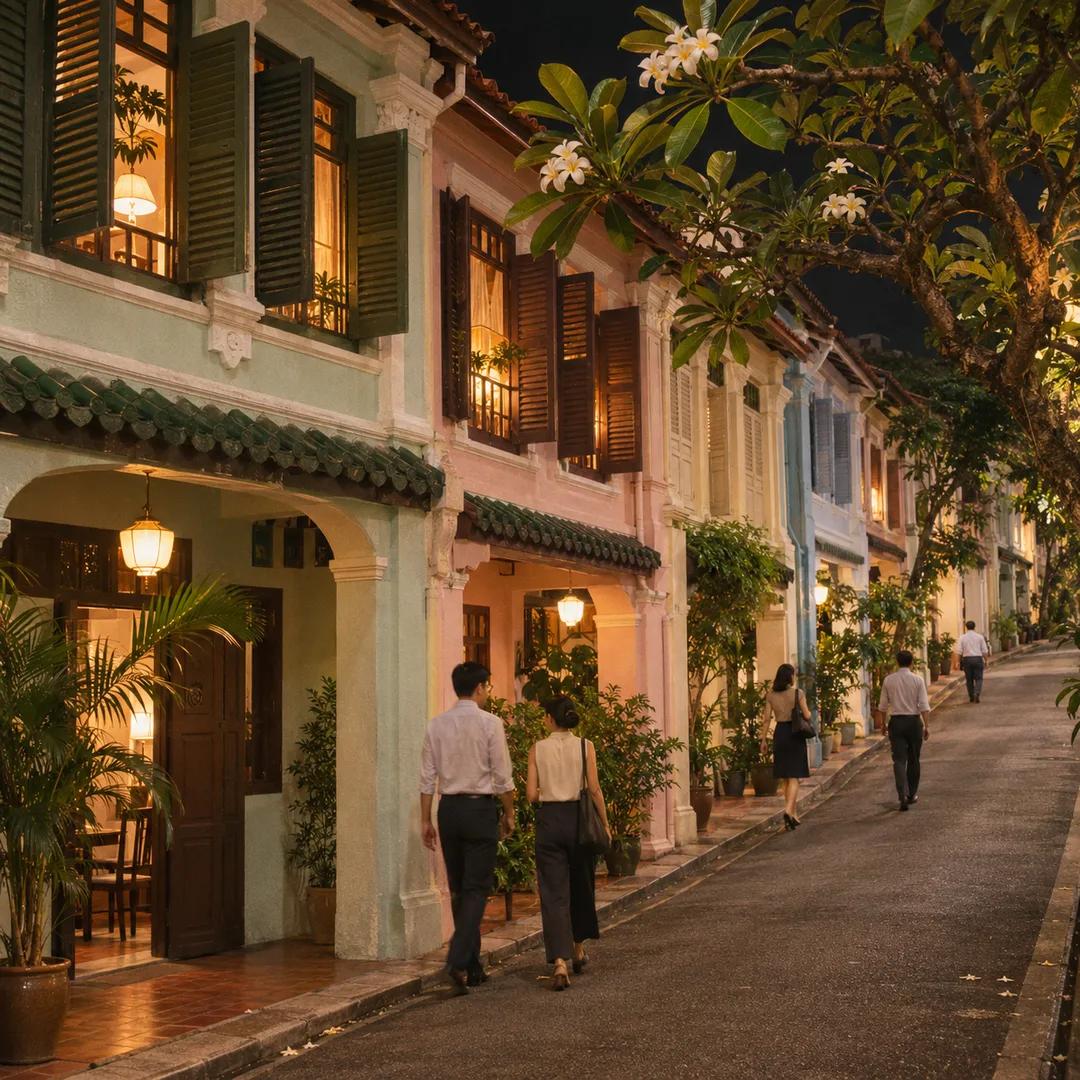
After dinner, cross toward Duxton Hill rather than heading straight for a taxi. These lanes of pastel shophouses climb a gentle slope that was once part of a nutmeg plantation, and the quiet Duxton Plain Park runs along the old railway line nearby. At night the street feels like a small village, with warm upstairs windows, potted plants on doorsteps and colleagues finally talking about something other than work.
If the group still has energy, loop back across to Ann Siang Hill and Club Street. Ann Siang Hill Park is a tiny green pocket on top of the rise and gives a pleasant view down into the lanes. Keep the pace easy. Humidity builds quickly after a hot meal, and a ten-minute stroll is more pleasant than a long march that leaves everyone sticky.
Using Karpo to Plan the Route
Before the evening, open the Karpo APP and describe the group: three visitors, one free evening, a mix of adventurous and careful eaters, and a wish to walk a little before and after the meal. Karpo can suggest a temple-street route, nearby hawker centres if Maxwell feels too crowded, and quieter places for a drink afterwards, all in one plan you can share with the group.
If something changes on the night, ask again. Karpo can point you to a second hawker centre a short walk away, or to a calm spot for coffee instead of a bar. Treat its suggestions as a starting point, then trust the street in front of you. The point of a Maxwell dinner is the shared table, and every route should lead back to that simple moment.
Hosting colleagues at Maxwell is less about finding the perfect plate and more about giving them a short, honest piece of Singapore: temple steps, a crowded hall, a shared tray and a quiet hill afterwards. Plan the walk, split the order and keep the evening loose. Your visitors will remember far more than the food, and they will probably ask to come back.
Ask Karpo for more information.
Keep reading
- Kovan Hainanese Curry Rice Lunch Picker: Heartland Plates
 Tampines Mee Rebus Breakfast Picker: Round Market Bowls
 Jurong West Mee Rebus Breakfast Picker: Boon Lay Bowls