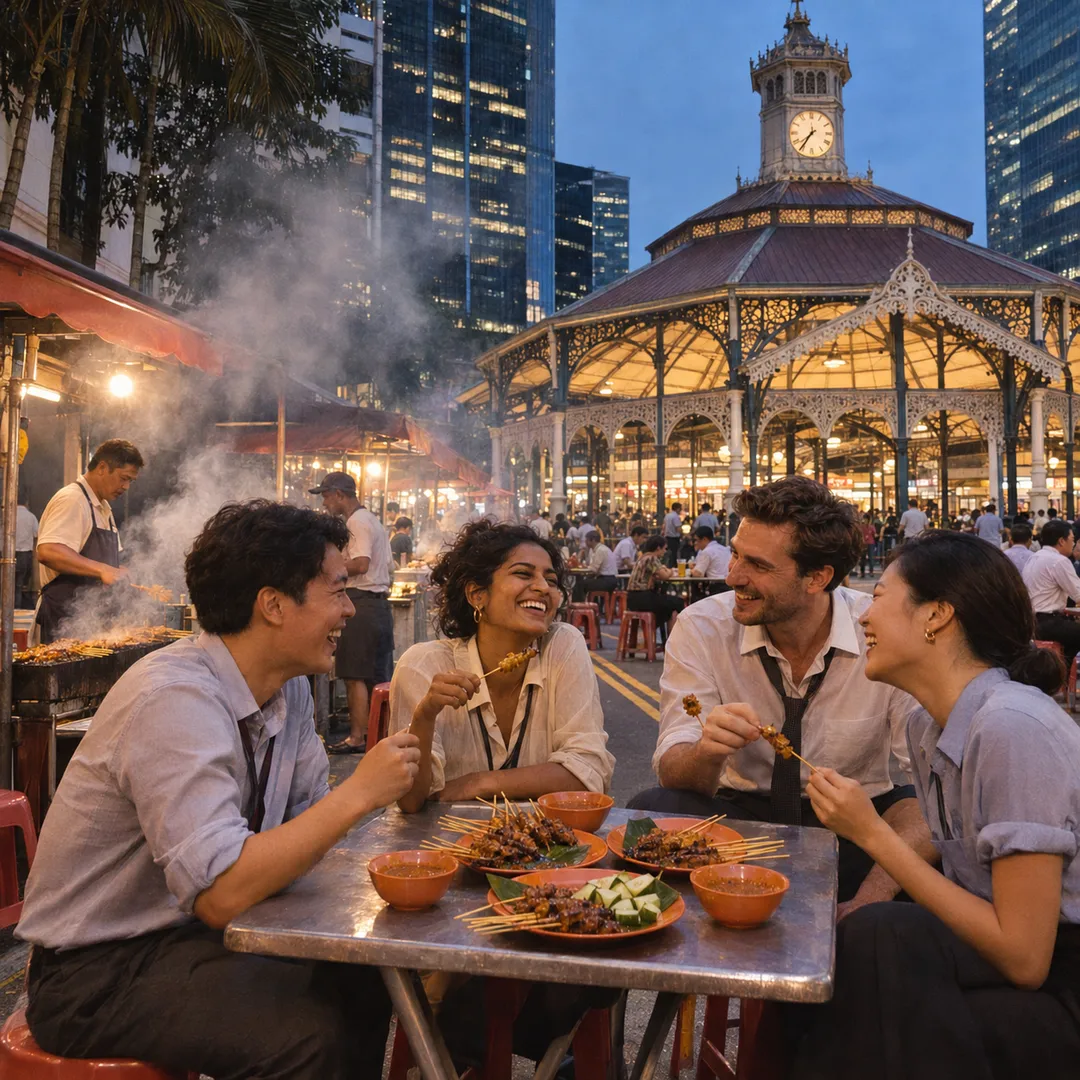
 Marina Bay Food Market Grazing Route After a Conference Day
Neighborhood Guides

Tiong Bahru Food Market Grazing Route for First Timers
This Tiong Bahru food market grazing route takes first timers through the wet market, the hawker floor upstairs and kopi lingo, then into the Art Deco lanes.
A Tiong Bahru food market grazing route is one of the gentlest ways to learn how Singapore eats. The neighbourhood's market building holds two worlds stacked on top of each other: a wet market on the ground floor, where residents buy fish, vegetables and spices, and a hawker food centre upstairs, where the same residents sit down for breakfast. For a first-time visitor it can feel overwhelming, with unfamiliar dishes, a shorthand for ordering coffee and an unspoken system for finding a seat. This route breaks it into simple steps, so you can graze confidently and leave knowing how to do it anywhere on the island.
Why Tiong Bahru Is the Right Place to Learn
Tiong Bahru was one of Singapore's earliest public housing estates, and its low, curved Art Deco blocks with spiral staircases and rounded balconies still give the area a calm, unhurried feel. The market sits at the heart of the estate, and it is very much a neighbourhood place. Grandparents shop here every morning, office workers grab breakfast before heading into the city, and families gather at the weekend over plates of noodles.
Because the market is compact and the estate is quiet, it is easier to take your time here than in the busy hawker centres near the business district. Stall holders are used to curious visitors, and regulars are generally patient with newcomers who are unsure what to order. It is a friendly classroom for hawker culture, which Singapore has recognised as part of its intangible cultural heritage.
Read the Wet Market First
Start on the ground floor in the wet market, ideally early in the morning when it is busiest and the produce is freshest. Walk slowly through the aisles. You will see whole fish laid out on ice, piles of leafy greens you may not recognise, bundles of fresh herbs, mounds of chillies and small limes, and stalls selling tofu, noodles and spice pastes. The floors are often wet, which is where the name comes from, so wear shoes with some grip.
You do not need to buy anything here, but looking around is the best introduction to what you will eat upstairs. Notice the ingredients that keep appearing, such as pandan leaves, belacan shrimp paste, galangal and fresh rice noodles. If a stall holder is not busy, ask what something is and how it is cooked. Then head up the stairs with a better sense of the flavours waiting for you on the hawker floor.

Learn the Kopi Code
Before choosing food, order a drink, since that is how many locals start the morning. Kopi is Singapore's local coffee, roasted with sugar and margarine for a dark, rich flavour, and it comes with its own ordering language. Kopi on its own means coffee with sweetened condensed milk. Kopi O is black with sugar, kopi C comes with evaporated milk and sugar, and adding kosong means no sugar. Siew dai means less sweet, and peng means iced.
The same system works for teh, or tea. If in doubt, ask for kopi siew dai, which most visitors find a pleasant balance. Take your drink, find a table and use it as your base. Leaving a packet of tissues on a seat is the local way to reserve it, a habit called choping. Respect other people's tissues, and do not leave your bag unattended on a chair.
Graze the Hawker Floor in Small Plates
Now walk a lap of the food stalls before ordering. Tiong Bahru's hawker floor is known for breakfast dishes, and the most famous is chwee kueh, soft steamed rice cakes topped with savoury preserved radish and a little chilli. It is cheap, light and perfect for sharing, so make it your first plate. Look also for lor mee, thick noodles in a dark, starchy gravy, and for stalls selling fried carrot cake, which is actually radish cake fried with egg.
Order one dish at a time and share between two or three people, so you can try more without overeating. Pay when you order at most stalls, and either wait or return to your table if the stall gives you a buzzer or says it will bring the food over. When you finish, return your tray and crockery to the tray return points, which is expected here.
Walk It Off in the Art Deco Lanes
After grazing, step outside and wander through the estate. The streets around the market are named after early Chinese pioneers, and the low blocks with rounded corners and spiral back stairs are a pleasure to explore on foot. Look for the murals tucked into some of the back lanes, which show scenes from everyday life in old Singapore, such as a bird singing corner, a pasar market and a fortune teller.
The area also has independent bakeries, cafes and bookshops in the ground-floor units of the old flats. This is a good time for something sweet. A buttery pastry, a slice of cake or a simple egg tart works well after a savoury hawker breakfast. Carry it to a bench under a tree and enjoy the quiet, which feels a world away from the busy city just a short train ride away.
What to Skip and When to Come
Come in the morning, when the wet market is at its liveliest and the breakfast stalls upstairs are in full swing. Many hawkers take one regular day off a week and close early once they sell out, so do not leave it too late in the day. Weekday mornings are calmer than weekends, when families fill the tables.
Skip trying to see every stall in one visit. A few dishes, a kopi and a walk through the estate is enough for a first time. Avoid crowding the wet market aisles with a large group or taking photos of stall holders without asking. Singapore is hot and humid, so bring water, wear light clothes and plan the outdoor part of your walk for early in the day.
Plan Your Tiong Bahru Graze With Karpo
Tiong Bahru station on the East West Line is a short walk from the market, and Outram Park is also within walking distance. From the estate you can continue on foot to the Singapore River or toward Chinatown if you want to keep exploring.
Before you go, open the Karpo APP and look up hawker stalls, bakeries and cafes around Tiong Bahru Market and the surrounding estate. Save a few breakfast dishes to try, add a sweet stop and a quiet bench for afterwards, and keep the list handy as you walk. Once you have learned the routine here, you can use it at any hawker centre in Singapore.
Ask Karpo for more information.
Keep reading
- Marina Bay Food Market Grazing Route After a Conference Day
 River Valley Food Market Grazing Route With Young Kids
 Serangoon Food Market Grazing Route for a Homecoming Weekend