 Marina Bay Food Market Grazing Route After a Conference Day
Neighborhood Guides
Little India Food Market Grazing Route for Home Cooks
A Little India food market grazing route for home cooks: learn the spices at the wet market, eat breakfast as you shop, and carry a bag of new flavours home.
Most food walks treat a market as scenery. This Little India food market grazing route treats it as a pantry. If you like to cook, the streets around Serangoon Road are one of the best places in Singapore to learn South Asian ingredients up close, and you can eat well while you do it. Start inside the wet market with your eyes and nose, snack on breakfast between purchases, slow down for a proper banana leaf lunch, and walk home with spices, leaves and sweets that will change what you make for dinner next week.
Why a Cook Should Start in Little India
Little India grew up as a home for Tamil and other South Asian communities who came to work, trade and settle in Singapore. The neighbourhood kept its own markets, temples, goldsmiths and spice merchants, and it still supplies households across the island with ingredients that are hard to find in an ordinary supermarket.
For a home cook, that means one compact area where you can see fresh curry leaves next to banana flowers, compare five kinds of lentils side by side, and taste the finished dishes made from them a few steps away. Every bite you eat on this route doubles as a lesson in how something is seasoned, so pay attention to what you like and note it down.
Walk the Wet Market Before You Buy
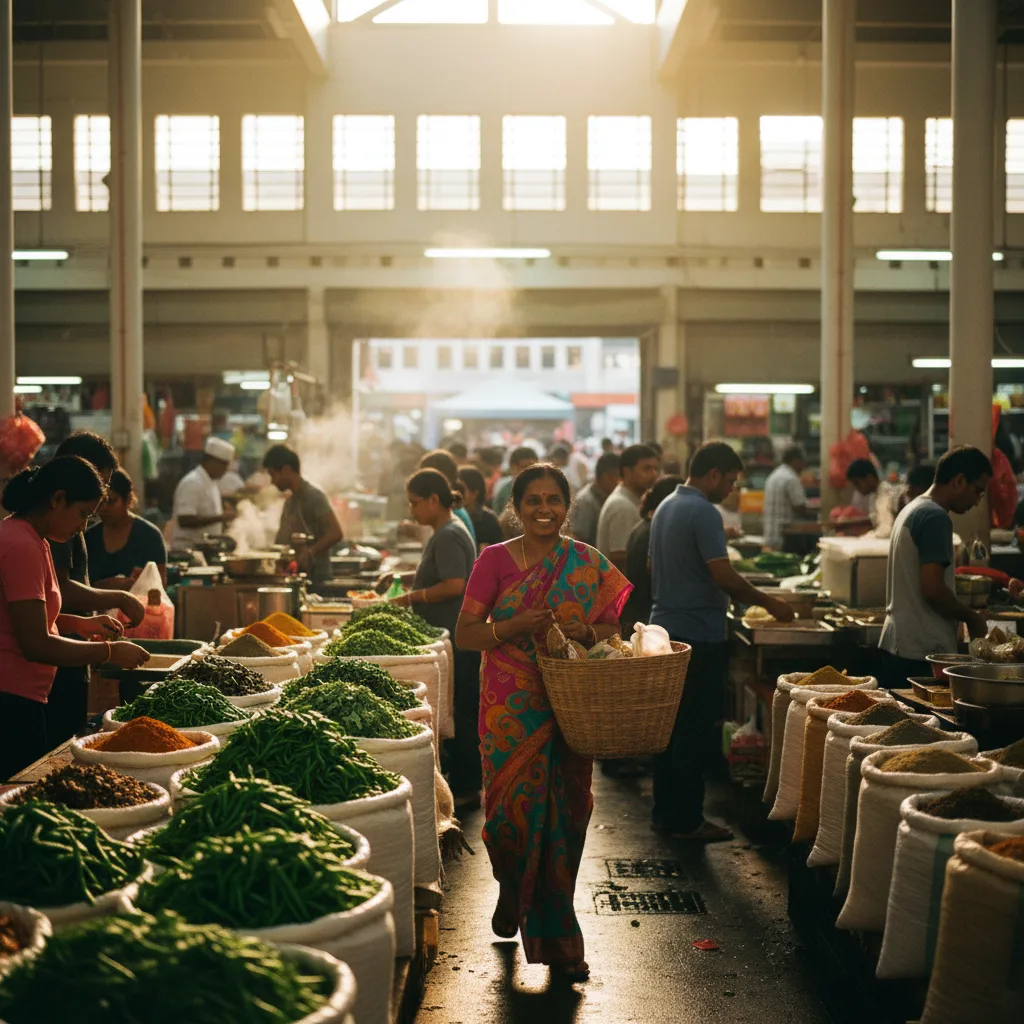
Begin at the Tekka Centre wet market on the ground floor. Do one full lap with empty hands. Look at the greens first: drumsticks, bitter gourd, snake beans, okra, banana leaves folded into neat stacks, and bundles of curry leaves that smell like citrus and toast when you crush one between your fingers.
Then find the stalls selling grated coconut, where machines shred fresh kernels for customers who want coconut milk at home. Watch how the regulars ask for it, coarse or fine, and how much they take. Further along you will see whole fish, mutton cuts and a counter of spice pastes made in house. Ask a seller what a paste is meant for. Many will tell you the dish and even how long to fry it before the meat goes in.
Only after the lap should you start buying, and only light things for now. A bunch of curry leaves and a packet of dried red chillies will survive the rest of the walk. Leave fresh fish and coconut for another trip, or for the very end.
Breakfast Between Purchases
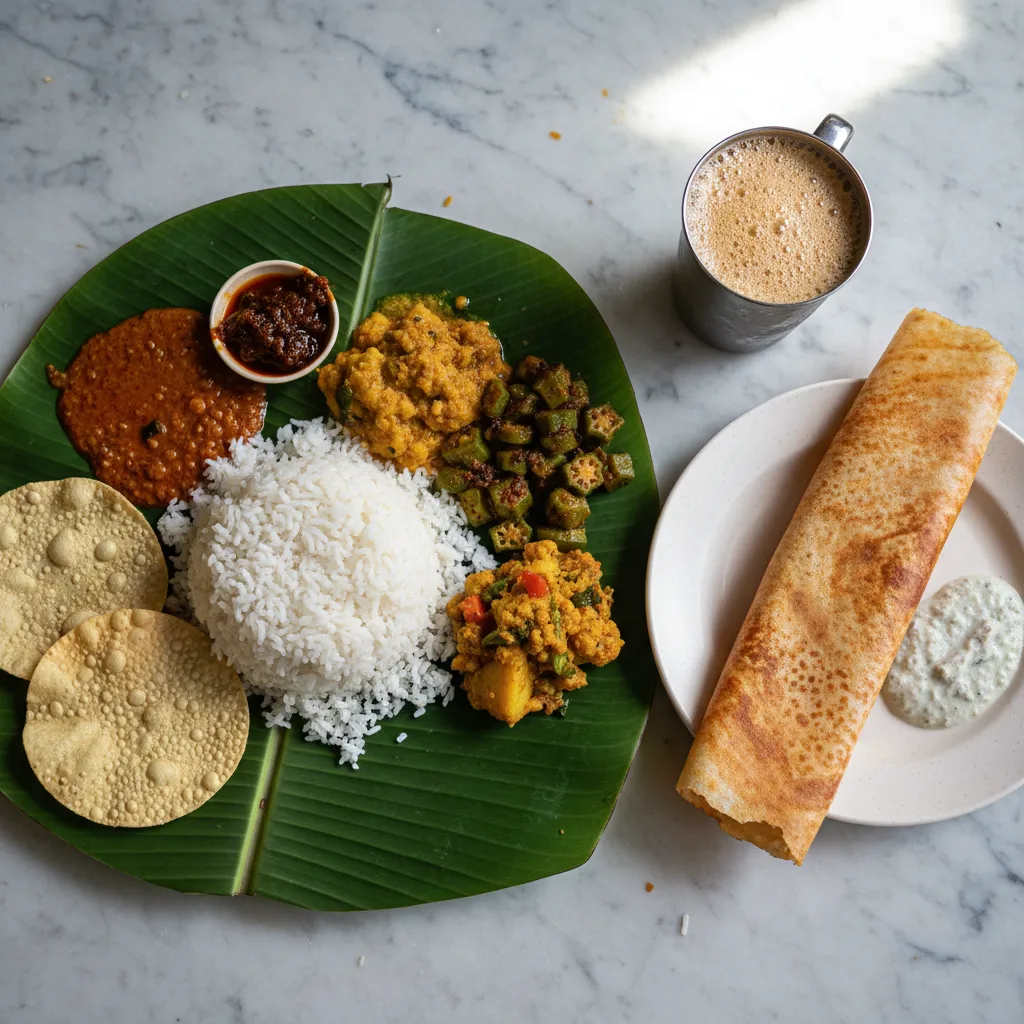
Climb the stairs to the hawker centre above the market for your first plate. A crisp dosa with coconut chutney and sambar is the classic choice, and it is a useful one for a cook, because you can taste the tempered mustard seed, curry leaf and lentil base that appears in so many South Indian dishes. Share a plate and order a second, softer item such as idli or appam to compare textures.
Watch the stall holders spread batter on the griddle and fold it with one stroke. It looks easy and is not, which is why it is worth eating here rather than attempting it on your first day home. Finish with a cup of teh tarik or South Indian filter coffee, poured from height to cool it and build a foam.
Spice Shops and Grinding Mills
Leave the centre and walk into the lanes around Campbell Lane, Dunlop Street and Buffalo Road. Here the shops sell spices loose and in packets: cumin, fennel, fenugreek, black cardamom, whole turmeric and rows of curry powders blended for fish, meat or vegetables. Smell before you buy, and choose small packets you will actually finish while they are still fragrant.
Some shops keep a grinding mill for customers who want their own blend. If you have a family recipe in mind, ask whether they can grind the mix for you. Otherwise, ask for the house fish curry powder and use it as a starting point. The staff are used to questions from beginners, so say what you want to cook and let them steer you.
Look out too for the shops selling cooking pots, tawa griddles, tiffin carriers and steel tumblers. A small steel tumbler and saucer set is a nice way to serve filter coffee at home, and it packs flat in a suitcase.
A Banana Leaf Lunch to Learn From
By late morning your bag will have a few packets in it, so stop for a banana leaf meal at one of the restaurants along Race Course Road or Serangoon Road. Rice arrives in a mound on the leaf, surrounded by vegetable curries, a dry stir fry, a sour rasam, papadum and pickle, with servers walking past to refill whatever you finish.
Eat it slowly and try to name what you taste. Is the sour note tamarind or tomato? Is that crunch urad dal fried in oil? This is the most useful lesson of the day, since each side dish shows a different technique. Fold the leaf toward you when you are finished, the traditional sign that you enjoyed the meal.
Sweets and a Garland to Finish
End at a sweet shop for a small box of mithai, such as soft milk peda, coconut burfi or syrupy jalebi. They make good gifts and keep for a few days in the fridge. If you are near the Sri Veeramakaliamman Temple, notice the flower stalls outside stringing jasmine and marigold garlands, a scent that sums up the neighbourhood as much as any spice.
Now is the time to pick up anything heavy or fragile that you skipped earlier. Head back to the market for fresh grated coconut or a few banana leaves if you plan to cook tonight, or buy a jar of pickle that you tasted at lunch and want at home.
Practical Tips for the Route
Morning is the best time for this walk, when the market is full and the heat is gentler. Avoid weekend evenings if you dislike crowds, since many workers gather in the area on their day off. Bring a cloth bag, a small cooler bag if you plan to buy fish or coconut, and tissues for eating with your hands. Use your right hand to eat and to pass food.
Dress for the temple even if you only pass it, with shoulders and knees covered, and remove your shoes if you go inside. The Little India MRT station on the North East and Downtown Lines puts you right next to the market.
Save Your Shopping List in Karpo
Home cooks tend to lose track of which shop sold the curry powder they loved. Use the Karpo APP to look up spice shops, sweet shops and banana leaf restaurants near Serangoon Road and save the ones you liked, so your next restock trip takes ten minutes instead of a whole morning of searching.
Ask Karpo for more information.
Keep reading
- Marina Bay Food Market Grazing Route After a Conference Day
 River Valley Food Market Grazing Route With Young Kids
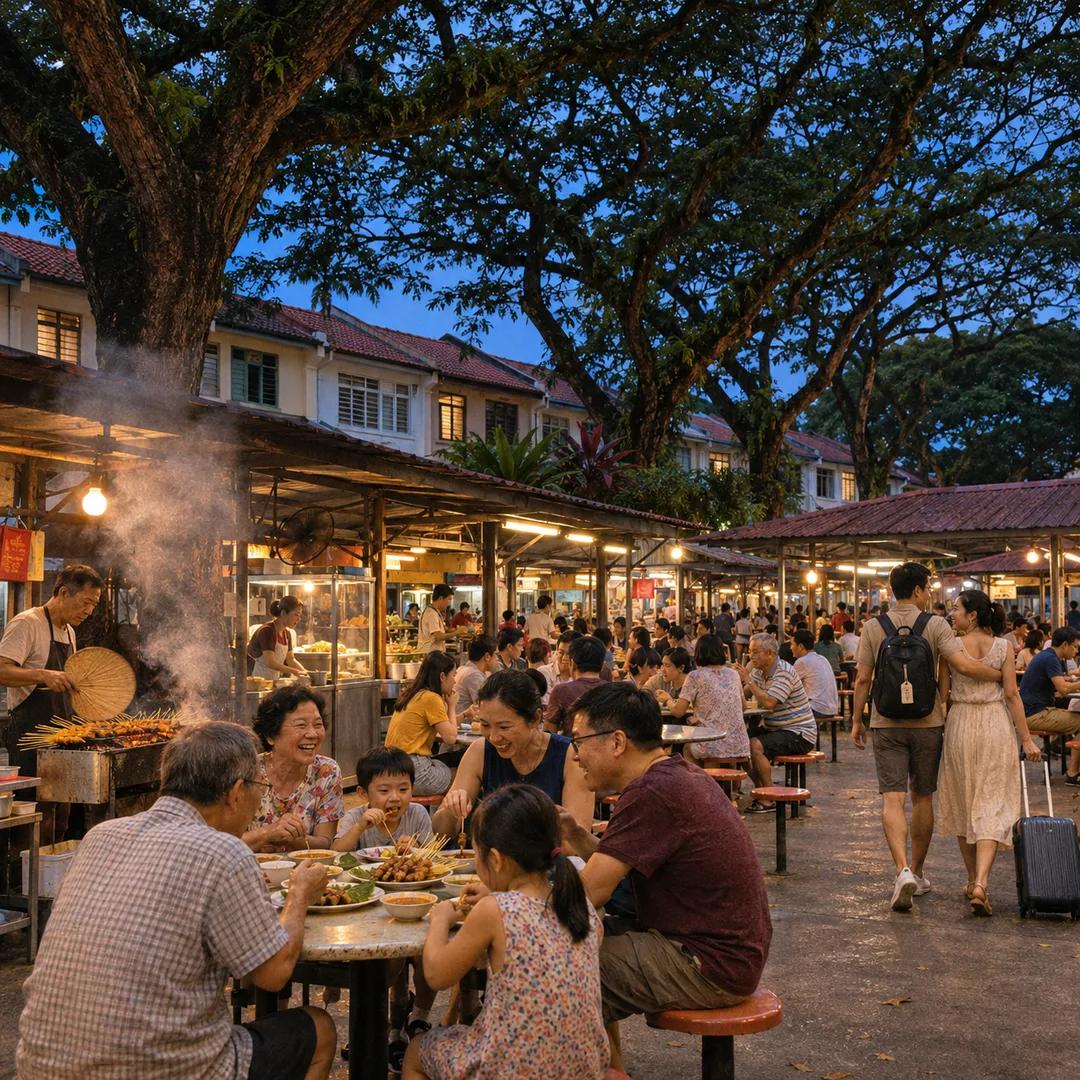 Serangoon Food Market Grazing Route for a Homecoming Weekend