 Marina Bay Food Market Grazing Route After a Conference Day
Neighborhood Guides
Katong Food Market Grazing Route Through Eurasian Heritage
This Katong food market grazing route traces Eurasian and Peranakan food along East Coast Road, from curry and cake to a hawker market finish by Marine Parade.
A Katong food market grazing route tells a story most visitors to Singapore never hear. Long before the high-rise flats of Marine Parade, Katong was a seaside district of bungalows and villas, home to many of Singapore's Eurasian families alongside Peranakan and Chinese households. Their cooking, a mix of Portuguese, Dutch, British and Malay influences, still survives in the area's kitchens and bakeries. Spend an afternoon walking East Coast Road, tasting curry, cake and snacks from these traditions, and finish at a hawker market near the old shoreline, where the whole of the east comes together to eat.
Why Katong Is Singapore's Eurasian Kitchen
Singapore's Eurasians trace their roots to unions between Europeans and Asians over several centuries, from Portuguese traders in Malacca to Dutch and British settlers. In the early twentieth century many Eurasian families made their homes in Katong, close to the sea, and the area became known for its churches, schools and community life. The Eurasian community's heritage centre is still based in the neighbourhood today.
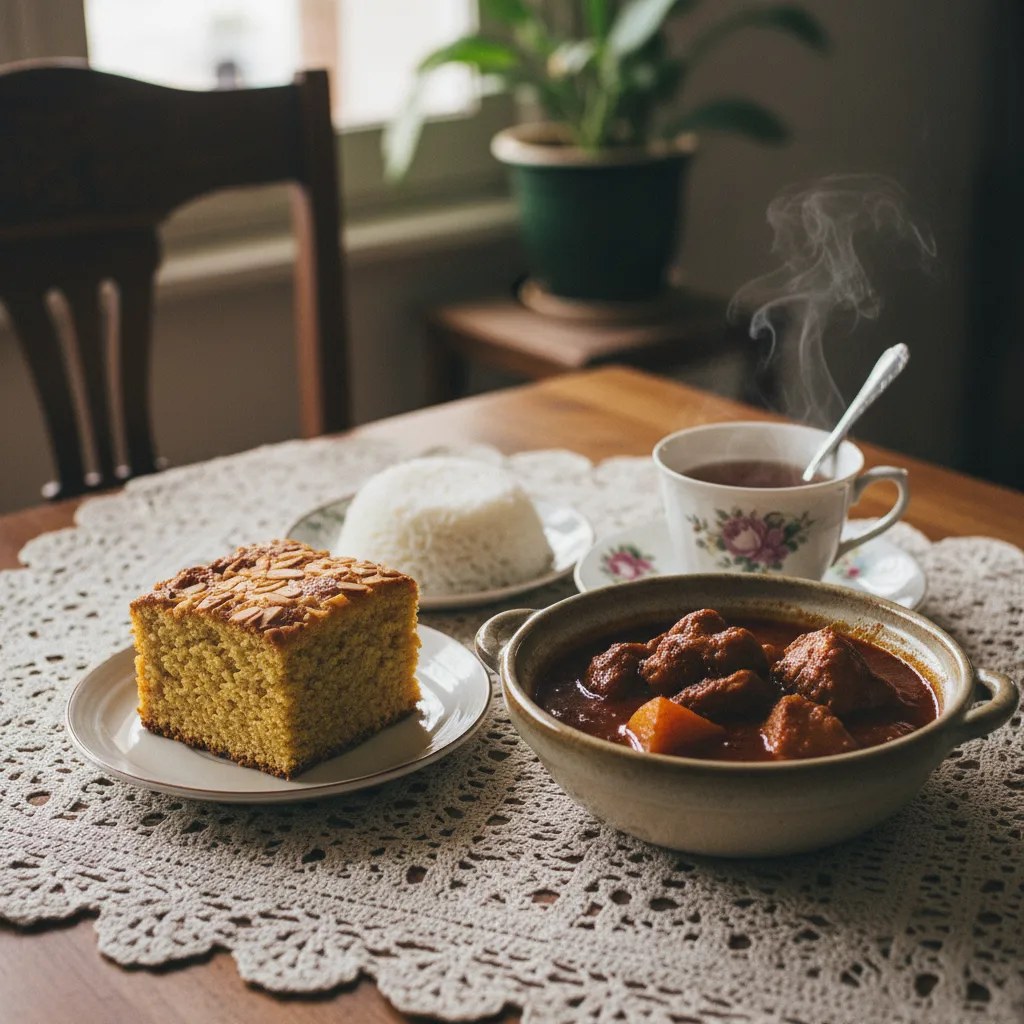
Eurasian food is one of Singapore's least known cuisines, yet it is full of character. Devil curry, a fiery, tangy stew traditionally made with leftover Christmas meats, sugee cake, a rich semolina and almond cake served at weddings and birthdays, and feng, a spiced curry of offal, are all part of the tradition. Grazing in Katong is a way to find these dishes alongside the Peranakan food the area is also famous for.
Start With the Eurasian Story
Begin near the Eurasian community's heritage gallery, off East Coast Road, if you want some background before eating. Its displays explain how Eurasian families lived, worked and celebrated in Singapore, and it gives you a sense of how their food developed. Even a short visit makes the rest of the graze more meaningful.
Then look for a cafe or restaurant nearby serving Eurasian dishes. Order a small portion of devil curry with rice to share, and taste how the chilli heat is balanced with vinegar and mustard seeds. If you can find it, try a slice of sugee cake with a cup of tea. It is dense and buttery, perfect in small pieces, and a classic of Eurasian celebrations.
Eurasian cooking is often described as home cooking, and much of it is still made in family kitchens for special occasions rather than sold in restaurants. That makes it harder to find than other Singaporean dishes, but also more rewarding. Ask the staff where a dish comes from and how their family makes it. Many cooks are happy to share stories about grandparents, festive tables and recipes that differ from one household to the next.
Walk East Coast Road for Peranakan Snacks
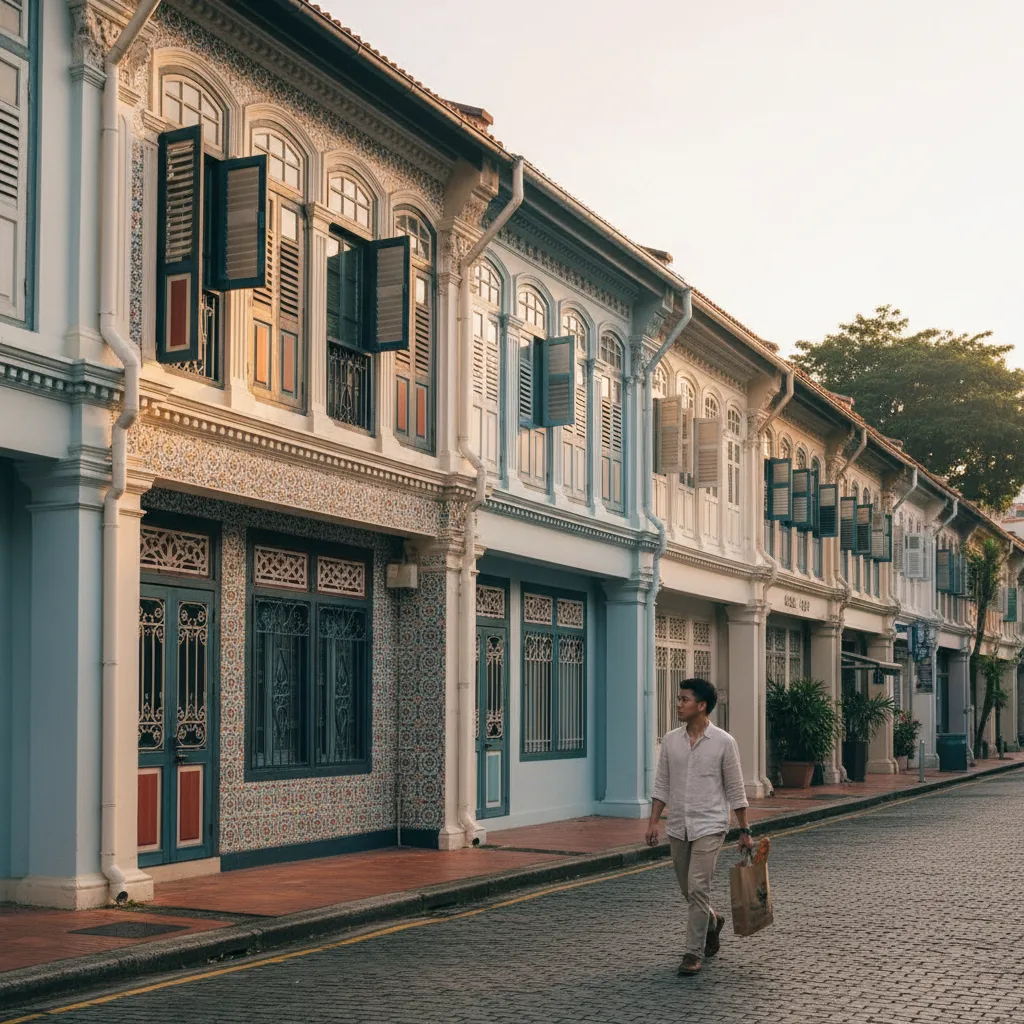
Continue along East Coast Road, Katong's main street, which is lined with old shophouses, small bakeries and long-running family businesses. The area is known for Peranakan food, and you will find shops selling kueh, pineapple tarts, curry puffs and rich nonya cakes. Pick a couple of small items to share rather than a full meal, as there is still more to come.
Katong is also famous for its own style of laksa, with a rich coconut curry broth and short-cut noodles that can be eaten with just a spoon. A small bowl shared between two is the ideal way to taste it here. Look at the decorated shophouse facades as you walk, and detour into the side streets to see the colourful terrace houses with patterned tiles and carved doors.
Take time to notice the area's churches and schools as you walk, many of them linked to the Eurasian and Catholic communities who shaped Katong. Their presence explains a lot about the neighbourhood's character, from Christmas traditions to the way families gathered around food after church on Sundays. It is a quieter, more domestic side of Singapore that sits comfortably alongside the busy shophouses of East Coast Road.
Find the Old Shoreline
It is hard to believe today, but East Coast Road once ran close to the sea. Land reclamation in the 1960s and 1970s pushed the coastline south and created the space for Marine Parade's housing estates and East Coast Park. As you walk south from East Coast Road, you are walking across land that was once water and beach, where wealthy families once had seaside villas.
Many older residents still remember swimming near what is now a busy road. This story is a good reminder that Katong's food traditions belong to a seaside community that has changed enormously. Stop for a kopi or a cold drink in one of the coffee shops along the way, and look for the old photographs that some businesses display on their walls.
Finish at a Hawker Market in Marine Parade
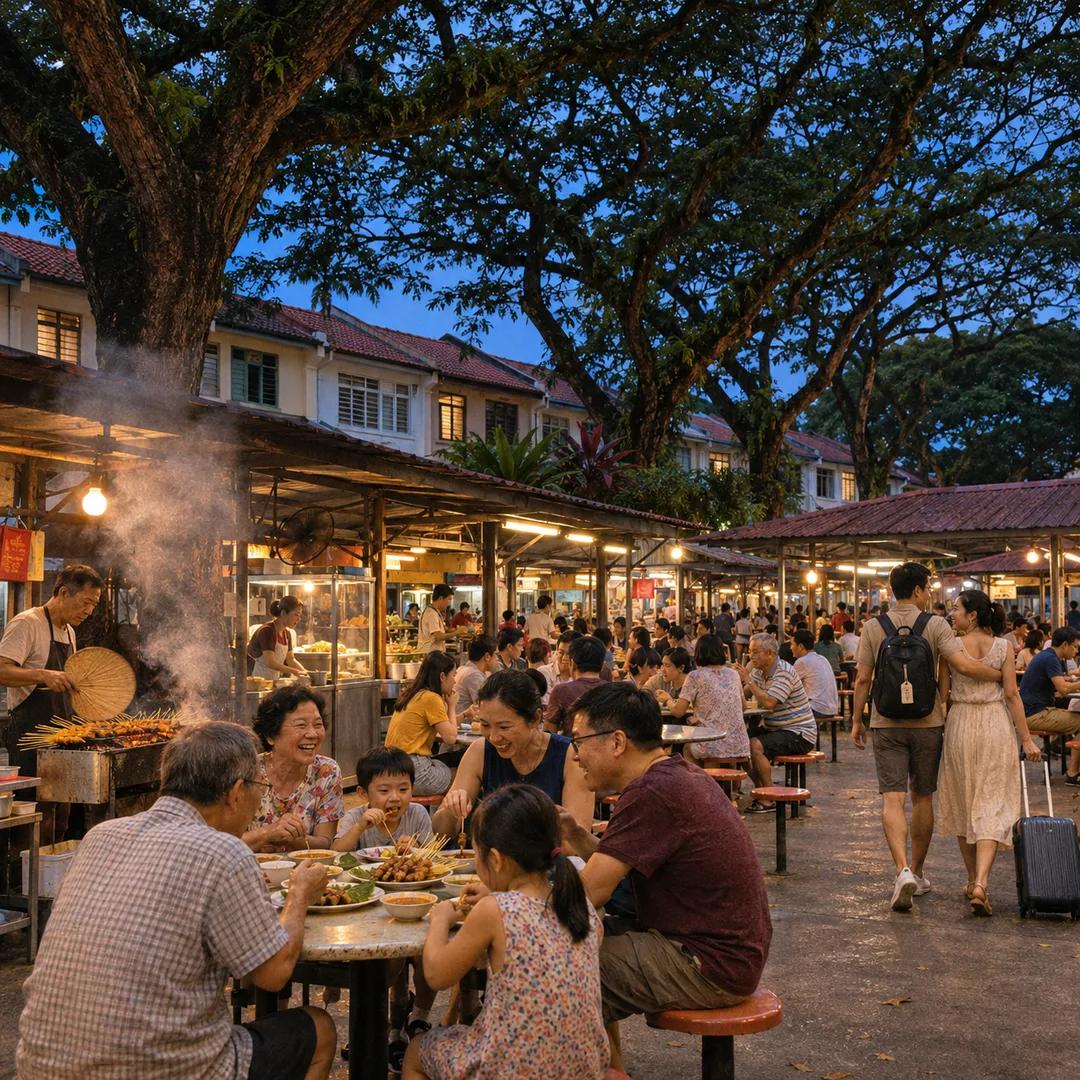
End your graze at one of the hawker centres in Marine Parade, where residents of the estates come to eat. These centres bring together dishes from every community in Singapore, from Malay satay and Indian prata to Chinese noodles and seafood. It is a fitting end to a walk through a district shaped by so many cultures.
By this point you will be fairly full, so choose one last thing to share, perhaps satay or a plate of fried carrot cake, and a fresh sugarcane juice. Return your trays when you finish, as is expected in hawker centres. If you still have energy, walk through the underpass to East Coast Park and enjoy the sea breeze along the shore.
Hawker centres in this part of Singapore are especially popular with families in the early evening, when grandparents, parents and children share long tables. Watching them is a lesson in how Singaporeans graze, ordering several dishes from different stalls and sharing them all.
What to Skip and When to Come
Come in the late afternoon, when the heat begins to ease and you can finish at the hawker centre for an early dinner. Many small shops and stalls close once they sell out, and some take a regular day off, so do not leave the graze too late. Around Christmas, look out for Eurasian festive dishes, which some kitchens make only during the holiday season.
Skip the temptation to order full meals at every stop. The point is to taste the Eurasian and Peranakan traditions side by side, so keep portions small. Bring water, wear light clothing and plan short indoor breaks to cool down.
Plan Your Katong Graze With Karpo
Marine Parade and Marine Terrace stations on the Thomson East Coast Line are close to the area, and buses run along East Coast Road from the city and from Paya Lebar. The route connects naturally with Joo Chiat to the north if you want to extend the walk.
Before you go, open the Karpo APP and look up Eurasian and Peranakan kitchens, bakeries and hawker stalls around East Coast Road and Marine Parade. Save a few to try, add a heritage stop and a seaside finish, and keep the list handy as you walk. Next time, come at Christmas and compare the festive dishes with your first visit.
Ask Karpo for more information.
Keep reading
- Marina Bay Food Market Grazing Route After a Conference Day
 River Valley Food Market Grazing Route With Young Kids
 Serangoon Food Market Grazing Route for a Homecoming Weekend