 Kovan Hainanese Curry Rice Lunch Picker: Heartland Plates
Restaurants
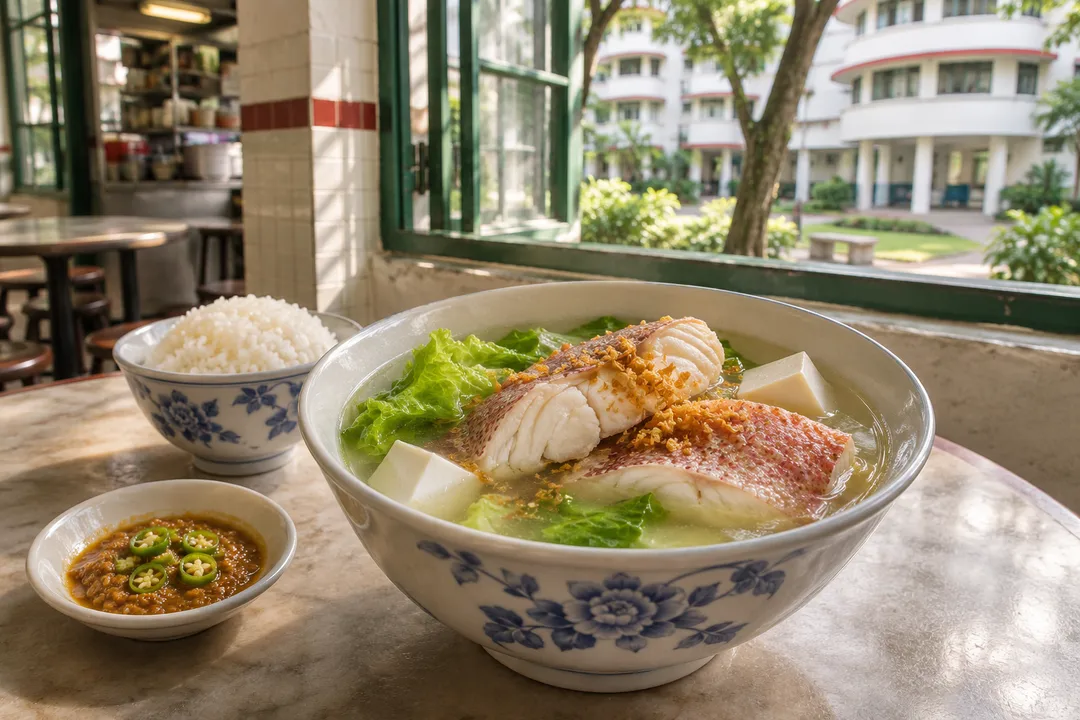
Tiong Bahru Fish Soup Lunch Picker: Market Deck Bowls
Upstairs hawker stalls in Tiong Bahru serve fresh market fish soup with no bookings needed. Compare red grouper slices, roe add-ons, and breezy courtyard seats.
Carrying a paper bag of warm sourdough from Yong Siak Street up the escalator to the breezy second-floor hawker deck above the wet market is a classic Tiong Bahru midday ritual. When you rely on a fish soup lunch picker in Tiong Bahru, your main decision is not just clear stock versus creamy broth—it is choosing a stall that draws directly from the downstairs fishmongers for thick-cut red grouper, threadfin, or handmade mackerel paste balls that suit both hungry adults and young children. On weekend late mornings and quiet weekday lunch hours alike, young parents pushing compact strollers, Art Deco architecture walkers, and third-generation estate residents share the bright tables ringing the central courtyard airwell. Arriving right after the morning marketing crowd clears gives you first pick of the prized fish cuts before the popular trays sell down.
Why the Upstairs Deck Above the Wet Market Sets the Standard for Freshness
Tiong Bahru's layout gives its upstairs fish soup cooks an immediate structural advantage: the ground floor houses one of the island's liveliest wet markets, where blocks of crushed ice keep whole coral trout, red grouper, Kurau threadfin, and Spanish mackerel gleaming from dawn. Upstairs stallholders prep their fillets in small batches rather than relying on pre-sliced factory tubs, which is why you will often spot thick, skin-on grouper pieces with a prized gelatinous collar layer right beside standard Batang slices. When you lean toward the glass display, check for translucent flesh with clean red or silver skin markings and firm cubes of silken tofu waiting in cool water.
Because the upper deck wraps around an open-air landscaped courtyard, steam and cooking heat rise quickly instead of trapping humidity over the tables. Look for stalls where the cook ladles broth from a twin-compartment boiler—one side holding boiling plain water for rapid blanching so the soup stays crystal clear, and the other holding the slow-simmered bone and soybean stock that gets poured into your bowl at the very end. That two-pot discipline prevents starch from the noodles or cloudiness from raw fish proteins from dulling the sweet maritime finish.
Matching Threadfin, Red Grouper, and Fish Paste to Everyone at Your Table
If you are sharing lunch with a toddler, an older grandparent, or a friend who dislikes bony fish, how you specify the cut matters more than the noodle choice. Ask for sliced threadfin or middle-cut Batang when feeding young eaters, because both have broad, boneless loins that flake softly on a ceramic spoon and pair wonderfully with smooth silken bean curd and sweet Napa cabbage leaves. When ordering for yourself or a seafood enthusiast who loves texture, upgrade to red grouper or ask whether the stall has fresh fish roe or fish maws tucked in the corner of the display case.
Tiong Bahru stalls also excel at hand-scraped fish paste and prawn-studded meatballs, which are slapped against a mixing bowl until springy and dropped straight into simmering stock. Combining sliced raw fish with three or four handmade fish dumplings gives you two completely different textures in one bowl without needing deep-fried batter. For the base, try pairing the clear grouper soup with flat kway teow noodles or a side bowl of yam-infused rice when available, as the slippery rice ribbons catch the toasted garlic oil and chopped coriander stems far better than plain vermicelli.

Courtyard Seating Strategy and Stroller-Friendly Timing Around Seng Poh Road
Unlike dense basement food courts along the main shopping belt, the Tiong Bahru hawker deck has wide peripheral walkways and ramp access that make it welcoming for families and casual walkers, provided you time your arrival wisely. The sweet spot falls between the end of the morning wet-market breakfast rush and the midday arrival of nearby hospital staff and creative-studio teams. During that window, the four-seat tables directly facing the central planter boxes catch a steady cross-breeze, and you can park a folded stroller or canvas book tote neatly against the low parapet wall without blocking tray traffic.
Before joining a long corner queue, take thirty seconds to walk the inner ring and notice what sits on the trays of diners who just sat down. If you see bowls topped with generous heaps of golden crispy ginger floss or pale winter melon chunks, trace those distinctive melamine bowls back to their stall number. Always keep small notes or a contactless payment app ready so the counter line keeps moving, and remember to return your tray and crockery to the designated racks near the washing stations once your table finishes eating.
What to Skip in Tiong Bahru and Where to Pivot When Trays Run Low
Two common mistakes trip up visitors who treat Tiong Bahru like an all-day food court. First, skip arriving in the mid-afternoon expecting full trays of premium red grouper, pomfret, or fresh fish roe, because market-linked stalls prep for the morning and midday waves and by early afternoon the prized belly and collar cuts are gone, leaving only basic fried dory or standard fish balls. Second, skip drowning a delicate grouper or threadfin broth in heavy dark soy sauce or overly sweet chilli ketchup, and instead touch each slice of fish lightly to a saucer of fermented taucheo bean paste with a single ring of green chilli so the natural ocean sweetness stays intact.
If you reach the top of the escalator and find your first-choice stall shuttered for a rest day or flanked by a twenty-person queue stretching past the pillar, do not abandon the neighbourhood. Step across the deck to a neighbouring Teochew porridge or fish-ball noodle counter that poaches fresh mackerel slices to order, or walk down to the ground-floor kopitiam corners along Seng Poh Road and Kim Pong Road where traditional soup stalls simmer pork and fish bone broths under whirring ceiling fans. You can also open the Karpo APP to scan nearby lunch spots across Tiong Bahru, Bukit Merah, and Outram without backtracking.
Stringing Together an Art Deco Lane Stroll, Indie Bookshop Browse, and Kopi Pause
A clean bowl of fish soup leaves plenty of room to enjoy Tiong Bahru's low-rise residential charm on foot. After descending from the hawker deck, turn into the quiet back lanes of Guan Chuan Street, Yong Siak Street, and Chay Yan Street to admire the curved pre-war streamline moderne apartment blocks, rounded corner balconies, and external spiral staircases shaded by frangipani trees. Because the residential lanes carry very little through-traffic at midday, you can stroll at an unhurried pace, browse independent bookshop shelves, or pick up ceramic tableware and fresh flowers along the street.
To round out the lunch break, duck into the historic Monkey God Temple along Eng Hoon Street for a quiet look at its ornate roof dragons, or settle onto a marble-topped stool at an old-school corner coffeeshop for a cup of kopi o kosong or hot chrysanthemum tea. If a sudden afternoon shower rolls across the estate, the continuous five-foot ways around Lim Liak Street and Kim Tian Road keep your walk dry until you reach the transit plaza or check the Karpo APP for afternoon cafes and heritage stops nearby.
Ask Karpo for more information.
Keep reading
- Kovan Hainanese Curry Rice Lunch Picker: Heartland Plates
 Tampines Mee Rebus Breakfast Picker: Round Market Bowls
 Jurong West Mee Rebus Breakfast Picker: Boon Lay Bowls