 Kovan Hainanese Curry Rice Lunch Picker: Heartland Plates
Restaurants
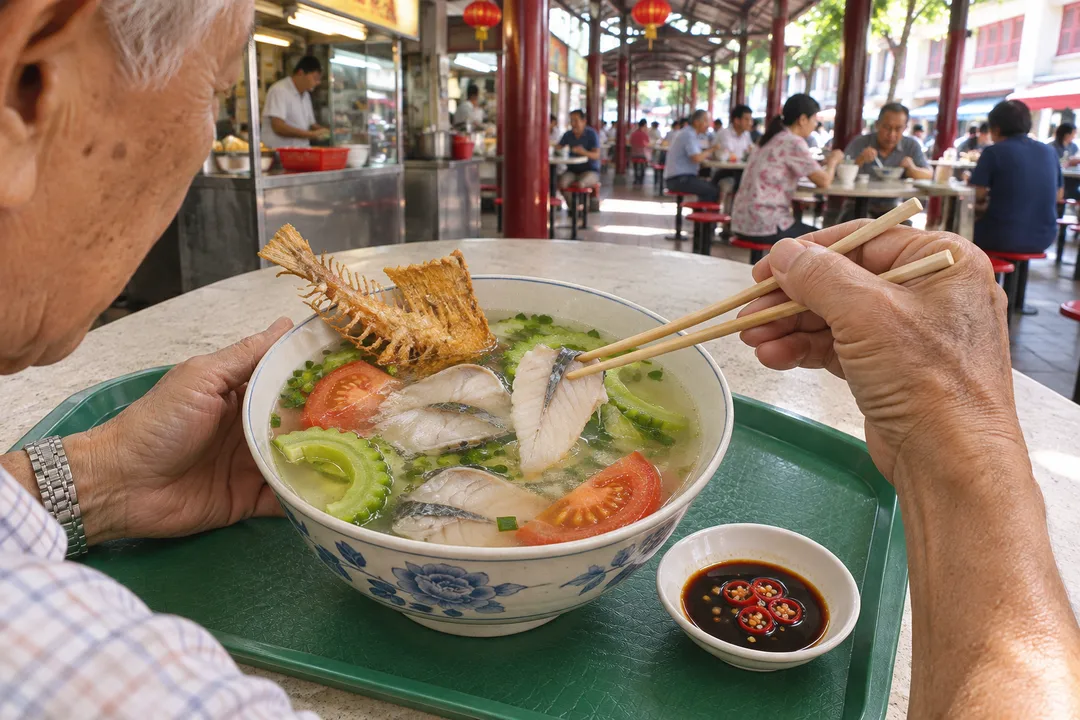
Chinatown Fish Soup Lunch Picker: Teochew Broth vs Milk
Walk-in hawker counters across Chinatown serve midday bowls with no bookings needed. Compare clear Teochew bone broth and fried-fish milk soup before the rush.
Steam curling off a cauldron of fish bones and dried sole draws office workers and retired Chinatown regulars into the covered hawker decks between Kreta Ayer and South Bridge Road long before the noon bell rings. Using a fish soup lunch picker in Chinatown comes down to one decisive choice at the stall front: whether your table wants the gin-clear Teochew broth seasoned with toasted ti poh, salted vegetable, and tomato wedges, or the opaque, ginger-forward fried-fish soup finished with a swirl of evaporated milk. My uncle, who spent decades trading dried sea cucumber and wolfberries along the medicine halls of New Bridge Road, still judges every midday stall by three things: the gloss on the raw Batang slices stacked in the chilled steel tray, the audible crackle of batter-fried dory hitting hot stock, and whether the cook ladles winter melon or bitter gourd into the bowl without being asked. Walk-in queues move briskly when you arrive during the late-morning lull, claim a breezy edge table near the open airwells, and know how to call your noodle, rice, and condiment combination in a single clean breath.
Reading the Chilled Fish Tray and Broth Cauldron at Kreta Ayer and Maxwell Counters
A proper Chinatown fish soup stall puts its prep work right behind the glass sneeze guard, and learning to read that counter saves you from a bland, over-boiled lunch. Look first at the stainless-steel pans holding the raw fish. Traditional Teochew cooks around Kreta Ayer, Smith Street, and the airy market halls toward Maxwell slice Spanish mackerel—known locally as Batang—or snakehead and pomfret on a slight diagonal so each piece curls gently the moment boiling stock hits the bowl. The flesh should look pearlescent and firm, never watery or ragged at the edges, and the cook should poach each portion to order in a small perforated wire basket rather than letting slices sit in a communal pot.
Behind the poaching baskets sits the master stock cauldron, where roasted fish frames, pork ribs, old ginger, and yellow soybeans simmer quietly for hours. What gives Chinatown Teochew bowls their unmistakable savoury depth is ti poh—sun-dried flatfish or sole that is deep-fried until brittle and crushed over the broth just before serving. When you step up to order, watch whether the stallholder finishes the bowl with a pinch of crispy garlic granules, chopped spring onion, and tangy tang oh greens, or offers a richer Cantonese-leaning stock whitened by hours of rolling fish-bone emulsion.
Clear Sliced Batang vs Fried Fish with Evaporated Milk: How to Call Your Bowl
Newcomers often freeze when the auntie taking orders asks four rapid-fire questions in five seconds, so decide your configuration while you are still three people back in the queue. First is the fish style: all sliced raw fish for a clean, silky bite that highlights the natural sweetness of fresh mackerel; all batter-fried fish for a smoky, savoury crust that softens into the soup; or a half-and-half mixed bowl known as yuan yang. My uncle insists that first-timers ordering fried or mixed fish should ask carefully whether they want evaporated milk added, because milk rounds out the peppery heat of the ginger and turns the broth velvety, whereas skipping the milk keeps the roasted sole aroma sharp and light for a humid afternoon.
Next comes the carbohydrate pairing, which completely changes how the meal sits during a busy workday. Thick bee hoon absorbs the savoury broth without turning mushy and remains the classic hawker default, while thin bee hoon tangles around bits of minced pork and fried garlic for a heavier mouthfeel. If you are eating with an older relative or want to taste the pure clarity of a pomfret or red grouper broth, ask for soup separate with a bowl of fluffy white rice or a comforting bowl of Teochew-style rice porridge on the side. Always ask for extra bitter gourd slices if you enjoy a clean, cooling bitter finish that cuts through the richness of fried fish skin.

Beat the Midday Office Surge and Handle Tray Etiquette Like a Regular
Chinatown sits right against the edge of the financial district, which means the lunch rush arrives in two distinct waves. The first wave belongs to neighbourhood seniors, herbal-shop clerks, and market regulars who take their bowls in the late morning while the air under the high ceiling fans is still cool and every corner table is free. The second wave hits as soon as office lanyards pour out of the transit exits and fill the centre aisles with groups of four and six. Arriving twenty minutes before noon—or sliding in after the main office crowd disperses in the early afternoon—turns a twenty-minute standing wait into a five-minute counter pickup.
When walking with a partner or a visiting relative, split your roles the way locals do: one person secures a ventilated table along the outer perimeter away from the steamy dish-return alcoves using a packet of tissue paper or a small umbrella, while the other joins the stall queue. Keep your tray steady when carrying two brimming ceramic bowls, grab your own soup spoon and chopsticks from the UV steriliser box at the side of the stall, and spoon your cut red bird's-eye chilli with dark soy sauce or fermented taucheo soybean paste before walking away so you do not have to weave back through the crowd.
Honest Skip Advice and Smart Backup Plans When the Main Queue Stalls
Not every add-on on the signboard improves a bowl of fish soup, and knowing what to skip keeps your lunch light and focused. Skip the deep-fried fish skin or extra prawn paste balls if you plan to leave them submerged in the soup bowl while you walk back to a distant table; within two minutes the crisp blistered skin turns soggy and clouds the delicate Teochew stock with heavy frying oil. If you crave that crunch, always ask for the fried fish skin on a separate dry saucer and dip each piece for two seconds right before eating. Skip ordering delicate white pomfret during the frantic peak of the midday rush when the cook is poaching six baskets at once, and stick to resilient Batang or snakehead slices that hold their tender bounce even if they rest an extra thirty seconds in hot broth.
Even the most disciplined lunch plan can run into a sudden stall closure on a market cleaning day or a queue of twenty-five people snaking past the drinks counter. Set a firm fifteen-minute wait rule: if the line has not moved past the neighboring pillar after five minutes, pivot immediately rather than sweating in the aisle. Within a three-minute walk, you can climb to the upper hawker deck above the wet market in the Kreta Ayer complex, cut across to the breezy food stalls near Hong Lim, or step into the Karpo APP to compare nearby Teochew fish porridge counters, Hakka thunder tea rice bowls, and quiet air-conditioned shophouse noodle rooms around Chinatown.
Pairing Your Bowl with a Shaded Heritage Walk Through Ann Siang and South Bridge Road
One of the great pleasures of choosing a clean fish soup lunch over a heavy curry or greasy stir-fry is how light you feel stepping back out into the afternoon sun. Instead of heading straight into a crowded train carriage, follow the covered five-foot ways along Sago Street and Banda Street toward the quiet green pocket behind the Buddha Tooth Relic Temple, where retirees sit under shady trees playing Chinese chess and chatting over thermoses of oolong tea. A short stroll past the carved timber eaves and incense coils lets the warm ginger and white pepper broth settle comfortably.
If you have half an hour before your next meeting or museum stop, trace the gentle slope up Ann Siang Hill and across the wooden boardwalks of Ann Siang Road toward Telok Ayer. The shaded arcades protect you from both midday glare and sudden tropical showers, and you can pause at a traditional Chinese tea merchant or a quiet kopitiam corner for a glass of iced barley water or freshly squeezed calamansi lime juice. When you want to extend the afternoon toward Tanjong Pagar or Clarke Quay, open the Karpo APP to filter nearby traditional dessert stalls, heritage temples, and shaded walking loops that match your pace.
Ask Karpo for more information.
Keep reading
- Kovan Hainanese Curry Rice Lunch Picker: Heartland Plates
 Tampines Mee Rebus Breakfast Picker: Round Market Bowls
 Jurong West Mee Rebus Breakfast Picker: Boon Lay Bowls