 Katong Indoor Swimming Pool Lane: East Coast Lap Swim
Sports Social

Fencing Club at Fencing Masters: Ubi Three-Blade Trial
Fencing Masters at 177 Ubi Avenue 4 teaches foil, sabre, and épée for ages 3 to 90. Its 1995 history and loaner gear make starting unusually simple.
Fencing Masters is a fencing club at 177 Ubi Avenue 4, #02-00, Singapore 408792, with a rare all-three-weapons offer: foil, sabre, and épée. Its official site says the club has coached in Singapore since 1995, welcomes fencers from age 3 to 90, and lends club gear for first sessions. For adults who want a serious sport without needing to buy equipment immediately, the Ubi salle offers a particularly clear entry point.
A Club Built Around Choice
Fencing Masters calls itself “3 Weapons · 1 Club,” and that is the useful headline. A newcomer does not have to commit to foil, sabre, or épée before understanding how they feel. The site explains the three blades as distinct routes under one coaching team, which makes comparison possible without turning the first visit into a shopping list. You can ask better questions after trying the footwork: do you enjoy speed, precision, or the whole-body puzzle?
The club also speaks to adults who want a smarter way to sweat. That phrase makes sense once the lesson starts. You are moving, but the work is organised around decisions: when to close distance, when to wait, and how to recover after an attack. A person who dislikes repetitive gym machines may find the same physical demand easier to accept because every drill has a tactical reason.
The Ubi Home Salle
The official contact details place the home salle at 177 Ubi Avenue 4, #02-00, Singapore 408792. Ubi is practical rather than picturesque, so build the journey around the class time, not an elaborate pre-session outing. Arrive in clothes that allow lunges, then leave a few minutes to find the right floor and change.
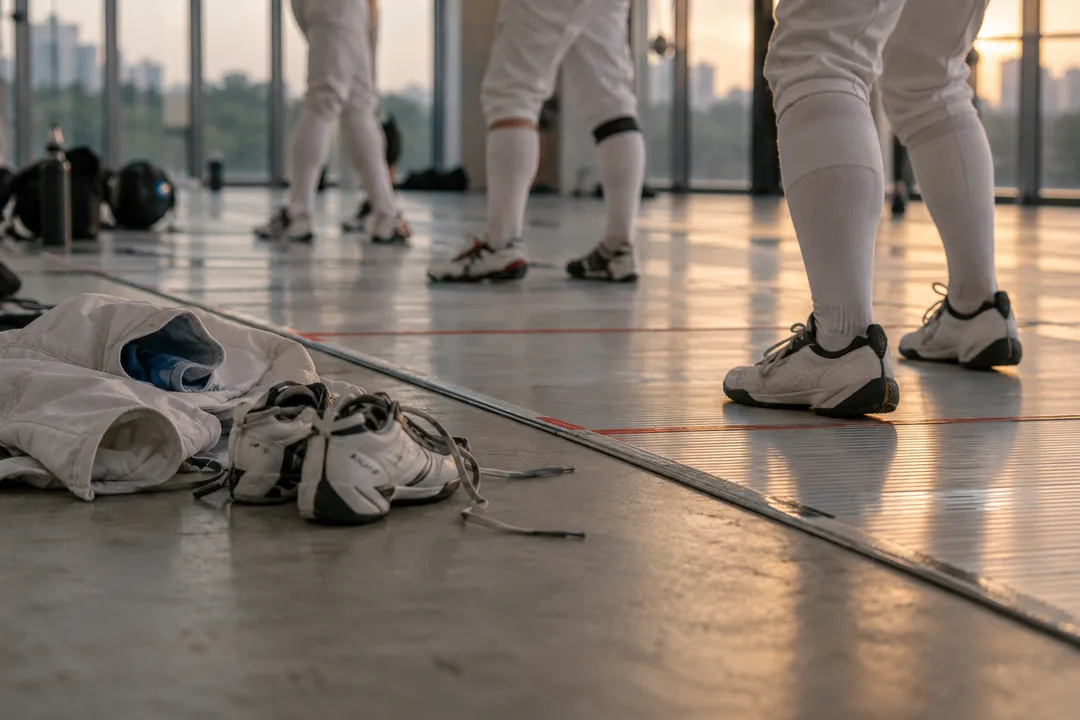
The room should be read as a working club. Fencing equipment takes up space, a bout needs a clear lane, and the coach may ask visitors to wait while a drill finishes. Keep bags out of the movement area, walk around the back of a piste, and let the person who is fencing finish the exchange. These small courtesies are more useful than trying to look fearless. The salle rewards attention quickly.
Adults Are Not Too Late
Fencing Masters explicitly presents the sport for adults and says it coaches ages 3 to 90. That range is more than a marketing flourish; it changes the emotional temperature of a first class. You do not need to arrive as a former athlete. You need to be willing to bend your knees, listen to a correction, and repeat a movement while your balance catches up. The coach can scale the exercise without making the adult feel like a child.
The site’s history reaches back to 1995, with founder Jeffrey Lopez coaching since 1975. That long view makes the club a sensible place for someone who wants a sport that can stay interesting for years. You might begin for fitness, later enter a veterans session, or simply become the person who understands why a clean retreat matters. The training has room for all three outcomes.
How The Weapons Differ
Foil is a precise weapon that teaches control of a target area and the logic of right of way. Sabre feels faster and more expansive, with attacks that arrive at a brisker rhythm. Épée makes the whole body vulnerable and turns patience into a central skill. The distinctions are easier to feel than to memorise. Try the same advance-and-retreat exercise with different weapons and notice how your attention changes before you decide which one suits you.
A useful first-session rule is to avoid chasing the blade. Beginners often stare at the opponent’s weapon and forget the feet, yet distance controls whether the blade can reach at all. Listen for coaching about posture, timing, and recovery. Fencing Masters describes fencing as physical chess, and the comparison is accurate when the lesson slows down. The board is the piste, the pieces are moving bodies, and a rushed move gives away information.
Gear, Salutes, And First-Day Rules
The official site says club gear is free for first sessions, which removes the most common beginner worry. Wear athletic clothes, secure indoor shoes, and nothing that can catch on a mask or weapon. Before a bout, salute with the weapon and wait for the start instruction; after a touch, reset without arguing across the piste. The etiquette is not decoration. It gives both fencers a predictable frame for learning and keeps the room moving.
Do not spend the first class trying to hit hard. A controlled touch tells you more than a wild swing, especially when the coach is teaching distance. Keep the point down when walking and place the weapon where the coach directs when the drill changes. Experienced fencers may move quickly, but they still follow the same safety language. Copy the process, not the speed.
An East-Side Evening
Ubi is a useful setting for a focused weeknight. Arrive, train, and let the walk to the next stop become part of the reset. Industrial streets and warehouse fronts feel very different from the controlled geometry of a piste, which is exactly why the contrast works. You can leave the salle thinking about one tactical problem, then allow the outside city to widen your attention before heading home.
Plan a modest meal and hydration rather than a long itinerary after your first session. The body may feel unfamiliar in places that a normal workout does not reach: calves, inner thighs, shoulders, and the hand holding the grip. If a friend joins you, explain that the interesting part is the decision-making. Fencing Masters is memorable because a small adjustment can make a movement feel completely different within one lesson.
Practical Notes
It identifies the club as coaching foil, sabre, and épée, says it has operated in Singapore since 1995, and describes programmes for ages roughly 3 to 90. Class times vary by programme, so the useful pre-visit request is to state your age, preferred days, and whether you want fitness, recreational, or competitive training.
The bottom line is that Fencing Masters suits adults who want options and a club with enough history to support long-term progress. You can try the three weapons, borrow club gear for the first sessions, and keep the same address as your training develops. Bring patience, not expensive equipment. The first clear milestone is simply understanding how a controlled step changes the distance between you and another fencer.
Ask Karpo for more information.
Keep reading
- Katong Indoor Swimming Pool Lane: East Coast Lap Swim
 Chinatown Indoor Swimming Pool Lane: Singapore Lap Guide
 Telok Ayer Indoor Swimming Pool Lane: Singapore CBD Lap Swim