 Chinatown New in Town Weekend Planner: Errands and Temples
Weekend Plans
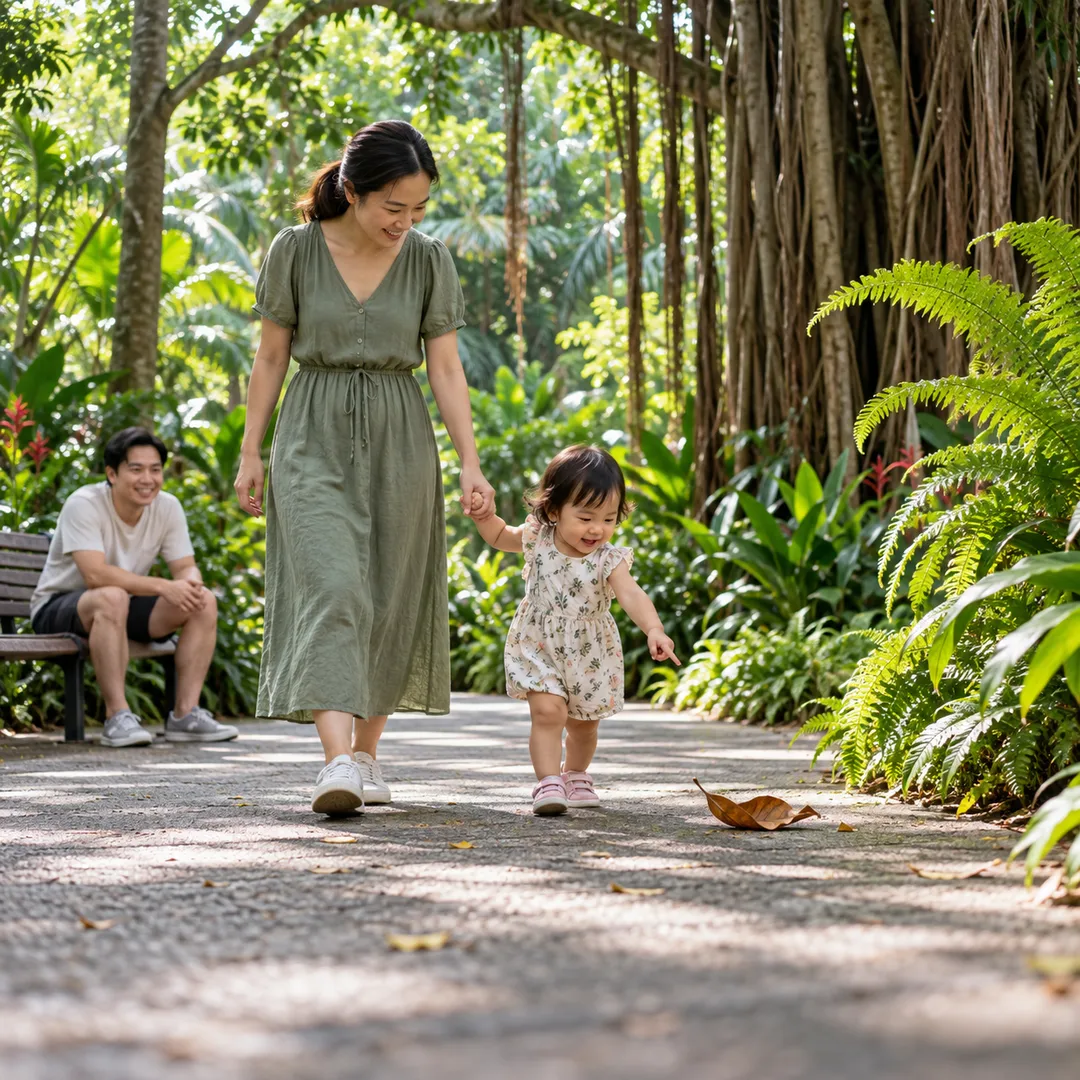
Singapore Family Outing Planner: One Stop Before Nap Time
A small morning can satisfy grown-ups and toddlers when the route follows one shared interest, a proper pause and a forgiving return home together.
A toddler can turn a short Singapore outing into a whole expedition. The interesting crack in the pavement matters as much as the destination, while the adults may still want a decent lunch and something worth leaving home for. A family outing planner works better when that difference shapes the brief. Start with the child's comfortable waking window, the adults' one shared interest and a route that can end gracefully after its first stop.
Give the smallest traveller a realistic role
Your toddler does not need to enjoy every adult activity. They need moments when they can move, look closely and take part without repeatedly being told to hurry. Think about the last outing that went well. Was the useful ingredient an early meal, a place to sit together, or permission to spend twenty minutes examining leaves? Describe that behaviour when you ask for ideas, rather than relying on the broad label “toddler friendly.”
Write down one adult priority too. That could be a visually interesting walk, a quiet drink together or a meal you would choose without children. Keeping an adult interest in the plan prevents the afternoon becoming a sequence of compromises nobody enjoys. The useful question is where that interest can sit alongside your child's pace. A long seated meal and a restless toddler create a different problem from a parent wanting a short architectural stroll.
Put the nap boundary into your first request
Try this in the Karpo APP: “Help me plan a Singapore family outing for two adults and a two-year-old. We want a short walk and lunch. Our child needs to be home for their usual nap, and we are taking a stroller. Suggest a compact starting idea with one optional stop.” Add your starting neighbourhood and the latest acceptable return time. Those details make the request personal without supplying unnecessary information about your child.
Treat the response as a proposal to discuss. If a suggestion depends on a lengthy transfer, ask for an alternative closer to your starting point. If it looks like an adult itinerary with a playground added at the end, move the child's movement break earlier. You are looking for a sequence that explains why each piece belongs. A recognisable attraction name alone does little to solve feeding, tiredness or the return journey.
Compare the transitions rather than the attractions
Two appealing stops can make a poor pair when getting between them consumes the child's remaining patience. Count the changes: leaving home, boarding transport, finding the entrance, folding the stroller, waiting for food and leaving again. Each transition demands attention from someone. A modest place with a simple arrival can suit this particular morning better than a more exciting destination that requires several changes before anyone gets to enjoy it.
Ask for the main activity and lunch to be considered as a pair. Explain whether eating first helps your child settle, or whether a short burst of movement makes sitting easier. Keep the walk optional when the meal is the adult priority. Make lunch flexible when the shared outdoor time is what matters most. This gives the plan a clear centre and leaves room for the ordinary variation between a cheerful morning and a tired one.
Build a pause that does not become another errand
A break works when the whole group can stop doing logistics. Buying a drink across a busy road while one adult looks after the stroller may be necessary, but it is not the same as sitting down together. Describe the pause you want: somewhere to sit, enough space to organise a snack, and an easy way to leave. Do not assume that a suggested venue has a changing room, stroller storage or appropriate seating unless supporting information establishes it.
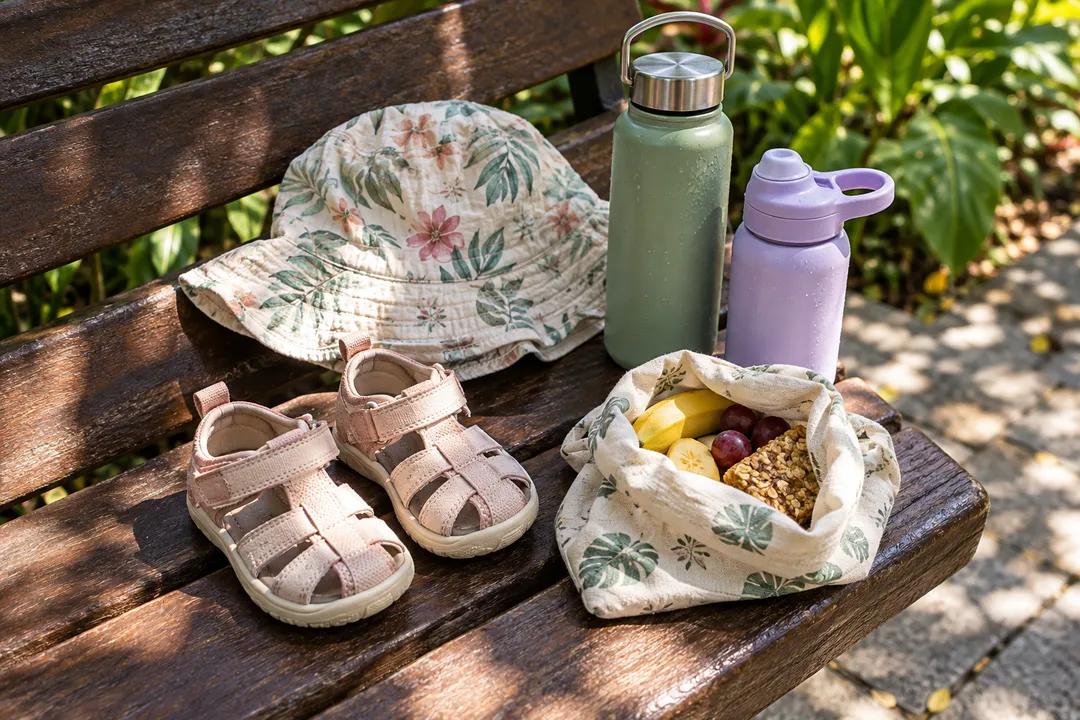
Prepare your own small outing kit around familiar needs. Bring the food, water and spare clothing your child normally requires, and give each adult a manageable responsibility. One might handle the bag while the other keeps the route information available. The point is to reduce the number of tasks happening at the same moment. A beautifully planned morning still becomes awkward when both adults are searching for the same missing item at the entrance.
Decide what gets dropped before anyone is tired
Choose an exit point after the first satisfying activity. It might be the moment you finish lunch or complete a short loop. Tell your partner that getting home from there counts as the full outing. A second stop then becomes a pleasant possibility, rather than a promise that has to be kept. This is especially helpful when one adult measures success by visiting places and the other measures it by how calmly the family returns.
If the child is already struggling, shorten the route directly. Avoid adding a treat across the neighbourhood to persuade them through another transfer. You can ask Karpo for a simpler nearby idea, but a new suggestion is still a choice to make, not an instruction to keep going. Sometimes the useful revision is removing the optional stop and heading home with enough energy left for the rest of the day.
Give older siblings a small piece of ownership
When a toddler shares the outing with a school-age sibling, avoid explaining every decision through the younger child's needs. Offer the older child a bounded choice that genuinely fits: choosing between two suitable snacks, spotting a particular colour on the walk, or picking which adult to accompany during a short detour. Make that contribution visible. It gives them something to anticipate without handing them responsibility for managing their sibling's mood.
Adults can also alternate a brief individual moment with each child. Keep any split easy to reverse, with a clear meeting place and an agreed duration. Do not build the entire day around separating the family to rescue an unsuitable activity. The main plan should still be comfortable together. A small personal moment is a bonus within that plan, especially when the older child has been patient through stroller stops and slower walking.
Practical notes for a morning that can bend
Before leaving, settle three household decisions: which part matters most, when you will begin the return, and who takes responsibility for the bag. Use your own child's routine to set the timing. Any example schedule is only a planning exercise, not a recommendation to change naps or meals. Keep the proposed route short enough that an early finish does not leave you far from the transport or pickup point you intend to use.
Open Karpo APP with the starting neighbourhood, ages, stroller needs and one adult interest. Ask for a family outing planner approach that keeps the first stop worthwhile on its own. Then refine the suggestion that most closely matches your actual morning. The aim is a small shared experience with a manageable beginning and ending: something the adults remember enjoying, and something the toddler has enough freedom and energy to explore.
Ask Karpo for more information.
Keep reading
- Chinatown New in Town Weekend Planner: Errands and Temples
 Kampong Glam New in Town Weekend Planner: Mosque to Murtabak
 Holland Village New in Town Weekend Planner: Meet People