 Chinatown New in Town Weekend Planner: Errands and Temples
Weekend Plans

Singapore Family Outing Planner: Two Hours Spent Indoors
Turn a short indoor window into one satisfying family activity, with room for arrival, a simple snack and a return that does not become a rush.
You have two hours between another commitment and the journey home. Everyone wants to do something together, but an ambitious Singapore itinerary would spend much of that window moving around. An indoor family outing planner brief should begin with the usable time, including arrival and departure, then compare one activity that fits. The reward is a complete little experience: something the children can finish and the adults can enjoy without watching the clock throughout.
Calculate the time that belongs to the activity
A two-hour gap on the calendar is not automatically two hours inside a venue. Work backwards from the moment you need to leave the area. Allow for gathering bags, using the toilet and reaching your next transport connection. Then consider the arrival at the other end. If those tasks leave a much smaller activity window, use the smaller figure in your request. It is a useful boundary that makes a proposed plan easier to judge.
Say whether the clock starts at home or at the activity entrance. That distinction changes every comparison. A family already in the neighbourhood can consider something that would be impractical for someone travelling across the island. Include the location of your next commitment if it helps define the route, without sharing a private address. A nearby station or broad neighbourhood can be enough to explain where the outing needs to end.
Ask for contrasting options with the same deadline
In the Karpo APP, start with a request such as: “We have a short indoor window in Singapore with two children aged six and nine. We will already be near our starting station. Help us compare a hands-on activity with a quieter browsing option. We need to leave the area after two hours, including any snack stop.” Add the actual neighbourhood, spending limit and the interests that would make either choice worthwhile.
Request two distinct approaches rather than a long list of places. For example, one proposal could centre on making or solving something, while the other could involve looking, talking and moving at your own pace. These are ways to frame the discussion, not claims about specific activities available that day. Once you have a candidate, separate the reason it suits your family from any practical information that still has no supporting source.
A timed session needs a clean arrival
A structured activity can be satisfying because it gives the outing a clear beginning and end. It can also use the whole window if the start time is awkward. Compare the required arrival with your realistic arrival, including the time needed to find the entrance. An activity starting halfway through your available period may leave too little room afterwards. Do not squeeze it into the plan simply because its advertised session length appears short enough.
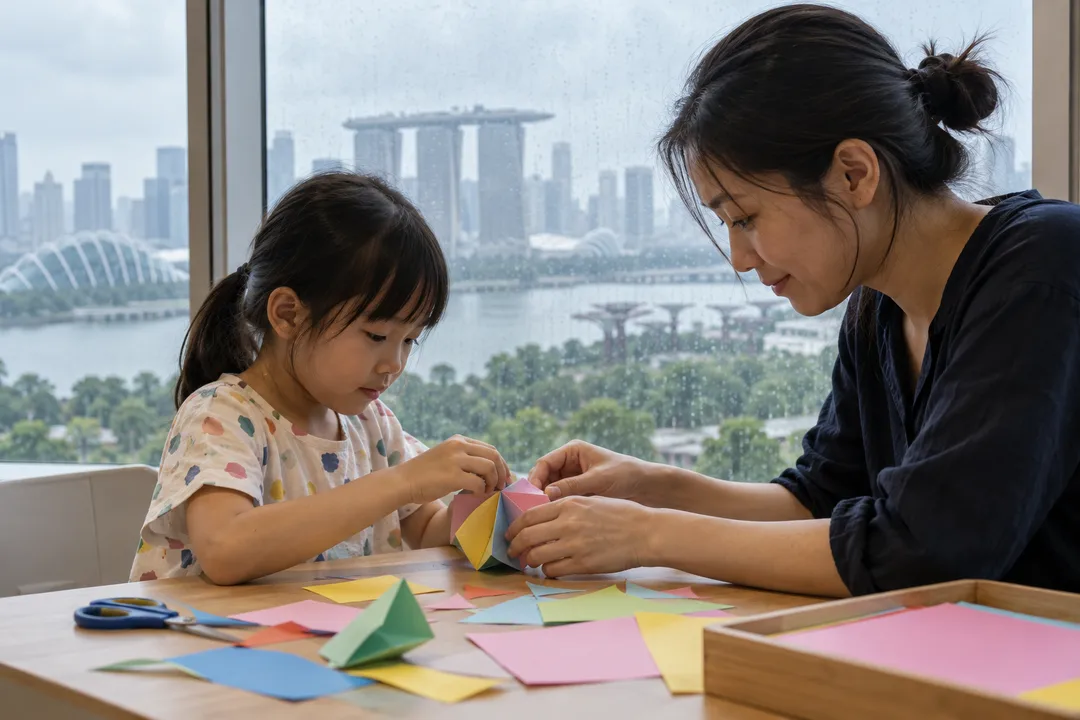
Ask what the family would do if you miss the start. This is a planning question, not an assumption that admission can be moved or refunded. Where a particular ticket has a stated late-arrival or cancellation rule, use that rule. Without one, do not build a flexible afternoon around presumed flexibility. A short window is often easier to manage when its central activity does not depend on arriving at a single precise minute.
A flexible visit needs an achievable stopping point
Self-paced browsing has a different problem: it can expand until leaving becomes a negotiation. Give the children a modest task before entering. They might each choose one interesting object to explain to the family or one colour to find in several forms. Keep it light enough that the visit still feels like leisure. You do not need a worksheet, a competition or a promise to see everything for the outing to feel complete.
Choose a natural ending in advance. Finish after one room, one small project or one shared discovery, depending on the place you eventually select. Describe that ending when comparing options with your partner. “We can leave after this piece” is more useful than “we can leave whenever.” It helps adults recognise a successful short visit and gives children a clear transition into the next part of the day.
Keep lunch from quietly replacing the plan
Food can consume the entire spare window if nobody has decided what kind of meal is needed. Distinguish a necessary lunch from an optional snack. If everyone needs a full meal, make that the central activity and ask for a small indoor idea nearby. If the family has already eaten, avoid adding a restaurant merely to make the itinerary look fuller. The amount of time available should determine the scale of the food stop.
A spending cap also becomes clearer when you state what it includes. Tell Karpo whether your limit covers transport, admission and food, or just the activity. Use the response to compare those categories, without treating an unsupported estimate as a quoted price. There is no need to invent a precise total for an unnamed venue. You can decide whether an option deserves more attention before committing to a paid session or a longer meal.
Make the indoor requirement specific
“Indoors” can mean different things to different families. One household wants shelter from rain between every stage. Another needs a seated activity because someone is tired. A third wants a quieter environment for a child who finds busy spaces difficult. Explain the practical reason in your own words. That lets you ask a sharper follow-up when a suggestion includes an outdoor queue, a long exposed approach or an activity with little opportunity to sit.
Do not assume that two indoor destinations have a sheltered connection. Treat the route between them as its own part of the plan. For a short outing, choosing a single building may be a useful preference to state, but even then a proposed venue's access arrangements need evidence. If the connection looks complicated, remove the second destination. Keeping the whole experience comfortably within reach can add more value than including another attractive name.
Use one revision to make the choice easier
After reading the initial suggestions, identify the biggest mismatch and correct it directly. You might write: “The making activity sounds good, but we cannot wait for a fixed afternoon start. Give us a self-paced alternative around the same interest.” Or explain that the quieter option would not hold the younger child's attention. A concrete revision keeps the conversation focused on the decision you actually need to make, rather than reopening the entire city.
Before you set off, tell the children what the small adventure involves and when it ends. Pack only what the family needs for that interval, with any essential snacks already arranged. Open Karpo APP when you want help turning your location, interests and deadline into a manageable shortlist. A successful two-hour plan has one satisfying purpose, a workable exit and enough breathing room that the next appointment does not arrive as a surprise.
Ask Karpo for more information.
Keep reading
- Chinatown New in Town Weekend Planner: Errands and Temples
 Kampong Glam New in Town Weekend Planner: Mosque to Murtabak
 Holland Village New in Town Weekend Planner: Meet People