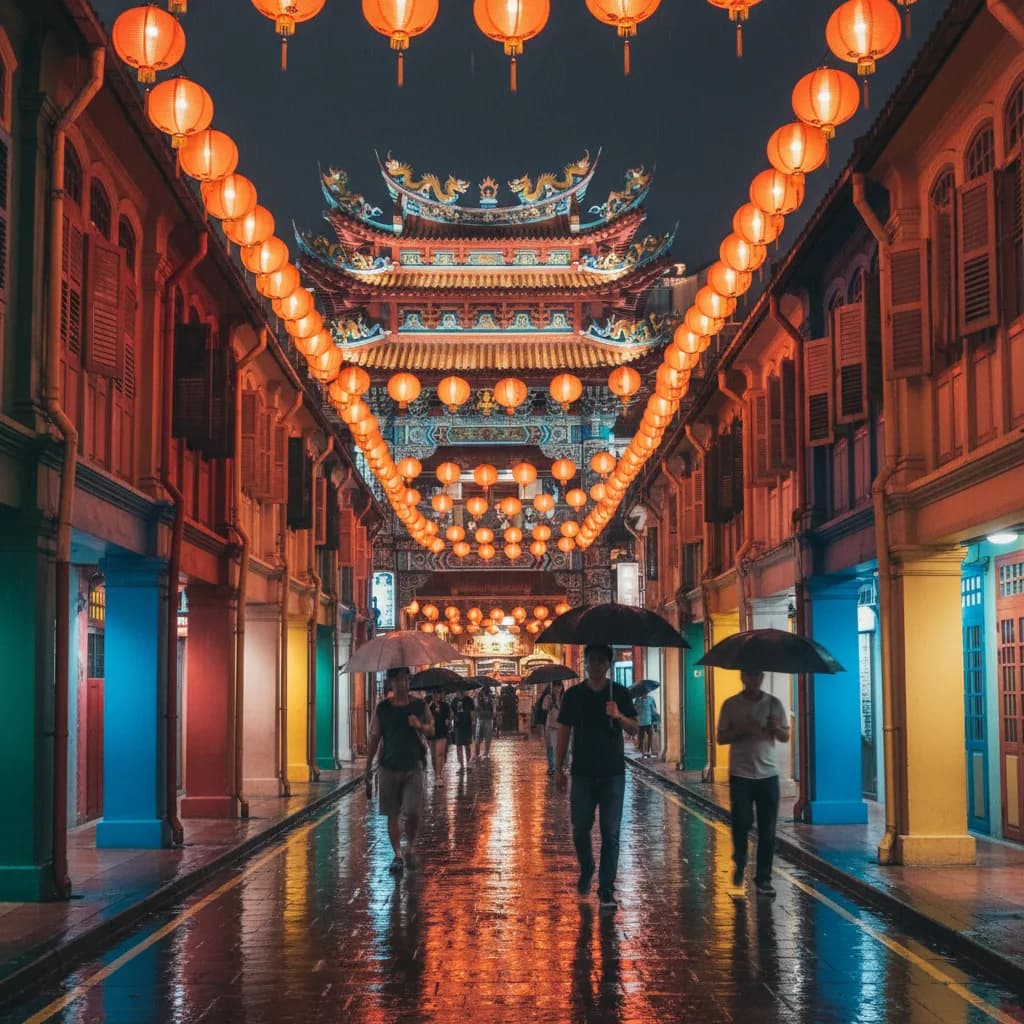
 Chinatown New in Town Weekend Planner: Errands and Temples
Weekend Plans
Sri Mariamman Temple Diwali in Chinatown: Open From 6am
Sri Mariamman Temple at 244 South Bridge Road opens 6am to 12pm and 6pm to 9pm, free to enter. Come Deepavali morning, 8 Nov, before the shoe racks fill up.
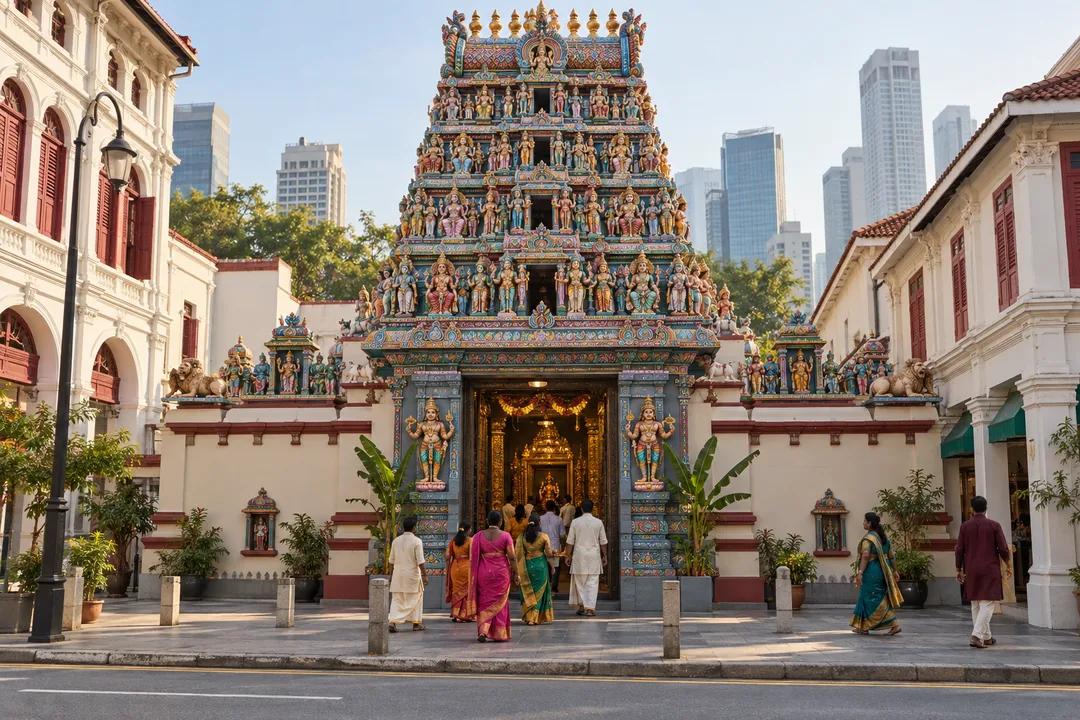
Sri Mariamman Temple at 244 South Bridge Road opens its doors at 6am and is free to enter, which makes it the place to start Deepavali on Sunday 8 November 2026 if you are staying in Chinatown or the CBD. It is Singapore's oldest Hindu temple, built by Indian settlers by 1827, and its tower of painted deities rises over Chinatown shophouses rather than the garland stalls of Little India. On festival mornings the courtyard is busy with families in new clothes who come to pray before visiting relatives.
Singapore's First Hindu Temple
According to the Hindu Endowments Board, which manages the temple, Indian settlers had built a Hindu temple on this stretch of South Bridge Road by 1827, the first in Singapore. It was originally known as Sithi Vinayagar Gothanda Ramaswamy Mariamman Kovil, and from the start it held sanctums for Sri Mariamman, Sri Vinayagar, Sri Subramaniyar and Sri Ramar, covering the Shakta, Shaiva and Vaishnava traditions under one roof. By the early 1900s people simply called it the Sri Mariamman Kovil.
The first temple was a granite and lime plaster building with a three-tiered tower. What you see today is the result of more than a century of rebuilding and additions, including a separate entrance on Pagoda Street that completed the collection of buildings on the plot. The government declared Sri Mariamman Temple a National Monument in 1973. The goddess Mariamman is venerated in South India as a protector against disease, which explains why so many early migrant workers on the Chinatown waterfront worshipped here.
What You See When You Arrive
The first thing that stops people on South Bridge Road is the rajagopuram, the entrance tower crowded with brightly painted sculptures of gods, guardians and animals. Stand on the opposite pavement for the full view before crossing, because once you are at the gate the tower is too tall to take in. Inside, the courtyard opens onto the main hall, with the sanctum of Sri Mariamman at the far end and smaller shrines around the sides.
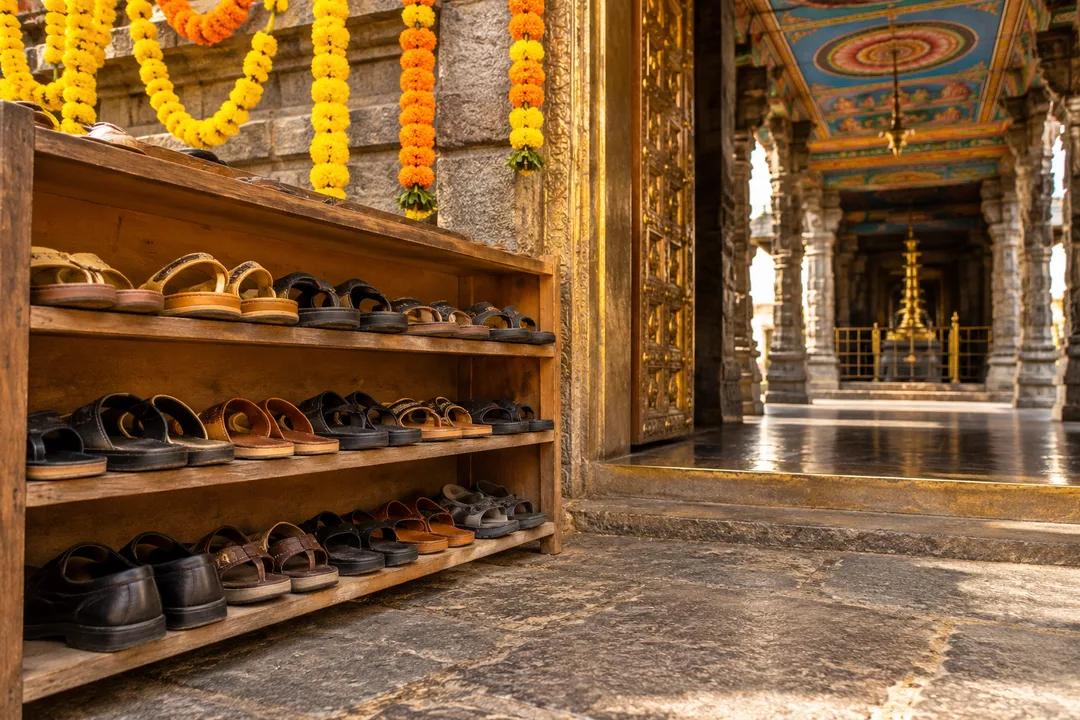
The ceiling paintings in the main hall and the carved columns are worth a slow look, but keep to the edges during prayers. Priests perform the ritual offerings in front of the sanctums, and devotees bring flowers, fruit and coconuts. You will see office workers dropping in for a few minutes, elderly regulars who sit on the floor along the walls, and tourists holding their shoes in a bag, unsure where to put them. Racks for footwear are by the entrance.
Deepavali Morning and the Firewalking Week
Deepavali falls on Sunday 8 November this year, and many Hindu families in Singapore visit a temple early that morning after the traditional oil bath, before breakfast with relatives. For a quieter visit, arrive close to the 6am opening; by mid-morning the shoe racks and courtyard are much fuller. If you would rather avoid the crowd entirely, the evening session from 6pm to 9pm on the following days is calmer, though the festive atmosphere has faded by then.
A week earlier the temple hosts one of the most dramatic events on the Singapore Hindu calendar. The Hindu Endowments Board has listed the Firewalking Festival, Theemithi, for Sunday 1 November 2026. Male devotees walk in a procession from Sri Srinivasa Perumal Temple on Serangoon Road to Sri Mariamman Temple, where they cross a pit of hot embers in the courtyard. Spectators line South Bridge Road and the surrounding lanes. This is not a calm visit: if you come that day, expect long waits and road closures, and go for the spectacle rather than for prayer.
How to Dress and Behave Inside
The temple's etiquette page is straightforward. Shoulders must be covered, and trousers or skirts must reach at least the knees. If you turn up in shorts or a sleeveless top, the temple provides shawls and wraps at the entrance, so you do not need to go back to your hotel. Remove your footwear outside before entering. Do not step into the shrines or sanctums themselves; stay in the hall where devotees stand.
Smoking and alcohol are prohibited in the temple and on its grounds. Walk clockwise around the shrines, the same direction as devotees, and avoid crossing directly in front of someone who is praying. Pointing your feet towards the deities while sitting is considered rude, so tuck them to the side. Many visitors ask whether they may take photos; be discreet and never photograph people mid-prayer or the priests during an offering without asking first.
Opening Hours and Timing
The temple's own website lists the hours as 6am to 12pm in the morning and 6pm to 9pm in the evening, with the evening session running to 9.15pm on Fridays. The building is closed between noon and 6pm, a detail that catches out tourists who wander down from the Chinatown street market in mid-afternoon and find the gate shut. Plan your visit for the morning or after 6pm.
Entry is free and there is no booking. The honest advice: skip the afternoon gap entirely and do not try to squeeze the temple into a lunchtime stop, because you will either miss it or arrive as the doors close. A visit of 20 to 30 minutes is enough for most people who are not attending a service. If you want a longer ceremony on Deepavali, the larger Serangoon Road temples in Little India hold more extended festival programmes.
Walking South Bridge Road After Your Visit
Sri Mariamman Temple is part of a remarkable block. A few doors along South Bridge Road is the Jamae Mosque, one of Singapore's oldest mosques, and the Buddha Tooth Relic Temple stands on the next block of the same road, so three faiths share one short walk. Pagoda Street, which runs beside the temple, leads into the Chinatown market lanes with their souvenir stalls and shophouse restaurants.
To see the full Deepavali light-up, take the North East Line from Chinatown MRT to Little India, three stops away. The Little India Shop Owners and Heritage Association has lit about two kilometres of Serangoon Road for the festival, every evening from 7pm to midnight. A good plan for Deepavali weekend is a morning visit to Sri Mariamman, lunch in Chinatown, then an evening under the Serangoon Road arches. If the temple is too crowded on 8 November, the nearby Sri Layan Sithi Vinayagar Temple on Keong Saik Road holds a special early-morning prayer that day.
Practical Notes
Address: Sri Mariamman Temple, 244 South Bridge Road, Singapore 058793. Nearest MRT: Chinatown station on the North East and Downtown lines, a few minutes' walk along Pagoda Street. Hours: daily 6am to 12pm and 6pm to 9pm, with Fridays running to 9.15pm. Closed between 12pm and 6pm. Entry is free.
Dress code: cover shoulders and knees; wraps are available at the entrance. Remove shoes outside. No smoking or alcohol. Key dates for 2026: Firewalking Festival on Sunday 1 November, Deepavali on Sunday 8 November, and a public holiday on Monday 9 November. Ask the Karpo APP for a route from Chinatown to the Serangoon Road lights that fits around the temple's midday closure.
Ask Karpo for more information.
Keep reading
- Chinatown New in Town Weekend Planner: Errands and Temples
 Kampong Glam New in Town Weekend Planner: Mosque to Murtabak
 Holland Village New in Town Weekend Planner: Meet People