 Kovan Hainanese Curry Rice Lunch Picker: Heartland Plates
Restaurants
Katong Dinner Spot Finder: Peranakan Plates, Seaside Supper
Katong dinner is easiest when you choose between Peranakan home cooking on East Coast Road, Joo Chiat shophouse rooms, or a breezy hawker supper by the sea.
Katong sits in the east of Singapore, away from the downtown towers, and dinner here feels closer to a family meal than a night out. The neighbourhood grew up as a seaside retreat for wealthy Peranakan and Eurasian families, and its pastel terrace houses, old church spires and long shophouse rows still give it a gentle, unhurried character. A Katong dinner spot finder plan is less about chasing a reservation and more about deciding which side of the neighbourhood you want to eat in: the heritage streets, the newer Joo Chiat rooms, or the seafront.
A Seaside Suburb With a Peranakan Heart
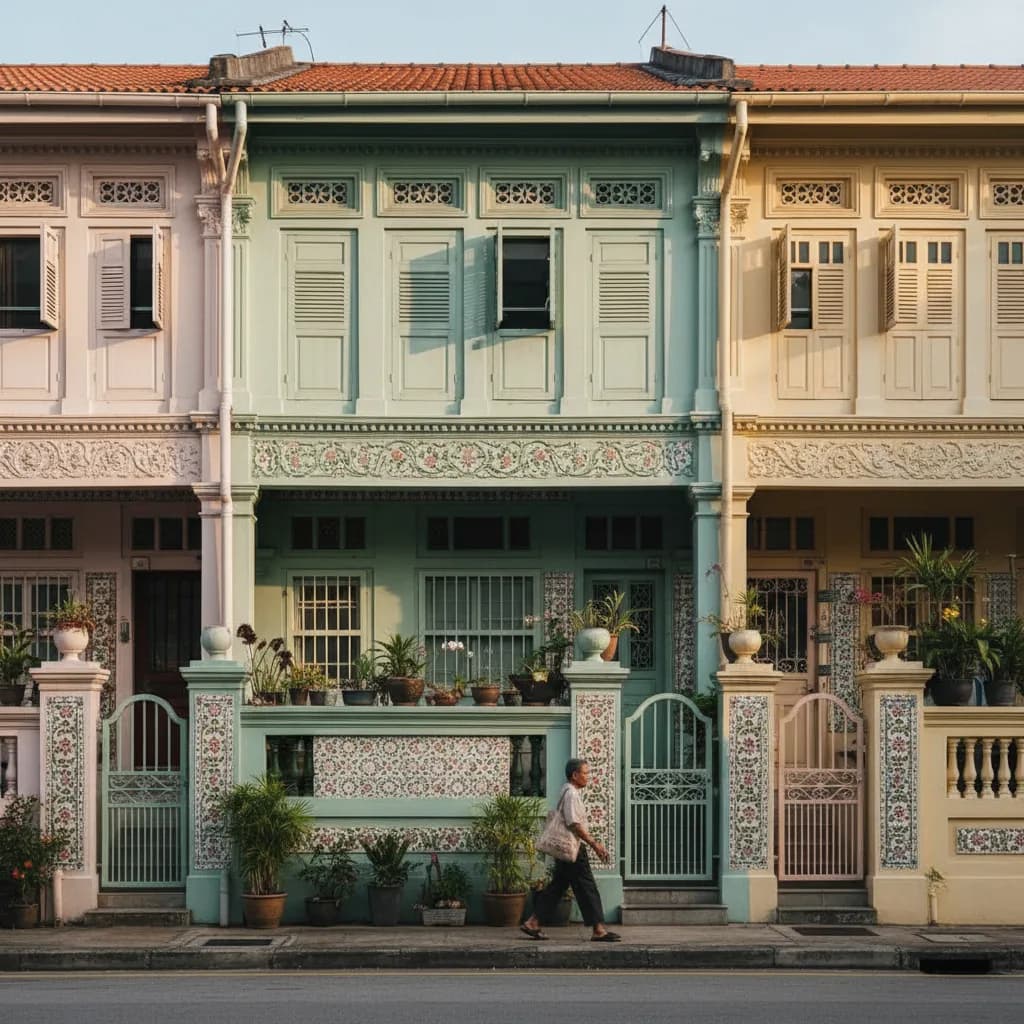
Before land reclamation moved the shoreline south, the sea came right up to the edge of East Coast Road, and Katong was a place of bungalows and holiday villas. The Peranakan community, descendants of early Chinese settlers who married into Malay culture, made the area one of their homes, and their influence is everywhere. The ornate terrace houses on Koon Seng Road, with tiles, carved doors and bright colours, are the most photographed example.
That heritage is also what you taste at dinner. Peranakan cooking, often called nyonya food, blends Chinese ingredients with Malay spices and techniques. Dishes are slow-cooked, rich and full of rempah, the spice paste pounded from shallots, chillies, galangal and lemongrass. It is home food first, which is why many Katong families still argue happily about whose grandmother made the best version of each dish.
Plan One: A Peranakan Dinner on East Coast Road
For a first visit, start with a Peranakan meal along East Coast Road or the lanes near it. The dishes to look for include ayam buah keluak, chicken braised with the black, earthy nuts of the kepayang tree, babi pongteh, pork stewed with fermented bean paste, and chap chye, a mixed vegetable braise. Sambal belacan and achar pickles come on the side and are worth trying with everything.
Peranakan meals are made for sharing, so order several dishes for the middle of the table and plenty of rice. If the group is small, ask the staff to suggest portion sizes, because many recipes are built for big families. Kueh, the colourful steamed and baked sweets, make a natural dessert. Some shophouses in the area sell trays of them, so you can pick a few to share after the meal.
Plan Two: Laksa and a Joo Chiat Wander
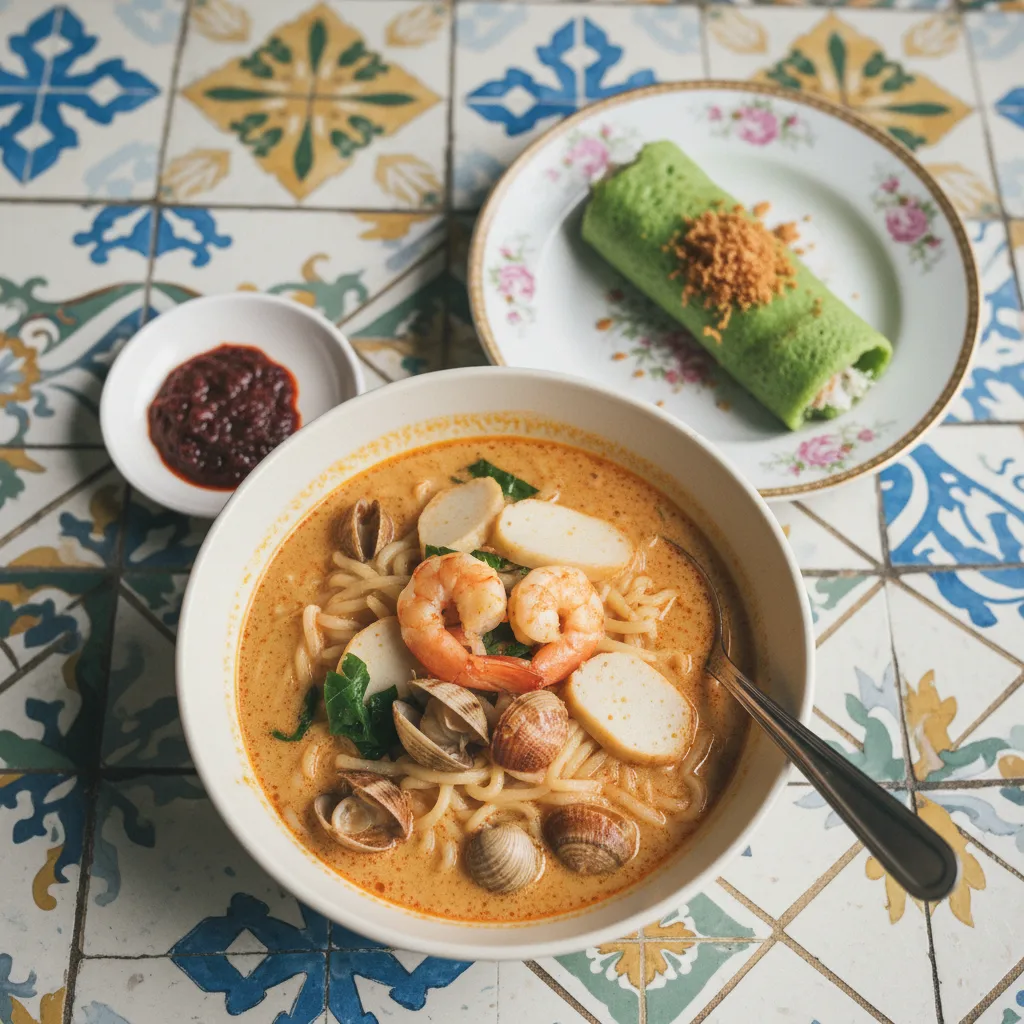
Katong is famous across Singapore for its own style of laksa, a rich coconut curry soup with rice noodles cut short so you can eat it with a spoon alone. It is a quick, casual dinner rather than a long one, and it pairs well with a walk. Several laksa spots sit close together on East Coast Road, so a laksa dinner is easy to fit into any evening.
From there, head north into Joo Chiat. Joo Chiat Road and the lanes off it have become one of the most interesting dining streets in the east, with old coffee shops, family bakeries and newer shophouse restaurants cooking everything from Vietnamese food to modern Asian small plates. Walking the length of the road after a laksa and stopping for dessert or a drink is a lovely, low-key way to spend an evening.
Plan Three: A Breezy Hawker Supper by the Sea
On a warm night, the seafront is hard to beat. East Coast Park runs along the coast just south of Katong, and its hawker centre near the lagoon is a long-time favourite for satay, barbecued seafood and chilli crab-style dishes eaten in the open air. Families often come straight from cycling or walking in the park, and the sea breeze makes the evening heat much easier.
This plan works best with a group and a relaxed attitude. Grab a table first, then split up to order from different stalls, and save the satay for last so it arrives hot. If the weather turns, the hawker centre is covered, but the walk along the park is not, so keep an eye on the clouds during the monsoon months at the end of the year.
Seafood here is usually priced by weight, so ask how big a portion is before you order a whole crab or a plate of prawns, and agree as a group how much you want to share. Sambal stingray, cereal prawns and grilled chicken wings are crowd pleasers, while a plate of fried carrot cake or oyster omelette keeps things casual for anyone who is not very hungry.
Planning a Katong Night With Karpo APP
Karpo APP works well for Katong because the neighbourhood is spread out compared with downtown. Tell it whether you want Peranakan food, a quick laksa dinner or a seaside supper, how many people are coming and whether there are older relatives or children in the group, and it helps you build a short list and a sensible walking or driving order.
It can also help you pair dinner with something else in the area, such as a stroll past the Koon Seng Road houses, a look at the old churches on East Coast Road, or a dessert stop on Joo Chiat. Bookings and table requests go directly to each restaurant, but Karpo makes it easier to agree on a plan before anyone leaves home.
Matching Katong to the Group
Large families tend to do best with a Peranakan dinner or the East Coast hawker centre, because both are built around sharing and noise is normal. Couples and small groups of friends often prefer the Joo Chiat side, where the rooms are more intimate and there are more places to stop for a drink afterwards. Solo diners can do very well with a bowl of laksa and a slow walk.
For mixed groups, choose the meal first and the drinks later. Katong is relaxed enough that nobody expects you to stay in one place all night, so it is perfectly normal to eat in one shophouse, move to another for dessert and end with a walk past the terrace houses on Koon Seng Road.
Practical Notes for Dinner in Katong
The Thomson-East Coast Line has made Katong much easier to reach, with Katong Park, Tanjong Katong and Marine Parade stations along the southern side of the neighbourhood. Paya Lebar and Eunos stations on the East West Line are closer to the northern end of Joo Chiat. Buses run the length of East Coast Road, and taxis are easy to find on the main roads.
Katong is a residential area, so keep noise down on side streets and be considerate when photographing the terrace houses, which are private homes. Parking can be tight on East Coast Road in the evening. Bring a light jacket if you plan to sit by the sea late, because the breeze can feel cooler than downtown, and carry an umbrella for passing showers.
Ask Karpo for more information.
Keep reading
- Kovan Hainanese Curry Rice Lunch Picker: Heartland Plates
 Tampines Mee Rebus Breakfast Picker: Round Market Bowls
 Jurong West Mee Rebus Breakfast Picker: Boon Lay Bowls