 Kovan Hainanese Curry Rice Lunch Picker: Heartland Plates
Restaurants
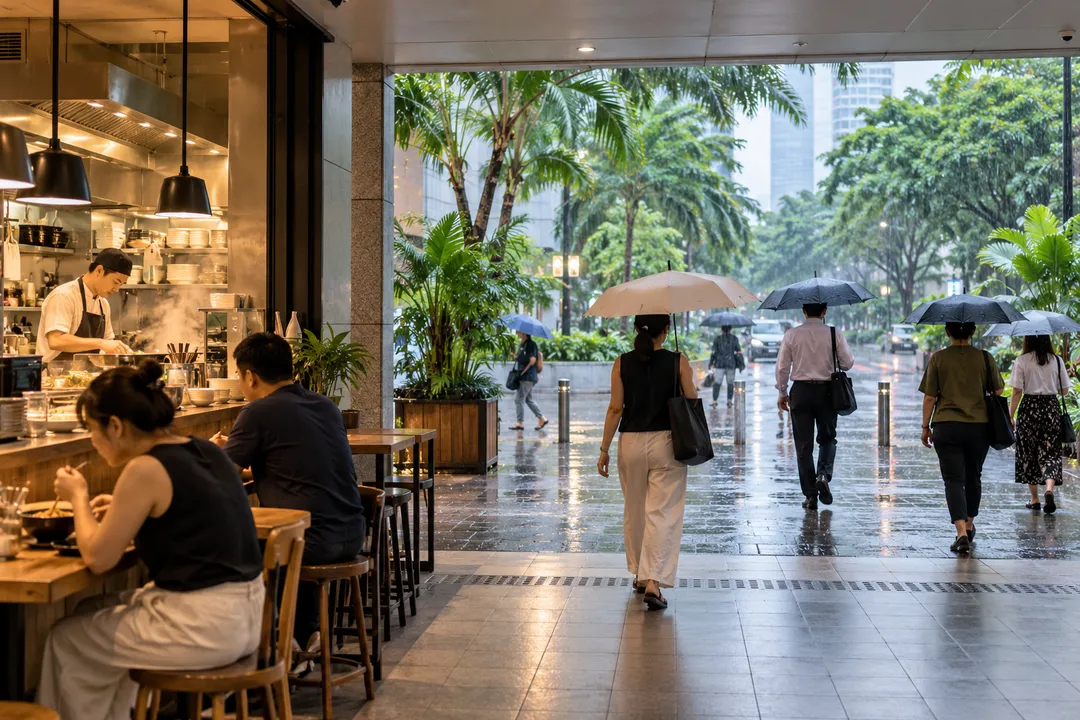
Singapore Dinner Shortlist Builder: Fit Meals Between Plans
A Singapore dinner between appointments needs a departure deadline. Work backward from the next stop and compare meal formats before adding a detour.
You have finished one appointment, another is already in the calendar, and dinner has to occupy the space between them. The nearest attractive restaurant may still send you in the wrong direction or require a meal longer than the gap allows. Use a dinner shortlist builder to frame a Singapore meal around the next commitment. In Karpo APP, describe both ends of the journey and the time you need to leave the table. That gives a discovery request a practical shape before food preferences enter the conversation.
Begin at the door of the next appointment
Imagine an evening with an early appointment near Dhoby Ghaut and a later commitment around City Hall. These are hypothetical planning locations, not a claim about a particular event or travel duration. Your destination is the entrance where you must arrive, rather than a broad district name. If the appointment includes collecting something, meeting a friend or finding a particular room, that takes place after reaching the area. Leave space for it instead of treating arrival at the nearest station as the end of the journey.
Write down the fixed arrival requirement and work backward. Separate the time needed to leave the restaurant, travel onward and settle at the destination. Those are planning blocks you supply, not an assurance that traffic or service will follow a forecast. The calculation gives you a latest sensible departure from dinner. A candidate that cannot plausibly accommodate that departure should leave the shortlist, however appealing its menu looks. The existing commitment defines the boundary of this meal.
Decide which kind of dinner belongs in the gap
Different meal formats make different demands on your evening. An individual bowl can be easier to structure around a short break than an elaborate sequence of shared dishes. That is a planning preference, not a guarantee of how quickly any kitchen serves. Choose the format you would be content to eat even if you have to keep the evening simple. If you are hungry enough to need a substantial meal, do not pretend a snack solves the problem merely because it fits the calendar neatly.
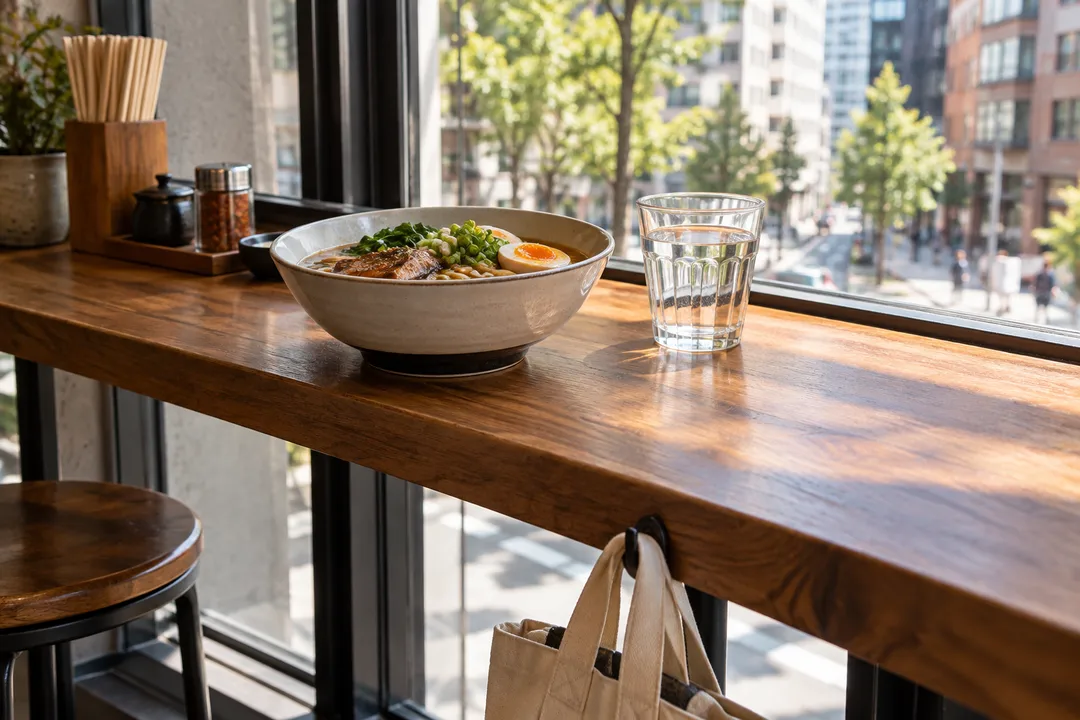
Think about transitions inside the meal as well. Being seated, placing an order, receiving food and paying are separate steps. A published opening time does not tell you how long those steps will take. A restaurant recommendation cannot establish the length of a queue at the moment you reach it. Use the shortlist to choose a suitable type of stop, then make your own decision about whether the actual situation fits the available time. The schedule should leave room for ordinary uncertainty.
Draw a corridor rather than a perfect midpoint
A geometric midpoint between appointments can be inconvenient if reaching it adds extra changes of direction. Consider the journey you would make without dinner, then look for a meal along that path or close to the second destination. In the hypothetical Dhoby Ghaut to City Hall example, you can ask for ideas around the relevant areas without asserting a specific route or number of minutes. State whether you intend to walk, take public transport or use another mode so that the request reflects the way you plan to travel.
A corridor also needs a practical final approach. In a Singapore evening, you may prefer a sheltered stretch, an indoor dining room or a location that reduces walking with bags. Describe the preference without claiming a particular walkway is continuous or a specific entrance has step-free access. An unanswered access detail remains unanswered until you have suitable evidence. Carrying a laptop, a change of clothes or something fragile can make a seemingly minor detour less appealing, so include the inconvenience that actually matters to you.
Put the time boundary into the first message
You could ask: I need dinner between two appointments in Singapore, starting near Dhoby Ghaut and finishing near City Hall. I want a simple individual meal and need to leave the table early enough for my second commitment. Please suggest a few places along that general route and explain any detour. Add your actual times privately when adapting the message. This wording requests help with discovery and comparison. It does not claim that Karpo reads your calendar or continuously tracks your journey.
Provide the constraints in order of importance. The second appointment may be fixed, the meal area flexible and the cuisine open. Alternatively, a dietary requirement may eliminate several otherwise convenient formats. If you want to spend most of the gap seated rather than walking, say so. Avoid sending only two place names and expecting the rest of your evening to be understood. A clear request gives you a better basis for judging whether a suggestion addresses the problem you actually brought.
Use two clocks when comparing candidates
The first clock concerns the whole journey, including the detour to eat and the onward trip. The second concerns the time you hope to spend at the table. A restaurant near the first appointment can appear convenient while leaving most of the travel until after the meal. Eating near the second stop may feel calmer because the remaining journey is simpler. Compare those arrangements explicitly. Neither is always preferable, and you can choose based on how much uncertainty you want after paying.
Attach a reason to every candidate: minimal detour, close to the final destination, or a meal format that suits a shorter break. Then list any missing information that could change the choice. Do not create a precise timetable from assumptions about service speed. A neat sequence of invented minutes looks authoritative but gives you little protection from a slow meal. A looser plan with a clear departure rule is more honest and easier to act on when the evening changes.
Agree on a switch point before sitting down
Decide what would make you choose a simpler meal. It might be the first appointment ending later than planned or the restaurant having a queue you are unwilling to join. Make the decision while you still have alternatives. Once seated and expecting food, changing course becomes harder. A switch point is a personal planning rule, not a prediction about restaurant operations. Its purpose is to stop an already shortened dinner break from absorbing the commitment that follows it.
If a friend is joining for the meal, share the departure boundary before agreeing on the restaurant. They may have imagined a leisurely catch-up, while you are treating dinner as a pause between commitments. A direct explanation lets them decide whether that version of the evening suits them. You can keep the conversation relaxed without pretending time is unlimited. Consider arranging a longer meal another day if the social part matters more than squeezing a table into the available gap.
Keep the final message usable on the move
Your chosen plan should fit into a few lines: restaurant, arrival intention, departure boundary and next destination. A fallback can describe a simpler meal format rather than an unresearched second restaurant. Keep the detailed comparison out of the message you will need while moving between places. The useful information is the next action and the condition that would change it. A reservation, if you make one, is a separate arrangement with its own terms rather than an automatic consequence of receiving a suggestion.
When the meal ends, judge the plan by whether it fed you and left the next commitment manageable. The most memorable restaurant is not necessarily the right answer for this particular gap. Bring the route, meal format and departure boundary to your next Karpo APP conversation, adjusting what did not work. A Singapore dinner shortlist builder can begin with appetite, but on a tightly arranged evening it should be guided by the shape of the journey and the time that belongs to something else.
Ask Karpo for more information.
Keep reading
- Kovan Hainanese Curry Rice Lunch Picker: Heartland Plates
 Tampines Mee Rebus Breakfast Picker: Round Market Bowls
 Jurong West Mee Rebus Breakfast Picker: Boon Lay Bowls