 Kovan Hainanese Curry Rice Lunch Picker: Heartland Plates
Restaurants
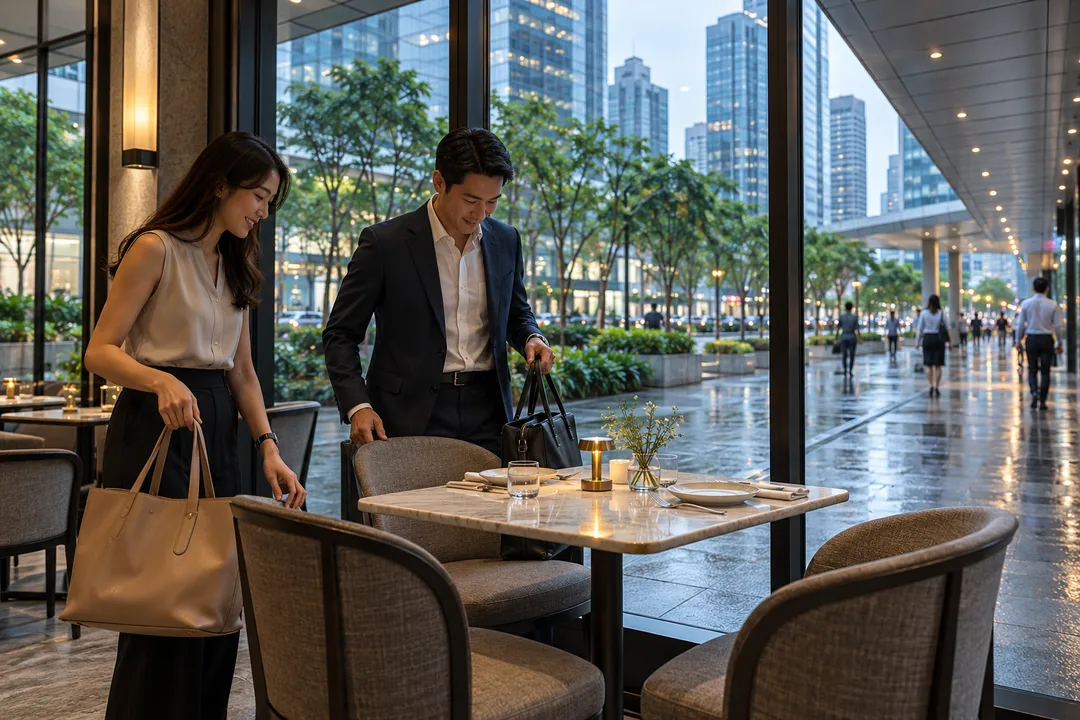
Orchard Dinner Reservation Finder: Eat After Work for Two
Arrange an Orchard dinner after work by setting a realistic arrival window, a meal length, and a meeting point before completing the restaurant booking.
An Orchard dinner after work needs an arrival plan that survives the end of the working day. Begin a dinner reservation finder request with when each person can actually leave, rather than the hour you wish you were already eating. In Karpo APP, describe the mood you want and the schedule you need to work around. The public product introduction offers those as ways to start a plan. Use that conversation to frame your dinner search, then go to the chosen restaurant's booking page for the offered time and the reservation itself.
Calculate arrival from the slower office
Two colleagues can finish at the same nominal hour and still reach Orchard at quite different times. Think about the last meeting, collecting belongings, getting to transport, and walking from the arrival point. Build the invitation around the later realistic arrival if eating together matters. Do not reserve early and quietly assume the other person can hurry. A dinner that starts with one diner apologising from a train is a poor solution to a simple scheduling problem. Agree on an arrival window that gives both people a reasonable chance of beginning the evening comfortably.
Ask for the right kind of weeknight
Try a request such as: "Dinner ideas around Orchard for two after work on Wednesday. We want a seated meal and time to catch up, but neither of us wants a long evening. One person is coming from an office later than the other. Prioritise a simple meeting location and individual ordering." These details explain what success means. You can add a preferred cuisine, but do not let that preference conceal the timing issue. A beautiful meal that only works before one person finishes work is not a usable recommendation for this particular night.
Keep the handover from work short
Choose whether to meet at the restaurant or at one precise point nearby. Meeting directly can spare the earlier arrival a second journey. Meeting elsewhere can be useful when one person does not know the area, provided the point is unambiguous. Orchard Road is a search area, not an exact destination. A mall name without the restaurant's floor or entrance details may still leave two people in different places. Once the booking is made, send the venue's own location information so everyone is following the same destination rather than an approximate map pin.
Decide whether dinner has a finish time
A shorter meal can still feel relaxed when its limits are understood. Say if someone has an evening call, an early morning, or another responsibility after dinner. Compare service formats with that limit in mind. A sequence of courses can be appealing on another occasion but unsuitable when you have a firm departure. Do not ask the kitchen to compress an experience whose structure you already knew. Choose a format that matches your available time, and tell the restaurant about a hard deadline if it affects whether the offered meal is practical.
Separate the restaurant from the reservation offer
A single venue can present several choices during booking. The reservation you select might specify a room, a counter, a set menu, or an experience with payment attached. Read that offer rather than assuming every time slot means the same dinner. If you expected separate dishes, a mandatory shared menu changes the decision. If you need ordinary chairs, a high counter may be unsuitable. Resolve those differences before proceeding. The purpose of a shortlist is to help you reach a workable choice, not to make the first available booking button look like an automatic answer.
Use the menu to remove one uncertainty
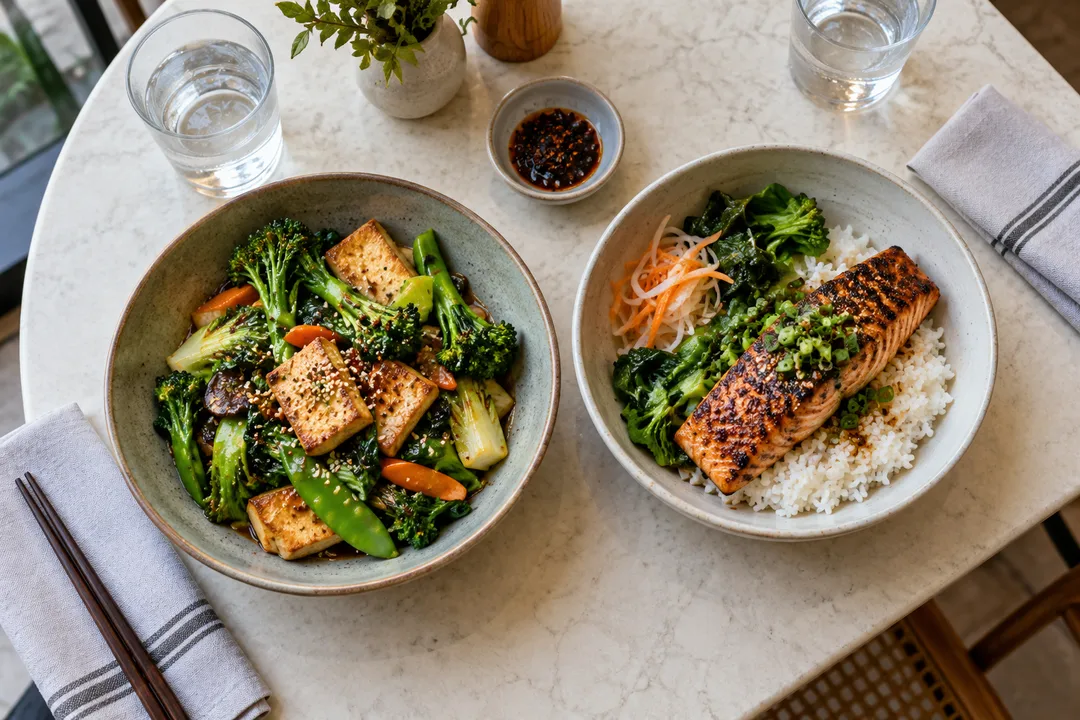
On a weeknight, agreeing on the type of ordering can be more useful than debating every possible cuisine. Decide whether you want separate mains, a few shared dishes, or a meal built around one person's dietary requirements. Consult the restaurant's current menu for what it actually serves. Treat a spending target written in your request as your own limit, not a quotation. If an allergy is involved, communicate it through the venue's stated contact process. A planning suggestion does not establish whether a kitchen can handle a specific preparation requirement.
Rain changes the last part of the journey
If you want to minimise outdoor walking, include that preference when describing the dinner. Then examine the route to the actual restaurant rather than assuming every Orchard destination has the same sheltered access. A short distance on a map can still include an inconvenient crossing or an exposed final section. Share whichever entrance the venue identifies for diners. This is also a good moment to consider luggage, work equipment, or shoes that make a long walk uncomfortable. Practical arrival conditions deserve a place in the decision before the table is reserved.
Make lateness a decision rather than a guess
Decide who will contact the restaurant if work runs over. Use the reservation's own instructions for changing the time or reporting a delay. Do not create a second booking elsewhere while leaving the first one active as insurance. That produces two obligations and makes the evening harder to manage. If the delay means the meal no longer fits, act through the original booking channel and agree on a simpler alternative. The earlier diner should know whether to wait, order, or leave instead of repeatedly receiving messages that the other person is almost there.
Keep a fallback that respects tomorrow
Choose the smallest acceptable adjustment in advance. For this dinner it might be a later arrival with a simpler menu, another day, or a different restaurant within the same area. Avoid solving an unavailable table by adding a lengthy journey across Singapore when both people wanted an uncomplicated weeknight. Skip the extra destination if it would turn dinner into another scheduling exercise. A sensible fallback protects the reason you arranged the catch-up: a meal together after work, with enough energy left to enjoy the conversation and get home at a reasonable point.
Orchard can stay the whole evening
You do not need to attach shopping, drinks, and a second meal to a dinner simply because the area offers many things to do. Let any walk along Orchard Road or toward Emerald Hill depend on the weather and how everyone feels after eating. If one person wants to leave, the reservation has still done its job. Keep optional activities outside the essential booking so the dinner does not become dependent on several more timetables. A compact plan is particularly useful when you have already spent the day moving between meetings and commitments.
Practical Notes
Before closing the planning conversation, send one message that answers five questions: where to meet, which day, what time the table is booked, which dining offer was selected, and who manages changes. Keep the restaurant or booking provider's acceptance available for the person holding the reservation. Use Karpo APP for a request organised around your schedule and preferred mood, then make the final selection with the venue's own details. Images on this page are newly generated illustrations of an after-work dining scenario. They are not photographs of a specific Orchard restaurant or proof of a particular table arrangement.
Ask Karpo for more information.
Keep reading
- Kovan Hainanese Curry Rice Lunch Picker: Heartland Plates
 Tampines Mee Rebus Breakfast Picker: Round Market Bowls
 Jurong West Mee Rebus Breakfast Picker: Boon Lay Bowls