 Kovan Hainanese Curry Rice Lunch Picker: Heartland Plates
Restaurants
Little India Dinner Reservation Finder: A Meat-Free Meal
Plan a vegetarian dinner in Little India by naming each diner's requirements, comparing the ordering format, and reserving the meal that fits your group.
A vegetarian dinner in Little India should begin with the requirements of the people eating, not an assumption about the neighbourhood. Use a dinner reservation finder to organise those requirements alongside your date, party size, and preferred way of ordering. Karpo APP offers mood and schedule as starting points in its public introduction. Tell it what would make this particular meal work, then use the restaurant's own information for dishes, preparation questions, and the reservation. A useful dinner plan lets the vegetarian diner choose an enjoyable meal rather than merely locate something they can eat.
Ask the vegetarian diner to define the requirement
Vegetarian is a useful description, but it may not settle every ingredient question. Ask whether eggs, dairy, particular vegetables, or preparation methods matter to the person joining you. Avoid making them answer for an entire cuisine or justify their choices. If the meal is for a group, collect the essential requirements once and carry them into the search. A vague instruction such as "some vegetarian options" can produce a different result from a request for a restaurant where the whole table can eat a fully meat-free meal together with plenty of choice.
Choose between a shared meal and individual freedom
Consider whether everyone wants to order separately or whether the dinner is meant to be communal. A shared meal can be enjoyable when the dishes suit all diners, but it needs agreement about what is placed in the middle. If some guests intend to order meat, ask whether that is comfortable for the vegetarian members of the group. Do not leave the issue until the first shared plate arrives. Separate ordering may be the simplest answer for one party, while another may actively prefer an entirely vegetarian table. The right format comes from the diners' preferences.
Turn the requirements into an example request
Try: "Suggest directions for a vegetarian dinner in Singapore's Little India for four adults on Saturday. We want all the shared dishes to be meat-free. One diner avoids eggs and another wants milder food. We would like a seated meal with time to talk, and need to understand whether a table can be reserved." This is a planning example with a specific task. It does not establish that any restaurant meets those conditions or that a table is available. Add a budget preference if helpful, then compare it with actual menu information rather than treating the prompt as a price quotation.
Give the menu more attention than the label
A restaurant description is only the beginning of the food decision. Look at the dishes currently presented by the venue and whether they provide a satisfying choice for each diner. Someone who avoids eggs needs more than an assurance that the menu is broadly vegetarian. A diner who wants milder food needs an appropriate ordering conversation rather than a generic assumption about the cuisine. If the menu leaves an essential ingredient question unanswered, use the restaurant's stated contact route. Let the person with the requirement explain it directly where necessary, instead of relaying an incomplete version through several friends.
Keep an allergy separate from a preference
An allergy asks a preparation question that a general planning recommendation cannot answer. Communicate the specific ingredient and any relevant cross-contact concern to the venue. Do not rely on a dish name, a photograph, or a vegetarian label as a safety guarantee. If the restaurant cannot accommodate the requirement, choose another meal arrangement. The diner should not be pressured to accept uncertainty because everyone else likes the location. Establishing suitability before the reservation is a practical part of organising dinner, just as important as agreeing on the date or finding enough seats for the group.
Understand how the food is ordered
Read how the chosen restaurant describes its service. Individual dishes, a set meal, and a selection of food to share create different experiences. If a reservation is attached to a particular menu, decide whether everyone wants that format before accepting it. Ask about a requirement that the whole party choose the same arrangement rather than assuming an exception is automatic. A photograph of several bowls does not tell you whether each is sold separately or included together. Use the venue's menu description to understand what you are choosing, without extrapolating from how another restaurant serves similar-looking food.
Put appetite into the conversation
A group of four can have four different ideas of a sufficient dinner. Ask who wants a full meal and who prefers something smaller. This is especially useful when you are deciding between sharing and individual ordering. Agree on how additional dishes will be chosen so nobody keeps ordering on everyone else's behalf. If you are trying unfamiliar food, let diners ask questions without making the meal a test of expertise. An enjoyable vegetarian dinner can be exploratory or familiar. It does not need to be a large spread simply because the group has found many appealing dishes on the menu.
Use Little India to focus the geography
Serangoon Road and the Tekka area can orient a neighbourhood-based request. They do not replace the address or location details of the restaurant you eventually select. Examine where that venue sits relative to how your party will arrive. If someone needs a shorter walk, give that constraint the same weight as the menu. Decide on one meeting point instead of sending everyone to a broad district and improvising from there. An optional look around the surrounding streets belongs in the flexible part of the evening, while arriving for the accepted reservation remains the fixed commitment.
Find out whether this meal takes bookings
A food recommendation does not itself establish a reservation service. Use the venue's own website or stated contact method to learn whether it accepts table bookings for your intended meal. If it does, enter the real guest count and date and select the dining format you agreed on. Read any payment or cancellation conditions associated with that selection. If the venue operates through walk-in dining instead, tell the group that clearly. Do not describe a plan to arrive as a secured reservation. The distinction matters when people are travelling specifically to eat together at a chosen time.
Change the candidate before compromising an essential need
When the favourite restaurant does not fit, decide what is flexible. You might change the arrival, the part of the district, or the style of ordering. An essential dietary requirement should not become the first compromise simply because a booking is convenient. Skip the impressive shared menu if one diner would be left with a token substitute. A smaller, well-suited choice is a better result than an elaborate meal that excludes someone. If no suitable reservation exists within the agreed conditions, adjust the plan openly with the group rather than presenting a misleadingly complete solution.
Practical Notes
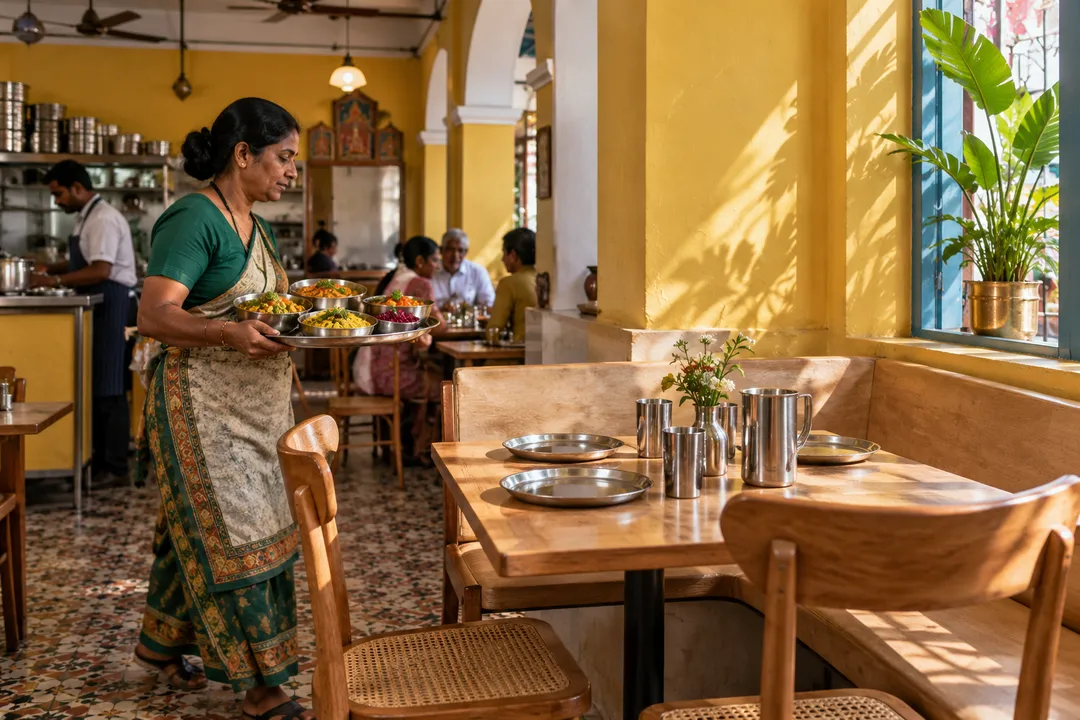
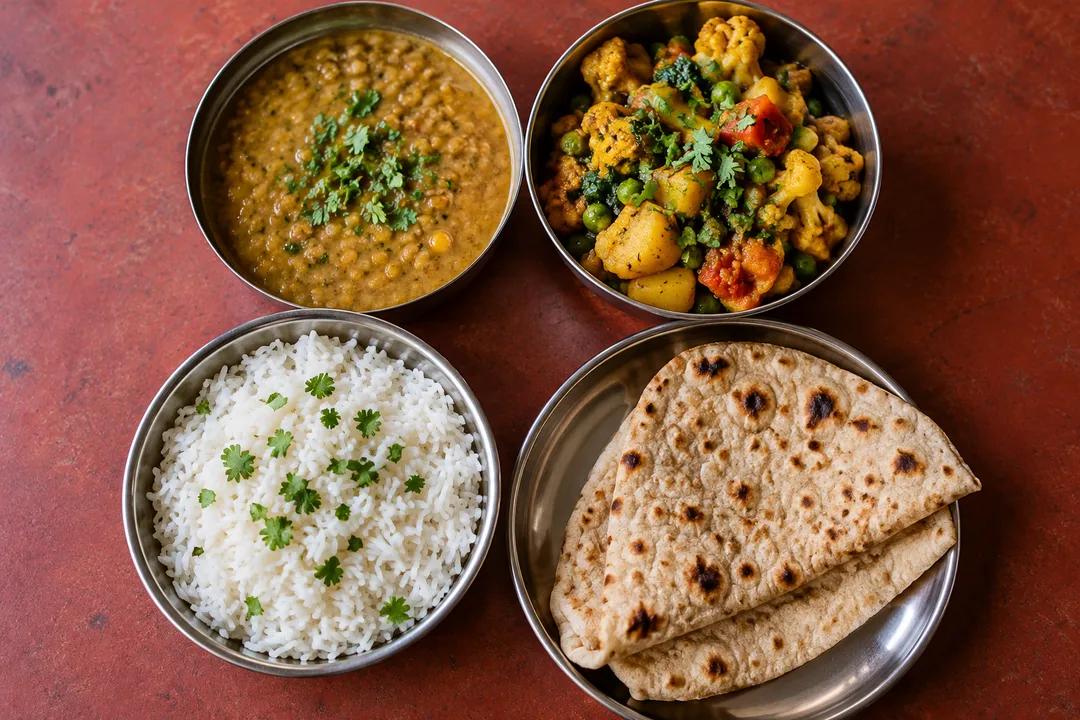
End with a clear record of the chosen venue, location, date, guest count, arrival, and whether a reservation has been accepted. Keep any dietary arrangement the restaurant agreed to alongside the booking, with the responsible contact easy to find. Use Karpo APP to express the kind of vegetarian evening you want, and use the venue's own menu and communication for the particular meal. The newly generated photographs illustrate generic vegetarian dining. They do not identify a real Little India restaurant, demonstrate ingredient suitability, or establish that the pictured food is available from a named business.
Ask Karpo for more information.
Keep reading
- Kovan Hainanese Curry Rice Lunch Picker: Heartland Plates
 Tampines Mee Rebus Breakfast Picker: Round Market Bowls
 Jurong West Mee Rebus Breakfast Picker: Boon Lay Bowls