 Tampines Board Game Cafe Night Picker for School Holidays
Bars & Nights Out

Singapore Date Night Plan Builder for Two Interests
Give each person something to anticipate without turning a shared night into two separate outings joined by a commute.
Two people can look forward to the same date for different reasons. One wants to make something with their hands, while the other wants a good meal and time to talk. A Singapore date night plan builder brief can start with that difference instead of asking for a generic romantic outing. Name what each person hopes to feel, find one experience both are willing to share, and give the rest of the evening a clear supporting role.
Translate interests into the pleasure behind them
An interest is not always a request for a particular venue. “I want art” might mean seeing something visually surprising, learning a technique or having a reason to wander slowly. “I want food” could mean trying a new flavour, enjoying a familiar comfort or sitting over a leisurely meal. Ask one more question about each preference before turning it into a location. The answer often reveals a shared quality even when the activities sound unrelated.
Write each person's priority in their own words. Avoid translating an enthusiasm into a weaker substitute just because it is easier to combine with yours. Someone who wants a hands on activity may not find a quick look at a shop satisfying. Someone who wants conversation may not get it while following complicated instructions. Respecting the original wish gives you a fair basis for choosing what to include, shorten or postpone.
Find a shared anchor rather than splitting the night
Choose one central experience that both people actively accept. This is different from scheduling your favourite thing and then theirs with a long transfer in between. A shared anchor gives the evening a centre: a meal you are both curious about, an activity neither has tried or a setting that encourages the kind of conversation you enjoy. The anchor does not need to represent both interests equally in every minute.
Imagine a couple whose preferences are making things and discovering food. A possible plan might pair a participatory session with a nearby meal, giving the finished object a place in their dinner conversation. That is an illustrative arrangement, not a named workshop offer or a claim about a restaurant's location. Its usefulness comes from the connection between stages. They would be sharing a topic rather than simply handing the evening back and forth.

Separate willingness from expertise
Ask whether each person is willing to participate, not whether they are already good at the activity. A beginner can enjoy learning alongside someone more experienced when the expectations are comfortable. Problems arise when the experienced person expects a performance or takes over the task. Choose an appropriate level and agree that the purpose is spending time together. Do not make one person's competence the measure of whether the date was worth planning.
The same applies to food. An adventurous eater can invite curiosity without ordering unfamiliar dishes for a reluctant partner. Leave room for an independently chosen plate, and discuss any sharing expectations before the meal. One person's favourite format should not remove the other's choice. This is a practical constraint for the planning brief: describe how you want to order and participate, rather than assuming that a venue's atmosphere will solve the difference for you.
Describe both voices in your request
In Karpo APP, frame the search as a shared problem with two sets of preferences. You could write: “We are planning a Singapore date. One of us wants a creative activity, and the other most values a good meal with conversation. Help us explore an evening with one shared anchor and a supporting stop in the same area. We are beginners at the activity, want modest travel and do not want the whole night scheduled minute by minute.” The request asks for suggestions without promising a specialised matching system.
Add a short veto list that both people have approved. A veto should describe something you cannot comfortably do, such as standing for a long time, eating a particular ingredient or joining a public performance. Avoid using it as a hidden way to remove the other person's interest. “No activities” cancels a creative brief, while “No requirement to perform in front of an audience” leaves several possible formats. Useful constraints narrow the search without predetermining the answer.
Compare contribution instead of counting minutes
Equal time is not the only way to make an evening fair. A short experience can matter deeply to someone, while a longer meal may feel easy and shared. Ask each person which feature gives them a reason to anticipate the date. If one cannot name anything, the plan needs revision even if the schedule appears evenly divided. The goal is meaningful participation, not an exact balance of time spent on two separate wish lists.
Consider the effort surrounding the activity too. Travel, clothing, advance preparation and physical energy belong to the experience. A short session with a demanding journey may be a larger ask than a relaxed meal nearby. If one person is making most of the adjustment, acknowledge it and simplify another part of the date. Fairness becomes easier to discuss when you name the actual inconvenience rather than arguing about which interest is more important.
Give each person one useful decision
Avoid asking one partner to plan everything and the other to approve the finished itinerary. Instead, divide the remaining choices in a way that reflects interest and effort. The person excited about the activity could compare suitable formats, while the person anticipating dinner could choose among food options near the agreed anchor. Both should still understand the whole outline. A division of research is helpful only if it does not conceal a commitment from the other person.
Bring the choices back together before spending money. If an activity fixes the start time, let that shape the meal rather than treating both as independent appointments. If dinner is the main event, choose a supporting experience that fits around it. Use the relevant operator's purchase process when you decide to book. A shortlist or suggested pairing does not itself establish entry, a seat or any transaction completed on your behalf.
Practical notes for keeping the date shared
Include a moment with no task to complete. After learning, tasting or looking closely, you may want a few minutes simply to sit and hear what the other person noticed. This does not need to become another stop. A little unscheduled space lets the activity enter your conversation rather than ending as soon as you leave it. It also gives you room to discover that the most enjoyable part was different for each of you.
Finish the planning with a sentence both people recognise: “We are doing this together because you want this and I want that.” If the sentence sounds like two unrelated trips, simplify the outline until the connection is clear. Then take those priorities into your next Karpo APP conversation. A good shared evening need not erase your different tastes. It gives those tastes a meeting point and leaves each person able to say they helped choose the night.
Ask Karpo for more information.
Keep reading
- Tampines Board Game Cafe Night Picker for School Holidays
 Dhoby Ghaut Board Game Cafe Night Picker for a Second Date
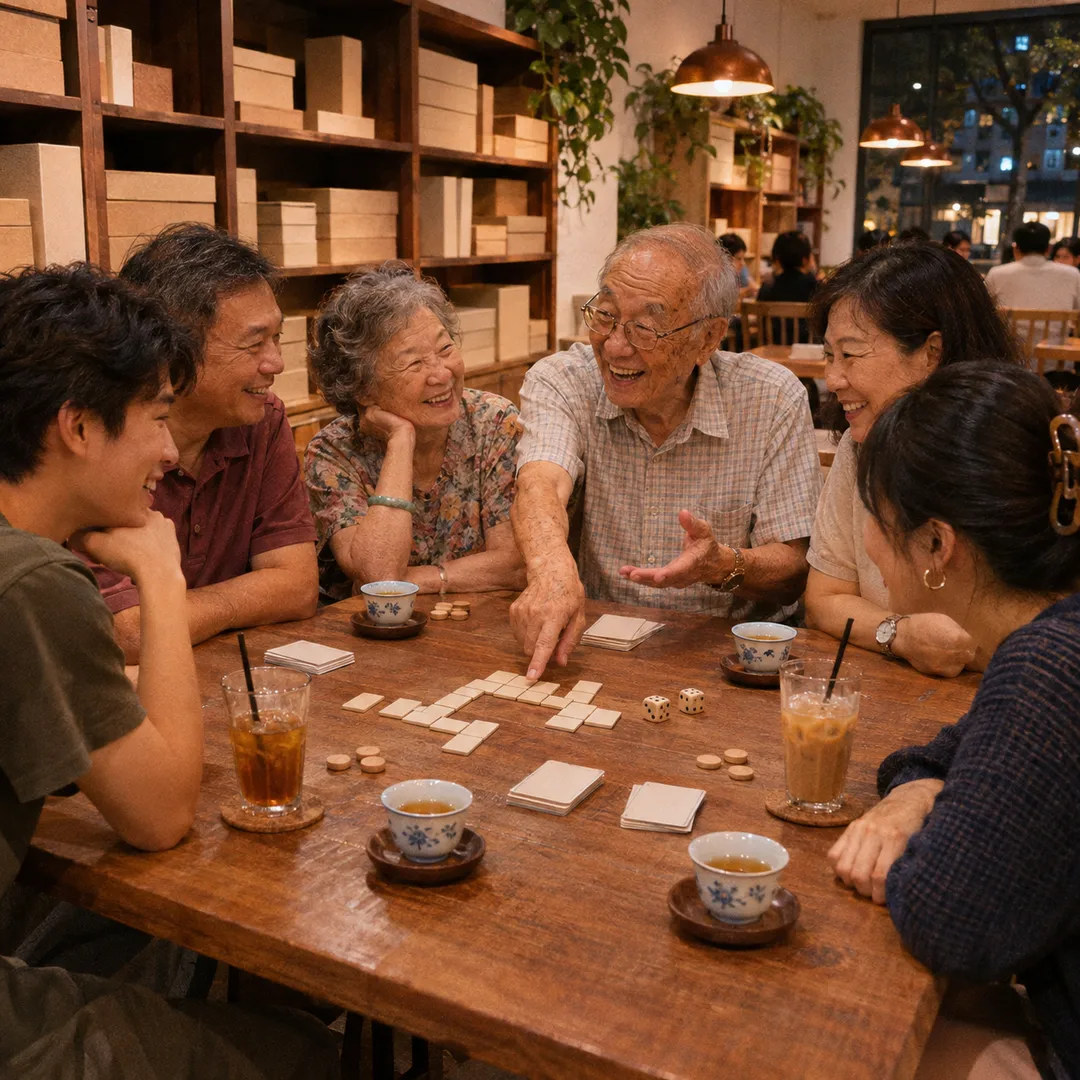 Chinatown Board Game Cafe Night Picker for Three Generations