 Tampines Board Game Cafe Night Picker for School Holidays
Bars & Nights Out

Singapore Date Night Plan Builder: Quiet or Lively Tonight
Compare two evenings with the same budget and finish time, then choose the kind of attention you want to give each other.
A Singapore date night can feel wrong even when the food is good: one person wants an uninterrupted conversation and the other wants the evening to gather momentum. Use a date night plan builder brief to compare those experiences before choosing a place. Start with the kind of attention you want to give each other, then add the district, spending limit and finish time. The useful result is a choice between two coherent evenings, with a reason to prefer one.
Name the sound level you actually want
Quiet means different things to different couples. You might want to hear every sentence without leaning forward, sit somewhere without a performance, or avoid a crowded entrance. Describe the observable feature instead of asking for somewhere romantic. A corner table can feel intimate and still sit beside a speaker. An outdoor seat can feel relaxed but put conversation next to passing traffic. Your brief should say which interruption would bother you most.
For the energetic version, identify the source of energy you enjoy. Background music, a shared activity and a room full of conversation produce different dates. Someone who dislikes dancing might love watching a skilled performer. Someone who enjoys a lively crowd may still want dinner to be calm. Separate the atmosphere during the main meal from the atmosphere afterward so a request for excitement does not turn every stage into a loud room.
Hold everything else steady for a fair comparison
Give both versions the same practical boundaries. If the meeting point is Tanjong Pagar, use that as an input for both drafts rather than comparing a nearby dinner with a distant excursion. State how much travel you are willing to do after meeting. The point is not to declare one neighbourhood universally better for dates. It is to stop the energetic option from quietly acquiring a longer journey, a later finish and a higher total cost.
Choose an overall spending ceiling together and say whether it covers transport and the optional final stop. You can describe that limit in your request without treating it as a venue price. If one version requires admission and another needs only a meal, compare the whole evening rather than the headline activity. Keep a little of your own budget unassigned so choosing dessert later feels like a shared decision instead of an accounting problem.

Write the request as two distinct evenings
Open Karpo APP and use its conversational discovery approach to describe your preferences. A useful example request is: “We are meeting in Singapore after work near Tanjong Pagar. Suggest a conversation focused date and a more energetic alternative within the same area. Dinner matters in both. Avoid clubbing, keep walking modest, and explain the tradeoff rather than listing lots of places.” These are instructions for a shortlist, not claims about a specific business or a guaranteed service.
Add the preference that could reverse the recommendation. Perhaps neither of you wants a scheduled performance, or perhaps the main attraction is having something to talk about while doing it. Ask for a compact explanation of why each proposed stop belongs in its version. A list of unrelated venues leaves the hardest work with you. A proposed sequence should connect the meal, the change of pace and the ending through the preferences you supplied.
Judge the quiet proposal by conversation friction
Read a quiet suggestion as though you have just arrived tired. Is the meeting point easy to describe? Does the plan let both people settle before introducing another decision? Would the second stop force you to interrupt a good conversation and travel? A quieter date often benefits from giving one comfortable setting enough time. The planning test is whether moving adds something you both want, rather than merely making the itinerary look more substantial.
Avoid confusing quiet with formal. A dress expectation, a lengthy meal format or an expensive commitment could make a gentle evening feel demanding. Tell your partner what matters about the option: “I like that we can talk without rushing” is more useful than “This looks fancy.” If either person needs a short evening, make that a positive feature of the choice. A clear finish can remove the pressure to keep buying another round or finding another stop.
Judge the lively proposal by participation
For an animated evening, ask how much participation the activity expects. Listening, watching, playing and performing are different levels of exposure. Do not surprise a reluctant partner with being put on a stage or competing in front of strangers. The proposed plan should fit both people when they are ordinary versions of themselves after work. An activity that needs one person to become unusually outgoing is a risky foundation for the evening.
Look at where conversation happens within the sequence. A lively central activity can be enjoyable when there is space to talk before or after it. If every stop competes for attention, you may finish with plenty of stimulation and little connection. Ask for a calmer landing after the active section rather than stacking another high energy venue onto it. That change makes the night feel intentional without forcing the two versions to become identical.
Choose together without presenting a sales pitch
Share the two concepts in plain language before sending a long list of links. One might be dinner with room to linger, followed by an optional short walk. The other might be a simpler meal followed by an activity, with a seated finish if you still feel sociable. Describe these as proposed shapes for the date. Venue details and entry conditions belong to the specific options you eventually select, not to the illustrative outline.
Ask each person to name the feature they would regret losing. If both choose conversation, the quieter version has a strong case. If one wants novelty and the other wants a familiar start, keep dinner comfortable and place the novelty later. You do not need to average your preferences into an evening neither person likes. Preserve the shared priority, then make the other feature optional or smaller so it does not take over.
Practical notes for committing to one version
Before making a purchase, distinguish a recommendation from an actual arrangement. A proposed restaurant is not a reserved table, and an activity appearing in a plan is not evidence of admission. Use the selected operator's booking or ticket process for any commitment. Keep the terms that matter to you with that purchase. The conversational plan is useful for deciding what to pursue, while the operator supplies the conditions for the thing you buy.
End your planning conversation with one sentence you can both remember: where to meet, the main experience and when you intend to head home. Keep the alternative available as an idea, not as a second itinerary you are obliged to complete. In Karpo APP, lead with the quiet versus lively choice and the constraint you share most strongly. That gives your next request a clear purpose and makes the resulting suggestions easier to accept, reject or refine together.
Ask Karpo for more information.
Keep reading
- Tampines Board Game Cafe Night Picker for School Holidays
 Dhoby Ghaut Board Game Cafe Night Picker for a Second Date
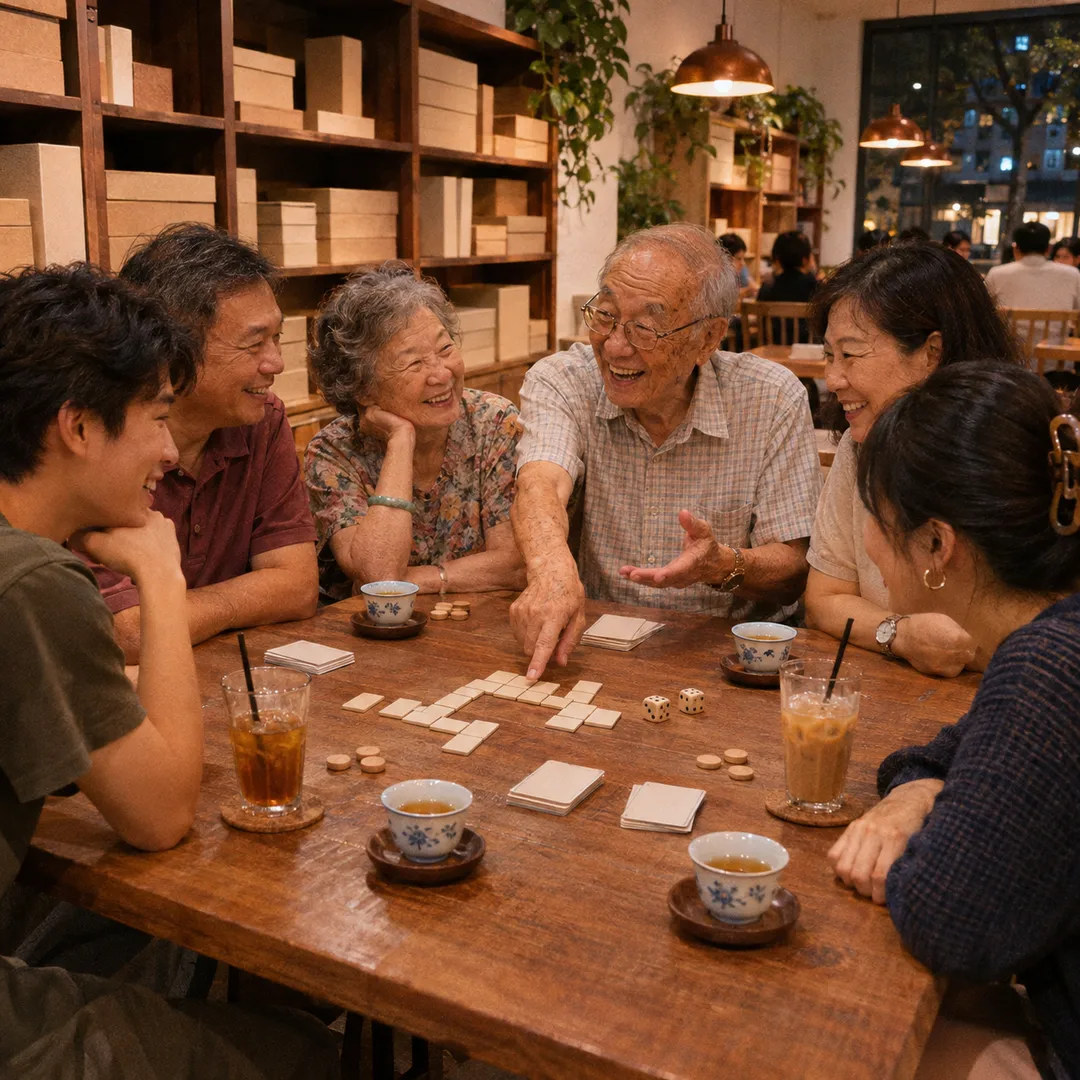 Chinatown Board Game Cafe Night Picker for Three Generations