 Kovan Hainanese Curry Rice Lunch Picker: Heartland Plates
Restaurants
Geylang Serai Curry Puff Snack Crawl: Afternoon Epok-Epok
Plan a Geylang Serai curry puff snack crawl through the heritage market and Changi Road stalls. Taste hand-pleated epok-epok kentang and sardine crescents.
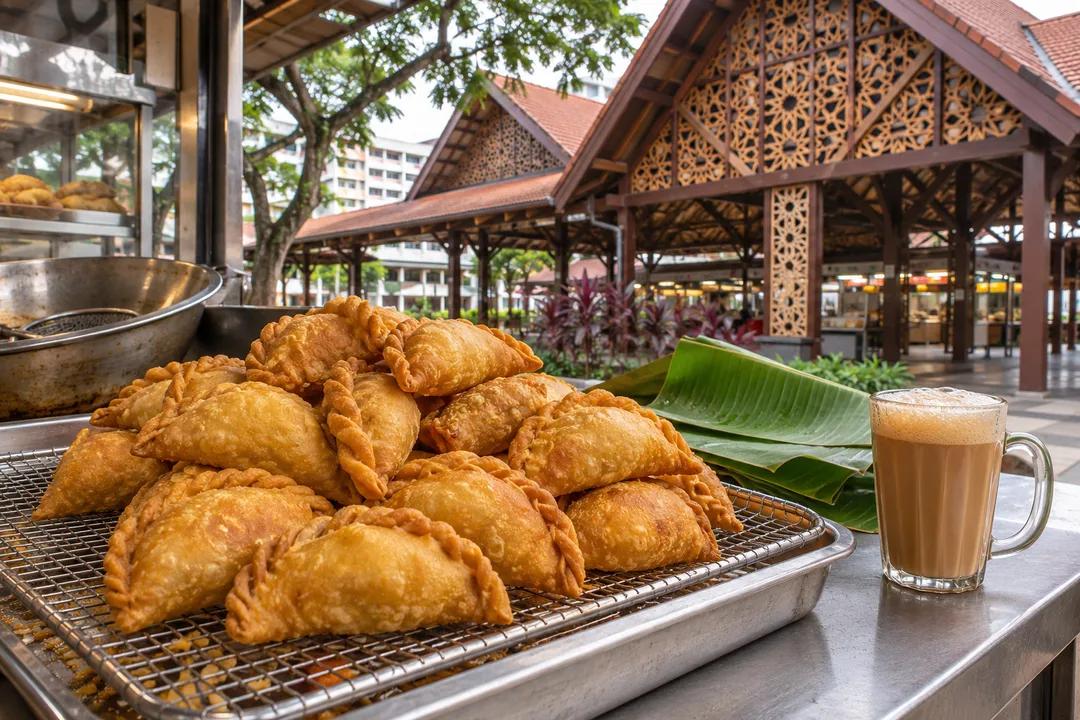
A batik textile merchant and her two visiting cousins from Kuala Lumpur start their Geylang Serai curry puff snack crawl beneath the high timber-inspired eaves of the neighborhood market just as afternoon frying hits its stride. Unlike the thick, flaky spiral puffs found in central estates, Geylang Serai is the heartland of traditional Malay epok-epok—petite, half-moon pastries wrapped in a thin, elastic dough that blisters into crisp bubbles the moment it meets hot oil. Moving between the ground-floor wet market perimeter, the upstairs food gallery, and the bustling shophouse aprons along Changi Road lets you compare three distinct spice blends and crimping styles in a single afternoon.
Decoding Hand-Pleated Epok-Epok Kentang and Sardine Markings
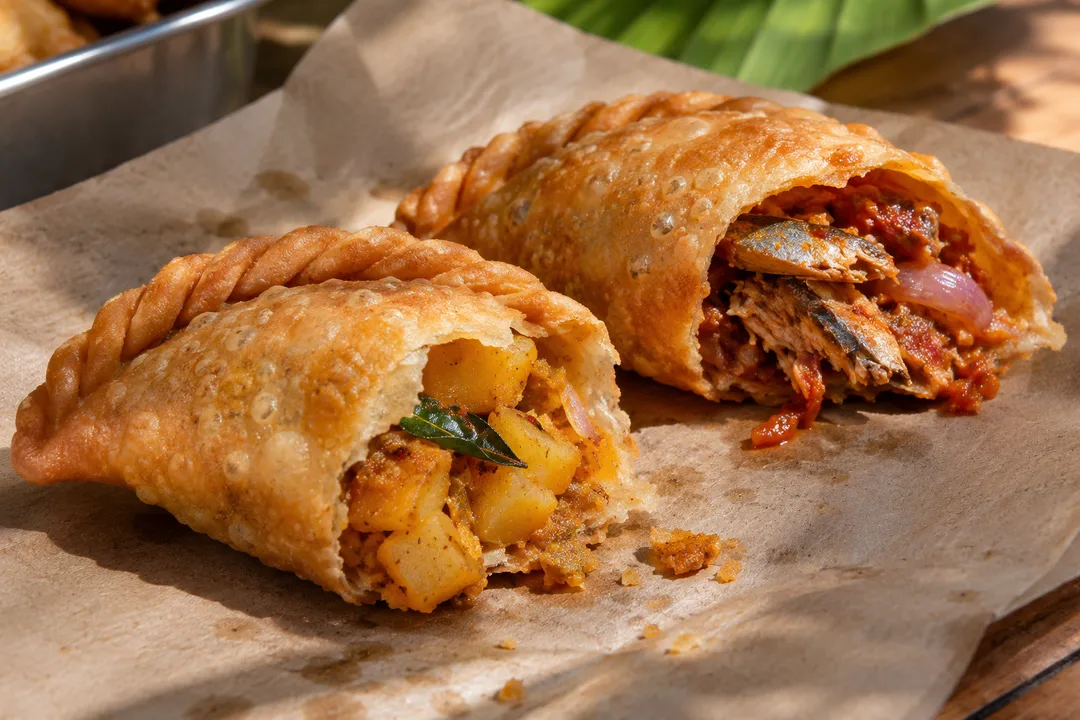
At the family-run fry tables lining the Geylang Serai market arcade, the dough is rolled remarkably thin so the aromatic rempah filling takes center stage. For classic epok-epok kentang, cooks sauté small potato dice with pounded shallots, garlic, candlenut, coriander, fennel, and whole curry leaves until the starches absorb every drop of spice paste before sealing the mixture inside a half-circle of dough. Watch the wrapper's hand-crimped border: a tight, rope-like twist called kelim not only keeps oil from seeping inside during frying, but also bakes into a crunchy ridge that regulars nibble first.
Ordering alongside the potato version is epok-epok sardin, where flaky mackerel is simmered down with sambal tumis, tamarind juice, and thin rings of purple shallot until tangy and rich. Because both fillings look identical once sealed, veteran stallholders use a visual code—either a dab of red food coloring on the belly, a sharper pointed corner, or a flatter double-pinch along the seam—to tell sardine apart from potato. The cousins always order two of each straight from the wire draining rack above the cauldron, comparing how the citrusy tamarind note in the fish filling contrasts with the earthy, peppery warmth of the potato cubes.
Changi Road Rendang Variations and the Paper-Blot Technique
Stepping across the pedestrian walkway toward the shophouse corners along Changi Road and Haig Road introduces heavier, contemporary fillings that expand the tasting route. Here, snack kiosks and Malay bakeries stuff flaky shortcrust and puff-pastry pockets with slow-braised beef rendang infused with toasted kerisik coconut, or black-pepper mutton minced with green peas. Because these meat fillings carry richer coconut milk and drippings than standard potato epok-epok, the pastry shells are rolled slightly thicker to support the weight without splitting in the fryer.
Because epok-epok are smaller and fried at high heat, managing temperature and surface oil is essential when eating on your feet. The textile merchant shows her cousins how to rest each hot crescent on a double sheet of unbleached brown paper for sixty seconds and gently tap the crimped seam before taking a bite. Biting straight into the center of a freshly pulled sardine puff releases a jet of scalding sambal steam; nipping the top corner of the rope crimp first vents the pocket safely while letting you test the crunch of the folded edge.
Comparing Crispy Blistered Skins Against Layered Kuih Trays
Part of the joy of an afternoon walk through Geylang Serai is noticing how each stall balances oil temperature and dough hydration. A true kampung-style epok-epok skin is mixed with warm butter or palm oil and kneaded just until pliable, creating tiny pearlescent blisters across the golden surface when plunged into the wok. When you tap the center of the crescent with a wooden toothpick, the shell should sound hollow and crisp rather than soft or bread-like, giving way immediately to the steam-softened potato inside. Veteran cooks never crowd the fryer basket, turning each crescent once with long bamboo chopsticks so both sides brown evenly without absorbing heavy oil.
To pace the savory heat across four or five stops, locals often alternate a spicy sardine or mutton puff with a small square of pandan-scented kuih seri muka or a rolled dadar pancake stuffed with palm-sugar grated coconut from the neighboring tray. That brief touch of coconut sweetness cools the chili tingle on your tongue without filling your stomach, making it easy to evaluate the next stall's rempah spice balance with a fresh palate. Sharing a mixed paper tray across three people keeps every stop lively while leaving plenty of appetite for the final heritage bakery counters down the block.
What to Skip and How to Pair Drinks Across Humid Walkways
Skip pre-packed plastic clamshell boxes of five or six epok-epok stacked on the front counter if you see a live wok operating right behind the display. Sealed plastic traps moisture within minutes in Singapore's afternoon humidity, turning the signature blistered skin chewy and dulling the contrast between the thin belly and the crunchy kelim edge. If a stall has just sold out of hot sardine puffs, pivot two aisles down for a crispy vadai or a banana fritter while the cook drops the next basket of raw crescents into the oil.
For drinks, avoid overly syrupy rose cordial that clashes with savory sambal fish. Instead, pair the spiced potato and rendang puffs with a cup of freshly pulled teh halia—frothy milk tea infused with crushed old ginger—or an iced calamansi lime juice with sour plum to cut through the fried pastry oil. Checking the Karpo APP before leaving the market pavilion helps you plot shaded walkways, compare nearby halal snack windows along Joo Chiat Complex and Haig Road, and coordinate a smooth loop without crossing unshaded highway slip roads.
Weaving Through Wisma Geylang Serai and Pastel Joo Chiat Lanes
Once your brown paper bags are down to the final warm crescents, carry your snacks across the open plaza of Wisma Geylang Serai, where breezy terraced walkways and cultural exhibition galleries sit beneath sweeping modern roofs inspired by traditional Malay kampung stilts. The shaded outdoor amphitheater steps and garden benches provide plenty of elbow room to lay out a side-by-side tasting of potato, sardine, and beef-rendang puffs while watching neighborhood families gather in the late-afternoon breeze.
From the civic plaza, continue south down Joo Chiat Road and turn into Koon Seng Road, where rows of pastel-painted Peranakan terrace houses display ornate ceramic flower tiles, swinging pintuk pagar half-doors, and plaster relief pilasters. Finishing your curry puff snack crawl with a leisurely architectural stroll through these heritage lanes turns a simple afternoon teatime bite into a rich sensory journey through eastern Singapore's culinary and textile crossroads. By the time you reach the quiet side streets of Katong, you will know firsthand how hand-pleated epok-epok wrappers and slow-simmered rempah fillings define the neighborhood's afternoon snack rhythm.
Ask Karpo for more information.
Keep reading
- Kovan Hainanese Curry Rice Lunch Picker: Heartland Plates
 Tampines Mee Rebus Breakfast Picker: Round Market Bowls
 Jurong West Mee Rebus Breakfast Picker: Boon Lay Bowls