 Kovan Hainanese Curry Rice Lunch Picker: Heartland Plates
Restaurants

Joo Chiat Curry House Lunch Picker: Eurasian Devil Curry
Joo Chiat is the place to taste Eurasian devil curry and Peranakan family curries. Here is how to order for a shared table, manage spice and walk off lunch.
This Joo Chiat curry house lunch picker is built around one pot that many visitors never hear about: Eurasian devil curry. Joo Chiat and the streets around it were home to Eurasian and Peranakan families, and their kitchens produced curries that are richer, sharper and more personal than the ones you meet in a hawker centre. The best way to enjoy them is at a shared table, with several generations, a few spice levels and a long, slow lunch that ends with a walk past the painted terrace houses.
A Neighbourhood of Two Kitchens
Joo Chiat grew from plantation land into a suburb of terrace houses, and two communities shaped its tables. Eurasian families, with roots in Portuguese, Dutch and British ties to Asian communities, cooked dishes that blended European technique with local spice. Peranakan families, of Chinese and Malay heritage, built a cuisine of slow-cooked curries, pastes and tangy gravies.
Both kitchens were home kitchens first. Many recipes were passed from grandmother to granddaughter and changed a little in each household. That is why a curry lunch in Joo Chiat feels different. You are not just eating a dish, you are eating a family version of it.
What Makes Devil Curry Special
Devil curry, sometimes called curry debal, is the signature dish of Eurasian Christmas and Boxing Day, but many Eurasian cooks serve it all year. It uses leftover roast meats, sausages or chicken cooked down in a dark red gravy of dried chillies, mustard seed and vinegar. The vinegar gives it a sharp, sour bite that cuts through the richness.
It is spicy, but in a bright way rather than a heavy one. Ask how hot the kitchen makes it before you order. Some cooks keep a milder version for guests, and many will happily tell you the story of how their family recipe was handed down.
Peranakan Curries on the Same Table
Peranakan cooking gives you a very different kind of curry. Curry kapitan is a thick chicken curry rich with coconut, candlenut and lemongrass. Ayam buah keluak is a dark, earthy chicken stew made with black keluak nuts, which have to be soaked and prepared over several days. Assam dishes use tamarind for a sour, fresh gravy.
Putting a Peranakan curry beside a Eurasian devil curry is the most interesting way to eat here. One is creamy and fragrant, the other sharp and fiery. Tasting them side by side helps you understand how two families in the same street could cook such different food.
Ordering for a Shared Table
Curry lunches in Joo Chiat are best eaten family style. Order one curry per two or three people, then add a vegetable, a fried dish and plenty of rice. For a group of six, two curries, a sambal vegetable, a fish dish and a light soup is a balanced spread.
Place the curries in the middle and let everyone take a little at a time. Fresh rice arrives in a large bowl, and it is normal to ask for more. If someone at the table has never tried buah keluak, scoop a little of the nut paste onto their rice and let them decide. It is a strong flavour and people either love it or politely move on.
Handling Mixed Spice Levels
A family table usually has one person who loves chilli and one who avoids it. Pick at least one mild dish, such as a coconut curry or a braised dish without much heat, so everyone has something to enjoy. Keep sambal on the side rather than mixed in, and let the chilli lovers add their own.
Cool drinks help too. Lime juice, barley water and iced tea all soften the heat. For young children, plain rice with a little gravy from the mild curry and some fried fish is often enough to keep them happy.
Bringing Grandparents Along
Joo Chiat is a lovely place to take older relatives, because many of the dishes remind them of home cooking from their younger days. Choose a restaurant with chairs rather than stools, and go a little before or after the busiest lunch period so you can talk without shouting.
Ask your grandparents to help you order. They may know dishes that are not obvious on the menu, or have opinions about how a curry should taste. That conversation often becomes the best part of the meal, and it keeps family recipes alive in a new way.
When to Plan Your Visit
Weekday lunches are calmer, and some family kitchens prepare their heavier curries in small batches, so arriving earlier gives you more choice. Weekends are busier with families from all over the island who come for a long lunch.
The festive season is a special time to visit. Around Christmas, devil curry appears on many tables, and the neighbourhood has a warm, celebratory feel. During Hari Raya, the nearby Geylang Serai area fills with bazaar stalls and lights, which is fun to see after a curry lunch.
A Slow Walk Past the Terraces
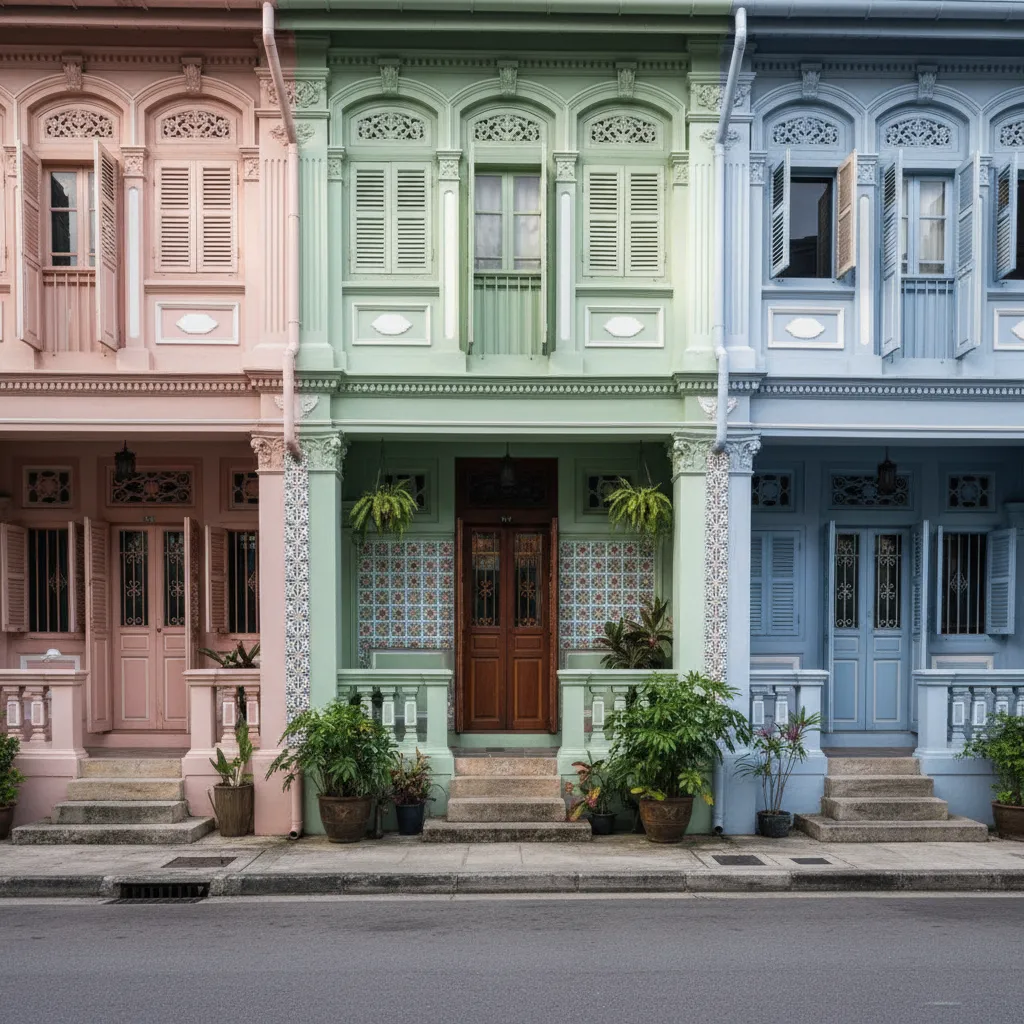
After lunch, walk the quieter streets off Joo Chiat Road. Koon Seng Road is famous for its rows of colourful Peranakan terrace houses with decorative tiles, carved swing doors and pintu pagar half doors. Walk on the side of the street opposite the houses to see the full facades.
Remember that these are private homes. Take photos quietly from the pavement, keep off doorsteps and gates, and keep your voice down. Residents are used to visitors, and polite behaviour helps keep it that way.
Taking Leftover Curry Home
Eurasian cooks often say devil curry tastes better the next day, once the vinegar and chilli have settled into the meat. If your table orders a little too much, ask whether you can pack the rest to take away. Many family kitchens are happy to do this, and it is a sensible way to avoid waste.
Reheat it gently at home, adding a splash of water if the gravy has thickened. Serve it with fresh rice or a slice of crusty bread, which is how some Eurasian households enjoy it on the morning after a festive meal. It turns one lunch into two, and gives you a second chance to taste the sharp, deep flavours.
Finding Eurasian Heritage Nearby
If your group wants to learn more, the Eurasian community has a heritage gallery not far from Joo Chiat that tells the story of Eurasian families in Singapore. It is a good stop after lunch, especially if devil curry made you curious about the people behind it.
Small bakeries and kueh shops around Joo Chiat also sell Peranakan sweets. Pick up a box of colourful kueh to share later, or bring some home for family members who could not join the lunch.
Making It a Family Tradition
A curry lunch in Joo Chiat works well as a yearly ritual. Many families return for birthdays, reunions or the festive season, trying a new curry each time and comparing it to the version they grew up with.
To plan your next visit, use the Karpo APP to look for Eurasian and Peranakan lunch spots around Joo Chiat, then save the ones that suit a big family table. Pick a day, invite the grandparents and let the curries start the conversation.
Ask Karpo for more information.
Keep reading
- Kovan Hainanese Curry Rice Lunch Picker: Heartland Plates
 Tampines Mee Rebus Breakfast Picker: Round Market Bowls
 Jurong West Mee Rebus Breakfast Picker: Boon Lay Bowls