 Kovan Hainanese Curry Rice Lunch Picker: Heartland Plates
Restaurants
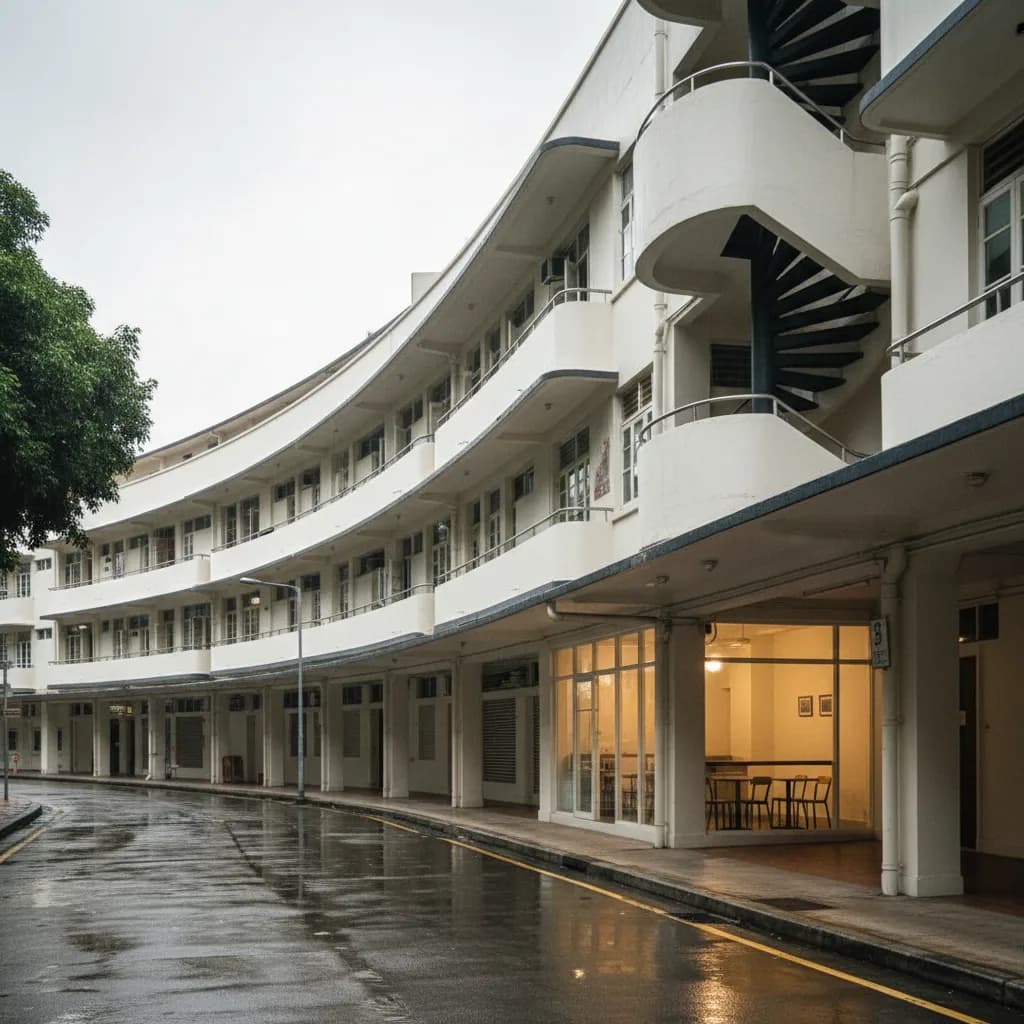
Tiong Bahru Cozy Indoor Bistro Finder for Monsoon Afternoons
Tiong Bahru's 1930s estate hides small air-conditioned rooms between its curved blocks. Plan a monsoon afternoon by rain, block and walk from Tiong Bahru MRT.
Tiong Bahru is one of Singapore's oldest public housing estates, a cluster of rounded, white Streamline Moderne flats built by the Singapore Improvement Trust from the 1930s. Its ground floors hold small cafes and dining rooms, and the covered five-foot ways between them make it a natural place for a cozy indoor bistro finder plan when the northeast monsoon brings heavy afternoon showers from November to January. Start at Tiong Bahru MRT on the East-West Line and walk five minutes east.
Why the Estate Works on a Wet Day
The pre-war blocks sit on a tight grid of short streets named after Chinese pioneers, such as Eng Hoon, Seng Poh, Yong Siak and Chay Yan. The distances are small, so on a rainy afternoon you are rarely more than a two-minute dash from one covered walkway to the next. The low-rise scale matters too. Rooms here are small, often a single shopfront deep, and the air conditioning feels gentle rather than arctic.
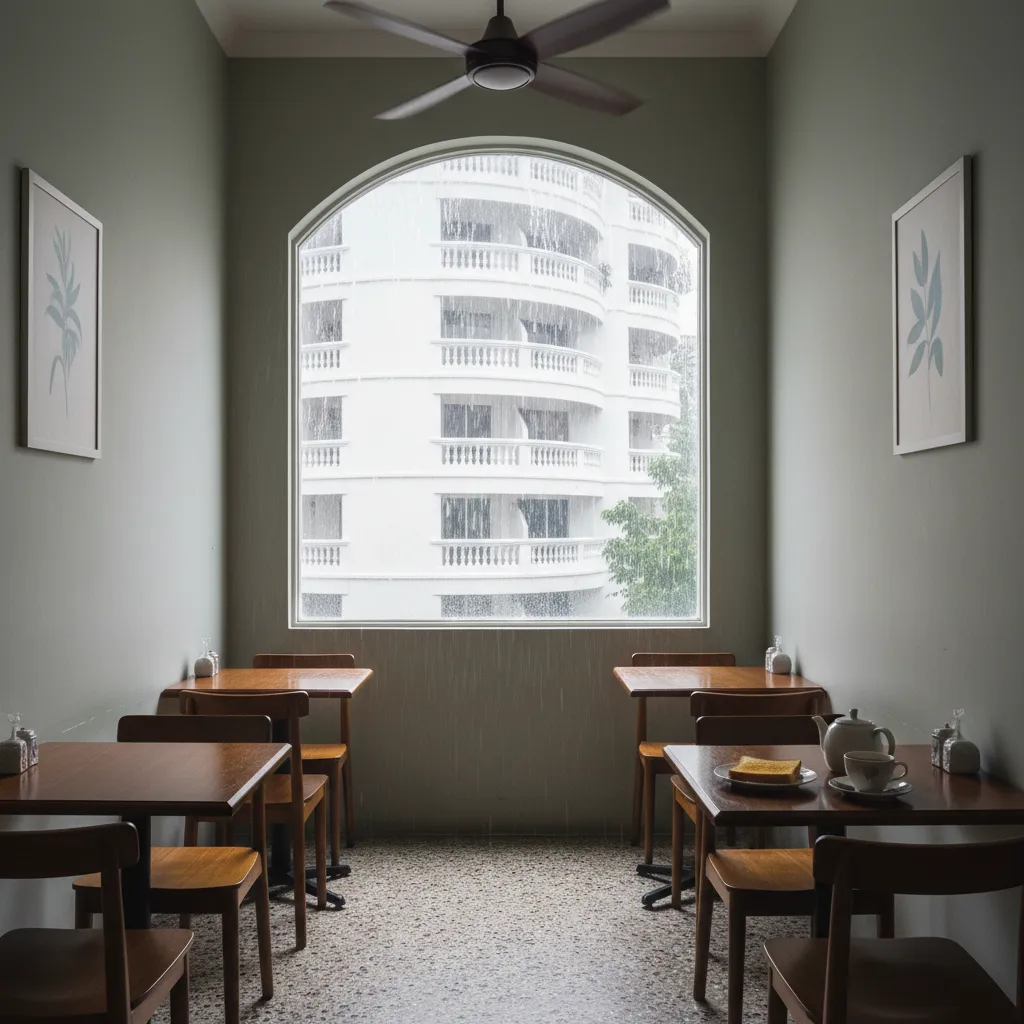
Wider Singapore can feel like a choice between a mall food court and a hotel lobby when the sky opens. Tiong Bahru offers a third option: a room with a window, a ceiling fan turning over the tables and a view of curved balconies dripping in the rain. That window seat is the whole reason to come here instead of staying in the CBD.
Plan by the Weather, Not the Clock
In a light drizzle, walk the estate first and eat second. Loop from Tiong Bahru Road along Moh Guan Terrace, where the flats curve around the corners, then settle into a room on Yong Siak Street or Eng Hoon Street. The five-foot ways keep you mostly dry, and you will see which rooms are full before you commit to any of them.
In a proper thunderstorm, the kind that drops a month of rain in an hour, do the reverse. Get inside within ten minutes of leaving the station and stay put. Choose a room with plenty of seating so nobody feels pressure to free up your table, and order slowly. Most tropical storms here pass within an hour or two, and the streets steam afterwards, which is the moment to walk.
On a dry, humid evening, the estate is at its most sociable, with families from the surrounding blocks heading to Tiong Bahru Market. This is when an air-conditioned bistro earns its place. Eat a little later, after 8pm, once the dinner rush at the hawker centre has thinned and the evening has cooled by a degree or two.
Reading a Room Before You Sit Down
The rooms that suit a slow afternoon tend to share a few signs: fewer than twenty seats, a short handwritten menu, mismatched chairs and staff who are not hovering with the bill. A queue of tourists photographing latte art at the door means the opposite. Walk past it, because a ten-minute wait in the humidity will undo any cozy feeling the room promised.
Look up as well as in. Some ground-floor units have a mezzanine or a back room that stays quieter than the counter by the door. If the front tables are taken by laptops, ask whether there is space further in. Groups of four or more should aim for the wider corner units, where the curved walls give a little more room.
Pair a Meal With the Estate's Quiet Corners
Before or after eating, there are a few free places worth folding into the walk. Qi Tian Gong on Eng Hoon Street is a small temple dedicated to the Monkey God, and its incense-filled hall is a short, calm stop. Block 78 on Guan Chuan Street contains a pre-war air-raid shelter, one of the few built into public housing, which is now opened for occasional heritage tours.
Tiong Bahru Market on Seng Poh Road is the estate's anchor, with a wet market downstairs and a hawker centre upstairs. It is not the cozy option, because it is open-sided and loud. It is, however, the honest plan B when every small room is full. A plate of chwee kueh or a bowl of noodles here is part of the neighbourhood's daily rhythm.
Who You Will Share the Room With
Weekday afternoons bring retirees from the blocks who have been coming for decades, freelancers on a long coffee, and parents with young children sheltering from the rain. Weekends belong to brunch groups from elsewhere on the island, and the small rooms fill by about 10am. An unspoken rule: do not hold a four-seat table for one person with a laptop at lunchtime.
Skip Saturday and Sunday late mornings unless you are happy to queue. A weekday between 2pm and 5pm is the sweet spot, after the lunch crowd and before dinner. That is also when monsoon showers are most likely to arrive, which suits the plan: you are already inside when the rain starts.
Using Karpo to Shortlist a Tiong Bahru Room
Tell Karpo how many people are coming, whether you want a quiet table or a lively one, and roughly when you will arrive. The Karpo APP turns that into a short list of rooms worth trying in Tiong Bahru, so you can share it with friends in a group chat and agree on one before anyone leaves home.
Karpo does not hold tables, see live waiting lists or check the weather radar for you. It helps you choose. Contact the restaurant directly if you want to arrange a table, and keep the market upstairs in mind as the fallback if the rain catches everyone at once.
Practical Notes for Tiong Bahru
Tiong Bahru MRT (EW17) is on the East-West Line, and the estate is a five-minute walk east along Tiong Bahru Road. Outram Park, on the East-West, North East and Thomson-East Coast lines, is about fifteen minutes away on foot. Many restaurant menus in Singapore show prices before GST, which has been 9 percent since January 2024, and a 10 percent service charge is common. Tipping is not expected.
Carry a compact umbrella from November to January. Some of the older units have a step at the entrance and narrow toilets at the back, so groups with prams or wheelchairs should look for the newer corner shopfronts. The estate is residential, so keep voices low on the walkways after 10pm.
Ask Karpo for more information.
Keep reading
- Kovan Hainanese Curry Rice Lunch Picker: Heartland Plates
 Tampines Mee Rebus Breakfast Picker: Round Market Bowls
 Jurong West Mee Rebus Breakfast Picker: Boon Lay Bowls