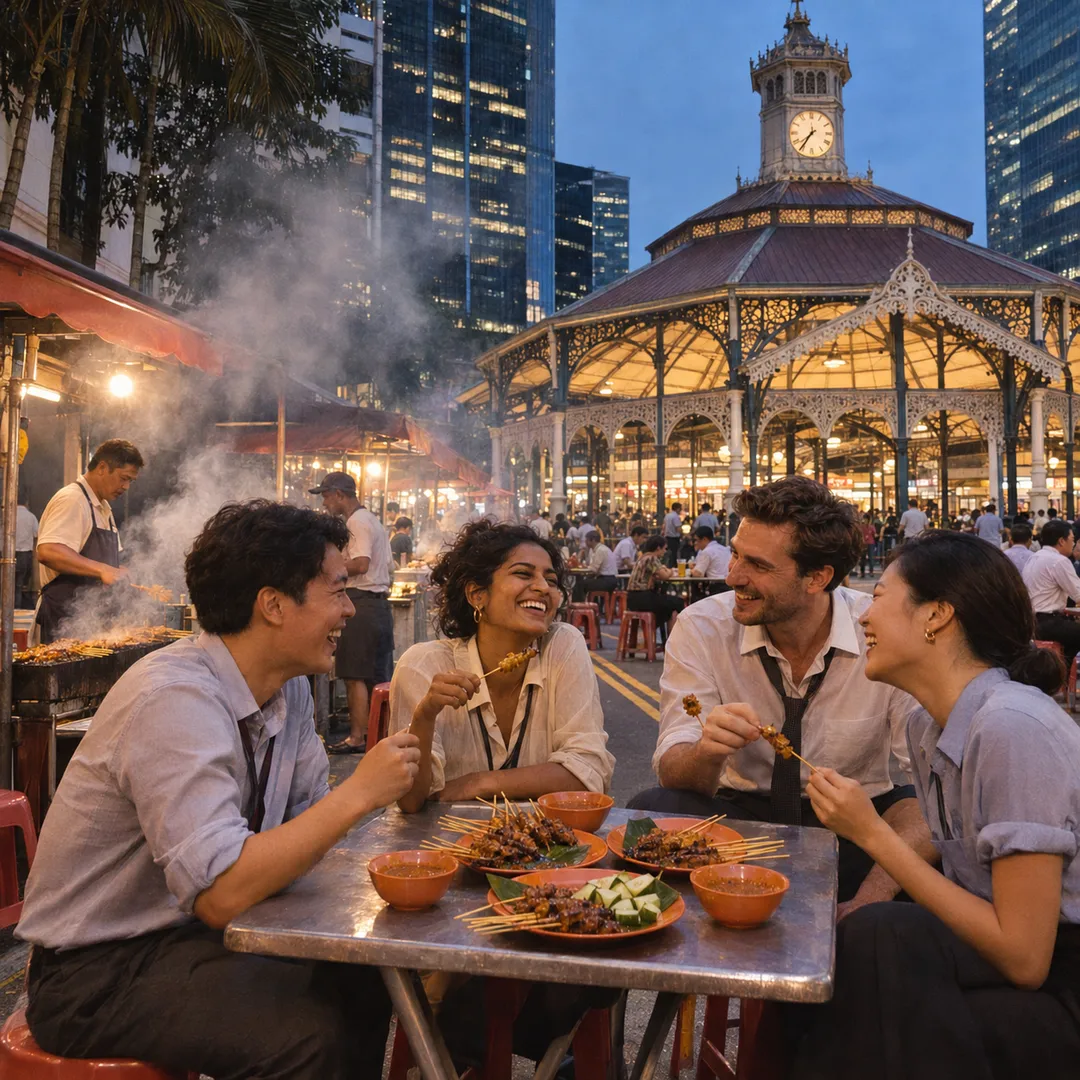
 Marina Bay Food Market Grazing Route After a Conference Day
Neighborhood Guides

City Walking Loop Planner: 4 Free Fort Canning Stops
Plan a shaded Fort Canning hill walking loop in Singapore starting at Clarke Quay. Ascend spice gardens, view archaeological sites, and return with ease.
Rising prominently above the bustling downtown core, Fort Canning Park is Singapore's 'Forbidden Hill,' a historic high point steeped in fourteenth-century royal Malay lore and colonial military strategy. Today, this historic knoll rising roughly forty-eight meters above sea level is an urban oasis transformed into a lush heritage park featuring nine thematic gardens, forested walking paths, and expansive skyline overlooks. Planning a circular walking loop around the hill offers a restorative balance between nature immersion and historical discovery, allowing you to ascend through ancient terraces and descend along manicured historic slopes without repeating a single track or missing hidden heritage markers. The hill holds deep cultural significance as the site where ancient Malay kings established their royal palaces, where Sir Stamford Raffles built his first official bungalow, and where the British army commanded its defense operations during World War Two.

A well-structured hilltop walking loop of roughly two and a half kilometers begins near the river at Clarke Quay MRT station, climbs the western slope toward the summit plateau, crosses the shaded botanical collections, and loops back down via the northern terraces toward the riverbank. Because Fort Canning Hill features distinct terrace elevations, stone staircases, and winding wooded slopes, walkers should anticipate hillside stairs and undulating park footpaths rather than a flat, barrier-free loop. Sharing your outdoor mood, walking duration, or nature interests with Karpo APP provides general suggestions for exploring historic green spaces, helping you frame a relaxed self-guided stroll around Fort Canning's heritage terraces and lush botanical collections. Navigating the hilltop as a continuous circle allows you to experience distinct micro-climates, from cool shaded forest valleys filled with bird calls to breezy open lawns overlooking the financial skyscrapers.
Stage One: Ascending from Clarke Quay to the Royal Terraces
Begin your walk from the southern entrance near River Valley Road and the Clarke Quay MRT station. Ascending the wide, paved pedestrian pathway, you are immediately enveloped in dense tropical foliage. Giant rain trees with sprawling fern-laden canopies buffer the hum of city traffic below, replacing urban noise with the gentle chirping of cicadas and songbirds. The path leads gently upward toward the Sang Nila Utama Garden, a heritage space designed as a re-creation of a fourteenth-century royal palace garden complete with traditional Javanese split gates, reflective water lily pools, and fragrant gardenia bushes that perfume the morning air. Water trickles softly from carved stone waterspouts into lotus basins, while surrounding low stone walls provide inviting perches to take in views of the lower gardens framed by traditional Indonesian split gates.
Continuing upward past the royal terrace pools brings you to the Pancur Larangan, or the 'Forbidden Spring.' According to ancient Malay annals, this freshwater spring served as the secluded bathing place for the noble consorts of ancient Singapura's rulers. The surrounding stone pavilion features handcrafted murals in natural volcanic rock depicting fourteenth-century palace life, nestled beneath shaded weeping fig trees and climbing philodendrons. The gentle trickle of water and natural limestone rockwork create an atmosphere of profound serenity just minutes from the financial high-rises, bridging past and present.
Stage Two: The Spice Garden and Archaeological Enclave
Reaching the central plateau of the hill, the loop guides you through the lush Spice Garden, inspired by the experimental plantation established by Sir Stamford Raffles in eighteen twenty-two. Paved pathways wind past terraced beds of nutmeg, clove, black pepper, cinnamon, and lemongrass, releasing rich aromatic fragrances into the morning breeze. Adjacent to the spice terraces lies the Fort Canning Artisan's Garden and Archaeological Dig site, where an open-air archaeological heritage pavilion and interpretive panels illustrate fourteenth-century porcelain, earthenware, and glass artifacts uncovered during past archaeological excavations on the hill. Informative display panels explain how ancient trade networks linked fourteenth-century Singapore with China, India, and the wider Malay Archipelago, offering tangible proof of thriving cosmopolitan commerce long before colonial arrival.
From the archaeological grounds, follow the brick-paved path toward the historic Fort Gate, the sole surviving remnant of the nineteen-century British fortress that once crowned the summit. Walking through the imposing white stone archway, you can admire the heavy iron-studded wooden gates and flanking ramparts. Just beyond the gate stretches the expansive green lawn of Fort Canning Green, where open-air cultural performances are held against the backdrop of historic Gothic Revival gate piers and solemn nineteenth-century memorial gravestones set into perimeter brick walls beneath spreading shade trees. A peaceful walk along the perimeter pathways allows you to observe colonial gravestones engraved in Latin, English, and Dutch, preserving the poignant personal histories of nineteenth-century European settlers, sea captains, and colonial administrators.
Stage Three: Fort Gate and Descending via Farquhar Garden
The descent begins along the northern flank of the hill through Farquhar Garden and the Raffles Garden. This pathway winds past heritage cannon emplacements that overlook the modern Civic District below, providing striking glimpses of the National Museum of Singapore through breaks in the mahogany foliage. From the northern foothill perimeter adjoining Penang Road near Dhoby Ghaut, walkers can view the famous Fort Canning Tree Tunnel, an underground pedestrian crossing featuring an open spiral staircase beneath a towering rain tree canopy.
Following the paved garden paths southward along the foothills, the loop traverses Armenian Street Park, an open pedestrianised heritage space connecting into the First Botanic Garden, before returning smoothly toward Clarke Quay. Along this lower perimeter path, colorful flowering frangipani and bird-of-paradise flowers border the walkway, while covered colonial arcades provide comfortable shelter as you approach your starting point. Completing the full circular climb and descent leaves you invigorated and perfectly positioned by the riverfront for an unhurried waterfront lunch or a refreshing cold beverage beside the river.
Practical Route Planning and Hilltop Trail Notes
To enjoy Fort Canning's hillside loop with maximum comfort, embark on your walk during the morning hours between seven and ten or after five in the afternoon when temperatures are gentle. Fort Canning Hill has significant elevation changes with multiple flights of historic stone steps and unpaved garden paths that are not suitable for wheelchairs or strollers. For accessible visits, NParks provides a designated barrier-free arrival drop-off point at the Cox Terrace roundabout near Fort Canning Centre, while general trail explorers should wear sturdy walking shoes with reliable grip to navigate the outdoor staircases safely. Carry insect repellent for shaded forested trails and bring a refillable water bottle for your trek.
Telling Karpo APP about your mood, preferred walking pace, or companions helps generate general ideas and recommendations for exploring outdoor parks and heritage destinations. You can discover suggestions for pairing your hilltop stroll with riverside dining, tailor an unhurried visit to cooler morning hours, and enjoy the park at your own leisure. For nature enthusiasts, history lovers, and active city explorers, this circular Fort Canning trail remains Singapore's premier historical hilltop walk, delivering peaceful botanical beauty and centuries of fascinating heritage in one memorable loop.
Ask Karpo for more information.
Keep reading
- Marina Bay Food Market Grazing Route After a Conference Day
 River Valley Food Market Grazing Route With Young Kids
 Serangoon Food Market Grazing Route for a Homecoming Weekend