 Kovan Hainanese Curry Rice Lunch Picker: Heartland Plates
Restaurants
Little India Cheap Eats Lunch Picker: Banana Leaf by Hand
A first-timer's guide to a banana leaf lunch in Little India: how to eat rice by hand, how refills work, what the folded leaf means and where to walk after.
Little India is one of the cheapest and most generous places in Singapore to eat lunch, and the classic meal here is rice served on a banana leaf. A server lays the leaf in front of you, scoops on rice, spoons out vegetables and curries, and keeps coming back with more. For a first-timer, the custom can feel like a test, but it is really an invitation. This cheap eats lunch picker walks you through how the meal works, how to eat it with your hand, how to read the small signals at the table and how to spend the rest of the afternoon on the streets around Serangoon Road.
Why Lunch Here Is Served on a Leaf
Eating from a banana leaf is an old South Indian tradition that came to Singapore with Tamil workers and traders who settled around Serangoon Road. The leaf is clean, waterproof and free, and it is said to add a faint fresh note to hot rice. It also means no plates to wash, which helped busy eateries feed many people quickly and cheaply.
Over time the leaf meal became part of daily life in the neighbourhood. Workers, families and office crowds share long tables at lunch, and the steady rhythm of servers walking past with buckets of rice and curry is one of the small joys of Little India. The meal is mostly vegetarian at its core, with meat and fish dishes offered on the side.
What Lands on Your Leaf
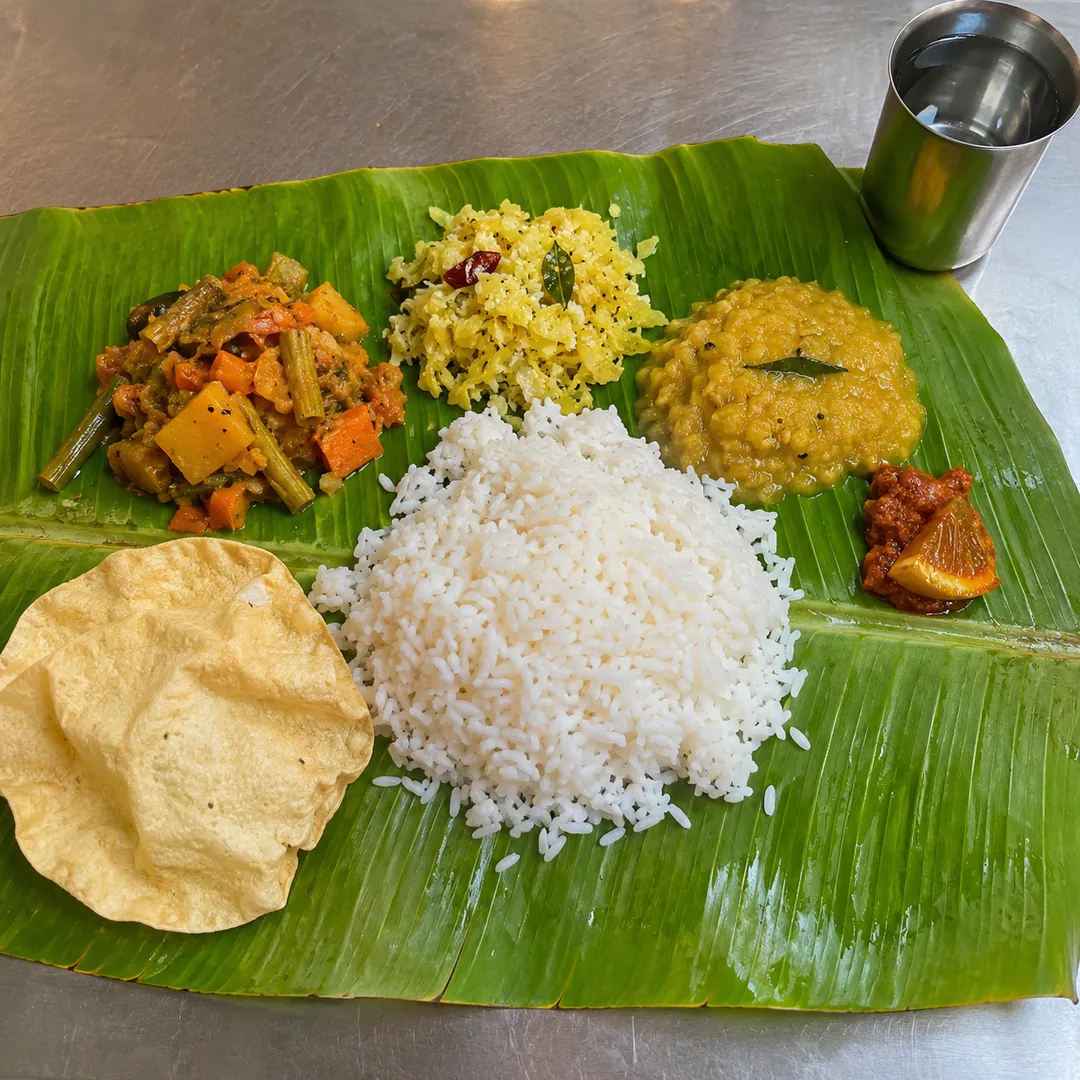
Most banana leaf lunches follow a pattern. First comes white or sometimes biryani rice. Around it the server places two or three vegetable dishes, often cabbage, beans or a dry potato fry, along with a ladle of dhal or sambar, a spoonful of pickle and a crisp papadum. Rasam, a thin sour pepper soup, may come in a small cup or straight onto the rice.
If you want more, you can point to the side dishes kept in trays at the counter, such as fish head curry, mutton, fried chicken or a fried fish. These are ordered on top of the basic meal. For a cheap lunch, stick to the vegetarian base and maybe one side to share, which is already more than enough for most people.
Eating With Your Hand, Step by Step
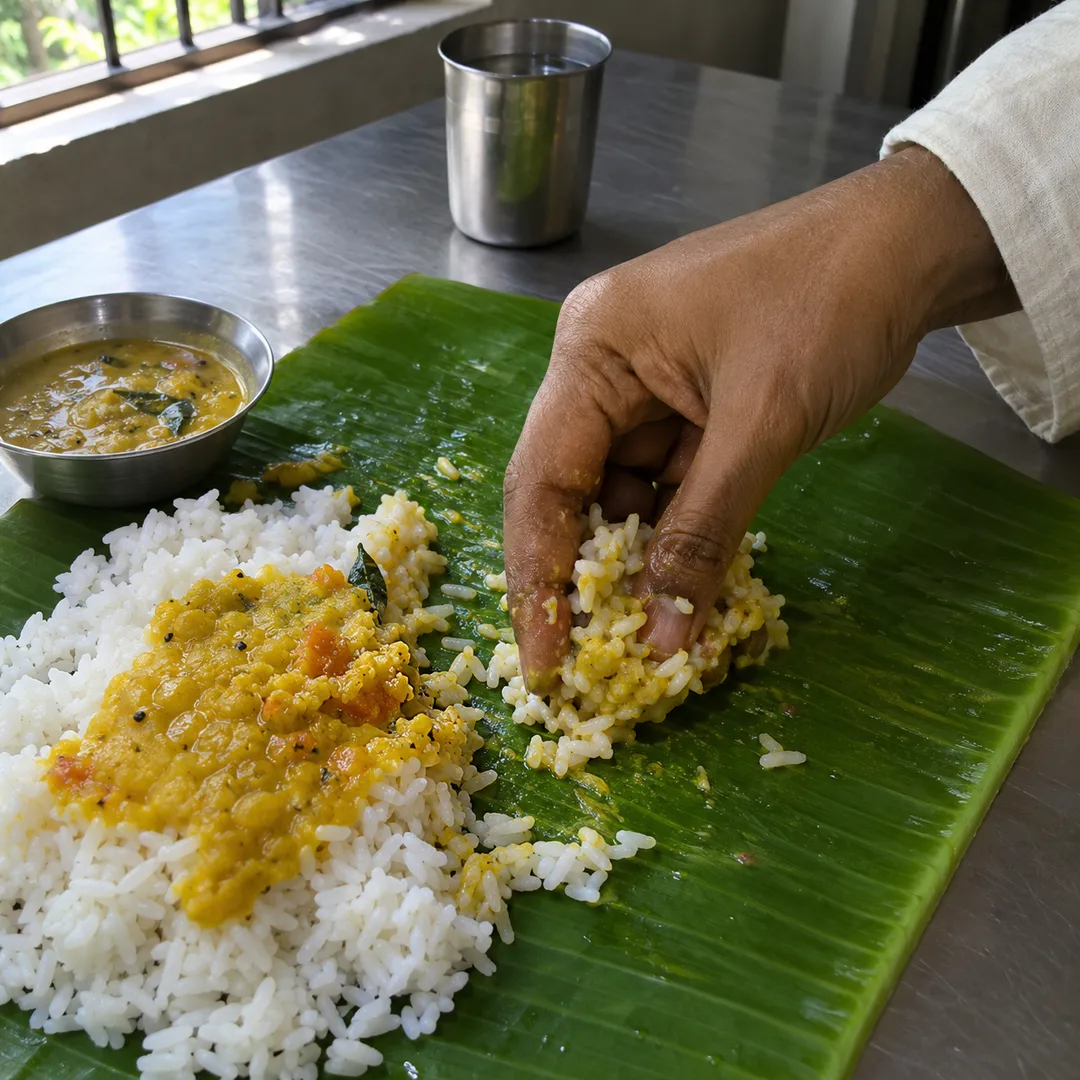
Start by washing your hands at the sink, which almost every eatery has near the entrance or at the back. Use only your right hand to eat, and keep your left hand for your drink or to pass things. Pour a little curry or dhal over a corner of the rice, then mix it with your fingertips until it holds together.
Gather a small ball of rice using your fingers, then rest it on the tips of your fingers and push it into your mouth with your thumb. It takes a few tries, and nobody will mind if it is messy at first. Work across the leaf one section at a time, so each vegetable keeps its own taste. If you prefer, most places will happily give you a spoon and fork.
How Refills Work
One of the best things about a banana leaf lunch is that rice, and often the vegetables and gravies, are refilled as you eat. Servers walk the tables with buckets, and they will usually ask if you want more. A nod and a small gesture toward the empty part of your leaf is enough.
If you are full, hold your hand flat over the leaf or simply say no thanks. It is better to take small refills than to leave a big pile of rice uneaten. Watch the regulars at nearby tables: they often ask for a second spoon of dhal or a different gravy on the last part of their rice, which is a good way to taste more of the kitchen.
The Folded Leaf and Other Signals
When you finish, fold the leaf in half. In many places folding it toward you means you enjoyed the meal and are satisfied, while folding it away can suggest the opposite, though customs vary by family and region. Either way, the fold tells the server you are done and the table can be cleared.
Do not worry about getting every rule right. Staff in Little India serve visitors every day, and a smile goes a long way. Keep your leaf area tidy, put bones or chilli stalks to one side of the leaf, and avoid touching shared trays or serving spoons with the hand you are eating with.
Picking a Place for Your Mood
Some banana leaf eateries are large, bright and busy, with fast servers and a crowd of office workers. These are good for a quick, lively lunch when you want energy around you. Others are small family rooms on side streets, where the pace is slower and you can watch the food being made.
For the cheapest meal of all, the hawker stalls inside Tekka Centre serve rice with curries, biryani, thosai and other South Indian dishes on plates or paper. You lose the leaf ceremony, but you gain variety, and you can try several stalls in one visit. Go upstairs or into the market after eating to see piles of spices, flowers and fresh produce.
Drinks and Something Sweet
A banana leaf meal can be spicy, so a cooling drink helps. Lassi, a yoghurt drink that comes plain, salty or sweet, is the classic match. Teh tarik, milky tea pulled between two cups to make it frothy, is popular after the meal. Lime juice and plain water are also fine and light.
For dessert, look for the sweet shops along the main roads that sell colourful Indian sweets such as gulab jamun, jalebi and milk-based barfi. Buy one or two small pieces to try, since they are rich. Payasam, a warm sweet pudding made with milk or lentils, is sometimes served at the end of a festive meal.
Who This Lunch Suits
A banana leaf lunch is great for curious travellers who want to try something new, for vegetarians who want a full and satisfying meal, and for groups of friends who like sharing side dishes. It also suits anyone on a budget, since the basic meal is filling and refills keep you going.
It is a good lunch for families, too. Children often enjoy the novelty of eating from a leaf and using their hands, and you can ask for milder dishes or plain rice with dhal. Solo diners fit in easily at long tables, and the fast service means you can eat well even on a short break.
Timing Your Visit
Weekday lunch in Little India is busy with office workers and tradespeople, so arrive a little earlier or later than the main rush if you want a calm table. Weekends, especially Sundays, are very crowded, as many migrant workers spend their day off in the neighbourhood. Expect lively streets and long queues at popular spots.
During Deepavali, the festival of lights, the streets are decorated with lights and arches, and stalls sell sweets, flowers and clothes. It is a joyful time to visit, but the area becomes extremely busy. Plan to eat away from the main roads, or come on a weekday morning to see the decorations before the crowds.
Walking It Off Around Serangoon Road
After lunch, walk slowly along Serangoon Road and its side streets. Visit the Sri Veeramakaliamman Temple, with its colourful gopuram tower covered in Hindu deities, and remove your shoes before entering. Further along, look at the brightly painted former house of Tan Teng Niah, a rare surviving Chinese villa in the area.
Little India Arcade and the lanes around it are full of shops selling spices, saris, brass lamps and garlands. Even if you buy nothing, it is a pleasure to look. Take time to watch flower sellers threading jasmine and marigolds, a craft that has served the temples and homes here for generations.
Planning the Next Leaf With Karpo
When you want to try another banana leaf room, a Tekka stall or a sweet shop you missed, the Karpo APP can suggest options around Little India and Farrer Park. Tell it what you need, such as a vegetarian meal, a quieter room or something mild for children, and pick from the ideas it gives.
A banana leaf lunch is one of the most generous meals in Singapore. It asks only that you sit down, wash your hands and enjoy what comes. Once you have folded your first leaf, you will understand why so many people make this part of the city their regular lunch stop.
Ask Karpo for more information.
Keep reading
- Kovan Hainanese Curry Rice Lunch Picker: Heartland Plates
 Tampines Mee Rebus Breakfast Picker: Round Market Bowls
 Jurong West Mee Rebus Breakfast Picker: Boon Lay Bowls