 Kovan Hainanese Curry Rice Lunch Picker: Heartland Plates
Restaurants

Joo Chiat Cheap Eats Lunch Picker: A Peranakan Food Lesson
Learn Peranakan food over a cheap lunch in Joo Chiat: what laksa, kueh and nonya dishes taste like, how to order for one or two, and which shophouses to see.
Joo Chiat is where many Singaporeans go when they want to taste Peranakan food at its most homely. The neighbourhood's painted shophouses, family bakeries and coffee shops carry the flavours of the Straits Chinese, a community that blended Chinese, Malay and other influences into one of Asia's most distinctive cuisines. This cheap eats lunch picker treats your lunch break as a short food lesson. You will learn what to order, what each dish tells you about the culture, and how to finish with a walk past some of the most beautiful houses in the city, all without spending much.
A Quick Introduction to Peranakan Cooking
The Peranakans are descendants of early Chinese traders who settled in the Malay world and married into local families. Over generations, their kitchens combined Chinese ingredients such as pork and soy with Malay spices, coconut milk, tamarind, lemongrass and chilli pastes. The women of the household, known as nonyas, were the keepers of these recipes, which is why the food is often called nonya cooking.
The style is slow and careful. Spice pastes, called rempah, are pounded by hand and fried patiently until fragrant, and good cooks are judged by the balance of sour, spicy, sweet and salty in a single dish. When you eat a Peranakan lunch in Joo Chiat, you are tasting family traditions passed from mothers and grandmothers to the next generation.
Lesson One: Laksa
Start with a bowl of laksa, the dish most closely linked with this part of Singapore. Katong-style laksa uses thick rice noodles cut short so they can be eaten with only a spoon, swimming in a rich, orange broth of coconut milk, dried shrimp and spice paste. Toppings usually include prawns, fishcake, cockles and a sprinkle of laksa leaf.
Notice how the broth tastes creamy, spicy and a little briny all at once. That layering is the signature of Peranakan cooking. If you are sensitive to heat, ask for less chilli paste on top. Laksa is filling, so a single bowl makes a complete lunch, and it is one of the cheapest ways to taste the neighbourhood's heritage.
Lesson Two: Nonya Kueh
Kueh are small, colourful cakes made from rice flour, glutinous rice, tapioca, coconut and palm sugar. Joo Chiat's bakeries and kueh shops display trays of them in pink, green, blue and white layers. Popular kinds include kueh lapis, with thin steamed layers you can peel apart; ondeh ondeh, green balls filled with molten palm sugar; and kueh salat, glutinous rice topped with pandan custard.
The blue colour often comes from the butterfly pea flower, while the green comes from pandan leaves, a natural flavouring with a sweet, grassy scent. Buy three or four different pieces to share, or take a small box back to the office as an afternoon treat. Kueh are cheap, light and a lovely way to see the artistry of nonya cooks.
Lesson Three: A Nonya Rice Plate
For a more complete lesson, find a coffee shop or small restaurant serving nonya rice dishes. Look for ayam buah keluak, chicken stewed with the black nut of a tropical tree, which has an earthy, almost chocolate-like flavour. Babi pongteh, pork braised with fermented bean paste, and chap chye, mixed vegetables in a savoury broth, are also classics.
Some places serve these as rice plates with a choice of two or three dishes, which keeps the cost down. Others offer nasi lemak, coconut rice with sambal, fried fish and peanuts, a dish shared across Malay and Peranakan homes. Ask the staff which dish they would recommend to someone tasting nonya food for the first time. Most are proud to explain.
How to Order for One or Two
If you are alone, pick one main lesson, such as laksa or a rice plate, and add one or two pieces of kueh for dessert. If you are with a friend, share a rice plate with two dishes and a bowl of laksa, then split a few kueh. This lets you taste three or four flavours without over-ordering.
Drinks help with the spice. A glass of barley water, lime juice or iced chrysanthemum tea will cool your mouth. For something sweeter, try bandung, a pink rose syrup and milk drink. Many coffee shops also serve kopi and teh, the local coffee and tea, which go well with sweet kueh.
Walking the Shophouse Rows
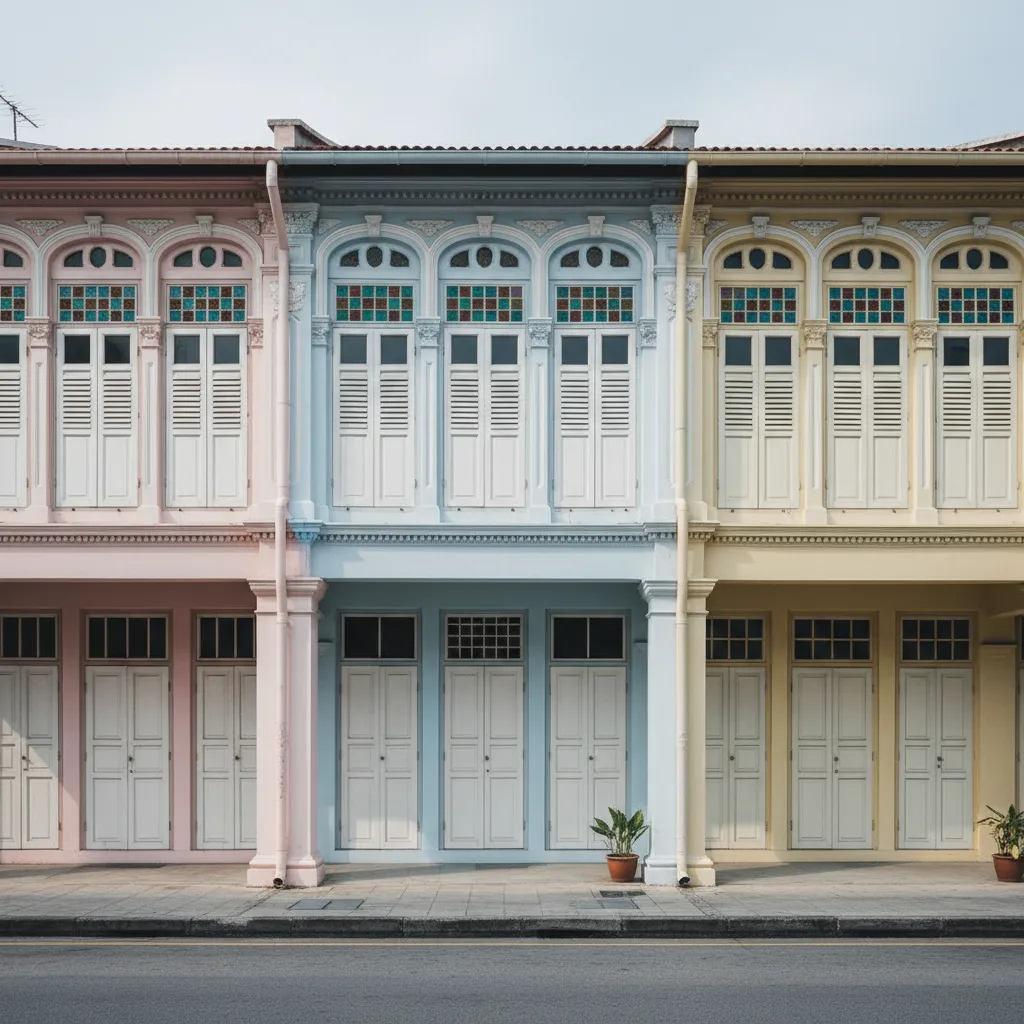
After lunch, walk to Koon Seng Road, where two rows of Peranakan terrace houses are painted in soft pastels and decorated with ornate plaster, carved wooden doors and glazed tiles. It is one of the most photographed streets in Singapore, so be respectful of residents. These are private homes, so stay on the pavement and keep voices low.
Along Joo Chiat Road itself, look up at the upper floors of the shophouses. Many have original windows, decorative mouldings and tiles with floral and bird designs. The mix of Chinese, Malay and European details tells the same story as the food: a culture built from many influences and shaped into something new.
Who This Lunch Suits
This plan is perfect for curious newcomers to Singapore, visitors who want to go beyond the usual hawker classics, and locals who have never really explored their own city's food history. It also suits food-loving couples looking for a cheap date lunch with a story behind every bite.
Families can enjoy it too. Children often love the bright colours of kueh, while adults appreciate the deep flavours of the main dishes. Grandparents with Peranakan roots may have their own stories to share. Ask them what their family cooked at home, and you will learn more than any guidebook can teach.
Timing and Comfort
Popular laksa and kueh shops can be busy at lunch and on weekends. Arrive earlier if you want a calm seat, or visit on a weekday when office workers are scattered across many places. Some kueh sell out quickly, especially the favourites, so morning or early lunch gives the best choice.
Joo Chiat can be hot in the middle of the day. Walk on the shaded side of the street, carry water and take breaks in air-conditioned cafés if needed. On rainy days, the covered walkways in front of the shophouses provide shelter, and a hot bowl of laksa feels even better while the storm passes.
Small Manners That Matter
Many Peranakan family businesses have been run by the same families for generations. Be patient with busy staff, avoid wasting food and thank the cooks if you enjoyed your meal. When photographing food or shopfronts, ask before photographing people, and avoid blocking doorways.
If you buy kueh to take away, carry them carefully in a flat box. They are soft and can be squashed easily. Eat them the same day for the best taste, since many are made fresh each morning without preservatives.
Planning Your Next Lesson With Karpo
Once you have tasted the basics, return for more advanced lessons, such as nonya curry dishes or more unusual kueh. The Karpo APP can suggest nearby coffee shops, bakeries and nonya kitchens around Joo Chiat and Katong when you want to try something new, such as a quieter room or a dish you have not yet met.
A cheap lunch in Joo Chiat is a gentle way to understand a culture through its food. Each spoonful of laksa, each slice of kueh and each painted shophouse adds a little to your knowledge of Singapore's Peranakan heritage. It is a lesson you will want to repeat.
Ask Karpo for more information.
Keep reading
- Kovan Hainanese Curry Rice Lunch Picker: Heartland Plates
 Tampines Mee Rebus Breakfast Picker: Round Market Bowls
 Jurong West Mee Rebus Breakfast Picker: Boon Lay Bowls