 Kovan Hainanese Curry Rice Lunch Picker: Heartland Plates
Restaurants
Geylang Cheap Eats Lunch Picker: One Lorong, One Dish
Yes, Geylang is great for a cheap lunch by day: walk the numbered lorongs, eat one dish per lane at old coffee shops, and see temples and clan houses en route.
Most people only know Geylang after dark, when the frog porridge pots and durian stalls take over the pavements. At midday it is a different neighbourhood. The numbered lorongs that run off Geylang Road fill with office staff, uncles from the clan associations and workers from the small factories nearby, all heading for the coffee shops that have fed them for years. This cheap eats lunch picker follows a simple rule for a daytime visit: one lorong, one dish. You walk a few lanes, eat a small plate at each, and see a side of Geylang that has temples, carved doorways and quiet courtyards hiding between the food.
Geylang by Daylight
Geylang has a reputation that keeps a lot of visitors away, but in daytime the main thing you notice is food and everyday life. The lorongs, numbered lanes that branch off both sides of Geylang Road, are lined with shophouses holding coffee shops, provision stores, clan association halls, small temples and family businesses that have been here for generations. Office workers from nearby Aljunied and Paya Lebar wander in at lunch because the food is good and the prices are kind.
A lunch walk here is about respect as much as appetite. Keep to the main lanes and the coffee shops, dress comfortably, and treat the temples and association halls as the working community spaces they are. Most lanes are calm in the middle of the day, with uncles reading newspapers, aunties hanging laundry on bamboo poles and delivery vans unloading crates. It feels much more like an old neighbourhood than the late-night image suggests.
Why One Dish Per Lane Works
Geylang coffee shops are full of single-dish specialists. A stall might spend all morning braising duck or stir-frying beef noodles, and that one dish is the reason people cross town. Ordering a full meal at the first place you see means missing the others. The one lorong, one dish approach solves that. You order a small plate or a single bowl at each stop, share it if you are with a friend, and keep walking until you are full.
This also keeps the budget low. A single hawker plate is cheap, and three small ones spread over an hour cost about the same as a single sit-down lunch elsewhere in the city. It makes the walk feel like a tasting menu without the formality. Plan on two or three stops for a normal appetite, or four if you skipped breakfast. Carry tissues and small change in your pocket, because many older stalls still prefer cash and do not stock napkins.
Picking the First Lorong
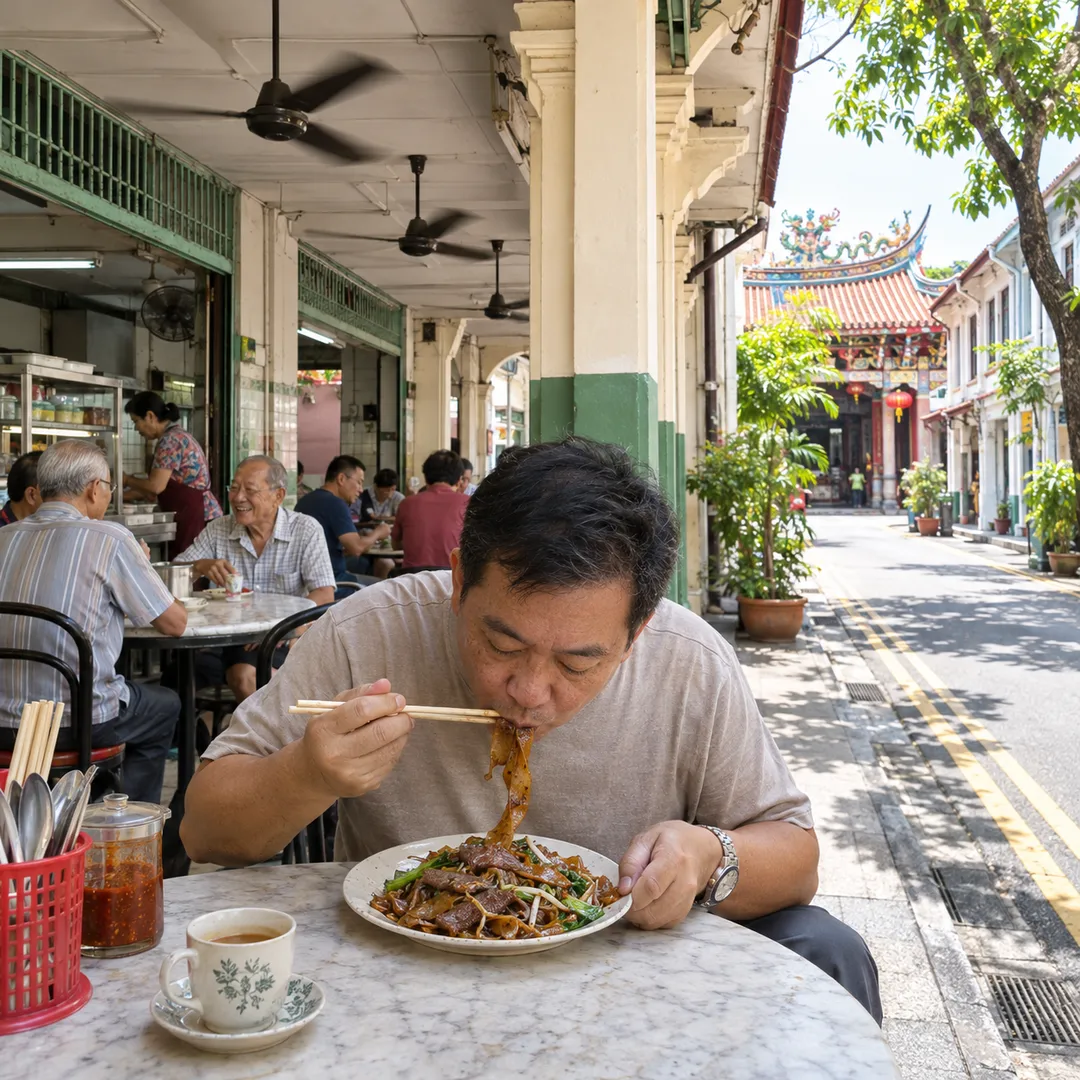
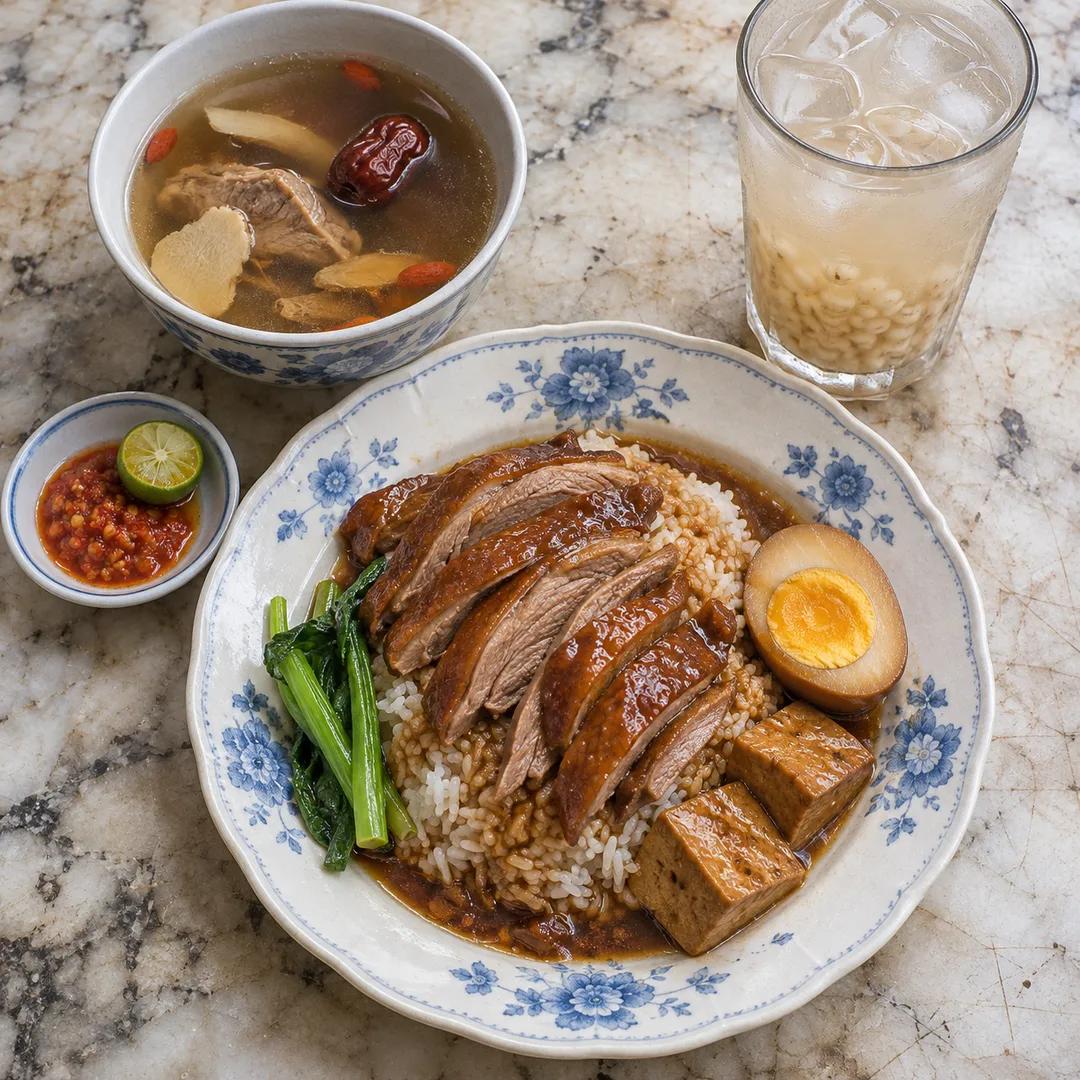
Start with something hearty. Geylang is known for beef kway teow, flat rice noodles fried in a hot wok with slices of beef and a dark, savoury sauce, and for braised duck served over rice with a ladle of gravy and pickled greens on the side. Either one makes a strong first stop. Look for a stall where the cook is working the wok or the chopping board without pause, because a busy station means the food has not been sitting around.
Sit near the stall if you can so you can watch the process. The rhythm of a Geylang wok station is part of the lunch, with the sizzle, the scrape of the ladle and the quick plating. When you finish, stack your plate neatly and return trays where there is a rack. Many coffee shops here are run by families who know their regulars by name, and a small thank you as you leave goes a long way even if you never return.
The Middle Stop: Soups and Lighter Bowls
After a rich first plate, go lighter. Bak kut teh, the peppery pork rib soup, is a Geylang favourite, and a small bowl with a cup of strong Chinese tea cuts through the oil from the noodles. Fish soup with sliced fish and greens, or a bowl of mee pok tossed in chilli and vinegar, are other gentle options that do not weigh you down. If you prefer no pork, many coffee shops also have a Malay or Indian Muslim stall, and a plate of mee goreng or nasi lemak is easy to find.
This is also the stop where you can slow down. Order a cold drink, sit for a few minutes and look around the shop. Older coffee shops often keep their original tiled floors, wooden cabinets and painted signboards, and watching regulars greet each other is a big part of the appeal. If the shop is crowded, sharing a table is completely normal. A nod and a quick question about whether a seat is free is all it takes.
Temples and Clan Houses Between Meals
Some of the most interesting sights in Geylang sit right between the food stops. Many lorongs hold small Chinese temples with ornate roofs and incense smoke drifting into the lane, and the clan association halls nearby keep alive the old links between families from particular villages in China. You may also pass Buddhist and Taoist shrines tucked into shophouse ground floors, their doors open and their altars glowing with red lanterns and offerings of fruit.
Walk past quietly and only step inside where the doors are clearly open to visitors. Take photos of the architecture from the lane rather than of people praying. These buildings show why Geylang has such a strong food culture: generations of families settled here, opened stalls and passed recipes down. Knowing a little of that history makes the next bowl of noodles feel like part of a much longer story rather than just a cheap lunch.
Ending With Something Cool
Geylang lunch walks get hot by early afternoon, so finish with something cooling. Many coffee shops sell fresh sugarcane juice, barley water, soy bean milk and grass jelly drinks, and a cold glass is the perfect way to close the loop. If there is a dessert stall, a bowl of chendol with shaved ice, coconut milk and palm sugar, or a cooling herbal jelly, makes a sweet last stop without much cost.
Fruit lovers will also spot the durian stalls that line Geylang Road. They are busiest in the evening and during the main durian seasons, but you can sometimes catch a quiet daytime stall too. If you want to try a durian for the first time, this is a good place to do it, eaten on a plastic stool right at the stall rather than carried home. Wash your hands afterwards at the coffee shop sink, because the smell lingers.
Who This Lunch Walk Suits
The one lorong, one dish walk works best for solo explorers and pairs of friends who enjoy wandering. It also suits people who live in the east and want a change from their usual food centre. Office teams from Paya Lebar sometimes make a monthly ritual of it, picking a new lorong each time. For families, the main road and the first few lanes are the easiest, with plenty of seating and simple dishes like chicken rice or soup noodles for children.
Arrive by MRT at Aljunied or Kallang and walk from there, or come from Paya Lebar for the eastern end. Comfortable shoes are a must, along with a hat or an umbrella for sun and sudden rain. Plan around an hour and a half for a relaxed three stop lunch. Leave your bag light, because you will be in and out of coffee shops and you want your hands free for plates, cups and the occasional temple photo.
Planning a Geylang Lunch With Karpo
If you are not sure where to start, open the Karpo app and describe what you want from the walk. Tell it you are in Geylang at lunchtime, how hungry you are, whether you eat pork or beef and how many stops you fancy. Karpo can suggest a sequence of lorongs that mixes a rich first dish, a lighter bowl and something cool at the end, with a temple or two along the way.
You can save routes and adjust them for future visits, such as a beef noodle focused walk, a Muslim-friendly lunch along the main road or a durian finish in season. Geylang rewards repeat trips because there are more lanes than you can cover in one afternoon. Having a plan ready means you can pop in on a free weekday, try a new combination and head back to work or home well fed and happy.
Ask Karpo for more information.
Keep reading
- Kovan Hainanese Curry Rice Lunch Picker: Heartland Plates
 Tampines Mee Rebus Breakfast Picker: Round Market Bowls
 Jurong West Mee Rebus Breakfast Picker: Boon Lay Bowls