 Chinatown New in Town Weekend Planner: Errands and Temples
Weekend Plans
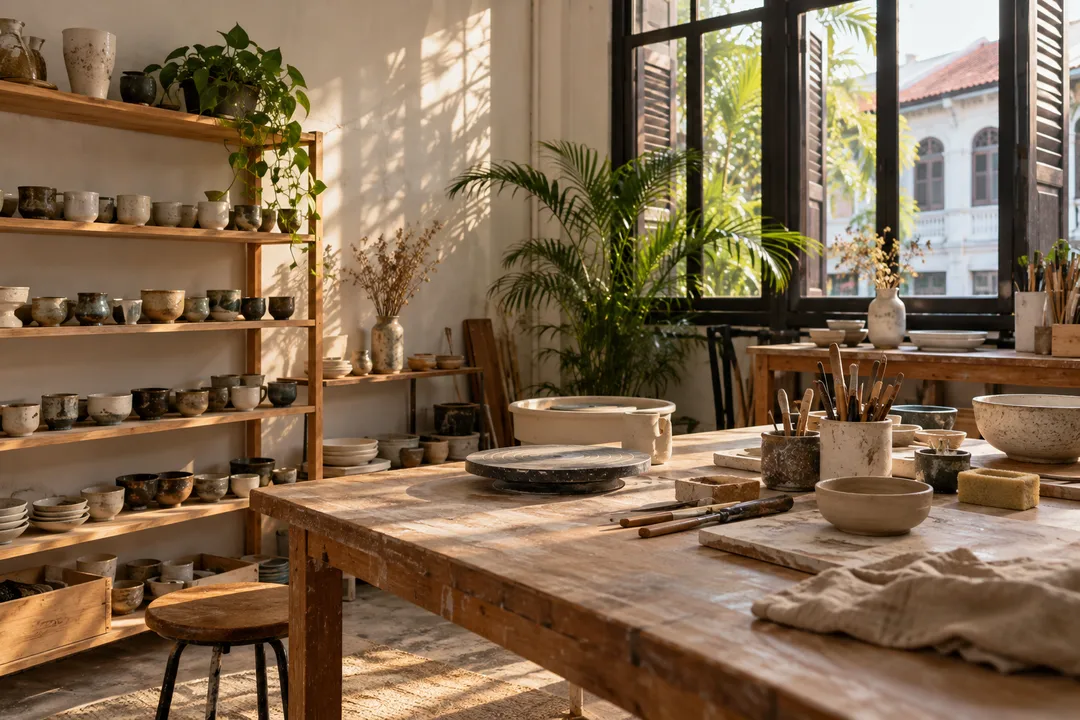
Singapore Ceramic Craft Studio: Plan A Clay Session
Plan a Singapore ceramic craft studio visit at Ceramic House on Thian Hock Keng Road, with a clear S$88 session brief and practical clay-day choices.
Ceramic House appears in Singapore searches as a ceramic craft studio at 2 Thian Hock Keng Road, Singapore 089109, with a listed S$88 pottery class. Treat this page as a planning brief for a hands-on clay session: choose a manageable object, set aside enough time for cleanup, and understand that drying and firing happen after the making. The useful decision is not whether clay looks relaxing in a photograph. It is whether the session format matches your patience, clothing, travel route and willingness to return for a finished piece. Start with the booking information, then build the rest of your Telok Ayer outing around a realistic buffer. Add a simple decision rule before booking: choose the format you can describe in one sentence, and write down what happens to the work after the class. That note keeps the visit grounded when several listings use similar words.
Read the listing before you decide what kind of ceramic craft studio experience you want. A beginner wheel session asks for sustained attention; hand-building asks for more planning around slabs, coils and joins. If the page offers several formats, compare the time spent shaping with the time reserved for instruction and cleanup. Ceramic House is useful as a named search result, but the practical task is broader: identify the process, the take-home arrangement and the booking conditions in one view. Save the exact address, 2 Thian Hock Keng Road, before you leave home so a similarly named class does not send you across Singapore. Compare the actual learning task, not just the duration. A short guided introduction may suit a first visit better than an open studio, while a longer session can make sense if you want to repeat one technique. Put the choice beside your transport plan.
Read the Listing Before Booking
A good first project has a job. A small cup, rice bowl, shallow dish or incense holder gives your hands a clear target without demanding a sculptor's confidence. Ask which forms suit the listed S$88 class and how many pieces a beginner normally starts. Keep the silhouette low and the walls even; a dramatic tall vessel is harder to center and easier to collapse. The best planning question is not what looks impressive on social media. It is what you can finish, mark clearly and recognize when you return after the kiln stage. A modest object teaches more than an ambitious shape that never survives. Give yourself permission to make a plain object. A low bowl reveals whether the base is even, a cup teaches wall thickness, and an incense holder teaches clean edges. Each one creates a useful reference for a second class.
Choose a Useful First Form
Plan the session as three linked phases: making, waiting and collection. The price line is S$88, but the value depends on what the booking includes and how the studio handles glazing, firing and pickup. Put those questions beside the calendar entry rather than relying on memory. Note whether tools are supplied, whether an apron is available and whether the class has a stated age or language condition. If a page lists a particular workshop time, use that exact slot in your itinerary. Do not compress the class into a narrow gap before dinner; clay work often ends with washing, labeling and a careful explanation of what happens next. Keep a short checklist in your phone: booking format, included materials, firing or glazing steps, collection timing and the channel for questions. If one of those points is absent, ask before payment so the S$88 line has a clear meaning.
Price, Timing and What to Ask
Your clothing is part of the plan. Wear sleeves that can be pushed back, shoes that cover your feet and fabrics you can wash without worry. Short nails make centering and smoothing easier, while a small water bottle helps after cleanup. Tie back long hair and keep a tote with enough room for tools or a wrapped object, even if the finished piece will be collected later. Bring the booking confirmation and the address in a note that works offline. These choices sound ordinary until a wet rim catches on a bracelet or a rushed departure leaves a tool behind. Avoid carrying a large backpack into a shared work area. A compact tote, hair tie and a spare pair of socks are more useful than extra equipment. The studio should remain responsible for its own tools; bring only what the booking instructions request.
Clothes, Tools and Arrival
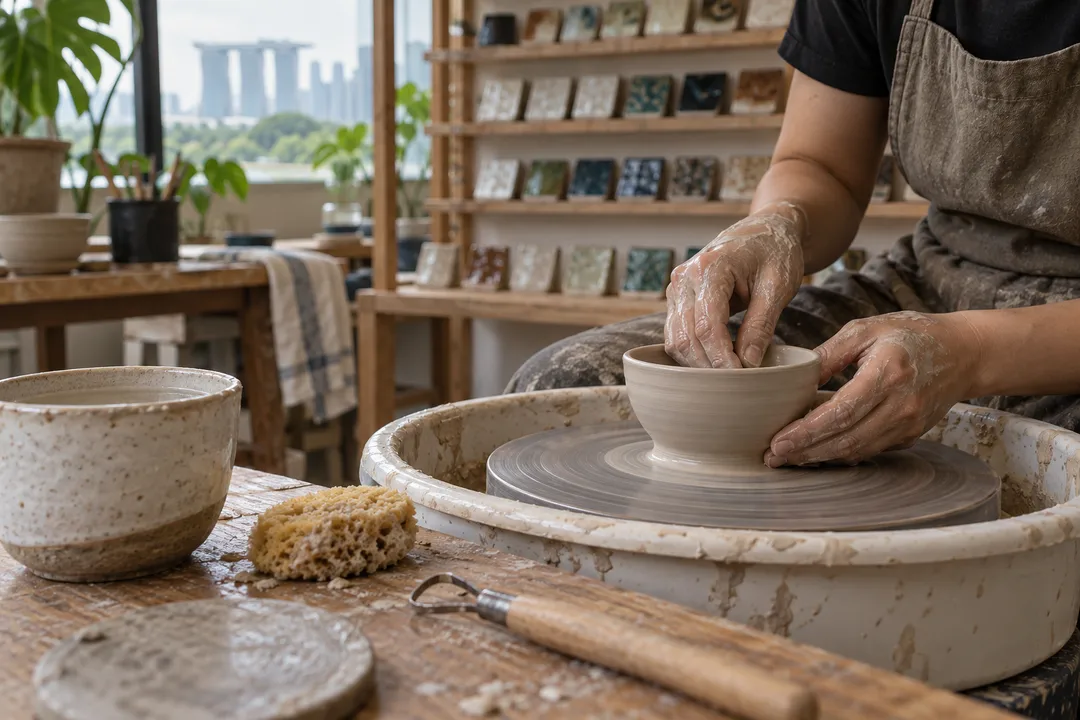
How the Working Room Teaches
Queue etiquette matters even when the session is booked. Arrive with enough lead time to find the entrance at 2 Thian Hock Keng Road, wash your hands and put personal items away before instruction begins. Do not move another maker's tools, take a drying shelf without asking or leave scraps on a shared table. If you are late, follow the teacher's reset rather than trying to catch up while the wheel is spinning. Keep your phone away from the work surface and use the break to check transport. The small rules protect concentration and make a beginner class feel collaborative instead of chaotic. Label your own items clearly and photograph the finished wet form only if the studio allows it. A quick note about the clay body or glaze is useful later, especially when several pieces look alike before firing. Courtesy is part of the studio skill.
Shared-Studio Rules
The material gives immediate feedback. Wedging removes air, centering establishes an axis, opening creates the floor, and pulling the wall is a controlled lift rather than a squeeze. When the clay wobbles, stop and ask for one correction instead of adding more water or speed. A good instructor can show where your pressure is traveling, but the hands still have to learn the movement. If you prefer visible fingerprints and irregular edges, ask about hand-building. If repetition calms you, choose the wheel. Match the method to the kind of attention you want to practice, not to the object you think will photograph best. The sequence also explains why patience matters. Clay that feels soft may still need less water, and a centered lump can lose balance when the hands hurry. Work in small corrections, pause when the form improves, and let the teacher see the problem before it becomes a collapse.
Wheel, Slab or Coil
Make the end of class explicit. Ask how your piece is labeled, whether glazing is selected immediately or later, and when collection is arranged after firing. Keep a note of the form you made and any glaze choice so you can recognize it among similar cups and bowls. Expect the object to change: clay shrinks, surfaces harden and colors develop through firing. That waiting period is part of the craft, not a missing service. If the listing does not state a pickup detail, use the studio's booking channel for that operational question and keep the answer with your confirmation rather than guessing. Ask whether the studio contacts makers when work is ready and how long an uncollected piece is kept. If you are visiting Singapore briefly, that answer may determine whether the class is practical at all. Record the collection plan next to your return-flight or onward-travel note.
Drying, Firing and Collection
Telok Ayer works well as a before-or-after walk because the clay session benefits from a slower neighborhood transition. Leave room for a meal, a drink or a short look at the shophouse streets before you enter the studio. After class, do not plan an attraction that requires a hard arrival time; cleanup and questions can run beyond the making itself. Walk until your hands feel less tense, then review the firing and collection note while it is fresh. A ceramic craft studio visit is more satisfying when the surrounding route supports the lesson instead of competing with it. Keep the walk flexible rather than stacking landmarks. A quiet drink or a shaded bench gives you time to check the booking confirmation and notice whether your hands need washing again. The neighborhood becomes part of the reset between concentration and the rest of the day.
A Walk Around Telok Ayer
If the first slot is full, compare another ceramic craft studio by process, not by glossy photographs. Check whether it teaches wheel throwing, hand-building, glazing or only surface decoration. A replacement should also state where it is, what the session includes and how finished work is handled. Keep the same planning brief: address, class length, tool policy, cleanup, firing and collection. If your schedule is tight, choose a format with a clear end time. If you want conversation, allow a wider buffer and accept that a shared studio may move at the pace of the least experienced maker. Do not treat a substitute as equivalent until its process and aftercare are clear. Two studios can both promise a pottery class while one includes firing and the other leaves the finished piece as an unfired practice form. That distinction changes the budget and the meaning of the visit.
If Your First Choice Is Full
Practical Notes: the prior listing records Ceramic House at 2 Thian Hock Keng Road, Singapore 089109, and identifies an S$88 pottery class. Use the studio's booking page for the current session choice and operational instructions. Save the confirmation, wear washable clothes, bring a small tote and leave time for cleanup. The object may need a separate collection step after drying and firing, so do not promise yourself an immediate souvenir. The best first visit is a small, useful form made with enough time to listen, ask one good question and leave the workbench ready for the next maker. For a first visit, the reliable plan is modest: confirm the slot, arrive early, follow the shared-room rules, ask one aftercare question and leave with the collection step recorded. That is enough structure to make the clay session feel deliberate without turning it into a rigid tour.
Ask Karpo for more information.
Keep reading
- Chinatown New in Town Weekend Planner: Errands and Temples
 Kampong Glam New in Town Weekend Planner: Mosque to Murtabak
 Holland Village New in Town Weekend Planner: Meet People