 Kovan Hainanese Curry Rice Lunch Picker: Heartland Plates
Restaurants
Casual Lunch Finder in Tiong Bahru: A 45-Minute Weekday Plan
Tiong Bahru suits a casual lunch if you start at the market food centre upstairs, then walk Yong Siak Street. Go before noon to keep your seat and your hour.
Tiong Bahru is the easiest Singapore neighbourhood for a casual lunch finder because two kinds of meal sit a few minutes apart: the hawker food centre on the upper floor of Tiong Bahru Market, and a ring of cafes and bakeries tucked into the 1930s walk-up flats. The trick is deciding which one fits your hour before you leave the office, not while standing in the heat on Seng Poh Road.
Start With the Question You Are Really Asking
Most people who type a lunch search on a weekday want three answers at once: can I sit down, will it cost a normal amount, and can I be back at my desk in under an hour. In Tiong Bahru those answers point in different directions. The food centre wins on speed and value, the cafe lanes win on comfort and air-conditioning, and the bakeries win when you only have twenty minutes and want to eat walking.
So the first filter is time, not cuisine. If you have forty-five minutes door to door, the market is the default and everything else is a bonus. With ninety minutes you can sit in a cafe, linger over a second coffee and still walk the estate. Write the number down before you open any app. It stops you from drifting toward a long brunch queue that eats the whole break.
How the Market Upstairs Actually Works
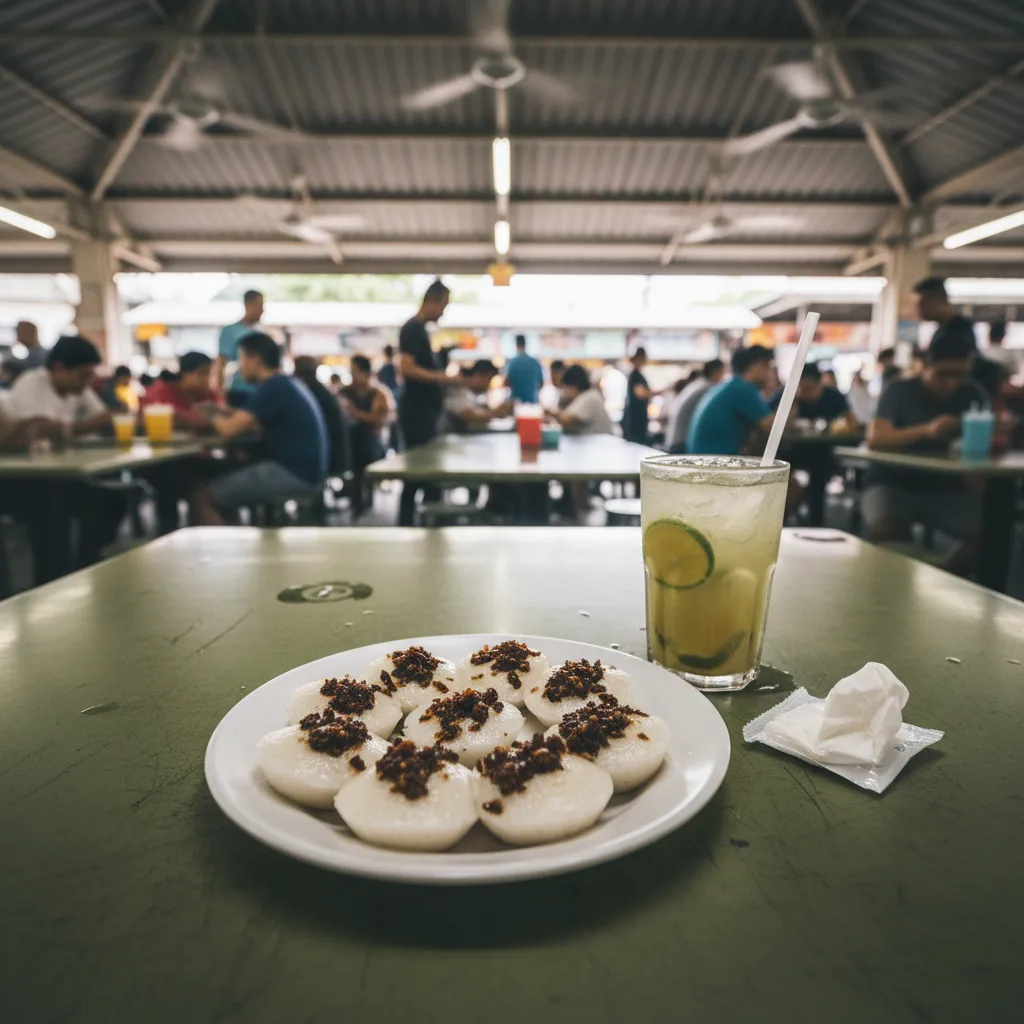
Tiong Bahru Market is a two-level building: the wet market and produce stalls take the ground floor, and the cooked-food centre sits on the floor above. You climb the stairs, scan the rows of stalls, pick a table, then order. Regulars mark a seat with a packet of tissues before queuing, a Singapore habit called choping. Leave a small item on the table if you are alone, and nobody will take it.
Queues here are a signal, not a law. A line of office workers in lanyards usually moves quickly because the stall has the order down to a rhythm. A line of tourists holding cameras moves slowly because every person asks questions. If you are on the clock, join the lanyard line. Bring a reusable bag if you plan to buy fruit downstairs on the way out, since the wet market stalls start packing up after the morning trade.
Reading the Dish Types Before You Queue
You do not need a list of famous stalls to eat well upstairs. You need to know which dish styles suit a short break. Chwee kueh, steamed rice cakes topped with preserved radish, is fast and light. Lor mee and fishball noodles arrive in minutes. Claypot dishes and anything cooked to order over charcoal will take longer, so save those for a day with slack in the calendar.
Drinks stalls are separate from food stalls, and that matters for timing. Order your kopi or iced lime juice while someone in your group holds the table, then let the food stall bring the plate to your table number if they offer it. If you are alone, eat first and grab the drink last so you are never juggling two queues at once. Tray return points sit at the ends of the rows, and returning your tray is expected.
When the Cafe Lanes Make More Sense
Yong Siak Street, Eng Hoon Street and the blocks around Seng Poh Lane hold the cafes that made Tiong Bahru famous among weekend brunch crowds. On weekdays they are calmer, and they solve a different problem: a quiet table, a power socket, a client you need to impress, or a friend who wilts in the humidity. Expect to wait for a table at the busier places during the midday crush.
Use the cafes when the conversation is the point of the lunch. A catch-up with a former colleague, a first meeting with someone from a dating app, or a planning session with a laptop all suit an air-conditioned shophouse better than a hawker table under fans. Be honest about the trade-off. You will pay more and wait longer, and the plates are often brunch-style rather than a quick rice meal.
A Walking Loop That Fits Inside the Hour
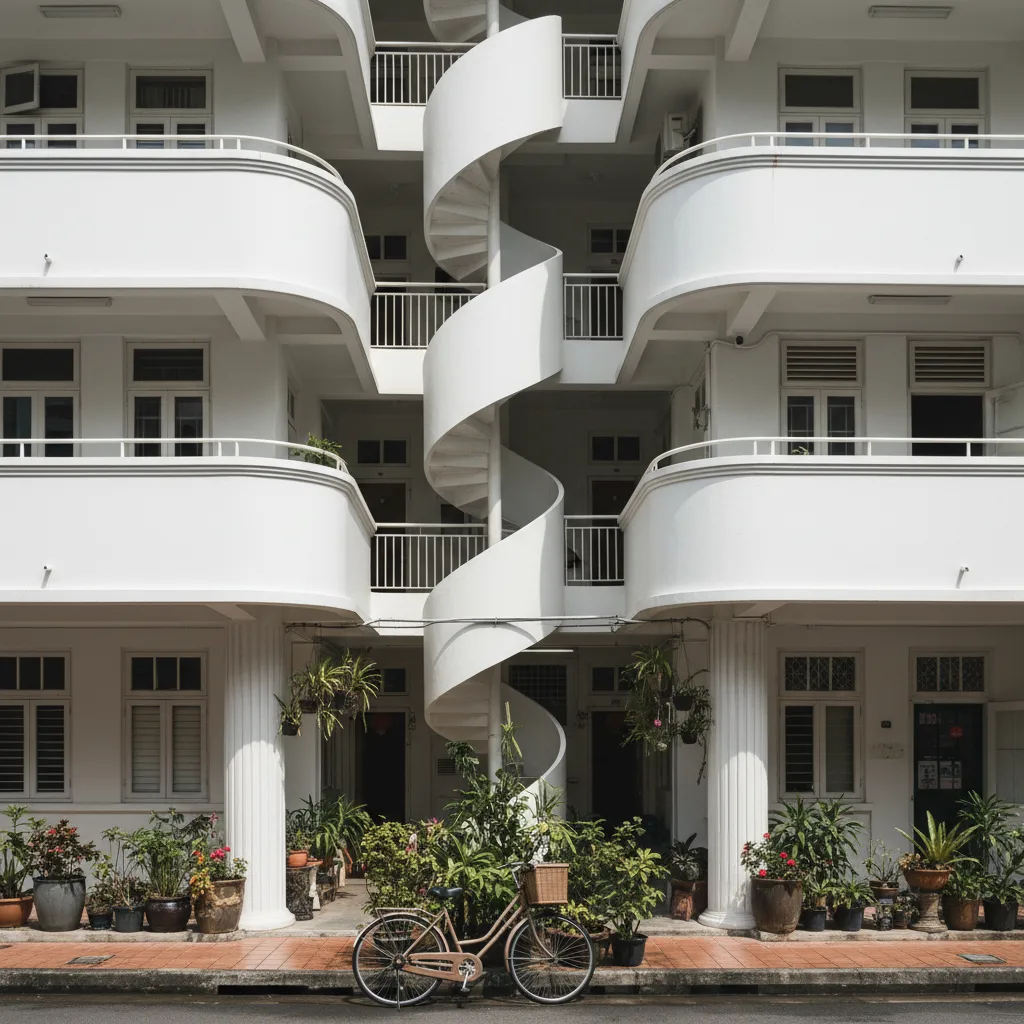
Tiong Bahru MRT station on the East-West Line sits on the edge of the estate, and the walk to the market takes under ten minutes through the newer towers and then into the low white blocks. Coming back, take the inner lanes instead of Tiong Bahru Road. The curved balconies, spiral back staircases and porthole windows of the pre-war flats are the reason the estate is a conservation area, and you see them best from the narrow back lanes.
If you finish early, the small open space near the market and the shady five-foot ways along Eng Watt Street are good spots to sit for ten minutes with a drink. Look up at the rounded corners of the flats along Moh Guan Terrace, where the Streamline Moderne lines are easiest to read. It turns a refuelling stop into a short architectural walk, and you still make it back before the afternoon meeting starts.
Weather, Crowds and the Honest Skip List
Singapore afternoons often bring short, heavy rain, and the five-foot ways that run along the shophouse fronts are your best cover. Plan a route that keeps you under those covered walkways rather than cutting across the open car parks. When the sky turns dark, the market is the better bet because it is roofed, and cafes with tiny dining rooms fill up with everyone else escaping the downpour.
Skip the most photographed brunch spots at peak lunch on a Friday. The wait is long, the tables are packed with people taking pictures of their plates, and the food will not be noticeably better than a quieter shophouse two streets away. If a line looks longer than fifteen people, walk on. Tiong Bahru is compact enough that the next option is always a few minutes away, and that freedom is the real advantage of the neighbourhood.
Using Karpo APP as Your Lunch Shortlist
Karpo APP works best here as a planning partner rather than a live tracker. Tell it you are in Tiong Bahru, you have forty-five minutes, you want something under a casual budget, and you prefer seats with a fan or air-conditioning. It will suggest a shortlist of places and dish styles that match, and you can ask follow-up questions about what suits a vegetarian colleague or a group of four.
Karpo does not see live queue lengths or hold tables for you, so treat its picks as a starting plan and let what you see on the street make the final call. That is how locals use the estate anyway. They arrive with two or three options in mind, glance at the lines, and choose in the moment. A good shortlist simply makes that glance faster.
Practical Notes for a Tiong Bahru Lunch
Carry a small packet of tissues for choping and for wiping the table. Many hawker stalls accept cashless payment through local QR systems, but a few smaller ones still prefer cash, so a little cash in your pocket avoids an awkward moment. Drinks are sold at their own stalls, and you return your tray yourself. Cafes in the shophouses generally take cards.
Wear shoes you can walk in, because the best part of Tiong Bahru is the five-minute stroll between meals. Pack a foldable umbrella from the start of the monsoon season in November onward. If you only remember one rule, make it this one: decide your time budget first, then pick market or cafe, and only then choose the dish. That order keeps lunch casual instead of turning it into a project.
Ask Karpo for more information.
Keep reading
- Kovan Hainanese Curry Rice Lunch Picker: Heartland Plates
 Tampines Mee Rebus Breakfast Picker: Round Market Bowls
 Jurong West Mee Rebus Breakfast Picker: Boon Lay Bowls