 Kovan Hainanese Curry Rice Lunch Picker: Heartland Plates
Restaurants
Katong Casual Lunch Finder: Laksa, Kueh and a Two-Hour Walk
Katong is made for a slow casual lunch: laksa or Peranakan plates on East Coast Road, kueh for dessert, then the Koon Seng Road terraces. Allow two easy hours.
Katong is the casual lunch finder pick for people who are not racing back to a desk. The stretch of East Coast Road and Joo Chiat Road in Singapore's east is known for Katong laksa, Peranakan cooking and bakeries selling trays of kueh, and the streets around them are lined with some of the most photographed shophouses in the country. Plan it as a two-hour outing rather than a quick refuel.
What Makes a Katong Lunch Different
Most Singapore neighbourhoods reward speed at lunch. Katong rewards patience. The district grew as a seaside retreat for wealthy families before land reclamation moved the coastline south, and the Peranakan community, descendants of early Chinese settlers who married into local Malay culture, left a strong imprint on its food, its tiled houses and its shops selling beaded slippers and porcelain.
That history shows up on the plate. Lunch here leans toward dishes that take hours to cook, such as rich curries, braised meats and spice pastes pounded by hand. They are not fast food, and the pleasure is in eating them slowly. If you have only thirty minutes, choose a different neighbourhood. If you can give it a late morning and an early afternoon, Katong is one of the most rewarding lunches in the city.
How to Eat Katong Laksa Like a Local
Katong laksa is the dish that put the area on the food map. The thick rice noodles are cut into short lengths so the whole bowl can be eaten with a spoon alone, no chopsticks needed. The broth is coconut-rich and spicy, with cockles or prawns, fishcake and a spoonful of sambal stirred in. Several laksa shops along East Coast Road claim the original, and locals argue about it with real passion.
You do not need to settle that debate to enjoy a bowl. Pick the shop with the shortest line, ask for less sambal if you are cautious about heat, and order an iced drink to go with it. The bowl is usually filling but not huge, which leaves room for kueh afterwards. Skip ordering a second big main for the table, because the real highlight of a Katong lunch tends to be the snacks.
Peranakan Plates When You Want to Sit Down
For a proper seated meal, look for Peranakan restaurants in the shophouses around Joo Chiat Road and East Coast Road. Typical dishes include ayam buah keluak, chicken braised with a black nut that has an earthy, almost chocolate depth, babi pongteh, pork stewed with fermented soy beans, and chap chye, a gentle vegetable braise. Sharing is the norm, so order a few dishes for the table with plain rice.
These meals suit birthdays, visiting relatives and anyone curious about a cuisine that is hard to find outside Singapore and Malaysia. Book ahead for a weekend group, since the dining rooms are often compact. Ask the staff which dishes are mild if you have children with you, because spice levels in Peranakan cooking can surprise visitors who expect gentle home food.
Kueh, Bakeries and the Dessert Detour
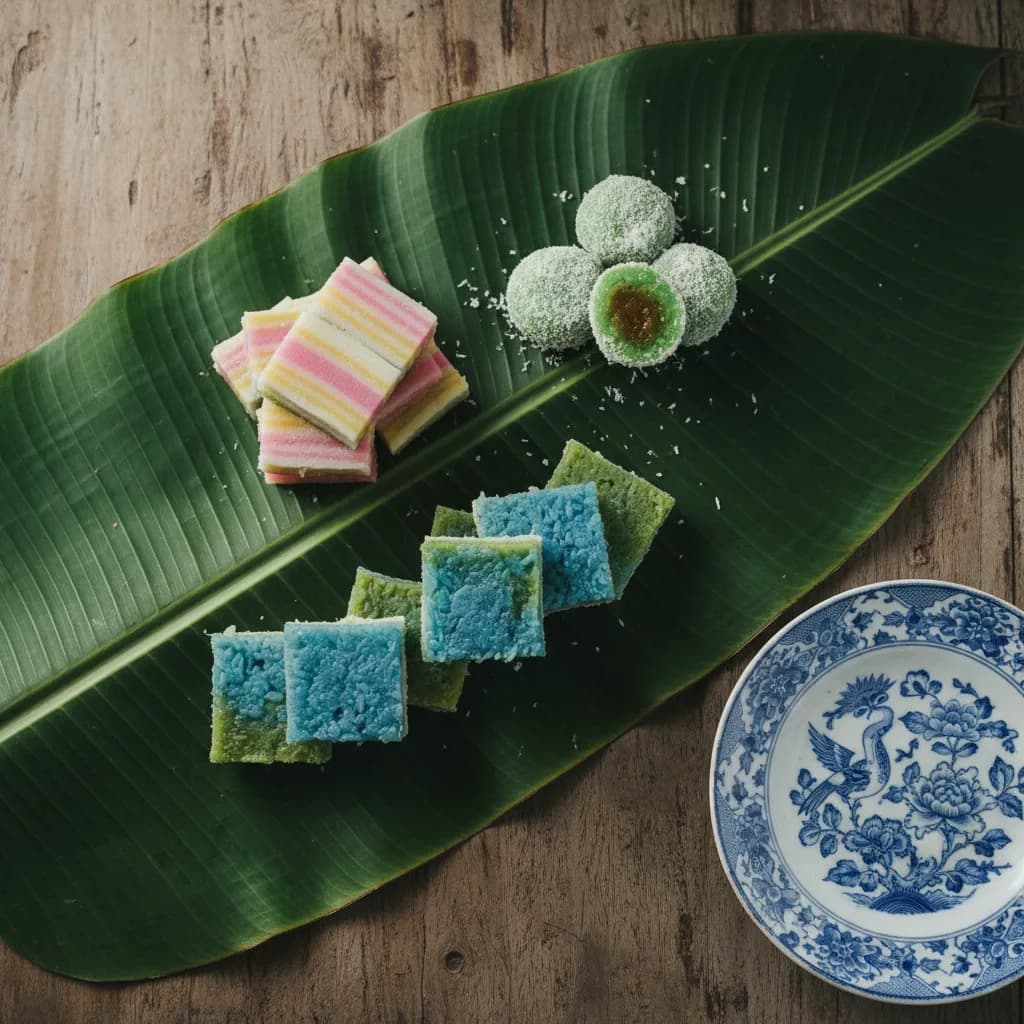
Nonya kueh are small steamed or baked cakes in bright colours, made from rice flour, glutinous rice, coconut and pandan. Kueh lapis has thin striped layers you can peel apart, ondeh ondeh are pandan balls filled with liquid palm sugar that bursts when you bite, and kueh salat pairs a layer of blue-tinted glutinous rice with a green custard. Bakeries on East Coast Road sell them by the piece, so you can try several.
Buy a small mixed box and eat it on a bench rather than at a restaurant table. Kueh is best fresh, so plan your purchase near the end of the meal instead of carrying it around in the heat. If you love them, buy a second box for the office, and ask the shop which pieces travel well, since some soft kueh lose their shape after an hour in a bag.
The Koon Seng Road Walk
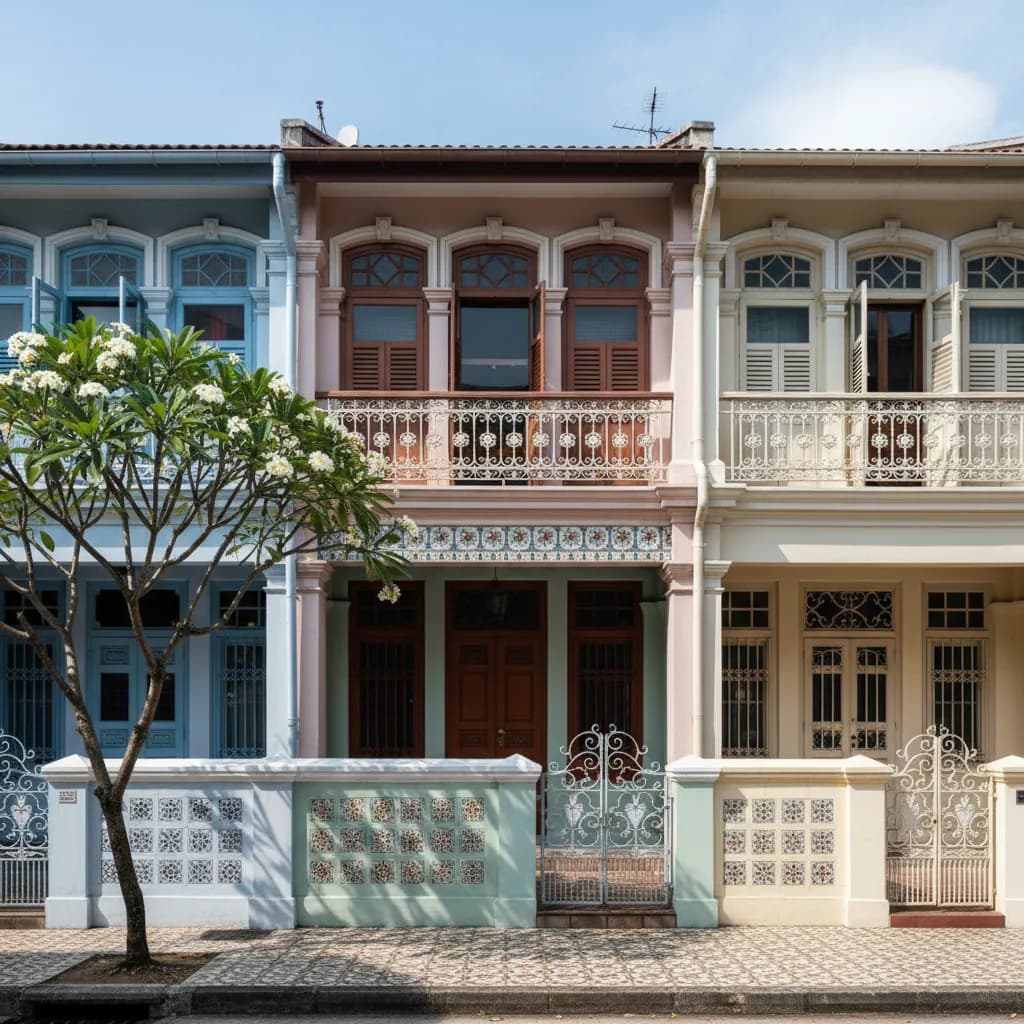
After lunch, walk to Koon Seng Road, a short side street off Joo Chiat Road where a row of pastel Peranakan terrace houses stands behind ornate gates. The facades are decorated with ceramic tiles, carved timber and plaster mouldings, and each house is painted in a different soft colour. They are private homes, so stay on the pavement, keep your voice low and never step into a front yard for a photo.
Continue along Joo Chiat Road to see more conservation shophouses with five-foot ways and decorative tiles, then loop back toward East Coast Road through the quiet residential lanes. The whole walk takes thirty to forty minutes at an easy pace. It is the perfect way to settle a heavy laksa and makes the outing feel like a small holiday rather than a meal.
Families, Friends and Who Should Come
Katong lunches attract grandparents who grew up in the east, young families with strollers, and friends meeting from different parts of the island on a weekend. The pace is slower than in the CBD, and staff in older shops often chat with regulars by name. It is a good area to bring visitors who want to see a residential side of Singapore that still feels rooted in history.
It is less suited to people on a tight budget who want a quick hawker meal, though budget options exist. If that is you, Marine Parade Central Market and Food Centre and the food centre at Geylang Serai Market are both a short ride away and offer a wide range of cheaper dishes. Choose them on a weekday when you want Katong food culture without a sit-down bill.
Letting Karpo APP Build the Afternoon
Karpo APP is a good partner for a Katong day because the order of stops matters. Tell it your group size, whether children are coming, how spicy everyone likes their food and how long you have. Ask it to suggest a laksa stop, a Peranakan option for a sit-down meal and a kueh bakery, and to sequence them with the Koon Seng Road walk.
Remember that Karpo is planning from what it knows, not watching the street. It does not know how long the laksa queue is right now and cannot hold a table at a restaurant. Use its plan as the outline, then adjust on the ground. Locals do exactly that, switching laksa shops when one line looks long and saving the restaurant for another day.
Practical Notes for Katong
The Thomson-East Coast Line now reaches the area, with Katong Park, Tanjong Katong and Marine Parade stations within walking distance of different ends of the district. Many bus routes run along East Coast Road too. Walking between the main food streets is easy, but the sun is strong in the middle of the day, so use the shaded five-foot ways and carry water.
Card and QR payments are widely accepted, though small bakeries and older stalls may still prefer cash. Bring a foldable umbrella during the rainy months that begin in November, when afternoon storms can roll in fast from the sea. And pace yourself. The best Katong lunch is laksa first, kueh second, a walk third and no rush at any point.
Ask Karpo for more information.
Keep reading
- Kovan Hainanese Curry Rice Lunch Picker: Heartland Plates
 Tampines Mee Rebus Breakfast Picker: Round Market Bowls
 Jurong West Mee Rebus Breakfast Picker: Boon Lay Bowls