 Kovan Hainanese Curry Rice Lunch Picker: Heartland Plates
Restaurants
Geylang Breakfast Spot Picker: A Malay Morning at the Market
Plan a Malay breakfast in Geylang: learn lontong, nasi lemak and mee rebus, pick a market stall or a quiet kopitiam, then walk Geylang Serai and Joo Chiat.
Most visitors know Geylang as a place to eat late at night, but the neighbourhood has a second, gentler life in the early morning. Around Geylang Serai, the historic heart of Singapore's Malay community, aunties carry bags of fresh herbs home from the market, uncles pull tea at hawker stalls and families sit down to plates of lontong and nasi lemak before the heat arrives. A Malay breakfast here is colourful, generous and full of small rituals, and choosing where and what to eat is half the fun.
Why Geylang Serai Feels Different at Dawn
Geylang Serai grew from a coconut plantation and a Malay village into a busy town centre, and it still carries that village spirit. The market is the anchor. Shoppers come early for fish, spices and banana leaves, and many of them stop to eat upstairs or nearby before heading home with full bags.
That rhythm sets the tone for a good breakfast. The food is made for people who have things to do, so plates are filling, service is quick and the cooks know their regulars by name. Arrive with an appetite and a little curiosity, and the neighbourhood will reward you.
The Dishes to Know Before You Go
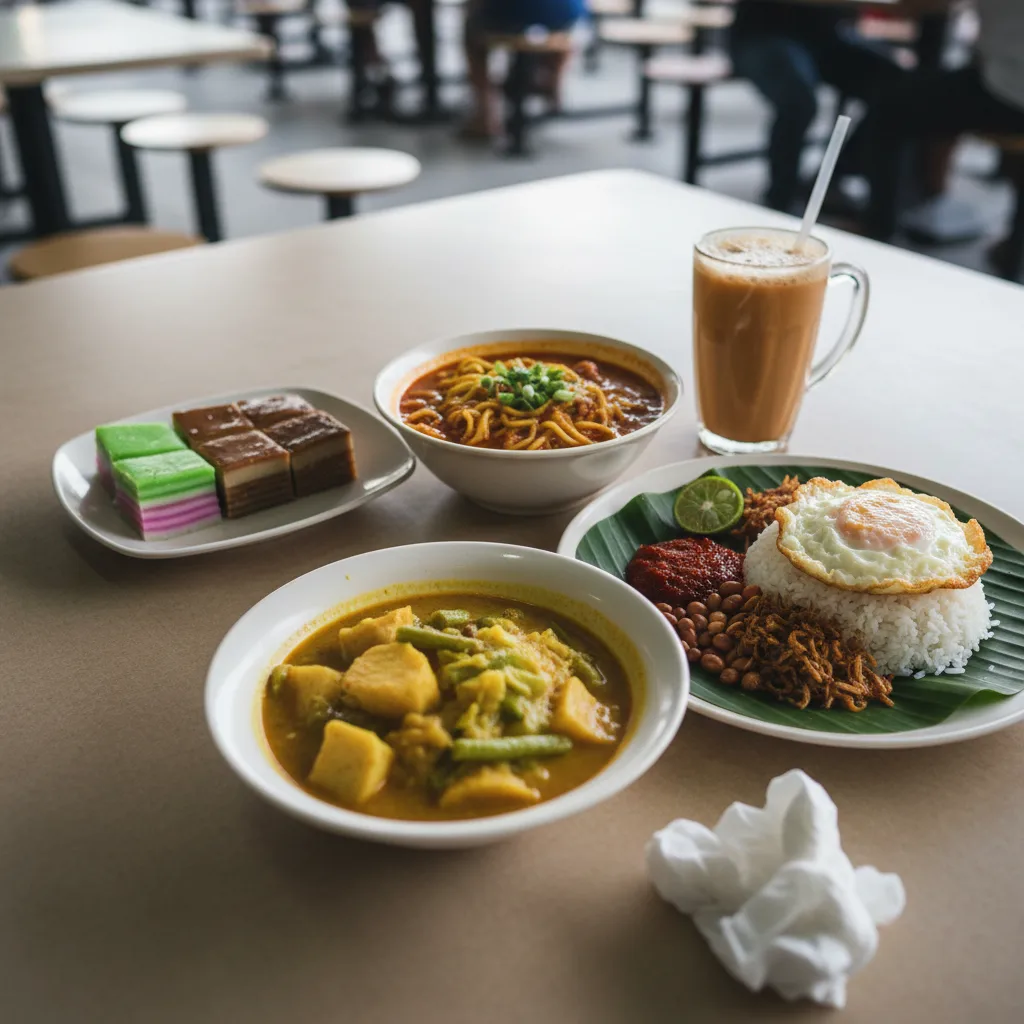
Lontong is the classic morning plate: compressed rice cakes in a mild, golden coconut gravy with long beans, cabbage and turnip, often topped with a spoon of sambal and a crumble of serunding, a toasted spiced coconut floss. It is soft, savoury and comforting.
Nasi lemak, rice cooked in coconut milk and pandan, comes wrapped in a banana leaf or on a plate with crispy anchovies, peanuts, cucumber, egg and sambal. Mee rebus is a bowl of yellow noodles in thick, sweet potato gravy with lime and green chilli. Mee soto, a clear spiced chicken noodle soup, is lighter and kind to a sleepy stomach.
Market Stall or Quiet Kopitiam
The food centre beside the market is the liveliest choice. Rows of stalls let you assemble a breakfast from several cooks: lontong from one, kuih from another, a drink from the tea stall at the end. It is ideal if you want variety, a crowd to watch and the full morning energy of the neighbourhood.
If you prefer calm, look for a corner coffee shop on the side streets. These rooms often have one or two Malay stalls among others, ceiling fans and older regulars reading the papers. They suit a slow breakfast with a friend or a solo traveller who wants a table to linger at.
How to Order Like a Regular
At a nasi padang or economy rice stall, point at the dishes you want and the cook will spoon them over rice. Popular morning choices include sambal goreng with tempeh and long beans, beef rendang and a fried chicken wing. Ask for a little gravy to be poured over the rice, a request most cooks understand at once.
For drinks, teh tarik is the star, pulled from a height until it turns frothy. If you like it less sweet, ask for kurang manis. Teh halia adds fresh ginger, and a cold bandung, rose syrup with milk, is a pretty pink treat once the morning warms up.
Kuih: The Sweet Side of Breakfast
No Malay breakfast is complete without kuih, the small cakes that fill trays in every colour. Look for kuih lapis with its peelable layers, ondeh ondeh that burst with palm sugar syrup, green kuih dadar rolled around sweet coconut, and steamed putu mayam with grated coconut.
Buy a few different pieces and share them at the table. Many people eat kuih with tea as a second course, or pack some for later. The best kuih stalls tend to sell out of favourites before the morning is over, so make this your first stop rather than your last.
Halal and Dietary Notes
Malay food stalls in Geylang Serai serve halal food, which makes the area an easy choice for Muslim visitors and mixed groups. Look for the certification displayed at the stall, and remember that a coffee shop may have halal and non-halal stalls side by side, each using separate utensils.
For vegetarians, Malay breakfasts can be tricky because gravies often contain shrimp paste or anchovies. Kuih, roti and some vegetable dishes are safer bets, but ask the cook directly. A simple question in plain English is usually met with a friendly, honest answer.
Shopping the Market After You Eat
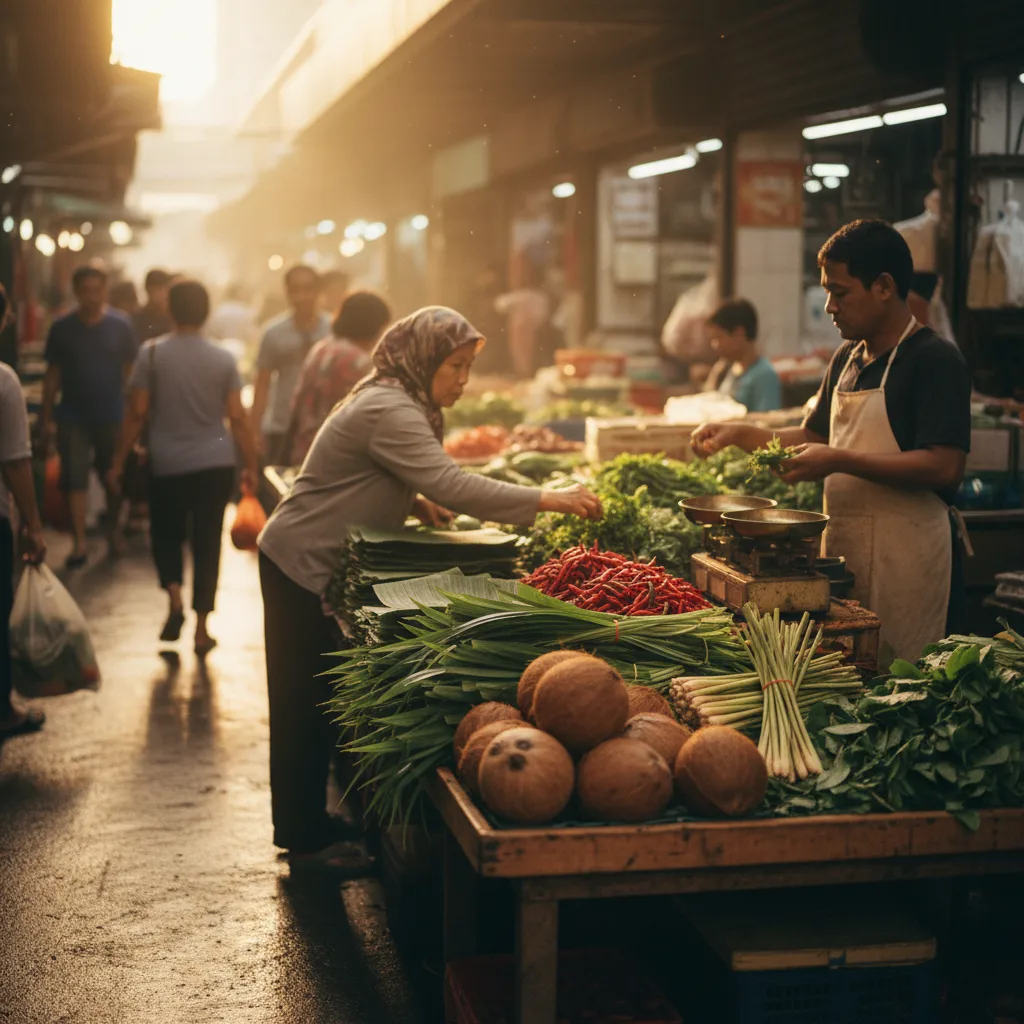
Once you have eaten, head downstairs into the wet market. It is one of the best places in Singapore to see the ingredients behind the dishes you just enjoyed: bundles of pandan and lemongrass, fresh turmeric, galangal, piles of chillies and freshly grated coconut.
The dry goods stalls sell spices, dried anchovies and banana leaves, while textile shops nearby stock batik and baju kurung fabric. Bring a reusable bag, take your time and be polite with photos. Vendors are busy in the morning, so ask before pointing a camera at anyone.
Walking From Geylang Serai to Joo Chiat
From the market, a pleasant walk leads south into Joo Chiat. The streets change quickly from busy shops to rows of colourful Peranakan terrace houses with patterned tiles, carved doors and pastel facades. Morning light is kind to these houses, and the pavements are still quiet.
Along the way you will pass small mosques, traditional shophouses and modern cafes that sit side by side. It is a gentle stroll that shows how Malay, Peranakan, Chinese and newer communities have shaped this part of the east over generations.
Festival Mornings and Ramadan
During Ramadan, daytime eating at Malay stalls slows down because many Muslims are fasting, and the neighbourhood's energy shifts toward the evening bazaar. If you visit in that month, choose a coffee shop with mixed stalls for breakfast and come back after sunset for the lively night market.
In the weeks around Hari Raya, Geylang Serai glows with festive lights and stalls selling cookies, kuih and new clothes. Morning visits during this season are busy but joyful, and you may see families buying cakes and outfits for the celebrations ahead.
Who This Breakfast Suits Best
A Geylang Serai breakfast is perfect for travellers who want a taste of Singapore beyond the city centre, for food lovers curious about Malay cooking and for anyone hosting Muslim friends or relatives. It is also a calm, cheerful family outing, since children tend to love the bright kuih and sweet drinks.
If you are short on time, a plate of lontong and a teh tarik takes very little of your morning. If you have hours to spare, combine breakfast, market shopping and the Joo Chiat walk for a full half day in the east.
Let Karpo APP Help You Choose
Not sure where to start? Open the Karpo APP and tell it what you are craving: a busy market breakfast with lots of choice, a quiet corner kopitiam for lontong or a halal spot for a family group. Karpo can suggest breakfast places around Geylang that fit your morning and the people you are bringing.
Ask Karpo for more information.
Keep reading
- Kovan Hainanese Curry Rice Lunch Picker: Heartland Plates
 Tampines Mee Rebus Breakfast Picker: Round Market Bowls
 Jurong West Mee Rebus Breakfast Picker: Boon Lay Bowls