 Chinatown New in Town Weekend Planner: Errands and Temples
Weekend Plans
Botanical Garden Near Me in Jurong: Lakeside Water Lilies and Bonsai
Experience the newly restored Chinese Garden and Japanese Garden at Jurong Lake Gardens, showcasing Singapore's largest water lily collection, century-old bonsai, and scenic lakeside trails.
For garden enthusiasts seeking an expansive aquatic and classical botanical garden near me in western Singapore, the newly revitalized Chinese Garden and Japanese Garden at Jurong Lake Gardens offer an unforgettable lakeside experience. Situated at 1 Chinese Garden Road, Singapore 619795, these historic island gardens originally opened to the public in 1975 under the vision of renowned Taiwanese architect Professor Yuen-chen Yu. Following a five-year comprehensive restoration spearheaded by the National Parks Board, the ninety-hectare property officially reopened to the public in September 2024. The revitalized landscape seamlessly marries traditional Asian garden aesthetics with cutting-edge ecological water management, establishing an essential cultural and horticultural sanctuary along the shores of Jurong Lake.
The September 2024 Reopening of Heritage Lakeside Sanctuaries
The origins of these gardens are deeply intertwined with Singapore's post-independence industrialization era. In the early 1970s, as the surrounding Jurong district was rapidly developed into an industrial manufacturing powerhouse, government leaders recognized the critical need for a sprawling green lung where factory workers and suburban families could reconnect with nature. The Chinese Garden was designed in the grand Northern Chinese imperial style characterized by sweeping tiled roofs and majestic stone bridges, while the adjacent Japanese Garden embraced the contemplative Zen aesthetic of quiet gravel courtyards and wooden teahouses. Over the decades, these twin islands became beloved community landmarks cherished for wedding photos and family picnics.
The major restoration completed in September 2024 preserved historic monuments such as the seven-story Cloud Tower Pagoda and the iconic Twin Pagodas while thoroughly upgrading botanical collections and accessibility. Engineers reshaped shorelines into naturalized bio-swales and floating wetlands that naturally cleanse urban runoff before it enters Jurong Lake. Today, the gardens showcase thousands of specialized wetland plants, rare aquatic flowers, and mature coastal trees, demonstrating how historic civic landscapes can be revitalized to meet modern environmental standards.
The Water Lily Garden and Tropical Aquatic Cultivars
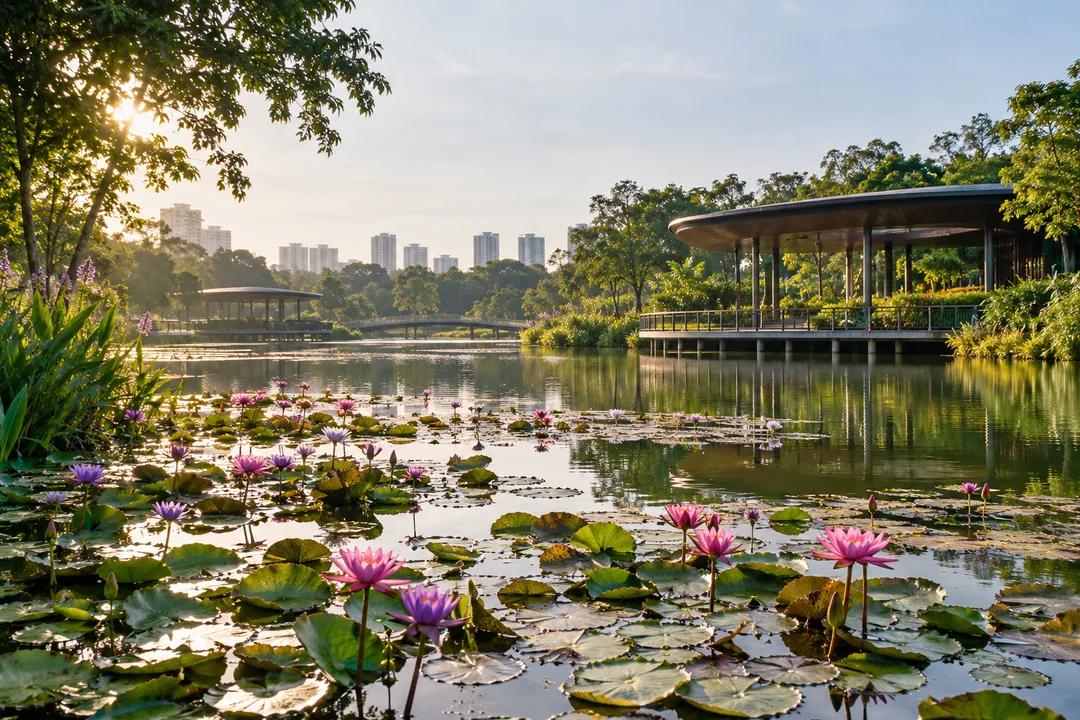
The crown jewel of the restored landscape is the expansive Water Lily Garden, which boasts the largest collection of water lilies and lotus cultivars in Singapore with more than one hundred and fifty distinct varieties. Meandering timber boardwalks hover just inches above the water surface, allowing visitors to view both day-blooming and nocturnal tropical water lilies (Nymphaea) in shades ranging from deep violet and cobalt blue to pure ivory and sunset peach. The aquatic beds are bordered by lush plantings of papyrus reeds, Japanese sweet flags, and yellow iris that provide vital shelter for dragonflies and nesting waterbirds.

A specialized microclimate conservatory pavilion nearby protects sensitive aquatic species, including the massive Victoria amazonica giant water lily, whose circular floating leaves can reach nearly two meters in diameter with upturned rims. Interpretive exhibits explain pollination biology, showing how these remarkable night-blooming flowers change color from pristine white to rose pink after being pollinated by beetles in the wild. The tranquil reflection of pagodas upon the lily-dappled water surface creates one of the most picturesque botanical vistas in the entire country.
The Courtyard Bonsai Collection and Serene Bamboo Pavilions
Another standout horticultural feature is the prestigious Bonsai Garden, housed within an authentic Suzhou-style walled courtyard adorned with decorative carved windows and covered corridors. This sanctuary curates more than one hundred heritage penjing and bonsai specimens, many of which were gifted by international donors and master arborists over the past half-century. The collection includes century-old banyan trees, twisted juniper specimens, and cascading water jasmines trained using traditional wire-binding and pruning techniques that mimic ancient, wind-swept mountain trees.
Stepping across the connecting bridge into the Japanese Garden leads visitors to the newly planted Bamboo Grove, where hundreds of towering bamboo culms create a rustling canopy that filters midday tropical sun. The surrounding Sunken Garden features vertical green walls draped with native ferns, staghorn epiphytes, and air plants, surrounding a circular water feature where natural breezes are cooled by continuous evaporative currents. Stone lanterns, dry rock zen courtyards, and tranquil streams bordered by weeping tea trees provide countless peaceful alcoves for quiet meditation. Nearby, the Floral Garden showcases seasonal blossoms, showcasing vivid bougainvillea, golden trumpet vines, and ornamental cannas that bloom vigorously under full equatorial sunlight.
Cool Breeze Strolls and Practical Arrival Information
Visiting Jurong Lake Gardens is remarkably budget-friendly, as entry to the entire park, including both the Chinese Garden and Japanese Garden, is completely free for all guests throughout the year. The outdoor garden grounds open daily from 5:30 am until 10:00 pm, while specific pavilions such as the Bonsai Garden and indoor exhibition galleries welcome visitors from 9:00 am until 6:00 pm. Because of the vast open water surface, morning breezes make an early walk between 6:30 am and 9:00 am exceptionally pleasant before the afternoon sun intensifies.
Reaching the garden entrance is seamless via the Singapore mass transit network. Chinese Garden MRT station along the East-West Line sits directly opposite the main entrance gate, requiring only a three-minute stroll along a covered sheltered walkway to reach the iconic 13-Arch Bridge. For drivers, designated parking lots are located at both the northern gate on Chinese Garden Road and the southern entrance along Yuan Ching Road. The park features barrier-free universal design with wide concrete promenades, accessible public restrooms, and continuous ramps connecting every major pavilion.
Lakeside Boardwalk Connections and Neighborhood Dining in Jurong
Beyond the Chinese and Japanese islands, the broader Jurong Lake Gardens complex encompasses Lakeside Garden to the west, where visitors can stroll along the scenic Rasau Walk boardwalk. This elevated wooden trail weaves through a restored freshwater swamp forest alive with over fifty species of native river mangrove trees, wild sedges, and pitcher plants. Strategically positioned bird-watching hides overlook tranquil inlets where families of wild smooth-coated otters play and white-bellied sea eagles hunt for fish above the open water, creating an extraordinary wildlife haven directly adjacent to suburban residential estates.
After concluding your botanical tour, take a brief walk across Yuan Ching Road into the surrounding Jurong East neighborhood to sample authentic local hawker fare. Nearby food centers and coffee shops offer regional specialties such as freshly tossed Hainanese chicken rice, crispy prata, and iced sugarcane juice.
Ask Karpo for more information.
Keep reading
- Chinatown New in Town Weekend Planner: Errands and Temples
 Kampong Glam New in Town Weekend Planner: Mosque to Murtabak
 Holland Village New in Town Weekend Planner: Meet People