 Kovan Hainanese Curry Rice Lunch Picker: Heartland Plates
Restaurants
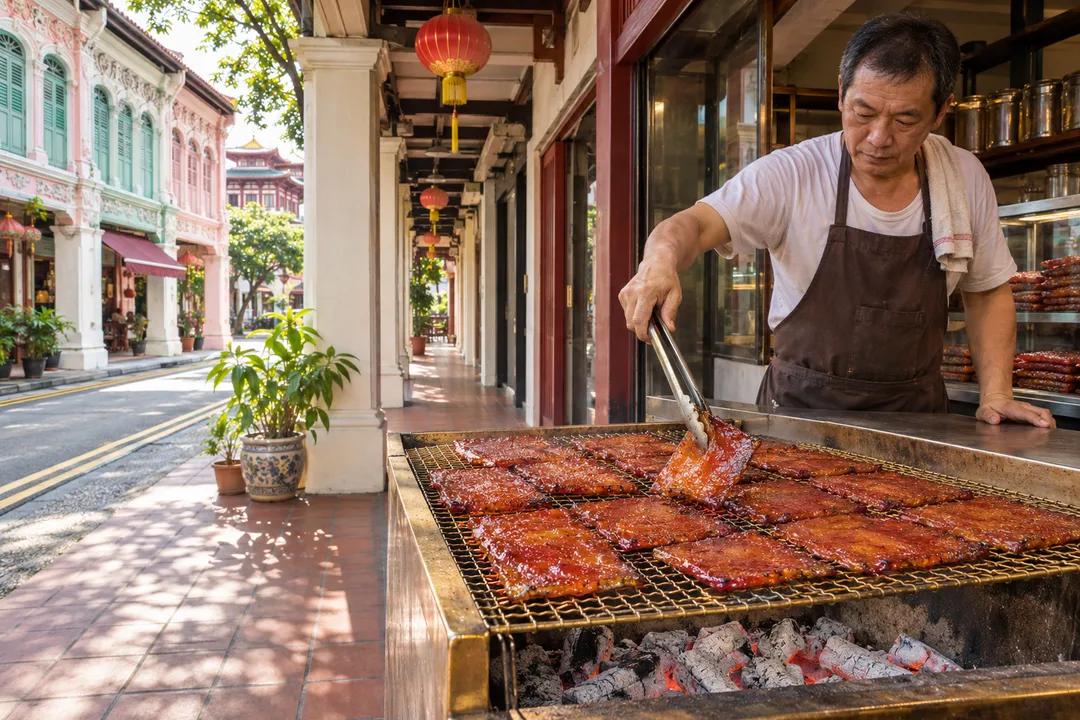
Chinatown Bak Kwa Shop Crawl: Charcoal Grids to Pick
Walk a Chinatown bak kwa shop crawl from New Bridge Road charcoal grills to Pagoda Street shophouses. Compare sliced pork belly with minced honey squares.
Two architectural conservators and their visiting Ipoh uncle start their Chinatown bak kwa shop crawl at the breezy intersection of New Bridge Road and Pagoda Street, arriving while grill masters are still raking fresh mangrove charcoal embers beneath woven brass wire grids. Instead of joining a single long queue for heavy gift hampers, the trio approaches the historic district as a comparative tasting walk: pitting smoky, hand-fanned minced pork squares along the main thoroughfare against thick-cut whole-muscle belly slabs and chili-flecked medallions tucked along Temple Street and Smith Street. Moving between open shophouse fronts lets you sample each caramelization style while the maltose glaze is still bubbling and warm from the coals.
New Bridge Road Open Charcoal Hearths vs Shophouse Side-Street Counters
Stepping under the covered five-foot ways along New Bridge Road brings you face-to-face with wide brick-lined braziers where sheets of marinated pork are flipped rhythmically with long steel tongs. At these flagship street-front hearths, the focus falls on classic minced pork pressed into thin, uniform squares and dried on bamboo mats before hitting the high-heat charcoal grid. The Ipoh uncle always watches the griller's wrist motion before choosing a counter: constant turning over white-hot ash produces tiny, lacy black char blisters across the edges without scorching the sweet fish-sauce and sugar cure at the center.
Turning inward toward Pagoda Street, Mosque Street, and Smith Street shifts the pace from bustling boulevard braziers to narrower shophouse parlors where specialty cuts take center stage. Here, smaller counters showcase whole-muscle sliced pork loin, gourmet three-layer belly cuts, and bite-sized coin medallions brushed repeatedly with honeyed maltose. Tasting a smoky, thin-pressed boulevard square right before a chewy, marble-streaked side-street slice reveals how meat grain and fat distribution completely change the way charcoal aroma lingers on the palate.
Comparing Minced Pork Squares, Sliced Loin, and Golden Belly Ribbons
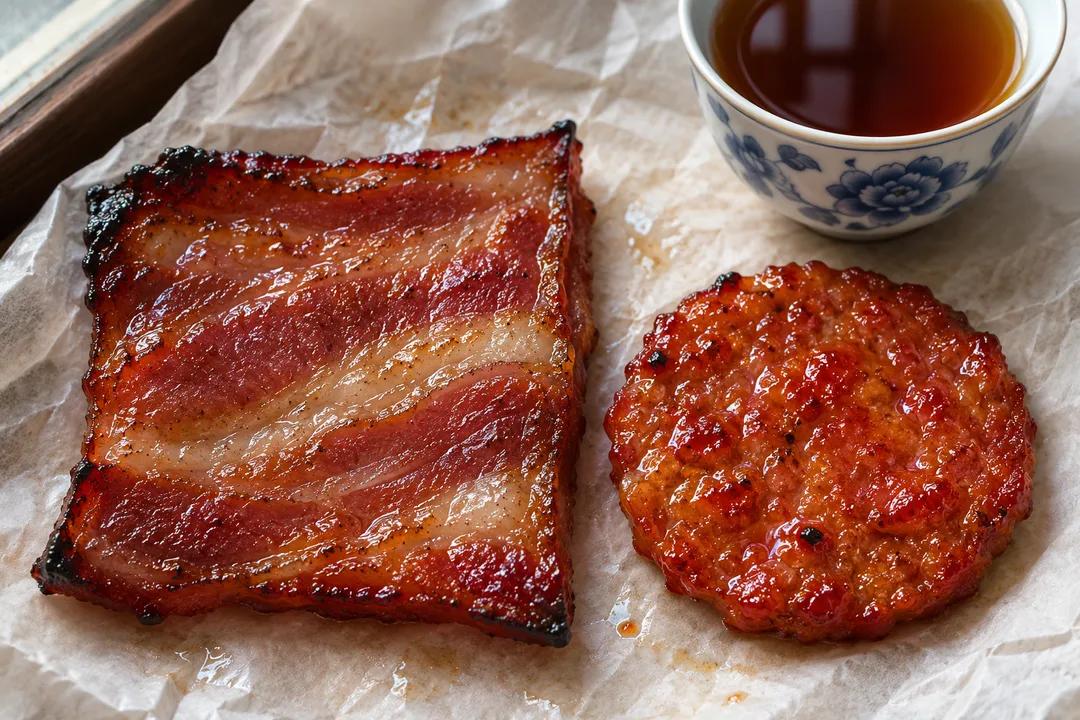
Examining the cross-section of a freshly sheared piece on wax paper tells you everything about how the meat was prepared before hitting the fire. Traditional minced bak kwa is ground coarsely so the pork absorbs five-spice, aged soy, and rose wine evenly, yielding a tender, springy bite that pulls apart effortlessly between the teeth. Because the fat droplets are emulsified throughout the sheet, every square glistening under the warm countertop lamps delivers a balanced, juicy mouthfeel that works well for casual walking snacks.
Whole-muscle sliced bak kwa and marbled belly strips offer a bolder, more textural experience for dedicated tasters. In sliced loin versions, the intact meat fibers require a firmer chew that releases deep savory notes before the sweet glaze takes over, while thick-cut belly ribbons alternate layers of lean meat with translucent bands of rendered fat that crisp like candied bacon over the coals. When sampling chili-infused sheets, look for visible crushed chili seeds embedded in the meat rather than a surface sauce brushed on at the end, ensuring the heat warms the throat gradually without masking the woodsmoke.
Requesting Sheared Bite-Sized Strips and Greased-Paper Ventilation
Walking with whole palm-sized sheets of sticky glazed meat quickly turns messy in tropical humidity, so experienced crawlers always ask the counter staff to shear their tasting portions into narrow finger strips with heavy kitchen scissors. Most Chinatown grillers happily snip a single square or a small weight parcel into neat rectangles and tuck bamboo toothpicks into the corner of the pouch. Keeping the top fold of the wax-paper bag slightly open for the first few minutes prevents trapped heat from steaming the caramelized sugar crust into a soft, tacky film. Their uncle also carries a pack of dry paper napkins to slip around the outer sleeve so warm maltose never smudges their sketchbooks.
Between savory stops, duck into a traditional tea merchant alley along Sago Street or Mosque Street to pair your warm strips with freshly brewed Tieguanyin or aged Pu-erh tea. The astringent, mineral finish of hot Chinese tea strips away the rich maltose and rendered pork fat from your tongue far better than iced fruit sodas, letting you distinguish subtle differences in fish-sauce salinity and charcoal wood aroma at your next shophouse counter. If you prefer a cold refresher under the midday sun, look for a traditional herbal tea stall serving unsweetened bitter gourd or chrysanthemum brew in thick glass mugs.
What to Skip and How to Bypass Tour-Coach Bottlenecks
Skip pre-sealed vacuum packs sitting on front display tables if your goal is immediate street tasting, as vacuum-packed slices lose their crisp blistered edges and need home reheating to wake up the fat. You should also pass on novelty cheese-topped or synthetic truffle-oiled squares when a grill is working at peak capacity; those heavy toppings mask the delicate smokiness of mangrove charcoal that defines heritage Chinatown roasting. If a tour group suddenly blocks a prominent corner shop on New Bridge Road, do not stand in the exhaust heat waiting for a single tray while four neighboring hearths sit wide open.
Opening the Karpo APP under the shophouse arcade helps you spot parallel grill counters on Kreta Ayer Road and Banda Street, compare walking loops across the pedestrian lanes, and pivot your tasting sequence in seconds. By checking nearby street clusters on the map, the conservators easily detour around crowded intersections and hit quieter heritage braziers while their coals are firing fresh batches. Pinning your favorite shophouse corners inside the route view also makes it effortless to swing back at the end of the walk to pick up larger takeaway parcels for family dinner.
Cooling Down Through Banda Street Pavilions and Ann Siang Hill
Once your tasting pouches are neatly folded into a canvas tote, follow the shaded footpath behind the Buddha Tooth Relic Temple toward the breezy timber pavilions of Banda Street and Kreta Ayer Square. Elderly residents gather here around stone checkerboards beneath sprawling angsana trees, offering a calm, shaded pocket where you can compare your final chili-pork and honey-coin samples away from the main pedestrian crush. Sitting on the low granite ledges lets you study the contrast between translucent belly fat ribbons and finely ground shoulder squares while listening to the clack of Chinese chess pieces.
From Kreta Ayer, a gentle uphill stroll along Club Street and Ann Siang Hill winds past restored guildhouses with carved timber fretwork and painted louver windows. Finishing your walk at the leafy wooden boardwalks of Telok Ayer Green or Duxton Plain Park lets the smoky sweetness of the crawl settle nicely before you catch an afternoon train home with your favorite roast parcels.
Ask Karpo for more information.
Keep reading
- Kovan Hainanese Curry Rice Lunch Picker: Heartland Plates
 Tampines Mee Rebus Breakfast Picker: Round Market Bowls
 Jurong West Mee Rebus Breakfast Picker: Boon Lay Bowls