 Kovan Hainanese Curry Rice Lunch Picker: Heartland Plates
Restaurants
Bak Kut Teh Supper Picker: Rangoon Road vs a Klang Friend
A Rangoon Road bak kut teh supper picker for hosting a Klang friend: peppery Teochew bowls versus dark herbal soup, what to order, and a late temple walk after.
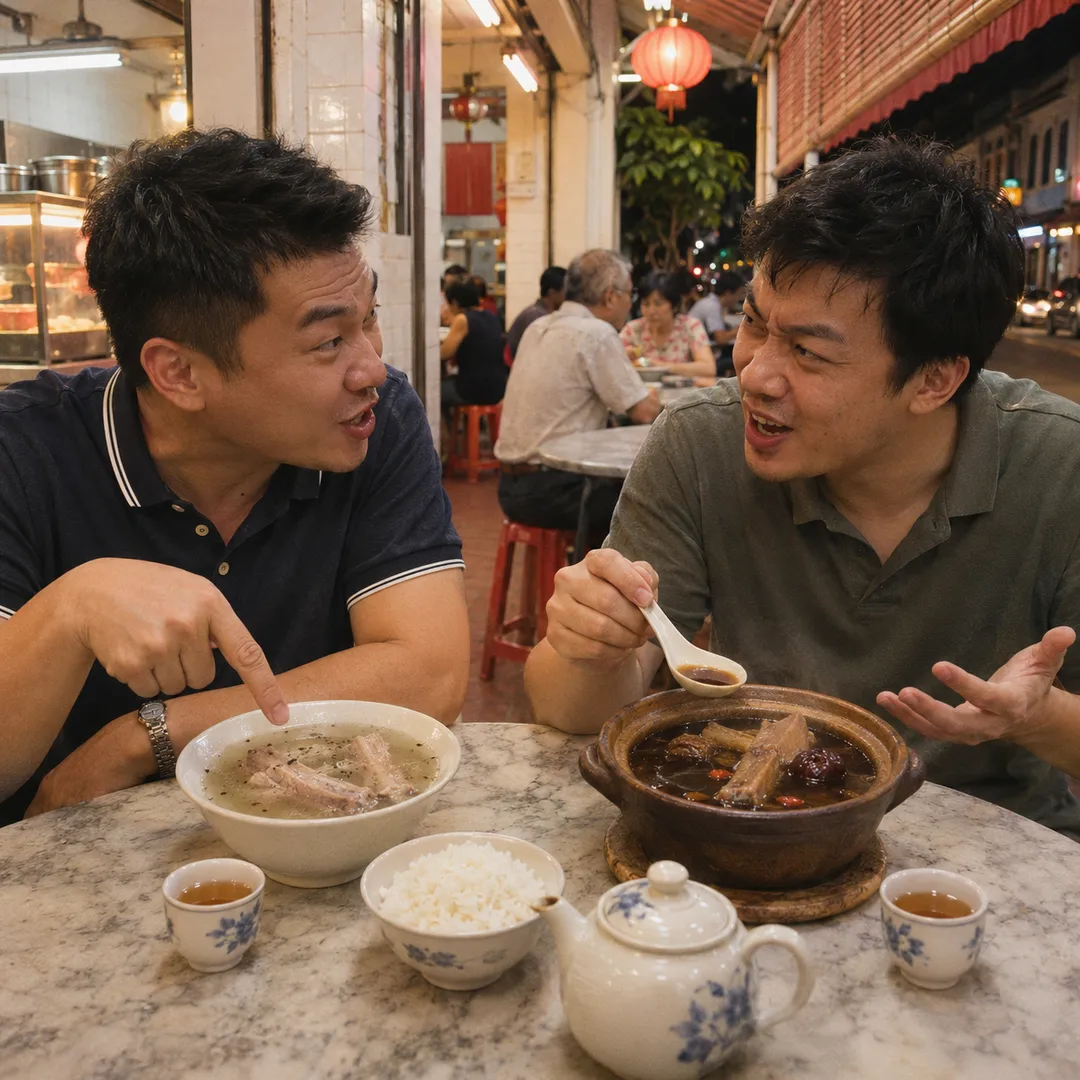
Rangoon Road bak kut teh is where Wei Jie takes friends who think they already know the dish. This time it is Kok Leong, who grew up in Klang, where the soup is dark, herbal and served in claypots. Singapore's Teochew style is pale, peppery and full of garlic. The two have argued about it for a decade. This bak kut teh supper picker turns that argument into a plan: what to order, how to judge it and where to walk afterwards.
The Argument They Bring to the Table
Kok Leong's position is simple. Real bak kut teh, he says, is black with soy and fragrant with angelica, star anise and cinnamon, the way his grandfather ate it at dawn before work in the Klang port. Wei Jie's answer is just as firm. A clear broth hides nothing, he says, so the pork and the pepper have to be good. Both are right, and that is why the evening works as a friendly contest.
The story most families tell is that the dish fed Hokkien and Teochew labourers on the docks on both sides of the causeway, a cheap pot of bones and spices that kept men going through heavy shifts. Each community shaped it to its own taste. Rangoon Road, with its run of rib soup houses, is a good place to taste the Singapore side of that story late in the evening.
Why Rangoon Road for This Debate?
The road takes its name from the old capital of Burma, and it sits in the Farrer Park pocket between Little India and Balestier. Its low shophouses and side lanes give it a residential feel, so supper here is quieter than in the busier food streets downtown. Families from nearby flats come in after a late dinner, office workers arrive in pairs and taxi drivers park for a quick bowl.
For a visitor from Malaysia, that ordinary crowd is part of the point. Kok Leong does not want a showpiece. He wants to see how Singaporeans eat the dish on a weeknight, with rice, tea and a refill or two. He wants to hear the clatter of ladles, watch the uncle at the stove top up the bowls and see whether locals reach for the chilli dish before tasting. Rangoon Road delivers exactly that, and the pepper hits hard enough to make his case for him or against him.
How Should Two Friends Order?
Order one bowl of the house ribs each, plus one plate of braised pig trotters to share, because the dark braise gives Kok Leong something closer to home. Add salted vegetables, a portion of beancurd skin and plain rice. If the menu has a dry version cooked with dried chilli and dark sauce, it is worth a try too, since it shows how cooks borrow from the herbal school.
Taste the clear broth first, before any chilli or soy. Notice the white pepper at the back of the throat and the soft sweetness of garlic cooked whole. Then ask for a refill and taste again: the second ladle is often stronger. That is when Wei Jie usually wins a point. Skip the tea-leaf eggs if you are both full; they are pleasant but add little to the comparison.
What Does the Tea Ritual Tell You?
Small clay pots of strong oolong arrive at many tables, with a kettle of hot water on the side. Kok Leong recognises this from Teochew relatives: the tea is brewed short and bitter so it cuts through the fat. Pour for your guest first and keep the pot topped up. When the lid of the pot is turned or tilted, staff will usually come by with more water.
The tea also slows the meal down, which is what a supper debate needs. Between cups, the friends trade notes on their families, their kids' schools and the price of everything in both countries. The bowls are almost an excuse. Honest advice: if you are not a tea drinker, still try one cup, because the bitterness after peppery soup makes sense of the whole meal.
Who Wins the Contest?
There is no official verdict, but the two have a scoring rule. Each gives marks for broth, meat, sides and atmosphere, and the loser pays for the next supper in Klang. Kok Leong usually admits the pepper broth is cleaner and better for a hot night. Wei Jie concedes that the herbal pot is more comforting in the rain. Both agree the pork has to fall off the bone either way.
If the queue on Rangoon Road is too long, do not stand around for half an hour. Walk a few minutes to another rib soup house in Balestier or settle for a coffee shop fish soup on a side street. The comparison works with any honest bowl, and the conversation matters more than the specific address. On rainy nights, the friends simply duck into the nearest place with a free table and judge whatever arrives.
Where to Walk After the Last Refill
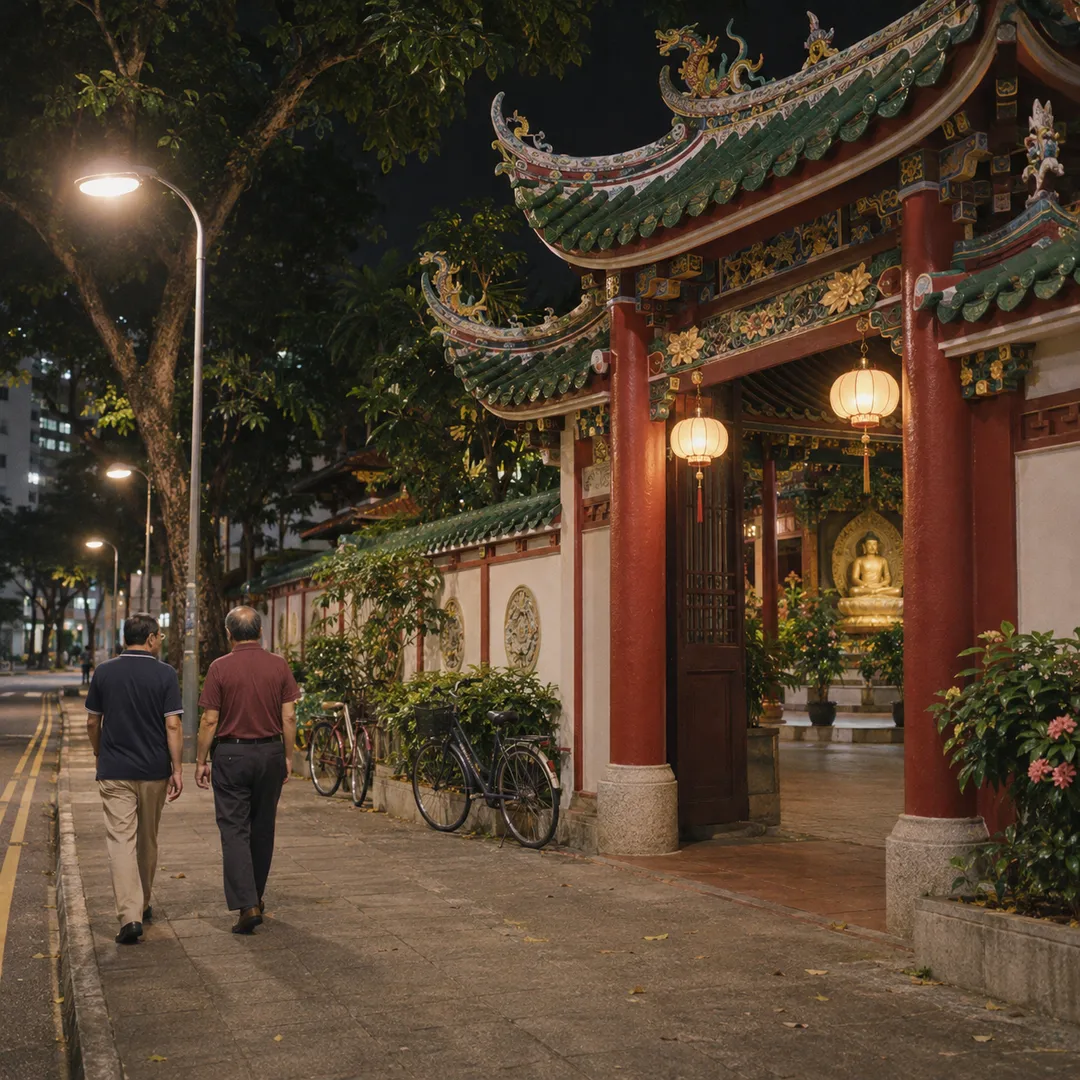
Head up to Race Course Road, named for the racecourse that once ran on the field at Farrer Park. On one side sits the Thai-style Buddhist temple known for its tall seated Buddha, and across the road the older Chinese temple with its carved roof ridges. At night both are closed, but their gates and roof lines catch the street lights beautifully.
Walk on toward Serangoon Road and you slide into the edge of Little India, where flower garland stalls and sweet shops may still be clearing up. Kok Leong always buys a bag of something to take back across the border. It is a gentle loop of twenty minutes that lets the soup settle and turns a meal into a neighbourhood night. Wei Jie points out the shophouse windows, the old signboards and the playing field, which still fills with footballers at weekends.
Keeping the Rivalry Going With Karpo
The friends now plan a bowl in each country every year. On the Singapore side, Wei Jie uses the Karpo APP to search for bak kut teh around Farrer Park or Balestier and saves new places to test. Karpo is also useful for finding a nearby dessert or late coffee shop when the debate needs a second round.
Next year the contest moves to Klang, and Kok Leong has promised a dawn breakfast at a herbal claypot house near the port. Until then, Rangoon Road holds the Singapore title. Bring a friend with strong opinions, order for the comparison rather than for volume, pour the tea and let the pepper make its argument.
Ask Karpo for more information.
Keep reading
- Kovan Hainanese Curry Rice Lunch Picker: Heartland Plates
 Tampines Mee Rebus Breakfast Picker: Round Market Bowls
 Jurong West Mee Rebus Breakfast Picker: Boon Lay Bowls