 Kovan Hainanese Curry Rice Lunch Picker: Heartland Plates
Restaurants
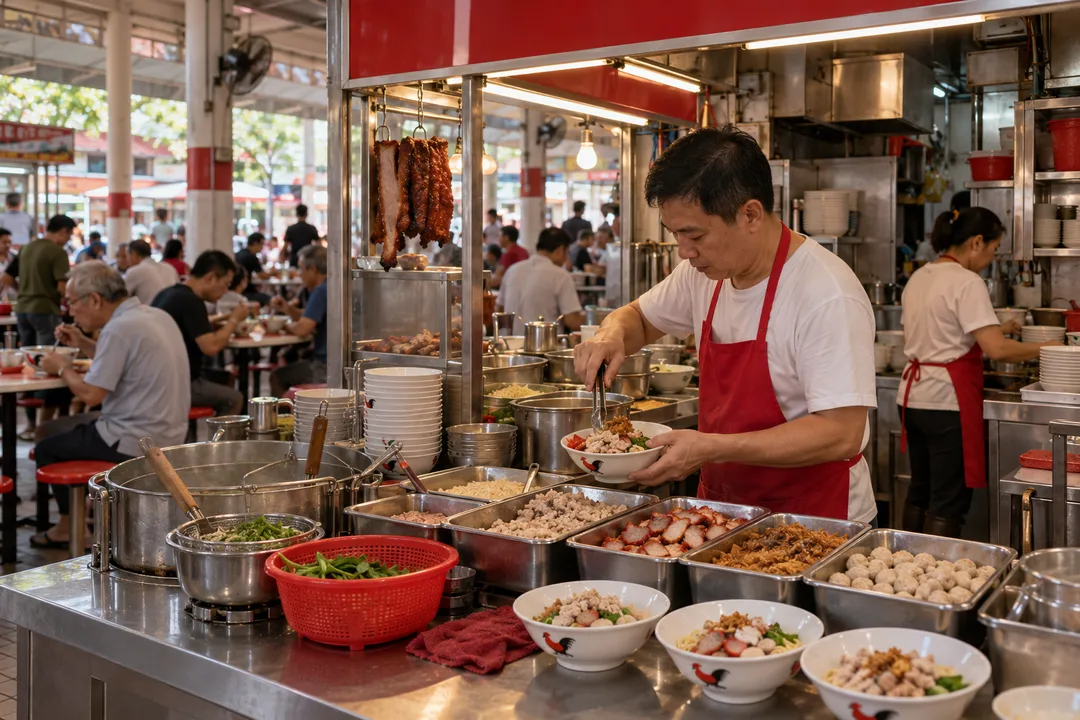
Tai Wah Bak Chor Mee: 1939 Recipe, Fast Chinatown Bowls
Tai Wah Pork Noodle at 531A Upper Cross St serves bak chor mee in Hong Lim Market. Its 1939 recipe story and compact Chinatown walk make the bowl easy to plan.
Tai Wah Pork Noodle (Hong Lim) is at 531A Upper Cross St #02-16, inside Hong Lim Market & Food Centre in Singapore. The location page on taiwahnoodles.com places the stall in the Chinatown/Hong Lim cluster, so this is the bak chor mee near me choice for a bowl in a real hawker centre rather than a restaurant dining room. The useful first decision is simple: enter the market, find the second-floor stall line, and keep the stall address visible because Upper Cross Street has several food destinations within a short walk. The official site identifies Tai Wah Pork Noodles as the brand; its story traces the recipe to 1939, when Tang Joon Teo started Tai Wah Teochew Minced Pork Noodles at Taiwah Coffee Shop on Hill Street. That long lineage gives the bowl a clear sense of place before you even sit down.
What Makes This Bowl Taste Like Tai Wah
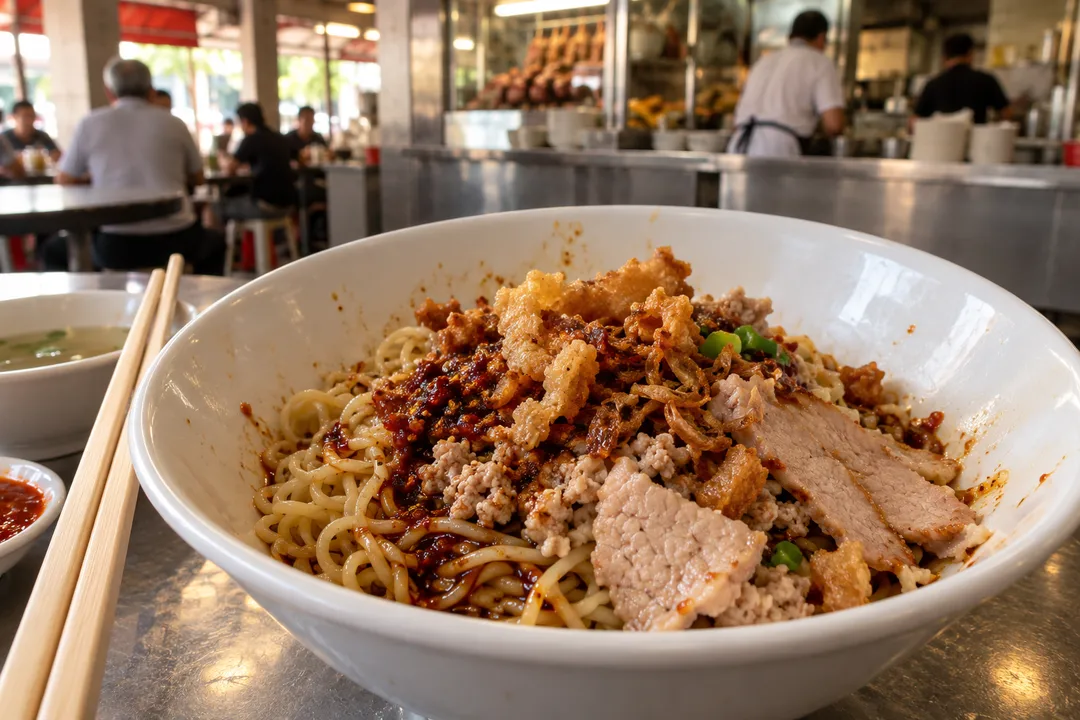
The bowl is built around the Teochew minced-pork-noodle idea: springy noodles, minced pork, pork slices, vinegar, chili and the crisp, savory bits that make each forkful alternate between tang and richness. At a hawker counter, the order is assembled quickly, but the flavor is not random. The brand history specifically calls out a secret chili-and-vinegar concoction and noodles cooked to minute precision. Read that as a practical ordering clue: taste the first few strands before adding more chili, and do not bury the sauce under extra condiments immediately. A classic bak chor mee is already a complete meal, so a first visit works best when you focus on the bowl rather than trying to turn the stop into a multi-dish feast.
A Hawker-Centre Rhythm, Not A Restaurant Pace
Hong Lim Market & Food Centre has a different tempo from a table-service restaurant. People arrive, scan the queue, order at the counter and look for an open seat. A small party should split up only after one person has secured a table; carrying bowls through a crowded aisle while searching is awkward and slows everyone behind you. The most considerate rule is to keep bags under the table and leave seats open for the person collecting the food. Tai Wah’s official location is a stall address, not a reservation page, so treat the visit as a walk-in hawker stop. Go earlier if you want the most relaxed bowl, or use a weekday window when the lunch rush is less compressed.
The Story Behind The Stall
Tai Wah’s own brand story is unusually specific. Tang Joon Teo migrated from southern China, settled in Singapore and began selling Teochew minced pork noodles in 1939. The narrative is about making a living while recreating a taste of home, then refining the chili, vinegar and noodle technique until the stall became a recognizable Singapore name. That history matters because the dish is not presented as an abstract “local specialty”; it is a family-style recipe attached to Hill Street, hawker work and the movement of people through the Straits Settlements. At Hong Lim, the address connects that story to a modern food centre where office workers, residents and visitors share the same tables.
How To Order Without Overcomplicating It
Start with one bowl per person and ask for the version you actually want rather than ordering several variations on the first round. If you enjoy heat, add chili gradually. The vinegar is there to sharpen the pork and noodles, not to turn the bowl sour, so mix a little, taste, then adjust. If you are sharing with someone new to bak chor mee, let them try a bite before adding extra sauce. A bowl that is mixed too aggressively can lose the contrast between springy noodles, tender meat and crisp toppings. The best small ritual is to eat the first third plainly, the second with a little chili, and the last with the full sauce balance.
When The Queue Feels Long
A visible line at a famous hawker stall does not always mean a long wait, because bowls move continuously. Watch how many orders are ahead and whether the counter is already plating. If the queue stops moving, let the group take a short lap around the centre instead of crowding the pickup area. Hong Lim’s surrounding streets also make a useful fallback: you can pause in the market, find a drink, and return when the collection space clears. The point is to preserve the bowl’s texture. Noodles left in a takeaway container while you wander will not eat the same as a bowl enjoyed promptly at a market table.
A Chinatown Walk After Lunch
Once the bowl is finished, walk out toward Upper Cross Street and let the neighborhood do the second half of the visit. The Chinatown/Hong Lim area rewards a short, unhurried loop: move from the food centre’s practical bustle to shophouse façades, small storefronts and the denser lanes around the central Chinatown streets. Keep the walk close rather than planning a cross-city itinerary. The meal is quick, and a 20–30 minute neighborhood loop gives you time to digest without turning a hawker lunch into an all-afternoon project. In wet weather, stay under covered stretches and use the market’s shelter as your reset point.
Who Should Pick Tai Wah
Tai Wah at Hong Lim suits a solo diner who wants a focused bowl, a pair sharing a quick Chinatown stop, or a visitor who wants to understand hawker food through one established noodle name. It is less suitable for someone seeking a quiet, leisurely dinner with table service or a long drinks list. The honest recommendation is to skip complicated side-order planning on the first visit. Let the noodles, minced pork, chili and vinegar explain why this style has endured. Once you know the flavor balance, you can decide whether a second bowl or another stall makes sense.
Practical Notes For 531A Upper Cross Street
The official address is 531A Upper Cross St #02-16, Hong Lim Market & Food Centre, Singapore 051531. The official location source is taiwahnoodles.com/locations/. Hong Lim is the relevant neighborhood label, and the stall is in the food centre rather than a standalone street-front restaurant. Bring a card or cash option that works for hawker stalls, keep the stall name handy when asking for directions, and plan to eat soon after collection. The practical sequence is: arrive, find the stall, order one bowl, secure a seat, taste before adjusting, then walk the nearby Chinatown lanes. Karpo APP can map the approach and add a short neighborhood stop around the meal.
A Bowl That Rewards Attention
Bak chor mee can look modest when it arrives: noodles, minced pork and a few toppings in a compact bowl. Tai Wah’s appeal is the precision underneath that simplicity. The official story emphasizes the noodle timing and the chili-vinegar recipe, and those details give you a way to eat more attentively. Notice how the sauce coats the noodles, how the pork changes the texture and how a small amount of chili lifts the whole bowl. This is not a dish that needs a long explanation at the table. It needs a few undistracted bites, a sensible pace and enough room to taste the work that made the name endure.
Plan The Stop, Then Let It Be Simple
A good Hong Lim visit does not require a packed schedule. Put Tai Wah first, allow a little space for the queue, and keep the post-meal walk nearby. The market setting supplies the atmosphere, while the bowl supplies the focus. If the group is hungry, order another item only after everyone has tasted the first bowl; if the group is full, leave the centre and enjoy Chinatown at walking speed. That flexibility is the real advantage of a hawker-centre stop. You get a specific dish, a specific address and a story that reaches back to 1939, without needing to manufacture a grand dining occasion.
Ask Karpo for more information.
Keep reading
- Kovan Hainanese Curry Rice Lunch Picker: Heartland Plates
 Tampines Mee Rebus Breakfast Picker: Round Market Bowls
 Jurong West Mee Rebus Breakfast Picker: Boon Lay Bowls