 Sentosa Christmas Light Up Walk Planner for Young Families
Free Things to Do
Autumn Walk Near Me: Singapore Botanic Gardens Heritage Trail
A practical Singapore guide to the Botanic Gardens Heritage Trail, with tropical seasonal texture, shaded routes, historic landmarks, and easy planning notes.
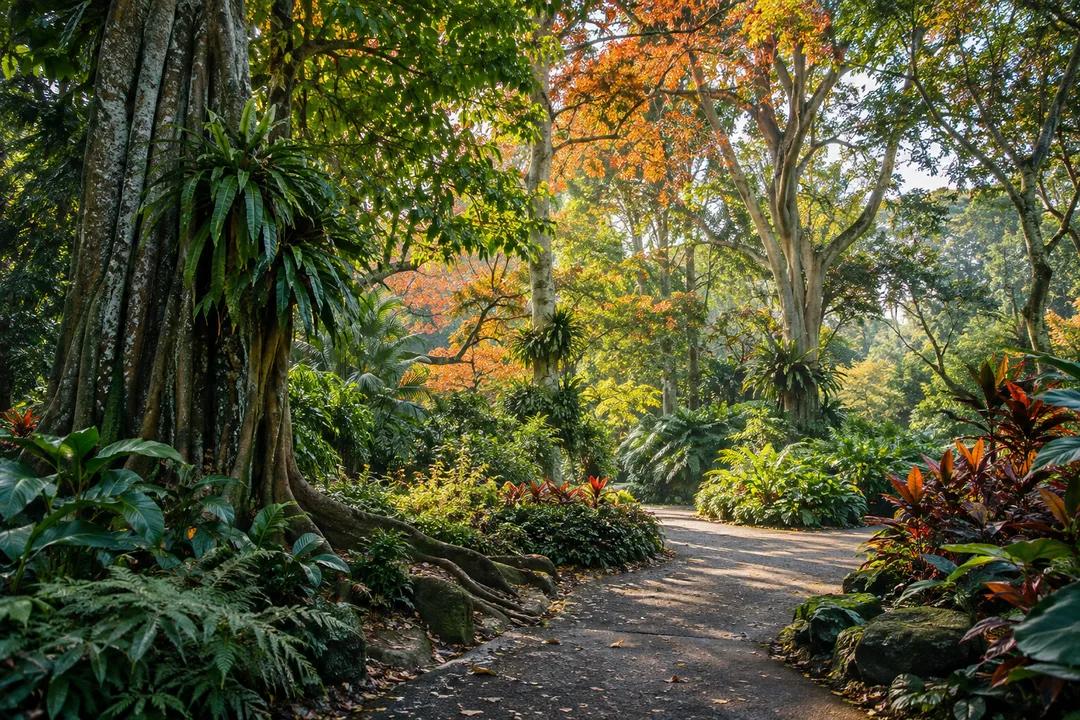
Singapore does not have a classic autumn, but the Singapore Botanic Gardens Heritage Trail gives an autumn walk near me a different, tropical meaning. At 1 Cluny Road, Singapore 259569, the gardens turn a seasonal-search phrase into a walk about shade, rain, tree age, and changing light. The point is not red leaves on a northern calendar. It is the feeling of moving through a layered landscape when the city heat briefly gives way to canopy.

Autumn without a fall season
Begin at the Tanglin side and let the first section stay slow. The Botanic Gardens are not just a green shortcut between roads; they are a living collection with history, labels, and distinct spaces. A heritage trail gives you a reason to look beyond the largest tree or most photogenic pond. Read the signs that explain what you are seeing, then step back and let the route become a walk rather than a series of facts.
The first practical rule is to respect the climate. Early morning or late afternoon gives you a more comfortable pace, while a compact umbrella is useful even when the sky looks bright. The shaded path is the must-see feature because it changes the physical experience: humid air, damp earth, filtered light, and sudden open lawns. In Singapore, autumn atmosphere comes from texture and temperature, not from a guaranteed foliage peak.
Start with the heritage layer
The gardens' heritage is tied to Singapore's botanical and colonial history, but the most rewarding version of that story is not a single date. It is the way old trees, formal planting, research-minded labels, and public recreation share one landscape. A visitor can be interested in plants, architecture, photography, or simply a cooler walk. The route works because it gives each kind of visitor something specific to notice without forcing a single pace.
Use one major landmark as your anchor and then take the long way around. The National Orchid Garden is a separate paid attraction, so do not assume every garden section is covered by the same access arrangement. If your aim is a free autumn walk near me, stay with the public garden routes and treat the orchid collection as an optional add-on rather than the definition of the day. That keeps expectations clear and the route flexible.
Look for the small signs of weather: leaves darkened after rain, water collecting at the edge of a path, roots lifting the ground, and bright green growth under a large canopy. The gardens reward close observation more than speed. A good walk may include several pauses of only two minutes, especially where a label explains why a tree matters. Those pauses also help you avoid overheating and make the heritage route feel less like a march.
A shaded botanical route
You will see several kinds of regular. There are runners who know which paths stay shaded, parents steering strollers toward flatter sections, students reading under trees, and photographers waiting for a gap in the walkway. The quiet rule is simple: keep clear of the main line when stopping. Do not block a bridge or narrow path for a group photo. The garden feels generous when visitors share its limited shaded space with care.
Food should be a pause, not the only reward. Nearby Tanglin and the Orchard edge give you many ways to finish, but the garden itself is best experienced before a heavy meal. Bring water, and do not plan a tightly timed second attraction immediately after entering. Tropical walks take longer than their map distance suggests because shade, rain, and humidity change how often you stop.
The details worth stopping for
My honest skip is trying to imitate a New England leaf-peeping itinerary. Singapore's landscape is not offering that, and forcing the comparison makes the visit feel like a substitute. Come for the heritage trees, orchid culture, ponds, and changing shade. The most satisfying autumn mood here is a cooler, slower city interval. Once you accept that, the garden becomes more distinctive and the route becomes easier to enjoy.
After the gardens, continue toward Tanglin for a neighborhood change of scale. The route can become a gentle urban walk through embassy-side greenery, cafés, and larger roads, or you can head toward Orchard for air-conditioning and transport. If you have energy, make the final section about contrast: public botanical space first, then Singapore's polished retail and dining city. That contrast is more memorable than adding another similar green space.
From Tanglin to a longer afternoon
A rain plan is easy if you make the heritage trail modular. Choose one shaded section, one indoor or covered pause, and one clear exit. If a storm arrives, do not hide under a narrow shelter with everyone else; move toward a wider covered facility or leave through the nearest gate. The garden is better when treated as a sequence of short experiences rather than a single route that must be completed.
For families, set a simple scavenger list: one unusual leaf shape, one labeled heritage tree, one bridge, and one place to hear water. For a solo visitor, take notes on how the same path changes after rain. For photographs, use the contrast between dark wet foliage and pale open sky. Avoid photographing strangers closely, and leave room for runners and maintenance staff to move through the public paths. The trail has a useful social rhythm because the garden serves both tourists and residents. Someone may be walking to exercise while another person is visiting for the first time. That means the best etiquette is not to claim the most scenic point for too long. Notice the tree, take the picture, and let the next person have the same view. The experience becomes calmer when no one has to compete with a tripod. Do not schedule the walk around a precise sunset promise. Cloud and rain change the light quickly, and tropical dusk does not behave like an autumn evening in London or Tokyo. Start with enough daylight for the route, then let the last section be optional. If the canopy grows dim, use the exit nearest your next destination rather than extending the trail simply to reach a planned distance. Practical notes: Singapore Botanic Gardens is at 1 Cluny Road, Singapore 259569. The public garden route is free, while some attractions inside the gardens have separate admission. Wear breathable shoes with grip, carry water and a compact umbrella, and build in shaded pauses. The official Singapore Botanic Gardens site is the source for visitor information and the garden's heritage context. This is an autumn walk near me for people who want the emotional shape of autumn without pretending Singapore has four temperate seasons. The heritage trail gives you old trees, wet paths, botanical stories, and a quiet transition from Tanglin greenery to the city beyond. Come early for comfort, slow down for labels, and let the weather create the color instead of waiting for leaves to change on command. The gardens were founded in 1859 and became Singapore’s first UNESCO World Heritage Site in 2015, adding a clear historical layer to the shaded route.
Ask Karpo for more information.
Keep reading
- Sentosa Christmas Light Up Walk Planner for Young Families
 Tanjong Pagar Christmas Light Up Walk Planner for Teams
 Bugis Christmas Light Up Walk Planner for Interfaith Friends