 Sentosa Christmas Light Up Walk Planner for Young Families
Free Things to Do
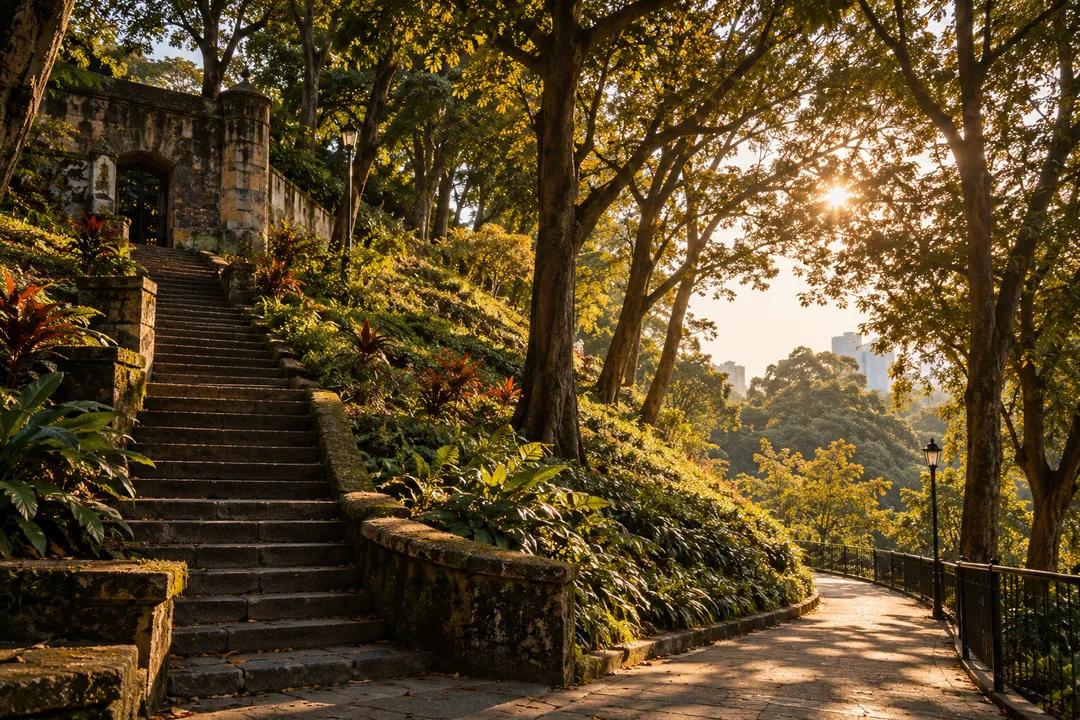
Autumn Walk Near Me: Fort Canning's Hilltop History
A practical Singapore guide to an autumn-style walk at Fort Canning Park, with shaded stairs, heritage layers, spice-garden details, and city-center planning tips.
Fort Canning Park turns an autumn walk near me into a hilltop history walk in the center of Singapore. NParks describes the 22-hectare park as a place of old trees, heritage, and the city's most diverse spice garden, and lists it as open 24 hours. The park is bounded by Hill Street, Canning Rise, Clemenceau Avenue, and River Valley Road, so the address is less a single gate than a set of entrances into a compact urban hill.
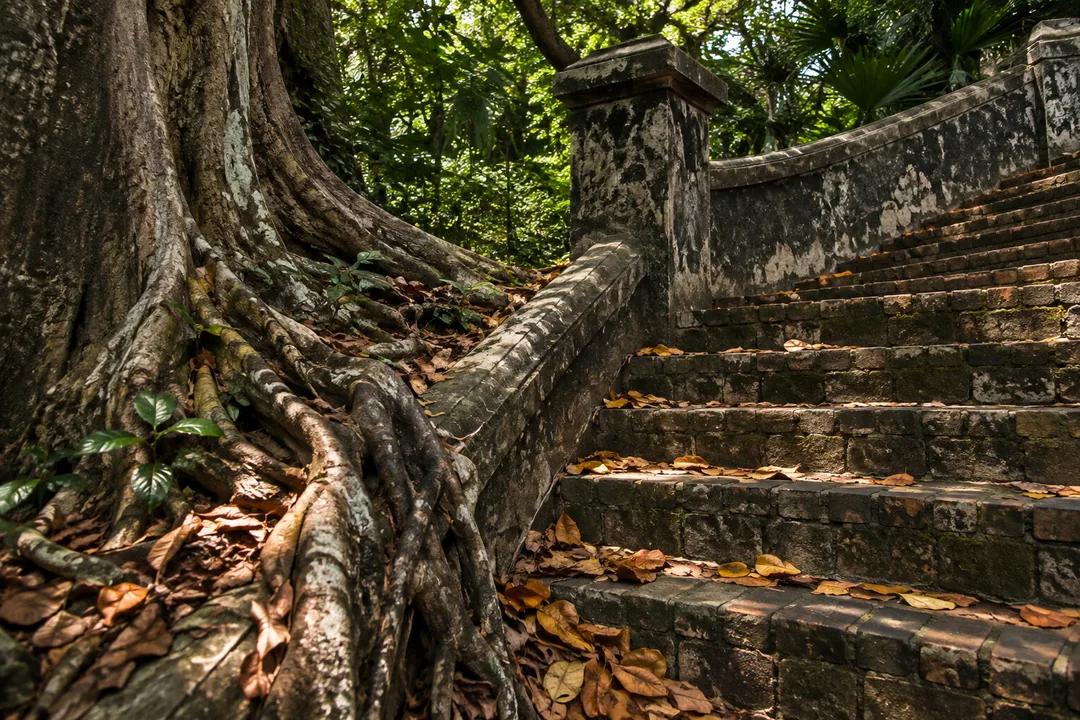
A hill in the middle of the city
Start from the side that matches your next destination, but give yourself time to understand the slope. Fort Canning is not a flat garden loop. Stairs, terraces, and changes in elevation are part of the story, and they also create the park's changing views. The first must-see is the transition itself: busy roads and museums below, then tree shade, old walls, and a quieter path above.
The park's historical layer reaches back centuries, and NParks highlights artefacts dating as far back as the 1300s. You do not need to memorize every date to feel the difference. Look for how the hill has been used, defended, planted, and reinterpreted. The route is strongest when history remains attached to a physical detail—an incline, a wall, a stair, or a clearing—rather than floating as text on a sign.
Follow the history under trees
The spice garden is the sensory center of the walk. It gives the route a different kind of autumn detail: leaves and bark with recognizable scents, dense planting, and a close-up experience after the open city views. Spend more time than a quick photograph allows. The garden rewards touching nothing and observing carefully. If you are walking with children, make scent and leaf shape the activity instead of turning the visit into a race.
Singapore's climate changes the way you plan the hill. A 24-hour opening schedule does not mean every hour feels equally comfortable. Morning and late afternoon give you a better chance of a walk with manageable heat, while wet stairs deserve more attention than a perfect route. Wear shoes with grip and keep one hand free on steeper sections. The park is accessible as a public destination, but the hill still asks for ordinary care.
There are several kinds of regular here: office workers cutting through between districts, visitors heading toward a museum, runners treating the slope as training, and families pausing at a shaded terrace. The quiet rule is to keep the stairs moving. If you stop for a photo, move to the side and do not leave bags across a landing. That small courtesy matters more on a hill than on a broad lawn.
The spice garden detour
Do not build the outing around one grand viewpoint. Fort Canning's pleasure comes from short reveals: a stair opening to trees, a path turning toward a historic marker, a spice garden appearing after a darker stretch. The most memorable route is a chain of small decisions. That makes it suitable for a short city break and for a longer afternoon when you want to combine the park with museums or galleries.
My honest skip is wearing smooth-soled fashion shoes because the park is in the city center. The roads below may be polished, but the hill has steps, roots, and surfaces that respond to rain. If the weather turns, shorten the loop and stay with the sections that have the clearest footing. A good autumn walk near me should leave you curious about the next stop, not annoyed by a preventable blister or slip.
How to handle the stairs
The central location makes the second act easy. You can walk toward the National Museum area, Bras Basah, Clarke Quay, or Orchard depending on your mood. Use the park as the quiet middle of the day, then choose an air-conditioned museum, café, or gallery afterward. The contrast is especially effective in Singapore: a historic hill and spice garden followed by a dense city block only minutes away.
If you are planning a group visit, divide the route into meeting points rather than expecting everyone to climb together. Agree on the next terrace or gate, then let faster walkers move ahead. The park's multiple approaches make it possible to shorten the outing without making anyone feel they missed the experience. That flexibility is one reason Fort Canning works better than a fixed-distance walking challenge.
A central Singapore second act
A storm plan should be practical. Do not shelter beneath a tree at the first thunder; move toward a proper covered area or leave for the museum district. After rain, the park may look at its best, with dark trunks, bright leaves, and reflective steps, but wet surfaces still change the pace. Treat the weather as a reason to slow down, not an excuse to ignore the hill's physical details.
For photographs, use the stairs and roots as foreground lines, then let the canopy close around the frame. A wide city skyline is optional. Fort Canning's stronger images often show the compressed space between old stone, dense plants, and a path disappearing upward. Avoid staging other visitors or photographing children closely. The park's texture is enough; it does not need a crowd to prove that it is central. The park's history also makes it a good place for a quiet solo walk. Read one marker, continue until the city noise softens, and then return by a different level of the hill. That pattern gives you a sense of discovery without requiring a long route. If you are visiting Singapore for the first time, it also offers a quick correction to the idea that the city is only towers, malls, and polished waterfronts. Practical notes: Fort Canning Park is bounded by Hill Street, Canning Rise, Clemenceau Avenue, and River Valley Road, Singapore, and NParks lists it as open 24 hours. Fort Canning Centre is at 5 Cox Terrace, Singapore 179620. The park is free to enter. Wear shoes with grip, carry water, and plan the steepest sections in daylight if you want the clearest footing and easiest navigation. This autumn walk near me is really a walk through layers: a city-center hill, a spice garden, old trees, and the memory of Singapore before the modern skyline filled the horizon. Come for the shade, stay for the physical history, and leave through a different gate. Fort Canning is at its best when you allow the route to feel slightly unfinished, with one more stair or path left for another visit. Fort Canning’s modern park identity also sits on a much older hilltop history, including its role as the site of the former Malay royalty settlement and later colonial administration. That layered past is why the walk feels more purposeful than a generic green shortcut. The hill also rewards a visit in two moods: arrive before the city becomes loud for a cooler, quieter climb, or come later when the surrounding towers begin to glow beyond the canopy. Either way, the route is short enough to adapt and rich enough to remember.
Ask Karpo for more information.
Keep reading
- Sentosa Christmas Light Up Walk Planner for Young Families
 Tanjong Pagar Christmas Light Up Walk Planner for Teams
 Bugis Christmas Light Up Walk Planner for Interfaith Friends