 Chinatown New in Town Weekend Planner: Errands and Temples
Weekend Plans
Singapore Art Museum Tour of LASALLE's Institute of Contemporary Arts
Experience the Institute of Contemporary Arts Singapore at LASALLE College of the Arts, featuring cutting-edge Southeast Asian contemporary art across five gallery spaces.
For devotees of experimental visual culture hunting for a pioneering contemporary art museum near me in Singapore, the Institute of Contemporary Arts Singapore at LASALLE College of the Arts delivers an electrifying creative hub. Situated at 1 McNally St, Singapore 187940 within the buzzing Rochor cultural corridor, this premier curatorial institution is dedicated to the creation, research, and critical exhibition of progressive contemporary practices from Singapore and Southeast Asia. Spanning fifteen hundred square meters across five versatile galleries, the venue serves as a dynamic catalyst where emerging creative talents collaborate alongside celebrated international masters.

RSP Architects' Black Monolith Campus and Dynamic Gallery Spaces
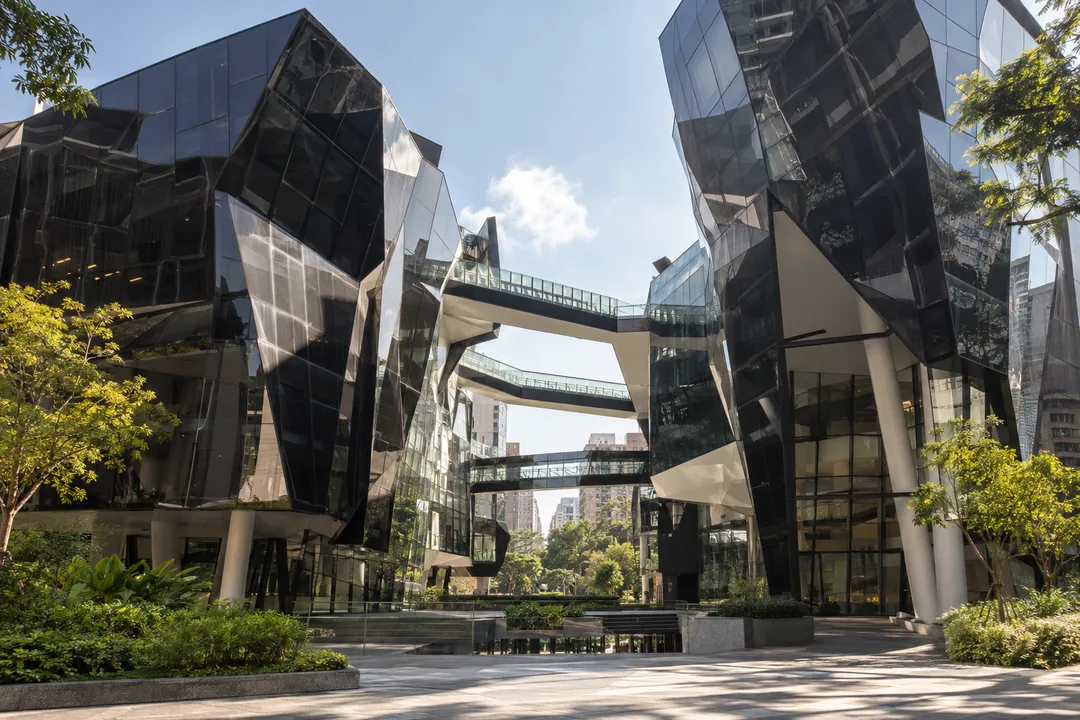
The architectural envelope housing the galleries is a globally celebrated modernist icon designed by renowned Singaporean firm RSP Architects. Conceived as a geological canyon, the campus exterior presents a dramatic, faceted black aluminium and stone monolith that opens into a crystalline interior courtyard enveloped in undulating glass curtain walls and suspended aerial walkways. Officially inaugurated in 2007, the daring design was honored with the prestigious President's Design Award in 2008 as Design of the Year for its visionary spatial integration.
The Institute of Contemporary Arts Singapore, established as an independent non-profit curatorial arm in 2004, operates five distinct exhibition venues across the campus footprint. Gallery 1 and Gallery 2 offer cavernous column-free spaces with nine-meter-high ceilings engineered for monumental site-specific sculptures and kinetic installations. Complementing these are the intimate Project Space, the experimental Praxis Space, and the historic Earl Lu Gallery, named in honor of the esteemed physician, philanthropist, and ceramic patron Dr. Earl Lu.
Natural daylight filters into the public courtyards through complex geometrical sky canopies, while the interior gallery spaces feature completely controllable professional lighting grids and heavy-duty structural rigging. Acoustic dampening acoustic plaster on the ceilings allows sound art installations and video projections to run concurrently without acoustic bleeding into adjacent rooms. The fluidity between the art galleries, rehearsal studios, and student design workshops fosters an atmosphere of continuous experimentation that permeates the entire precinct.
Avant-Garde Southeast Asian Contemporary Art and Curatorial Practice
The exhibition calendar at the institute features an ambitious rotation of solo retrospectives, thematic group shows, research symposiums, and graduate showcase salons. Exhibitions critically interrogate urgent regional issues, ranging from rapid post-colonial urbanization, indigenous ecological knowledge, and queer Southeast Asian identities to experimental digital media and performance art. The galleries maintain an active commissioning program, producing new works in collaboration with leading artists from Indonesia, the Philippines, Thailand, Vietnam, and Malaysia.
In addition to cutting-edge contemporary commissions, the institute stewards the permanent Earl Lu Collection, which comprises more than one thousand works of Southeast Asian and Chinese modern art, traditional celadon ceramics, and classical scrolls. Highlights include foundational mid-twentieth-century ink and oil paintings by Nanyang School masters Chen Wen Hsi, Cheong Soo Pieng, and Georgette Chen, offering critical historical lineage to the conceptual investigations taking place in adjacent contemporary halls.
The ceramic holdings in the collection are especially prized by regional decorative arts scholars. Rare fourteenth-century green-glazed celadon dishes from Sawankhalok and Sukhothai kilns in Thailand, Annamese cobalt-blue plates from northern Vietnam, and southern Chinese trade pottery provide crucial physical evidence of regional maritime craftsmanship. Curators regularly rotate these ancient ceramic objects into thematic dialogue with contemporary clay sculptures crafted by twenty-first-century ceramic artists.
Visitors often encounter live artistic research in progress, including open studios, durational performance art, and interdisciplinary video projections in the underground sound chambers. Public programs frequently accompany major exhibitions, offering free curator-led walkthroughs, international artist panel discussions, and hands-on printmaking workshops that invite visitors to participate actively in creative dialogues rather than remain passive spectators.
Rochor Arts District, Shophouse Cafes, and Little India Heritage
The campus sits at the vibrant junction between the historic Kampong Glam district, Rochor, and the Little India heritage precinct. Exiting the McNally Street campus, visitors can wander down Prinsep Street and Short Street, where two-story conserved pre-war shophouses host independent design bookshops, specialty matcha tearooms, and vinyl listening bars. The nearby Waterloo Street arts belt features the Objectifs Centre for Photography and Film, alongside the Stamford Arts Centre with its traditional dance companies.
Food options around the institution cater to diverse tastes and budgets. On campus, students and art patrons gather at independent espresso counters for freshly brewed flat whites and sourdough toasties. A two-minute walk toward Albert Centre Market and Food Centre reveals legendary local street food stalls renowned for Hainanese chicken rice, savory rojak, and handmade Teochew fishball noodles. Just across Sungei Road, the spice-scented lanes of Little India offer authentic south Indian vegetarian thali and crispy paper dosai served on fresh banana leaves.
Opening Times, Zero-Dollar Admission, and MRT Commuter Access
The Institute of Contemporary Arts Singapore maintains public gallery hours from Monday through Saturday between 12:00 pm and 8:00 pm, remaining closed on Sundays and gazetted public holidays. In alignment with its educational mission to democratize contemporary culture, admission is completely free for all local and overseas visitors, with standard exhibition entry priced at S$0 across all five gallery halls throughout the entire year.
Visitors seeking information regarding curatorial tours, academic publications. All gallery spaces are designed with complete wheelchair accessibility, featuring street-level ramp access from McNally Street, automated sliding doors, tactile paving guides, and wide elevators connecting underground parking with upper gallery floors. Accessible restrooms are located adjacent to the main campus atrium.
Reaching the institute via Singapore's MRT network is remarkably straightforward. Rochor MRT station (DT13 Exit A) is situated practically at the campus doorstep, requiring just a two-minute sheltered walk. Jalan Besar station (DT22 Exit B) and Little India interchange (NE7/DT12 Exit E) are both accessible within six minutes on foot. Furthermore, municipal buses 23, 48, 56, 57, 66, 170, and 851 stop conveniently along Rochor Canal Road and Bencoolen Street adjacent to the campus perimeter.
To discover more experimental art spaces, artist-run galleries, and creative coffee bars across Singapore, launch the Karpo APP. From uncovering avant-garde evening exhibitions to navigating historic shophouse districts, the platform powers seamless urban exploration.
Ask Karpo for more information.
Keep reading
- Chinatown New in Town Weekend Planner: Errands and Temples
 Kampong Glam New in Town Weekend Planner: Mosque to Murtabak
 Holland Village New in Town Weekend Planner: Meet People