 Chinatown New in Town Weekend Planner: Errands and Temples
Weekend Plans
Singapore After Work Route Planner: River Walk in 60
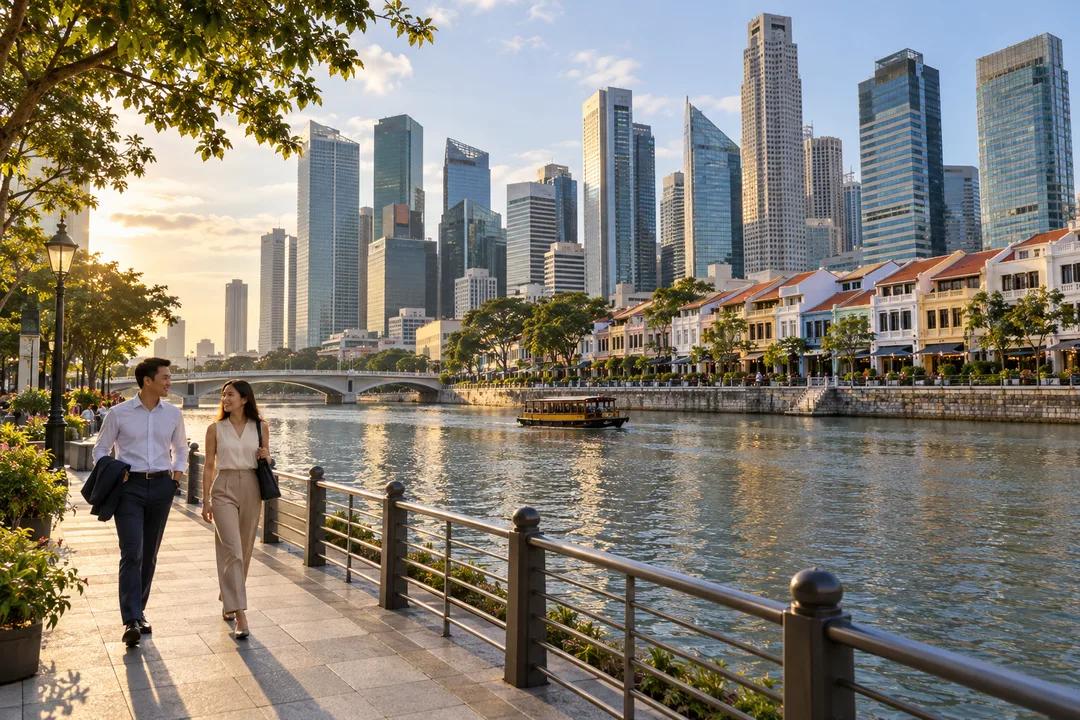
A Raffles Place river walk starts with a 60-minute limit, a sitting break and an exit choice. Ask Karpo APP for a plan shaped around your energy.
You leave the office wanting a little distance from the day, but not an expedition. A useful Singapore after work route planner starts with that distinction. For a riverside evening from Raffles Place toward Boat Quay and Clarke Quay, give the walk an hour, including the pauses. The aim is a change of scene with an easy way home. In the Karpo APP, describe the pace you want, the amount of outdoor walking you enjoy and whether dinner belongs in the plan.
Give the hour a job
Decide what would make this particular evening feel better. Perhaps you want ten quiet minutes beside the water, a gentle conversation with a colleague or a route that ends before you feel hungry. Those are different assignments. Asking for a riverside walk without saying why can produce an attractive list of places that takes more effort than you wanted. Put the purpose first and treat every suggested stop as something that must earn its place in the hour.
For an example budget, reserve fifteen minutes for leaving the office and settling into the walk, twenty for moving along the river, fifteen for a pause and ten for finding your onward connection. These are allowances you choose, not measured walking times between named landmarks. A delayed lift or a conversation at the office door comes out of the first allowance. It should not quietly consume the sitting break that was the whole reason to go outside.
Use Raffles Place as a starting area

An office address and a station name do not describe the same starting point. Tell Karpo whether you are beginning inside a building, at a street entrance or already beside the river. You can use an approximate location if you prefer, then refine the first leg yourself. The useful detail is which side of the walk you are approaching from. Starting instructions should help you reach the water without turning the first few minutes into a hunt for a particular exit.
Raffles Place, Boat Quay and Clarke Quay can serve as the three area anchors for this brief. They are not three compulsory appointments. Ask for an outward route toward the river and an optional continuation farther along it, with a clear point where stopping would still make the evening feel complete. This makes the route usable when you leave late. You can enjoy the shorter version without feeling that you abandoned an itinerary halfway through its main attraction.
Choose a side before choosing a seat
A river walk becomes unnecessarily fiddly when every appealing view prompts another crossing. Request a simple sequence with as few changes of bank as practical, and ask the proposed route to identify any crossing it depends on. Bridges belong in the walking allowance. If a crossing only exists to reach an optional refreshment stop, compare that detour with remaining on the same side. The calmer option may have fewer named sights and still be the better fit for tonight.
Treat a seat as a preference rather than a promised resource. Tell Karpo whether you want a public sitting opportunity, a cafe suggestion or simply somewhere to pause while standing. A photograph of an empty bench is not evidence that the bench will be available on arrival. Build the route so the break works without a particular seat. A short pause at a suitable public place can replace a long search for the perfect water-facing perch and keep the evening relaxed.
Ask for shade without promising a breeze
Shade, shelter and cooler air are separate qualities. A shaded pavement can still feel warm, and a riverside position does not guarantee a breeze. Explain whether direct sun, rain exposure or continuous walking is your main concern. Ask for shorter outdoor stretches if heat is the limiting factor. That gives the plan a concrete design rule instead of an impossible promise that a particular bank will feel comfortable throughout the entire evening.
If the weather makes an outdoor hour unappealing, change the assignment. You could keep only a brief look at the river and spend the rest of the break indoors, or go straight home and save the walk for another evening. Neither decision needs a replacement attraction. The route is there to support your energy. Avoid asking it to combine full shelter, uninterrupted waterfront views, no detours and a fixed endpoint when those requirements pull in different directions.
A prompt that leaves room to breathe
Try this in the Karpo APP: “I am leaving Raffles Place after work and have one hour before heading home. Suggest a gentle riverside walk toward Boat Quay, with Clarke Quay only as an optional extension. Include a short sitting break, limit crossings and keep food optional. I prefer less direct sun and want an easy early exit.” Add your actual departure time and any mobility needs so the request describes your evening rather than an imaginary average walker.
Read the suggested sequence as a draft you can shape. If it contains three cafes, ask for one. If the continuation makes the return awkward, ask for the earlier finish. A helpful follow-up is specific: “Keep the river pause, remove the second crossing and shorten the walking part.” This is more actionable than repeatedly asking for something more relaxing. You have named which part matters and which parts can change, so the next version has a clear direction.
Bring a colleague without inheriting a group outing
A two-person decompression walk needs a shared end time. Agree on that before adding drinks, dinner or another person. One colleague may want to talk while another wants a quiet stretch after meetings. You can make the first part conversational and leave the last few minutes unstructured. Share the proposed start and finish in plain language, including the option to separate earlier. The route does not need a poll, a booking or an elaborate collection of stops to become a pleasant invitation.
If somebody joins late, move the meeting point rather than asking the original walker to retrace the whole route. If somebody leaves early, preserve an obvious point for parting. Tell Karpo which person has the tighter deadline and whether either person needs a step-free route. Any recommended path should be assessed against those needs before it becomes the shared plan. A simple linear outing is easier to adapt than a loop whose appeal depends on everybody completing every leg together.
Practical Notes for the final ten minutes
Keep the finish visible throughout the outing. Your one-hour limit should include reaching the place where you continue home, not merely reaching the last scenic point. Use a navigation service for turn-by-turn directions and the relevant transport operator for service information. The planning conversation establishes priorities and options. It does not constitute live confirmation of path access, train conditions or a free table. A visible closure sign on the ground takes precedence over an appealing line on a suggested route.
Before setting off, reduce the plan to three things you can remember: where you join the river, where you pause and where you leave. Carry water if you want it, choose footwear suited to the walk and keep optional purchases separate from the route itself. When the pause has done its job, you can finish. The evening succeeds when you feel ready for the next part of your day, even if Clarke Quay remains an idea for another time.
Ask Karpo for more information.
Keep reading
- Chinatown New in Town Weekend Planner: Errands and Temples
 Kampong Glam New in Town Weekend Planner: Mosque to Murtabak
 Holland Village New in Town Weekend Planner: Meet People