 Chinatown New in Town Weekend Planner: Errands and Temples
Weekend Plans
Marina Bay After Work Route Planner: Walk and Cool Down
A Marina Bay evening route needs cooling breaks before extra viewpoints. Ask Karpo APP for a shorter circuit, a rain option and a finish you can reach.
A skyline can tempt you into a much longer walk than the evening you actually have. Around Marina Bay, the useful question is not how many views fit on a map. It is how much outdoor walking you want between comfortable pauses. Use an after work route planner to shape that balance before setting off. Tell the Karpo APP where you are beginning, which direction you need to go home and whether completing a circuit matters more than enjoying a few well-chosen stretches of waterfront.
A circuit is a preference, not a requirement
First choose between returning to your starting area and finishing somewhere else. A circuit can suit somebody who has left a bicycle or bag at the beginning. A one-way outing can suit somebody who wants to keep moving toward an onward journey. Neither format is inherently better. Put the reason in your request. Otherwise a neat loop may look persuasive on screen while adding a final leg that contributes very little to your actual evening.
Divide your available time into outdoor movement, cooling pauses and departure time. For a ninety-minute example, you could assign forty minutes to walking, twenty to indoor breaks, fifteen to looking around and fifteen to reaching your onward connection. These are planning portions, not a claim about the length of the Marina Bay circuit. If your starting point makes that allocation unrealistic, ask for a shorter arc. You can enjoy the bay without treating every edge as compulsory.
Choose the view you would miss

Give the route one visual priority. You might want the broad expanse of water, a skyline composition or the feeling of moving beside the bay rather than between office buildings. Explain that preference in ordinary language. It helps distinguish a route designed for photographs from one designed for unwinding. A photographer may value time standing still at a good angle. A tired walker may prefer fewer stops and a continuous stretch with a straightforward exit.
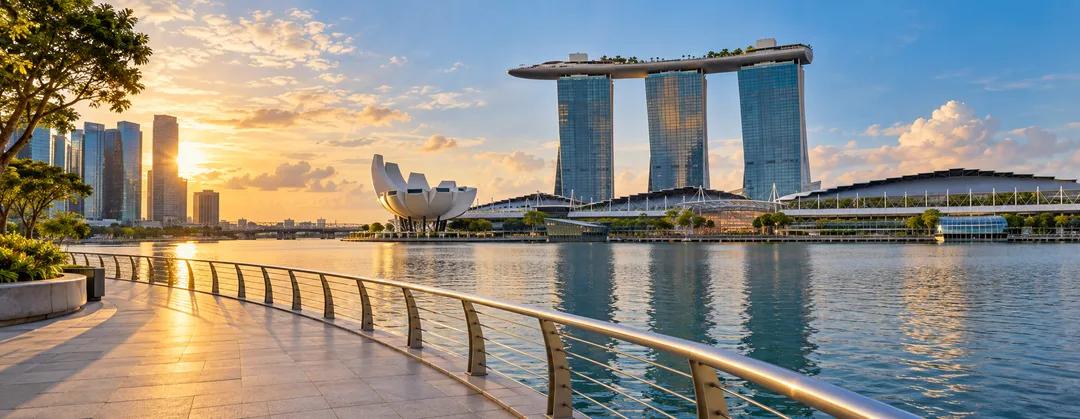
Do not ask for five viewpoints simply because five sounds like a complete itinerary. Every additional angle has an approach and a departure, and those transitions count. Choose a main outdoor stretch, then let a second viewpoint remain optional. If you already have a picture in mind, describe the scene rather than assuming a particular entrance or path is available. The plan should identify an appealing direction without presenting an illustrative photograph as proof of an unobstructed spot on the ground.
Put cooling into the route itself
An indoor pause belongs between walking sections, not as a reward after you have already exceeded your comfort level. Ask for an accessible public indoor option along the proposed direction of travel. Specify whether you want somewhere to sit, buy a drink or simply spend a short period out of the weather. These are different requirements, and a building that provides shelter is not automatically a place where an unoccupied seat will be waiting.
Keep indoor suggestions tied to an entrance and an exit in the proposed plan. Going inside can mean another floor, a long corridor or a return through the same door. That is not necessarily a problem, but it should be visible when you compare options. If the indoor detour eats most of the break, request a smaller outdoor circuit instead. Reducing exposure can be more comfortable than adding a complicated sequence of cooling stops to preserve the original distance.
Leave construction avoidance as an evidence question
A request to avoid construction is sensible. A promise that a waterfront route has no detours would require up-to-date evidence. Tell Karpo about any closure or obstruction you already know, including its location, and ask for an alternative that avoids that particular section. Do not describe the entire district as construction-free on the strength of a suggested itinerary. A planning conversation and a physical path inspection answer different questions, even when both involve the same map.
On the walk, use posted signs and lawful pedestrian access to decide what is possible. If a barrier interrupts the route, a shorter outing can be the simplest response. You do not need to improvise through a building or follow an unofficial gap to preserve the loop. Ask for a revised endpoint from where you are now. That keeps the request concrete and prevents the original destination from becoming more important than a comfortable and clearly permitted way to reach it.
Phrase the tradeoff you actually want
A useful starting message is: “Help me plan a Marina Bay walk after work. I want an outdoor skyline stretch followed by an indoor cooling pause, with a shorter version if the circuit feels too long. My priority is comfortable walking rather than collecting landmarks. I will give you my starting point and homeward direction. Separate suggested timing from any access information you can support.” In the Karpo APP, add your preferred walking allowance and whether stairs are a concern.
Then compare the response against your original tradeoff. If it preserves the full loop by cutting every pause, it has optimized the wrong thing for this brief. Ask to keep the cooling break and lose the extra viewpoint. If a dramatic photo stop requires a long return, ask for a viewpoint on the exit side instead. These edits create a plan that reflects your priorities. They do not require the app to detect your physical state or know how crowded the promenade feels.
A different version for a friend with a camera
When somebody wants photographs, agree on a stopping allowance before the first picture. You can make one pause longer and keep the rest brief, rather than repeatedly restarting the conversation at every appealing reflection. Ask the photographer which scene matters most. Let that answer determine the route's direction. The other person should know whether the outing is mainly a walk with pictures or a photography session with walking between positions, because the pace will feel very different.
A solo version can be even simpler. Keep one outdoor segment and one decision point, then choose whether to continue after reaching it. You do not owe the plan a complete circuit. If you are enjoying the view, spend the remaining time there. If you feel ready to go, use the exit you selected. The value of planning is that you have options you understand, rather than an instruction to keep moving until a line on the map becomes a closed shape.
Practical Notes for an adaptable finish
For detailed navigation, use a service designed to show pedestrian directions, and assess any suggested access against the signs at the location. Your conversation with Karpo can organize a request for places and a sequence, but this page does not promise live detour monitoring, air-conditioning status or available seating. Keep shopping, dining and admission choices separate from the walking brief. You can add them deliberately after choosing the route instead of discovering that the entire cooling plan depends on an unplanned purchase.
Water, a manageable bag and a realistic departure point make the plan easier to use. Keep an indoor-heavy version for an evening when outdoor walking loses its appeal, and a compact waterfront version for a late office exit. Both should retain the part you wanted most: a break with a view. When you leave the bay, the route has succeeded if it gave you room to enjoy that scene and enough energy for the journey home, whatever shape the final line took.
Ask Karpo for more information.
Keep reading
- Chinatown New in Town Weekend Planner: Errands and Temples
 Kampong Glam New in Town Weekend Planner: Mosque to Murtabak
 Holland Village New in Town Weekend Planner: Meet People