 Outer Sunset Cioppino Dinner Picker: Pots by Ocean Beach
Restaurants
Mission Bay Weekday Lunch Meeting Spot Picker for Lab Teams
Mission Bay lunch meetings revolve around labs and arenas: pick campus-edge tables for research partners, avoid game-day rushes, and walk by Mission Creek.
Mission Bay was rail yards and empty lots within living memory, and today it is one of the densest life-science districts in the country. The UCSF campus, biotech companies, research institutes and the arena that hosts the Warriors all share a few square blocks south of the ballpark. A weekday lunch meeting here usually means academics meeting industry, a startup meeting a lab, or a visiting scientist meeting a host. This weekday lunch meeting spot picker is built around how those people actually work and move.
Who You Are Meeting Shapes the Table
Lunch meetings in Mission Bay tend to fall into three groups. The first is a collaboration lunch between a university lab and a company, where both sides want to explore a joint project without lawyers in the room. The second is a vendor or partner meeting, often with someone selling equipment, software or services to a lab. The third is hosting a visiting researcher before or after a seminar. Each needs a different setting, and the district has options for all three.
Collaboration lunches work best in relaxed, neutral rooms just off campus, where nobody is on home turf and the conversation can wander from science to career plans. Vendor meetings fit quicker counters near the company buildings, because everyone has an afternoon of experiments waiting. Hosting a visitor calls for something with a sense of place, so they leave with a memory of San Francisco and not just of a cafeteria tray.

Campus-Edge Rooms for Collaboration Lunches
The streets around the campus and along Fourth Street hold small restaurants, cafés and casual dining rooms that fill with researchers, clinicians and biotech staff at midday. Pick one a short walk from both sides of the collaboration, ideally with tables for four and enough space to spread out a printed figure or two. Researchers often want to sketch a pathway or an assay design while they talk, so a table with room for a notebook matters more than a fancy menu.
Keep the tone exploratory. A collaboration lunch is not the place to discuss intellectual property terms or detailed budgets, which belong in a follow-up with the tech transfer office. Use the hour to understand each other's questions and decide whether there is enough overlap to keep talking. If there is, a short walk back toward the lab buildings is a natural moment to agree on who will send the first email.
Plan Around Game Days and Arena Events
Mission Bay sits between the ballpark and the arena, and that changes the rhythm of the neighbourhood completely. On days with a midday ballgame or a big afternoon event, streets, trains and restaurants near the venues fill with fans hours ahead of time. The T Third light rail line gets crowded, parking becomes difficult and quick lunches turn slow. Check the schedules for both venues before you set a date, especially for a meeting with someone visiting from out of town.
If a meeting has to happen on an event day, move it away from the venues. The streets on the western side of the district, closer to the campus and toward Potrero Hill, are noticeably calmer. Or schedule the lunch early, before the crowds build. A visiting scientist who has to battle a stadium crowd to reach you will remember the stress, not the conversation, so a little planning here pays off.
Waterfront Parks for Walking Meetings
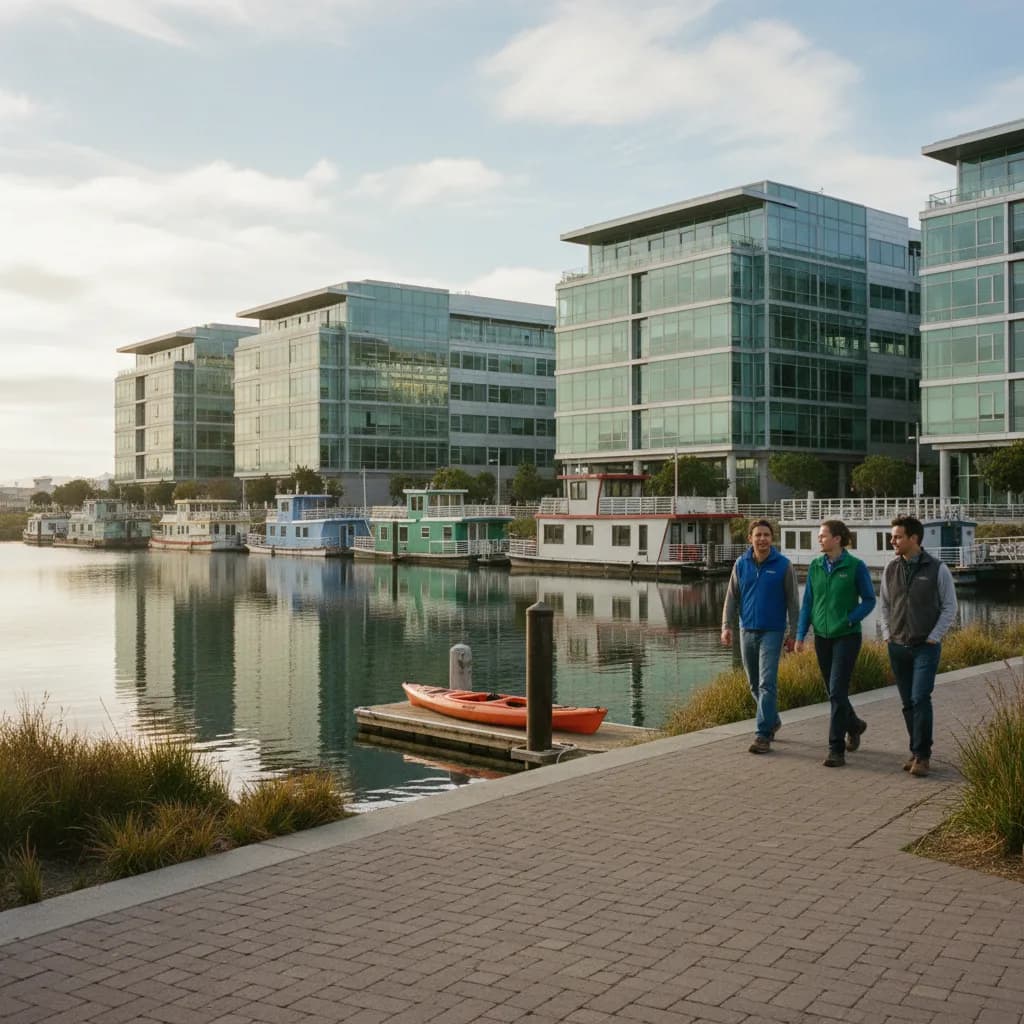
Mission Bay has invested heavily in open space. The paths along Mission Creek pass a small community of floating houseboats, one of the most unexpected sights in the city, and lead toward the bay. To the south, Crane Cove Park reuses a historic shipyard, with old cranes, slipways and a small beach where kayakers launch. Bayfront Park, near the arena, adds lawns and views across the water. All three are good for a walk after a counter lunch.
A walking meeting along the creek suits the conversations scientists find hard to have at a table: career advice, a postdoc deciding whether to move to industry, or a founder testing whether a professor wants to join an advisory board. The houseboats and herons give you something to point at when the talk needs a pause. Time it to finish back near the lab buildings, so nobody misses the afternoon lab meeting.
Hosting a Visiting Scientist
When a speaker flies in for a seminar, lunch is often your best chance to talk with them one on one. Pick somewhere with character and an easy route back to the seminar room. The neighbouring Dogpatch, a short walk south along Third Street, has old industrial buildings converted into restaurants, bakeries and design studios, with a strong sense of the city's maritime and industrial past. It makes a better story for a visitor than a generic chain near the campus.
Ask the visitor ahead of time about dietary needs and how much time they have. Some speakers want a long conversation over lunch, while others need quiet time to prepare. If they seem tired from travel, a short, quiet lunch and a walk to the water may be more welcome than a big group meal. Let them choose, and you will be remembered as a thoughtful host.
What to Skip and Backup Plans
Skip the venue-facing bars and restaurants around the ballpark and the arena for anything serious. They are set up for fans and big groups, the screens are loud and the menus are built for watching a game rather than talking. If your first choice is packed with lab staff at noon, walk to the creek or the park with takeaway food rather than waiting. In Mission Bay a picnic table by the water is often a better meeting room than a crowded dining room.
Wind and fog roll in off the bay here as well, so outdoor plans need a fallback. The lobbies and common areas of some of the newer buildings have public seating, and the cafés on the campus edge provide indoor tables where you can still talk without shouting. Mention a warm layer to any visitor who has just flown in from a sunnier city.
Picking the Spot With Karpo
Describe the lunch to the Karpo APP, for example a collaboration lunch for four near the Mission Bay campus that needs a quiet table and space for notes. Karpo suggests nearby places that fit the brief, and you can compare the atmosphere and walking distance from the lab buildings. Karpo does not reserve tables, so once you have chosen, book directly with the restaurant or simply walk over.
Over time, build a small list for each type of Mission Bay meeting: a relaxed room for collaborations, a fast counter for vendor visits, a Dogpatch spot for visiting scientists and a creek or shipyard walk for the conversations that need some air. Combined with a quick look at the venue calendars, that list will save you from game-day surprises.
Ask Karpo for more information.
Keep reading
- Outer Sunset Cioppino Dinner Picker: Pots by Ocean Beach
 Marina Cioppino Dinner Picker: Bistros After Bay Walks
 Embarcadero Cioppino Dinner Picker: Pots by the Bridge