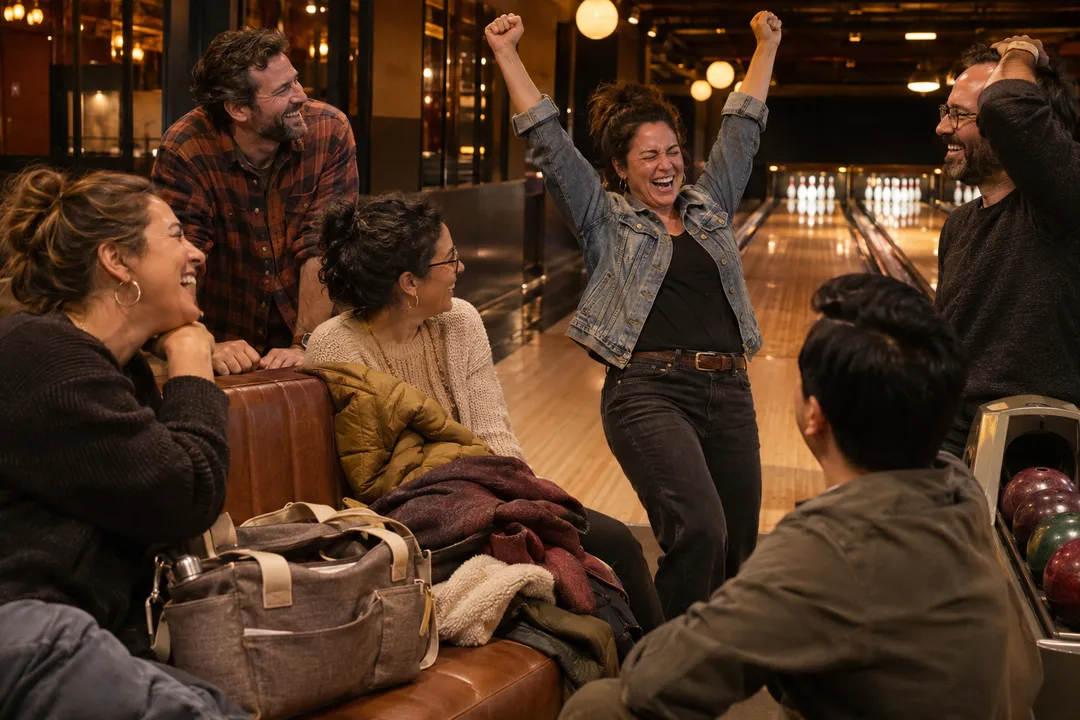
 SoMa Bowling Group Night Planner to Welcome New Hires
Sports Social

SF Tennis Court for Four: Organise Your Doubles Meet
Plan an SF tennis court session for four players with a shared time window and practical meeting point. Use Karpo to narrow options before someone books.
Four players need one agreed tennis court, a shared time window and somebody responsible for the reservation. In San Francisco, use the Karpo APP to organise that decision around the group you actually have. Give each person's starting area, the intended date and the kind of doubles you want to play. Ask for a few suitable options with a clear travel comparison. The recommendation helps the group choose; the court operator's confirmation supplies the booking everyone can rely on when setting off.
Begin with four yeses
Before searching for facilities, establish who is definitely joining. A doubles plan with three confirmed players is still missing a player, even if the court looks perfect. Ask each person to provide one available window and a realistic journey limit. Keep those responses together in the request you give Karpo. You do not need to share home addresses to explain the geography. Starting neighbourhoods or agreed public meeting points provide enough context for an initial comparison of where the group could gather.
Distinguish an arrival time from a playing time. Somebody saying they finish work at six has not necessarily promised to stand at the baseline at six. Let each player include the time needed to collect equipment and travel. The useful overlap is the period when all four people can be there. If that overlap disappears, move the date before paying for a court. A venue cannot solve a group scheduling problem simply by appearing halfway between four pins on a map.
Give the game a shared character

Decide whether this is social doubles, a competitive match or an introduction for a returning player. A stronger player can enjoy a relaxed rally, but only if the group agrees that is the purpose. Describe the intended pace in the planning request. Karpo can help narrow the type of outing and organise the options without assigning an invented player rating. Use plain descriptions of experience rather than a numerical level nobody in the group has actually established.
For a mixed-experience group, agree on how partners will rotate. You could change teams after a short set or keep the same pairings throughout; these are personal arrangements rather than court policies. The point is to settle the social expectation before the booking becomes a commitment. If one person wants a serious practice session, give that preference room in the discussion. A smaller shortlist is useful only when the four players are evaluating it against the same kind of evening.
Ask for a meeting comparison, not four separate searches
A useful prompt might read: “Help four adults organise social doubles in SF. We are starting from the Mission, downtown, the Sunset and the Richmond. Compare public booking options that make the meeting manageable for everyone.” Add the real date and the overlapping window you already agreed. Ask for the biggest travel disadvantage of each option as well as the apparent benefit. That makes the result easier to discuss than four unrelated lists of nearby courts.
Choose a fairness rule the group understands. You might minimise the longest journey, prioritise the person with the earliest homeward deadline, or rotate the neighbourhood between outings. Those approaches can lead to different choices. Tell Karpo which one you prefer instead of expecting the phrase “convenient for everyone” to resolve the tradeoff. If a particular player is carrying spare rackets for the group, factor that practical burden into the meeting decision too. Convenience is more than straight-line distance.
Nominate a booking owner before payment
One person should follow the selected operator's booking process and keep the resulting record. Share the facility name, court identifier if supplied, date and session time with the other three players. Avoid a group message that says only “booked” without enough detail to find the place. This planning workflow makes no promise that Karpo has reserved a court in the background. A shortlist, an itinerary and a successful operator transaction are separate stages, with the confirmation marking the last one.
Read the operator's participant and reservation conditions as part of that booking. A limit described per account, per court or per session can affect how the group should proceed. Use the published terms for the actual facility rather than general tennis etiquette as a substitute. Likewise, if you want instruction or organised drills, book a product that explicitly includes them. Four friends sharing court hire do not automatically have permission to run a coached session or bring a large training group.
Divide the practical jobs as well as the bill
Assign equipment responsibilities in the same message as the meeting details. One player might bring balls and another might lend a spare racket, but nobody should discover the missing item after arrival. Ask each person whether they have shoes appropriate for the booked surface and the operator's rules. Keep water and a layer for the journey within reach. These are straightforward preparations for the outing you selected, without assuming a facility supplies rental equipment, lockers or refreshments.
Agree on payment sharing using the actual receipt. Dividing the documented court charge among four players is different from assuming every expense is shared equally. Racket hire, coaching and travel can belong to individual players or separate bookings. State that arrangement before somebody volunteers to pay. If a player withdraws, use the operator's cancellation terms and the group's own agreement to resolve the cost. Do not count on an automatic refund, a replacement player or a resold slot unless the provider offers that route.
Keep the fourth-player problem from reopening the whole plan
Choose a response to a late withdrawal while the group is still complete. You might ask a known friend, change to a three-person practice session if the booking permits it, or cancel under the applicable terms. Those are decisions for the participants. Karpo can help rewrite the outing plan around the new headcount, but a three-person recommendation should not be presented as a confirmed doubles match. Keeping the revised purpose explicit avoids recruiting somebody who expects a different experience.
A post-match stop is easiest when it remains optional. Ask for ideas near the chosen court or along the group's onward routes once the session is booked. Some players may want a meal while another needs to head home. Splitting at that point is perfectly workable when everyone knows the plan. Avoid choosing a court mainly to serve an elaborate dinner itinerary if the original goal was a simple social hit. The tennis reservation should still make sense on its own.
Practical Notes
Collect four attendance decisions, four starting areas and one shared availability window. Describe the intended standard of play, equipment needs and the group's travel fairness rule. Ask Karpo for a concise comparison, agree on one option and let the nominated player book it through the operator. Share the confirmation and the equipment assignments in a single clear message. Keep a fallback for a missing player. That gives the group a concrete meeting to look forward to without leaving the essential choices scattered across a long conversation.
Ask Karpo for more information.
Keep reading
- SoMa Bowling Group Night Planner to Welcome New Hires
 Lower Haight Bowling Group Night Planner for Kitchen Crews
 Bernal Heights Bowling Group Night Planner for Parents Out