 SoMa Bowling Group Night Planner to Welcome New Hires
Sports Social

SF Tennis Court After Work: Plan Your Evening Hit
Plan an SF evening tennis court visit around travel, lighting and your finish time. Build a shortlist in Karpo, then reserve through the court operator.
A San Francisco evening tennis court search starts with your finish time, travel limit and need for lighting. Use the Karpo APP to turn those constraints into a focused request for places to investigate. Give it an actual weekday and the latest time you can leave the court. A suggested facility is a starting point for planning; the operator's booking confirmation establishes your playing time. Keeping those two steps distinct makes it easier to arrange a hit without mistaking a recommendation for a reserved court.
Count backward from the journey home
Start with the end of the evening. Suppose you want to be home by nine and would like an hour on court. Those are your own planning targets, rather than a venue schedule. Allow separately for getting changed, reaching the playing area and travelling afterward. Ask Karpo to help compare options against that whole window. An attractive start time loses its appeal if the route leaves you rushing through the final games or missing the evening commitment that follows.
Your departure point matters as much as your home neighbourhood. A player leaving an office downtown and a partner leaving a flat in the Richmond need a different meeting plan from two people travelling together. Describe both starting areas without sharing a private apartment number. Ask for a compact set of options with an explanation of the travel tradeoff. Keep the first response small enough that your partner can react to it during a work break.
Put lighting ahead of the photograph
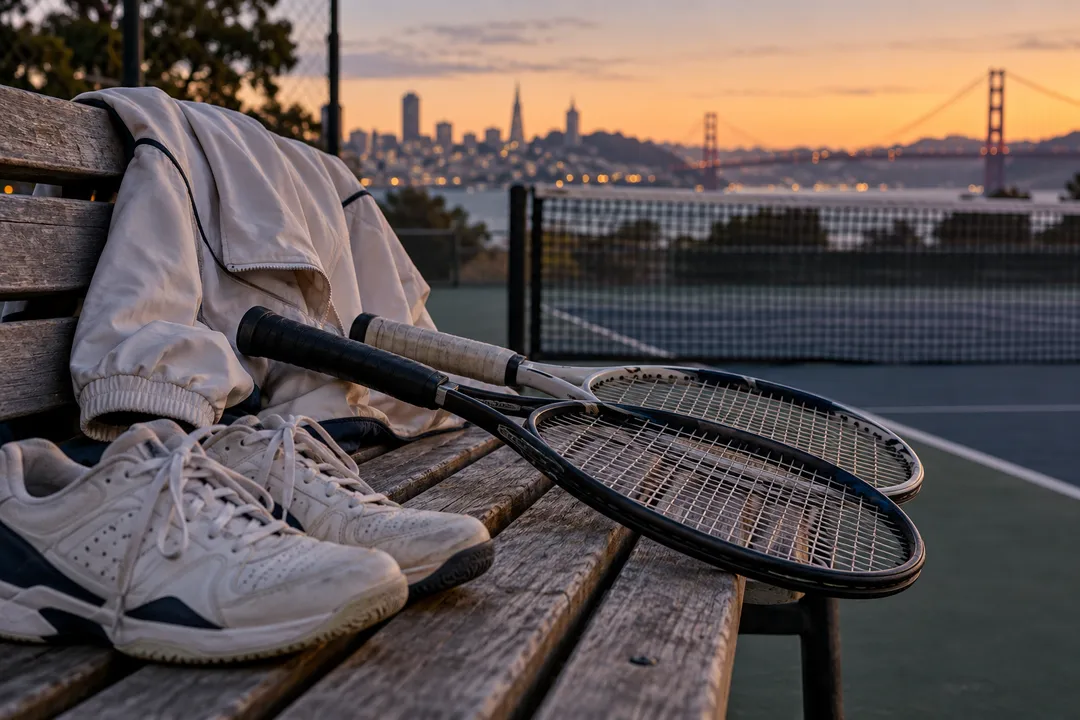
If the session extends beyond daylight, ask for lighting information in the comparison. The useful detail is whether tennis use is supported during your intended interval. A photograph of illuminated courts does not establish an evening booking window. Public access, the facility's general schedule and the hours of the lights can describe different things. Read the operator's published booking conditions for the option you select, and use the named court and session on the resulting reservation.
Fog and wind are reasons to pack thoughtfully, not reasons to invent a weather guarantee. An extra layer and a bag that keeps grips dry are practical choices for an outdoor evening. Tell Karpo whether you prefer an indoor alternative or are happy to move the game to a different day. That preference helps narrow the plan, although an indoor suggestion still needs a genuine public booking route. A private club photograph alone is insufficient evidence that visitors can play.
Make the shortlist answer one question per row
Request a comparison organised around location, route, playing format, lighting evidence and booking link. Each row should help decide whether that option fits tonight's game. Ask for unavailable details to be left blank rather than filled with estimates. You can then remove an option that depends on information central to your decision. For example, if playing after dark is essential, a facility with no usable lighting information does not belong at the top of this particular shortlist.
Separate hard limits from preferences in your message. A maximum journey and a fixed finish time can eliminate a candidate immediately. A preference for a quieter setting might only break a tie. Try this request: “Help me find an SF tennis court for an evening rally after work. We are two adults coming from downtown and the Richmond. Prioritise a manageable meeting point and explain the booking steps.” Add your date, actual time window and budget before sending it.
Decide who owns the booking
Give one player responsibility for the reservation. That person follows the facility's official booking route, reads the applicable terms and shares the confirmation with the other player. Karpo can help organise the comparison and summarise information you provide, but this workflow does not assume it can hold a court or complete a payment. Treat a proposed itinerary as provisional until the operator provides the booking record. Avoid having both players independently pay for overlapping alternatives while the choice is still being discussed.
Use a simple decision order with your partner: agree on the area, approve the time, then book. Discussing surface preferences after somebody has paid introduces an avoidable problem. If you care about the court surface, tell Karpo at the beginning and make that another comparison field. A photograph or a broad listing category is not a substitute for the operator's description. Keep the selected court type attached to the booking information instead of relying on a remembered image.
Protect the playing hour
Arrive with the equipment your arrangement requires. For two adults who already own rackets, that could mean rackets, balls, court shoes, water and a warm layer. If either person needs equipment hire, make that an explicit part of the request and use only a documented rental option. Do not assume every tennis facility lends rackets. Likewise, a general opening time does not tell you how much of a purchased session is available for warming up or collecting hired equipment.
Agree on what you want from the hit before arriving. A relaxed rally, serve practice and a scored singles set use an hour differently. You might choose a short warm-up followed by alternating service games, with the exact division decided between you. Those are suggested ways to use your own time, rather than facility programmes. Avoid carrying a whole basket of balls into a busy shared setting unless the operator permits that practice format. Follow the local rules for entering and leaving courts.
Give the evening a workable second choice
Choose a fallback that changes only one major variable. If the preferred slot is unavailable, a later date with the same partner might be easier than searching across the entire city again. If the date is fixed, relax the neighbourhood preference while preserving the homeward deadline. Ask Karpo to revise the shortlist using that change. This produces a new comparison rather than an invented cancellation alert, wait-list position or prediction that a particular booking will appear.
A nearby meal can follow the game once the reservation is settled. Ask for suggestions around the chosen exit or the route home, with enough time to change and walk there. Decide whether eating together is optional before including it in the schedule. Otherwise a brief tennis plan can become a much larger evening than either player intended. Keep any restaurant reservation separate from the court confirmation so that changing the game does not silently change the rest of the outing.
Practical Notes
Send your date, work finish time, two starting neighbourhoods, intended session length, travel preference and latest return time. Add whether lighting is essential, whether you have equipment and whether you need a visitor booking. Ask the Karpo APP for a short comparison with clear next steps. Select one option together, complete the operator's booking process, and share its confirmation. The useful result is an evening both players can actually attend, with a defined meeting point and enough time left to enjoy the rally.
Ask Karpo for more information.
Keep reading
- SoMa Bowling Group Night Planner to Welcome New Hires
 Lower Haight Bowling Group Night Planner for Kitchen Crews
 Bernal Heights Bowling Group Night Planner for Parents Out