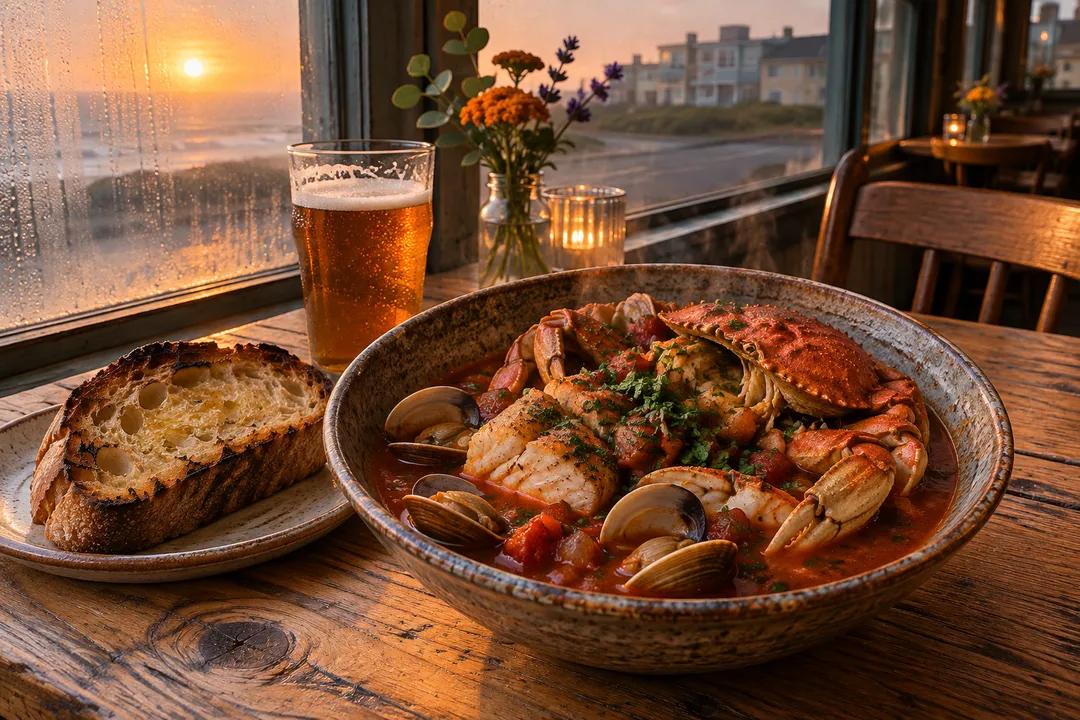
 Outer Sunset Cioppino Dinner Picker: Pots by Ocean Beach
Restaurants

Mission District Taco Truck Night Finder: Read the Line
A Mission District taco truck night finder: how to judge a truck by its griddle, line and salsas after dark, order in simple Spanish, and walk 24th Street.
In the Mission, the taco truck is not a novelty or a weekend treat. It is part of the street furniture, as familiar as the murals and the corner produce stands, and after dark it becomes the neighborhood's kitchen of last resort and first choice at the same time. This taco truck night finder is less about a single address and more about a skill: how to walk up to a glowing window on a Mission side street, read what is happening inside in about thirty seconds, and walk away with a plate you will remember.
Why the Mission Is the Place to Learn This
Taco trucks in this part of San Francisco grew out of the same families and the same cooking traditions that fill the taquerias on Mission Street and 24th Street. Many of the people working the griddle learned in home kitchens in Jalisco, Michoacan, Puebla or Guatemala, and the trucks carry those regional habits with them. One window leans hard on al pastor shaved from a spit, another is known for tender cabeza, another for a smoky salsa that the regulars drive across town for.
That variety is what makes the Mission such a good classroom. Within a few blocks you can see several styles side by side, compare how each crew handles its meat and tortillas, and slowly build your own sense of what a great night taco looks like. Once you can read a truck here, you can read one almost anywhere.
The Thirty Second Read From the Curb
Start before you get in line. Look at the griddle first. A busy flat top with meat sorted into neat zones, some pieces crisping at the edges and others resting in their juices, tells you the cook is paying attention. A spit of al pastor that has clearly been carved down through the evening is a good sign, because it means pork is being shaved fresh rather than sitting in a tray.
Next, watch the tortillas. The strongest trucks warm them on the griddle in small batches, often doubling them up for street tacos, and some press fresh ones to order. Then look at the crowd. A line of construction workers, nurses coming off shift and families with sleepy kids is the most honest review you will find. If people are eating standing right at the truck instead of carrying food away, the tacos are good enough that nobody wants them to cool.
Ordering With a Few Spanish Phrases
You do not need fluent Spanish, but a handful of words makes the exchange warmer and faster. Ask for tacos by the meat: al pastor for spit roasted pork with pineapple, asada for grilled beef, carnitas for slow cooked pork, cabeza for tender beef head meat, lengua for tongue, and buche or tripa if you feel brave. Say con todo if you want onion and cilantro on top, and sin cebolla if you would rather skip the onion.
A simple order sounds like dos de pastor y uno de asada, con todo, por favor. If the cook asks something you did not catch, a smile and a quick question back usually clears it up. Many crews are happy to switch to English, but trying the Spanish first is a small courtesy that regulars notice. Say gracias when the plate comes across, and you will often get a nod and a little extra lime.

How to Pace a Night of Tacos
The classic mistake is ordering six tacos at the first window you see. Order two, eat them right there, and decide from the taste whether this truck deserves a second round. If the pastor is excellent, add more pastor. If the asada is a little dry, you have lost very little and can walk on to another truck to compare.
A good night rhythm is two or three trucks across an evening walk, each one chosen for a single specialty. Try the spit pork at one, the slow braised meat at another, and finish with something like a quesadilla or a mulita, which is two tortillas sandwiching cheese and meat, crisped on the griddle. Use the Karpo APP to find taco trucks near you in the Mission tonight and to line up a short route that matches what you are craving.
Working the Salsa Tray
Many trucks set out a small table with salsas, sliced radishes, pickled jalapenos with carrots and onion, cucumbers and lime. This is where you finish your own taco. Taste a drop of each salsa on the tip of a chip or a corner of tortilla before committing. The bright green ones can be either mild tomatillo or fierce serrano, and the dark red ones with visible seeds tend to bite hardest.
Treat the tray with care. Take what you will eat, use the spoon in each container rather than dipping your taco, and step aside so the next person can reach. Radishes and cucumber are there to cool your mouth between bites, and a squeeze of lime over everything wakes up meat that has been on the griddle for a while.
Where to Stand and How to Eat
Eating at the truck is part of the ritual. Hold the paper plate flat in one hand, fold each taco gently at the base, and lean forward a little so the juices land on the plate instead of your shoes. Doubled tortillas are there for a reason; if the inner one tears, the outer one holds the filling together.
Give the window room. Step a few paces down the curb after you get your food so the next order can land, and keep your group from blocking the sidewalk. Pile your napkins and plates in the bin the truck provides, or carry them until you find one. Respect for the space is part of why these trucks keep their spots, and the neighbors appreciate it.
Walking 24th Street After Your Plate
Once you have eaten, the Mission at night is worth a slow stroll. Twenty Fourth Street is the heart of the Latino Mission, with bakeries, botanicas, fruit stands and storefronts that stay lit into the evening. The painted garage doors and walls on the side alleys tell stories of Central American history, neighborhood struggles and family pride, and many of them glow under the streetlights.
If you are still hungry, look for a panaderia for a sweet bread to carry home, or a fruit cart stand for mango with chili and lime. Walk with a friend, stay on the main lit streets after dark, and keep your phone in your pocket when you are not using it. The neighborhood is lively, and walking it calmly is the best way to feel how deeply the trucks are woven into everyday life here.
Bringing Friends Who Have Never Done This
If you are introducing someone new to Mission taco trucks, let them watch you order first, then let them try the Spanish on the second truck. Steer a nervous eater toward asada or pastor, and save the lengua and tripa for the curious friend who wants a story. Order one extra taco of something unusual for the group to share, so nobody has to commit to a whole plate of it.
Above all, slow the evening down. The pleasure here is not ticking off a list but standing on a cool San Francisco sidewalk with steam rising off the griddle, comparing salsas with people you like, and deciding together which truck you will come back to next week.
Ask Karpo for more information.
Keep reading
- Outer Sunset Cioppino Dinner Picker: Pots by Ocean Beach
 Marina Cioppino Dinner Picker: Bistros After Bay Walks
 Embarcadero Cioppino Dinner Picker: Pots by the Bridge