 SoMa Bowling Group Night Planner to Welcome New Hires
Sports Social
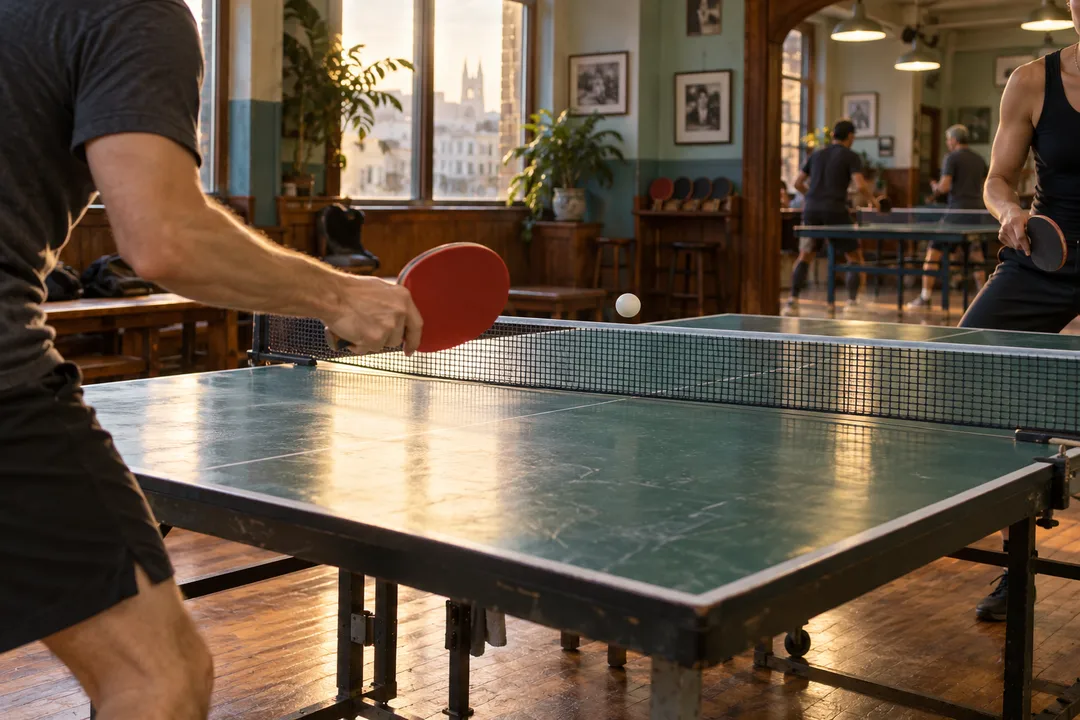
Table Tennis Club Near Me: AMDT Ping Pong in San Francisco
AMDT Ping Pong is a San Francisco North Beach table tennis clubhouse at 1968 Powell Street, with weekend open play, coaching, equipment, and a Wednesday night league.
AMDT Ping Pong, at 1968 Powell Street in San Francisco's North Beach, is a useful answer when a table tennis club near me search needs a real place rather than a generic list. The clubhouse is a supply and training center with open play, coaching, equipment, and a Wednesday night league. Weekend hours run from 11 in the morning until 7 in the evening. Weekday special activities are arranged ahead. Start by deciding whether your group wants practice, a casual rally, or a coached session, then reserve around that goal.
Start With the Kind of Session You Want
The best first visit is not necessarily the one with the most ambitious score. A pair of beginners can use the opening minutes to learn the bounce, serve legally, and keep the ball moving. A mixed group can agree on a rotation before the first game. More experienced players can turn the session into focused work on receive, footwork, or placement. That choice gives everyone a job and keeps the room from feeling intimidating when the first few returns go long.
Because AMDT describes itself as both a table tennis supply center and a training center, the outing can include more than table time. A player who arrives with worn rubber, an unfamiliar paddle, or a question about equipment has a natural reason to ask for help. Someone who only wants a social game can keep the plan simpler. Either way, treat the clubhouse as a place built around the sport, not as a bar with a ping-pong table added for decoration.
What the Clubhouse Actually Offers
The official clubhouse information makes the schedule unusually clear: Saturday and Sunday are the regular public hours, while Monday through Friday activities are available by advance arrangement. That distinction matters when a group is searching late on a weekday. Do not assume a casual walk-in will work. For a weekend visit, plan around the 11 in the morning opening or a later slot when the group can arrive together. For a weekday, contact AMDT first and settle the activity before traveling across the city.
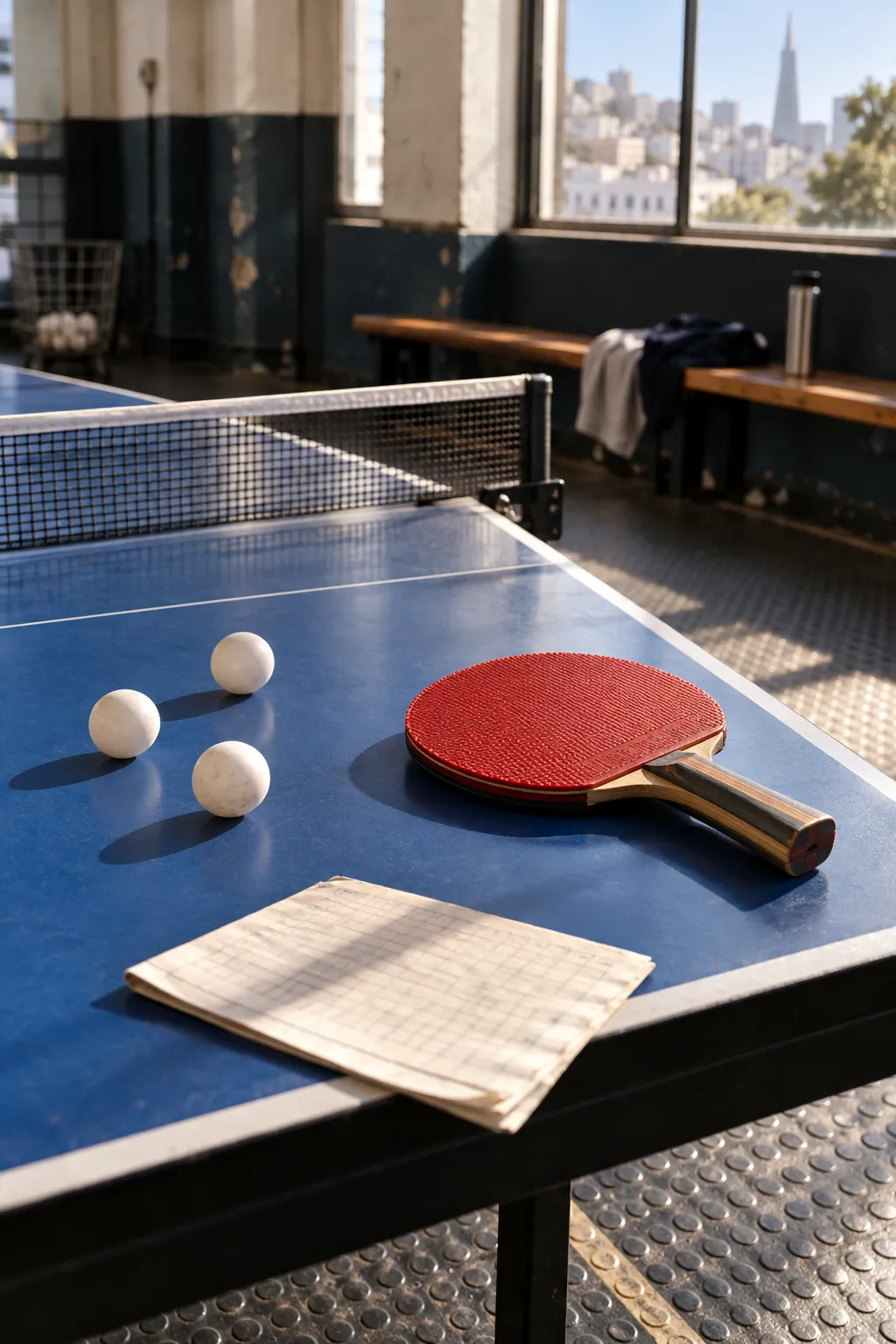
Open play is the easiest format for friends who already know one another's pace. Begin with a cooperative rally, then use short games so the newest player gets repeated serves and receives. If the group includes four people, write the order on a note before anyone starts. A visible rotation prevents the common problem in which the strongest pair stays on while two quieter players wait. The rule is simple: everyone should know when the next turn begins.
A Wednesday night league is a different proposition from a private session. It gives a solo player a way to encounter local players, but the atmosphere may be more competitive than a first-time family game. Arrive ready to observe before joining a rally, ask how the rotation works, and keep your first target modest. Three clean returns, a controlled serve, and one good recovery are better measures of progress than trying to win every point immediately.
A Focused Room for Learning
Coaching is worth considering when a player has a specific problem rather than a vague wish to improve. Bring one question: why does the backhand keep landing in the net, how should the feet move on a wide forehand, or what is making the serve predictable? A focused question gives the coach something concrete to watch. After the correction, repeat the same motion several times before adding speed. The useful part of a lesson is the experiment that follows the advice.
The supply side of the business also changes the way a beginner can prepare. If you need a paddle, balls, or another accessory, handle that decision before the booking rather than using the first ten minutes of court time to shop. A new player can ask for a setup that matches occasional play, while a regular can discuss what has changed in their current equipment. The goal is not to buy the most advanced option. It is to remove one avoidable distraction from the session.
Sharing Tables Without Losing the Rally
Practical Notes start with the venue's exact listing: AMDT Clubhouse, 1968 Powell Street, San Francisco, CA 94133. On Saturday and Sunday, the clubhouse is open from 11 in the morning until 7 in the evening. Weekday special activities require advance arrangement. Save the contact details before leaving home, especially if your group includes a visitor who may arrive separately. A short message about the number of players and the intended format can make the arrival much smoother.
Wear shoes that let you stop and change direction without sliding, and bring water even if the planned session is short. Keep bags away from the playing area, collect loose balls between points, and make space when another player is preparing to serve. If you are borrowing equipment, return it neatly. These are small habits, but they show that the room is shared by learners, regulars, and people taking a more serious training block.
How to Build a Better First Visit
For a first visit, book less time than your enthusiasm promises if the group is new to the sport. A compact session gives beginners enough energy to remember what they learned and leaves room for a meal or walk afterward. If everyone is comfortable, extend the next booking. If one player is struggling, change the task instead of increasing the pressure: cooperative returns, alternating targets, or doubles can make the same table feel much more welcoming.
A useful etiquette sequence is serve, rally, retrieve, reset. Wait until the point is over before crossing near another table. Call out before sending a ball back toward a player. When giving advice, ask whether the person wants it and offer one adjustment at a time. Table tennis moves quickly, so a long explanation rarely helps in the middle of a game. Save the detailed conversation for the break, when the player can actually test the suggestion.
North Beach After the Last Point
North Beach gives the outing an easy second act. After play, walk toward Washington Square and let the group cool down before choosing coffee, a meal, or a Chinatown detour. The neighborhood is compact enough that the post-game plan can stay flexible. If the weather turns or the session runs late, skip the extra stop rather than rushing. The point of pairing the clubhouse with a walk is to make the sport part of an afternoon, not a stressful appointment between errands.
The route also works in reverse. Meet for a neighborhood walk first, then arrive for the weekend opening with enough time to settle in. That order is helpful for friends who need conversation before competing. It also gives late arrivals a clear meeting point. Keep the final activity simple: one warm-up, one agreed rotation, and one short game that ends while everyone still wants another round. A clear finish makes it easier to plan the return visit.
Who AMDT Ping Pong Suits Best
AMDT Ping Pong is a strong fit for players who want the sport to be the main event, beginners who appreciate a dedicated environment, and friends looking for an activity that rewards attention. It is less suited to a group that wants a purely passive night out or expects a weekday walk-in without planning. The clubhouse makes sense when everyone is willing to pick up a paddle, learn a small rule, and share the table fairly.
It also suits a solo visitor who is curious about local play, especially around the Wednesday night league. The right approach is to arrive early enough to watch the room, introduce yourself briefly, and ask how newcomers enter the rotation. You do not need to perform expertise. You need to be ready to listen, return the ball, and accept that the first session may be more about finding the right people and rhythm than collecting wins.
The Practical Takeaway
For anyone searching for a table tennis club near me in San Francisco, the practical test is straightforward: can the group arrive with the schedule understood, start with a fair rotation, and leave with one skill to repeat? At AMDT Ping Pong, the answer can be yes when you plan around the weekend hours or arrange a weekday activity ahead. The address anchors the visit, but the shared attention around the table is what turns it into a place worth returning to.
Ask Karpo for more information.
Keep reading
- SoMa Bowling Group Night Planner to Welcome New Hires
 Lower Haight Bowling Group Night Planner for Kitchen Crews
 Bernal Heights Bowling Group Night Planner for Parents Out