 Outer Sunset Cioppino Dinner Picker: Pots by Ocean Beach
Restaurants
Szechuan Restaurant Near Me in Chinatown: Chong Qing Xiao Mian Guide
A practical San Francisco guide to Chong Qing Xiao Mian in Chinatown, with noodle prices, ordering advice, timing, and a Kearny Street walk.
When the search is for a Szechuan restaurant near me in San Francisco, Chong Qing Xiao Mian gives the answer in a focused form: noodles first, broth and chile aroma immediately after. The Chinatown location at 915 Kearny Street is built for a quick solo bowl or a compact shared meal, with the kind of menu that rewards knowing whether you want dry noodles, soup, dumplings, or a side of rice. It feels like a noodle counter with enough depth for a return visit.
The address sits on busy Kearny Street, a short walk from Portsmouth Square and the Chinatown gate. Montgomery Street BART is the practical rail connection, while several downtown buses stop within a few blocks. Walk uphill or downhill with a little patience because this part of Chinatown is crowded, especially around lunch. The restaurant is easy to miss if you are scanning only for a large sign, so use 915 Kearny Street and look for the compact noodle-shop frontage.
Chong Qing Xiao Mian is different from a broad banquet restaurant because the menu has a clear Chongqing street-food center. The kitchen builds flavor through seasoned oil, preserved vegetables, broth, minced pork, pickled mustard, and pepper rather than offering a generic hot sauce on every plate. The experience is direct and informal. You choose a bowl, adjust the heat if needed, and watch the table become fragrant before the first bite has cooled.
Start with the house Chongqing noodle soup, listed around $16, if you want the restaurant's name to make sense in the bowl. The wheat noodles have a springy bite, while the broth carries chile, garlic, and savory seasoning without becoming a heavy stew. Eat the noodles soon after they arrive so they keep their texture. Ask for less spice only if you truly need it; mild still leaves room for aroma and is more useful than removing every defining ingredient.
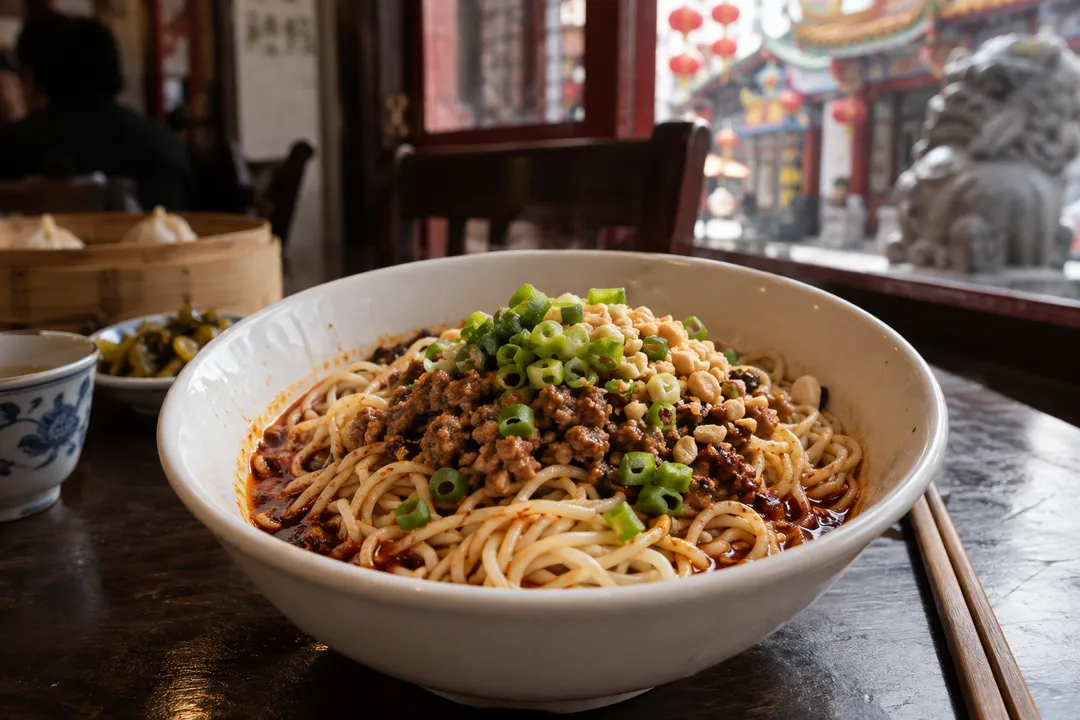
The Dan Dan noodles, around $18, are the better dry-noodle introduction. Minced pork, chili oil, scallion, and nutty seasoning cling to the noodles, so stir from the bottom before deciding whether the bowl is too hot. The first taste should include sauce, noodle, and topping together. Extra minced pork is about $5, and a vegetable add-on is about $5 when you want the bowl to become a fuller lunch rather than a snack.
For a soup with a deeper savory edge, spicy beef noodle soup generally lands near $17. The beef and broth make it feel more substantial than Dan Dan noodles, while the pickled and aromatic notes keep it from tasting flat. Pork-intestine noodle soup is another choice at roughly $16 for diners who enjoy a richer texture. These are dishes to eat in the room, not to let sit in a delivery container while the noodles soften.
The cold noodles, around $16, are useful when the day is warm or when the table needs a reset between hotter dishes. They bring sesame, chile, and a cooler chew that contrasts with soup. Spicy pork wonton soup is usually about $16, and the pork wonton soup is closer to $18. One noodle bowl plus one wonton order works for two light eaters, but a hungry pair should add dumplings or rice rather than doubling the same heat.
The menu allows more customization than a first glance suggests. You can request less spicy, extra spicy, extra numbing, less oil, no cilantro, or no peanuts, and you can substitute regular noodles, rice noodles, or glass noodles on selected bowls. Tell the server about allergies before ordering because a request to remove garnish is not the same as avoiding a sauce base. Sichuan pepper creates a tingle, while dried chile brings direct heat; they are not interchangeable.
The most reliable time for a seat is the first lunch stretch or an early dinner before downtown workers arrive. The shop serves daily from about 11:30 a.m. to 8:45 p.m., but ordering cutoffs and holiday hours can move. A line may look short while the room is still turning over small tables. If you are in a group, arrive together, keep the party size accurate, and decide whether everyone wants a full bowl before joining the queue.
There is a useful etiquette to this kind of meal. Let the server know whether you want the bowl mixed thoroughly or prefer to control the amount of oil yourself. Keep chopsticks and soup spoons on the provided rests, and do not wait ten minutes to photograph noodles that are best at their peak. If you are sharing, order one dry preparation and one broth preparation so the table has two textures. Chili oil on the rim is part of the experience, so napkins matter.
The room is modest, bright enough to see the broth, and arranged for turnover rather than lingering over a long tasting menu. That is not a drawback. The compact setting keeps the focus on the noodles and makes a solo meal comfortable. A small group can share wontons and a side, but a party of six should call ahead or split into two smaller orders. Street noise and Chinatown foot traffic are part of the address, not an interruption to it.
The story of Chong Qing Xiao Mian is carried by the style of food more than by a theatrical dining room. Chongqing xiao mian belongs to the everyday noodle tradition of southwestern China, where a bowl can be quick but still layered with fermented, toasted, spicy, and numbing notes. In San Francisco, that format suits Chinatown's walkable rhythm. Someone can stop in after shopping, a museum visit, or an afternoon crossing downtown without planning a formal occasion.
After the meal, walk north toward Portsmouth Square and the Chinatown gate, then continue toward Grant Avenue if you want shops and bakeries. A short detour toward the Dragon's Gate gives visitors a landmark without asking them to commit to another full attraction. If the bowl was particularly spicy, a slow loop is better than jumping straight into a crowded bus. The route also makes it easy to add tea, a small dessert, or a second stop in North Beach.
Practical notes: the address is 915 Kearny Street, the menu supports dine-in and takeout, and street parking is difficult enough that transit or rideshare is usually simpler. Prices above are planning figures and can change. Bring a card and a little patience during lunch. The restaurant is a strong choice for noodle lovers, solo diners, and anyone learning the difference between chile heat and peppercorn numbness, but it is less suited to a quiet celebration or a long, leisurely dinner.
Ask Karpo for more information.
Keep reading
- Outer Sunset Cioppino Dinner Picker: Pots by Ocean Beach
 Marina Cioppino Dinner Picker: Bistros After Bay Walks
 Embarcadero Cioppino Dinner Picker: Pots by the Bridge