 Waterfront Park Near Me: Candlestick Point State Recreation Area Shoreline
Free Things to Do
Street Art Near Me in Jack Kerouac Alley
A free San Francisco alley walk through Jack Kerouac Alley, linking Chinatown, North Beach, poetry, paving, murals, and nearby literary stops.
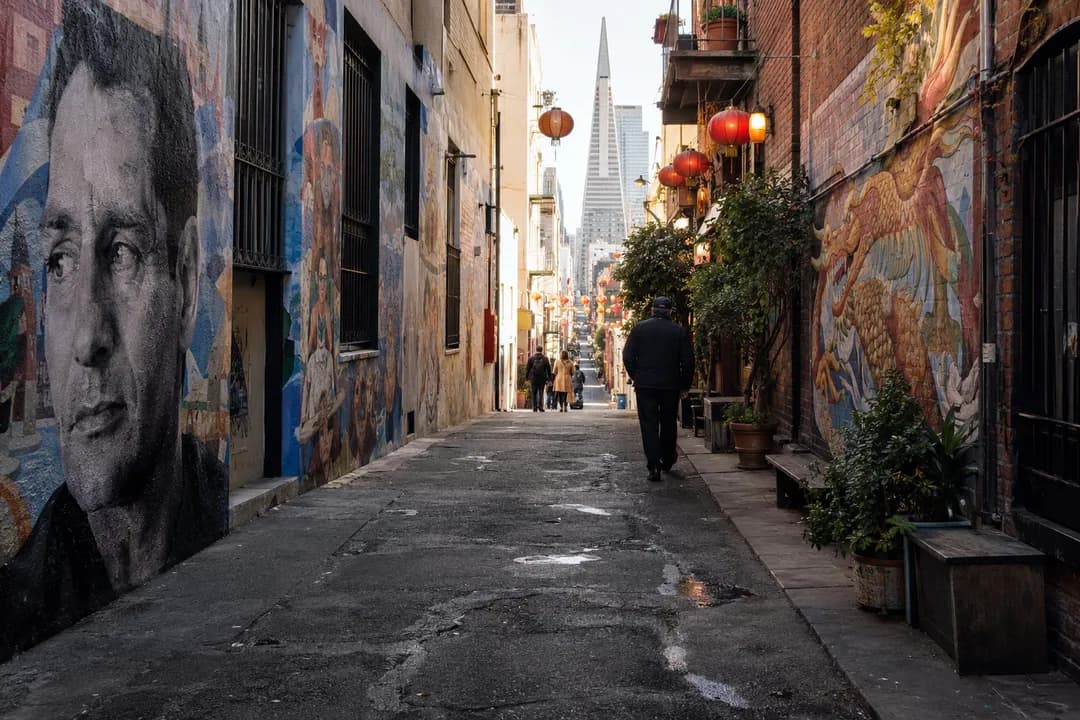
Searches for street art near me in San Francisco often lead to big mural districts, but Jack Kerouac Alley offers a narrower kind of reward. This short passage between Chinatown and North Beach compresses poetry, paving, brick, painted surfaces, restaurant traffic, and literary history into one pedestrian lane. Its scale is modest, yet its setting makes every detail feel intentional. Because the Grant Avenue entrance immediately changes the alley's cultural tone, Jack Kerouac Alley gives the opening choice a local anchor, and San Francisco feels easier to read from there.
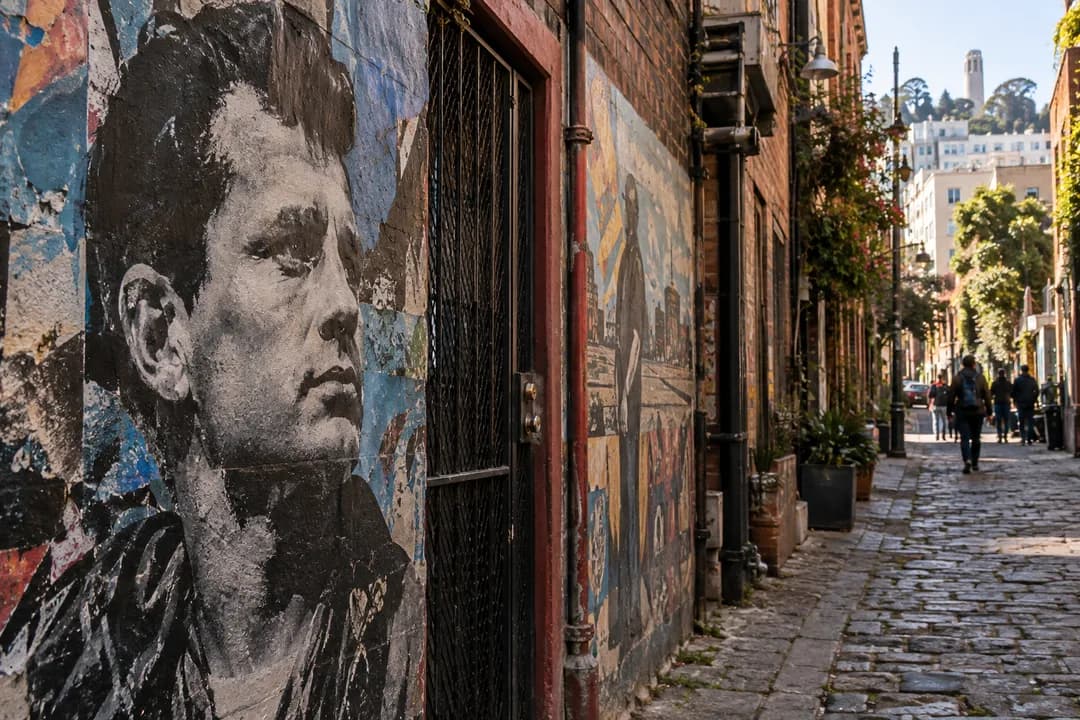
The alley links Grant Avenue with Columbus Avenue, which means you can approach it from two entirely different moods. From Grant, the walk begins in Chinatown's layered storefront energy. From Columbus, the alley arrives beside City Lights and the Beat-era mythology of North Beach. Either entrance changes how the first few steps feel. Around Jack Kerouac Alley, the detail to notice is that City Lights makes the Columbus Avenue side feel literary before the first step; it keeps the stop from becoming a generic wall on a map.
Jack Kerouac Alley became more than a shortcut after public improvements made the passage cleaner, more readable, and easier to linger in. The redesign helped turn a leftover urban space into a small cultural connector. Its history is not only about Kerouac; it is also about the meeting point of Chinese American neighborhood life and San Francisco literary identity. Use this route cue near Jack Kerouac Alley: paving details ask for the same attention as the walls. That Jack Kerouac Alley cue helps visitors decide when to pause and when to move.
Look down before you look for a wall. The paving carries references and texture that many visitors miss while aiming cameras upward. Bilingual literary touches, brick edges, fire escapes, wall color, old building lines, and narrow shafts of light do much of the work. The alley's appeal is cumulative rather than based on one enormous image. At Jack Kerouac Alley, notice that delivery traffic explains why lingering has to be brief and careful. That Jack Kerouac Alley texture matters when the block is busy, shaded, or changing by the minute.
Because the lane is tight, etiquette matters immediately. Keep moving when delivery carts, tour groups, restaurant staff, or cafe traffic need space. Step close to a wall only after checking what is behind you. This is a public pedestrian route, not a paused photo booth, and its best atmosphere depends on that shared movement. For timing at Jack Kerouac Alley, remember that the short passage works best as a hinge between two neighborhoods. Around Jack Kerouac Alley, light, traffic, and comfort can change the pace of looking.
Morning is the right choice if you want quieter photographs and cleaner sightlines. The light slips through the alley without turning it into a crush of visitors. Early evening suits a different plan: bookstore browsing, a drink nearby, dinner in Chinatown or North Beach, and a small art stop folded into the transition between neighborhoods. Etiquette feels clearer at Jack Kerouac Alley when you remember that brick, fire escapes, and narrow sky do much of the visual work. The art at Jack Kerouac Alley still sits inside a working San Francisco neighborhood.
City Lights is the natural companion stop, especially if you enter from Columbus Avenue. Vesuvio sits nearby, carrying its own literary atmosphere. Walk a little farther and you can connect the alley to Portsmouth Square, Washington Square, or Grant Avenue storefronts. Few San Francisco blocks let you shift cultural registers this quickly. Planning stays flexible at Jack Kerouac Alley when Portsmouth Square and Washington Square give the route two different endings is treated as useful context, not a promise that every visit will match.
The visual details are easy to underestimate because the alley is short. Slow down for patched surfaces, signs, utility lines, painted marks, tile-like ground patterns, and the way windows frame the passage. What makes this place memorable is not a single mural moment, but how urban fragments line up inside a compact corridor. A smaller loop around Jack Kerouac Alley works well because a bookstore stop turns the alley from a shortcut into a small itinerary can pull attention away from the obvious wall.
If you are coming by transit, aim for Chinatown, North Beach, or the Financial District edge and walk in. Parking nearby can be more trouble than the visit requires. The alley is free, public, and best experienced as part of a larger foot route rather than a destination that needs its own complicated arrival plan. Nearby, the Grant Avenue entrance immediately changes the alley's cultural tone can reset the day, giving Jack Kerouac Alley a second rhythm after the first sweep of color.
Do not treat every person in the lane as scenery. Restaurant workers, residents, and shop visitors use this passage for ordinary reasons. If someone is unloading or cleaning, give them room. If a tour group stops, slip around calmly rather than pushing through. The alley's intimacy is its charm and its main constraint. Let the frame include the fact that City Lights makes the Columbus Avenue side feel literary before the first step at Jack Kerouac Alley; real street life often explains scale better than an empty shot.
The Chinatown approach has the advantage of contrast. Grant Avenue's signs, lanterns, markets, and tight storefront rhythm make the alley feel like a threshold. Coming out toward Columbus, the mood opens into cafes, bars, bookstores, and North Beach's Italian American streetscape. The same few yards can feel like a miniature city crossing. Look for how paving details ask for the same attention as the walls changes the surface, because Jack Kerouac Alley carries weather, repair, and neighborhood use together.
Photographers should avoid expecting a blank canvas. Trash bins, service doors, shadows, wires, and people may enter the frame, but they also keep the alley honest. A polished, empty image would miss the point. Try compositions that include the ground, walls, and slice of sky together, because the space works vertically and horizontally. As of October 2026, delivery traffic explains why lingering has to be brief and careful is the sort of current detail worth checking before crossing San Francisco.
Practical Notes: access is free and public at normal street level, with no ticket or gate. The visit can take five minutes or half an hour, depending on how closely you read the surfaces. Wear shoes suitable for a longer neighborhood walk, because the alley is best paired with nearby blocks. The short passage works best as a hinge between two neighborhoods keeps this street art near me result specific to Jack Kerouac Alley, not interchangeable with another mural district.
For food and pauses, let your direction decide. North Beach offers espresso, bars, pizza, and bookstores; Chinatown offers bakeries, tea shops, markets, and restaurants. The alley sits between them without belonging fully to either, which is exactly why it feels useful as a city-guide stop. It is a hinge, not a monument. Practical planning improves when brick, fire escapes, and narrow sky do much of the visual work is handled before arrival, leaving more attention for the free outdoor art.
Leave through the opposite end from where you entered. That simple choice completes the experience, letting the alley function as connection instead of backdrop. Jack Kerouac Alley is small, free, and easy to miss, but it teaches you to notice how San Francisco stores culture in narrow passages, paving stones, old brick, and everyday foot traffic. For the last pass, Portsmouth Square and Washington Square give the route two different endings gives Jack Kerouac Alley a memory beyond the search phrase and the first photograph.
Ask Karpo for more information.
Keep reading
- Waterfront Park Near Me: Candlestick Point State Recreation Area Shoreline
 Waterfront Park Near Me: Heron's Head Park Marsh Trail in Bayview
 Waterfront Park Near Me: India Basin's Shipyard Shore in Bayview