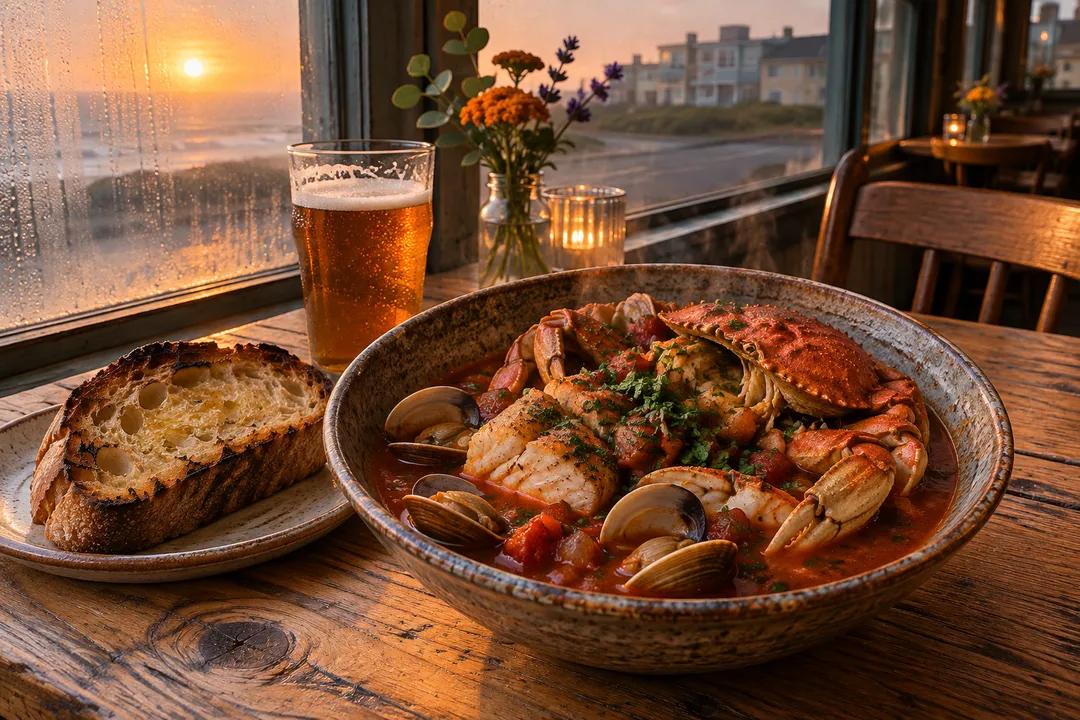
 Outer Sunset Cioppino Dinner Picker: Pots by Ocean Beach
Restaurants

North Beach Steaming Broth Comfort Eats: Cioppino or Wontons
North Beach steaming broth comfort eats split two ways: cioppino and brodo on Columbus Avenue, or Cantonese wonton soup a few blocks away on Stockton Street.
Steaming broth comfort eats in North Beach come with a choice that few neighborhoods in America can offer. Walk down Columbus Avenue and you are in the old Italian quarter, where seafood stews, minestrone, and pasta in brodo fill the menus of trattorias that have fed the city for generations. Walk a few blocks east and south, past Broadway, and you are at the edge of Chinatown, where wonton noodle soup and slow-simmered herbal broths are everyday food. On a damp November night, when the fog smothers Telegraph Hill, both directions promise a hot bowl. Here is how to decide.
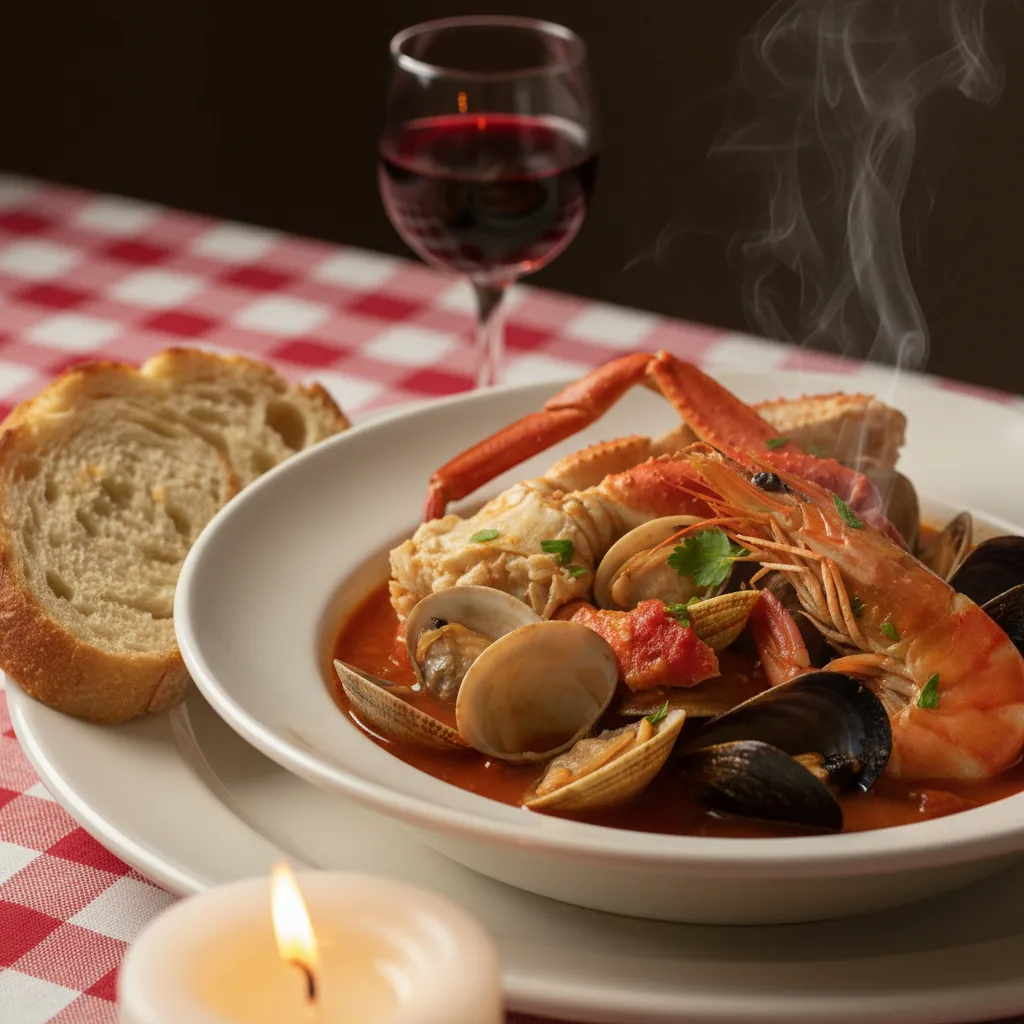
Cioppino, the City's Own Seafood Stew
Cioppino is widely credited to the Italian fishermen, many from Liguria, who worked the San Francisco waterfront in the late nineteenth century. The story goes that each boat contributed part of its catch to a communal pot, and the dish grew from whatever was left at the end of the day: crab, clams, mussels, prawns, white fish, all simmered in a tomato and wine broth with garlic and herbs. Whatever the exact origin, it is now one of the dishes most closely associated with the city.
Ordering cioppino is a commitment. It arrives in a wide bowl, usually with a bib, crusty sourdough for mopping, and a plate for shells. Expect to use your hands, especially for the crab. It is a meal to share slowly with someone you do not mind seeing covered in tomato broth. When Dungeness crab is in season, which in the Bay Area usually begins in late autumn though openings are sometimes delayed, many kitchens feature it prominently in the pot.
For a lighter Italian bowl, look for minestrone, stracciatella with egg and parmesan, or tortellini in brodo. These are the soups an Italian grandmother would serve to someone with a cold, and they make a good first course before a plate of pasta.
Wonton Soup on the Other Side of Broadway
Chinatown in San Francisco is one of the oldest Chinese communities in North America, and its noodle shops and family restaurants serve Cantonese comfort food without fuss. The classic order is wonton noodle soup: thin egg noodles, shrimp or pork dumplings, and a clear broth that often gets its depth from dried flounder or shrimp shells. It is light, quick, and inexpensive, the opposite of a cioppino dinner.
Other options include congee, the rice porridge that many Cantonese families treat as the ultimate cold-weather comfort; beef brisket noodle soup with star anise; and, at some restaurants, a soup of the day that the staff can explain. Service in these places tends to be brisk, and sharing tables at busy times is common. Order at the table, eat while it is hot, and do not linger if people are waiting.
Choosing Between Them
Pick cioppino if you want an occasion: a long dinner, a bottle of wine, the noise of a crowded trattoria. It suits a date, a birthday, or visitors who want a dish they can only find in San Francisco. Plan to book ahead on weekends and budget for a seafood dinner rather than a snack.
Pick wonton soup if you want comfort without ceremony. It suits a solo traveler, a late lunch between museums, or an evening when you have already eaten too much. It is also the better choice for anyone with a shellfish allergy, though you should still ask, since some broths use shrimp.
If you cannot decide, do both. Have a small bowl of wontons as an early supper, walk up the hill, and share a cioppino later with a glass of wine. Locals have done stranger things on a cold night.
Who Shows Up on a Foggy Weeknight
On a Tuesday in November the crowd is a mix you only find here. Longtime residents and their grown children still come back to the old Italian rooms for a familiar plate, couples on second dates order one cioppino and two bibs, and tourists who climbed down from Coit Tower look for anywhere warm. Across Broadway, the noodle shops fill with grandparents bringing grandchildren after school, restaurant workers on their break, and students who know exactly how far a bowl of wontons can stretch a budget.
The two worlds overlap more than you might expect. Many North Beach residents eat in Chinatown several times a week, and Chinatown families have long shopped at the Italian delis on Columbus. A soup crawl that crosses Broadway is less a novelty than a snapshot of how the neighborhood actually lives.
The Walk That Connects Them
Start at Washington Square Park, the green heart of North Beach. Facing it on Filbert Street is Saints Peter and Paul Church, the twin-spired church dedicated in 1924 and nicknamed the Italian Cathedral; the spires look almost unreal when the fog rolls through them. Walk south along Columbus Avenue toward the corner with Broadway, where City Lights Booksellers, founded in 1953 by poet Lawrence Ferlinghetti and Peter D. Martin, still anchors the Beat-era literary history of the block.
Jack Kerouac Alley, a short pedestrian lane beside the bookshop, leads toward Grant Avenue, one of the oldest streets in the city. From there you are on the edge of Chinatown, with Stockton Street a block west carrying the neighborhood's busiest produce markets and bakeries. If you have energy after dinner, Coit Tower, completed in 1933 on top of Telegraph Hill, is a steep climb east of Washington Square with views that reward the effort on a clear night.
Practical Notes
North Beach is compact but hilly. Wear shoes that grip wet pavement, because the steep sidewalks around Telegraph Hill can be slick in fog. Parking is famously scarce; Muni buses along Columbus Avenue and Stockton Street are usually easier, and the Central Subway's Chinatown station sits on Stockton Street.
When planning, tell the Karpo APP what kind of evening you want, for example a shareable seafood stew for two near Washington Square or a quick wonton bowl close to Grant Avenue. Karpo suggests places to compare and saves them in a list you can check while you walk. If the fog lifts after dinner, take the climb toward Coit Tower; if it thickens, a second small bowl is the wiser plan.
Ask Karpo for more information.
Keep reading
- Outer Sunset Cioppino Dinner Picker: Pots by Ocean Beach
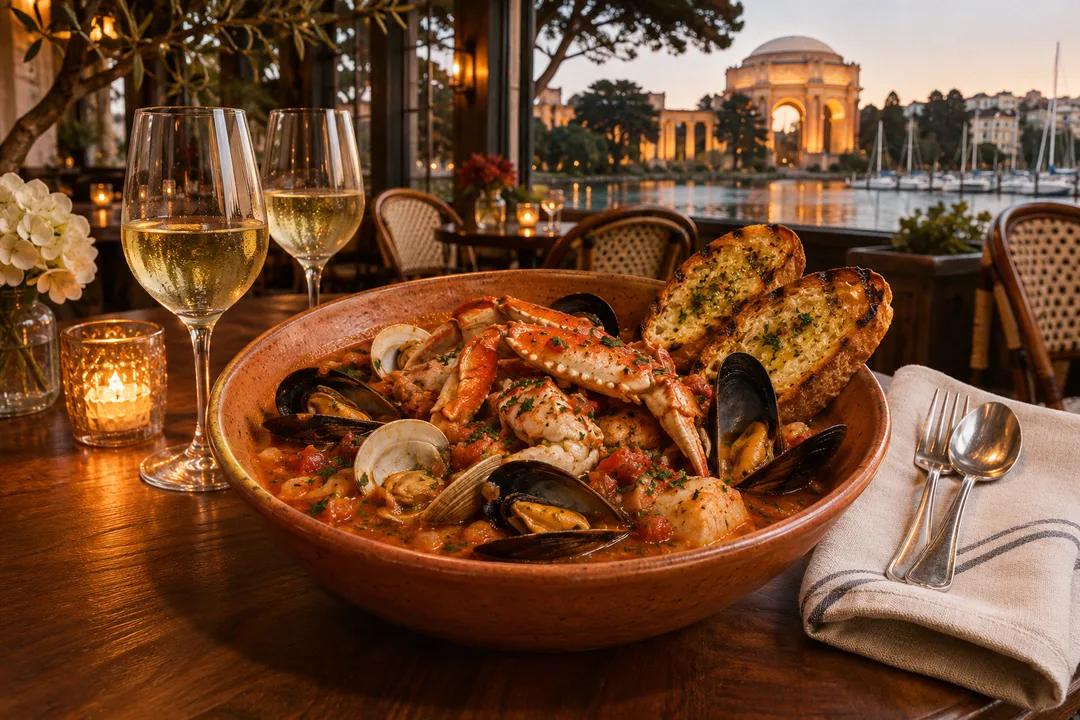 Marina Cioppino Dinner Picker: Bistros After Bay Walks
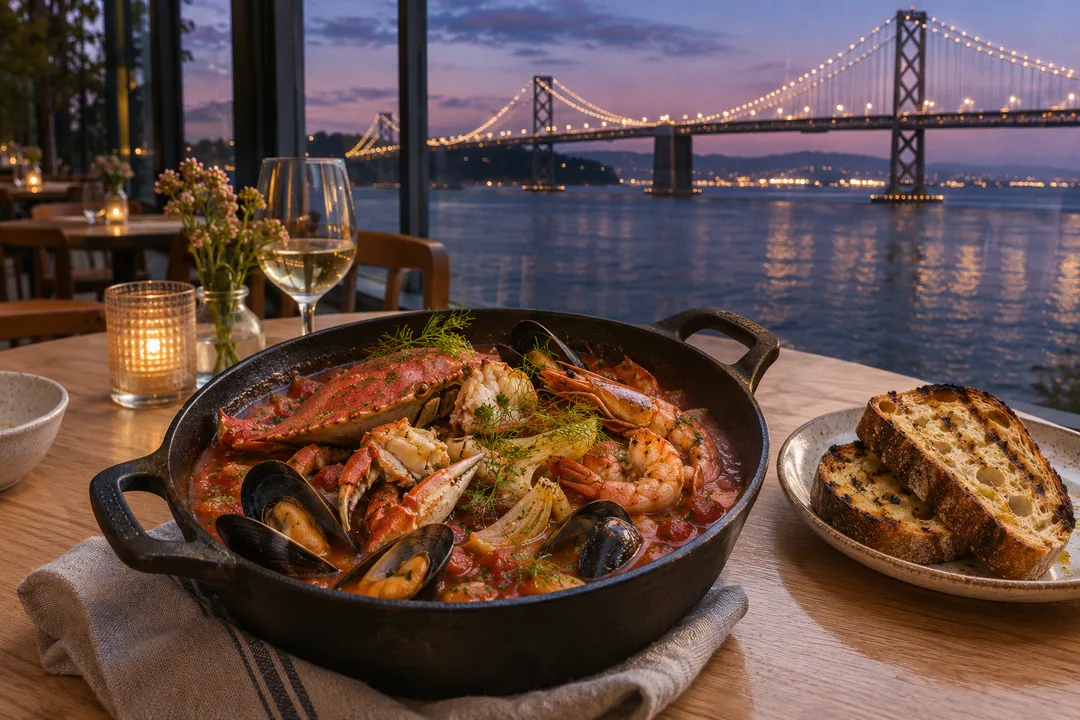 Embarcadero Cioppino Dinner Picker: Pots by the Bridge