 Inner Richmond Egg Tart Bakery Crawl: Clement Street Pastry
Coffee & Dessert
Mission District Sourdough Bakery Crawl for Home Bakers
Plan a Mission District sourdough bakery crawl as a home baker: read crust and crumb, ask good questions at the counter and finish with a Dolores Park picnic.
A Mission District sourdough bakery crawl looks different when you keep a jar of starter on your own kitchen counter. Maya has fed hers for three years in a small apartment near Precita Park, and her loaves still come out flatter than she wants. So one Saturday she walks the Mission with a canvas bag and a list of questions, treating every bakery counter as a classroom. This is how she plans the route, what she looks for and what she takes home.
Why the Mission Is a Bread Classroom
San Francisco has been a sourdough town since the Gold Rush, when miners carried living starters in their packs and earned the nickname that still sticks to the bread. The Mission inherited that habit and then pushed it further. Over the past two decades the neighbourhood became a place where bakers talk openly about long fermentation, high hydration and dark bakes, and where a line on the pavement is often a line for bread rather than brunch.
For a home baker, that openness matters more than any single loaf. Counters here tend to show the bread whole, cut and toasted, which means you can study the same dough in three states before you buy. Maya calls it reading the shelf. She is not hunting for a favourite so much as for a picture of what her own dough could become with a little more patience.
Reading Crust Before You Read Crumb
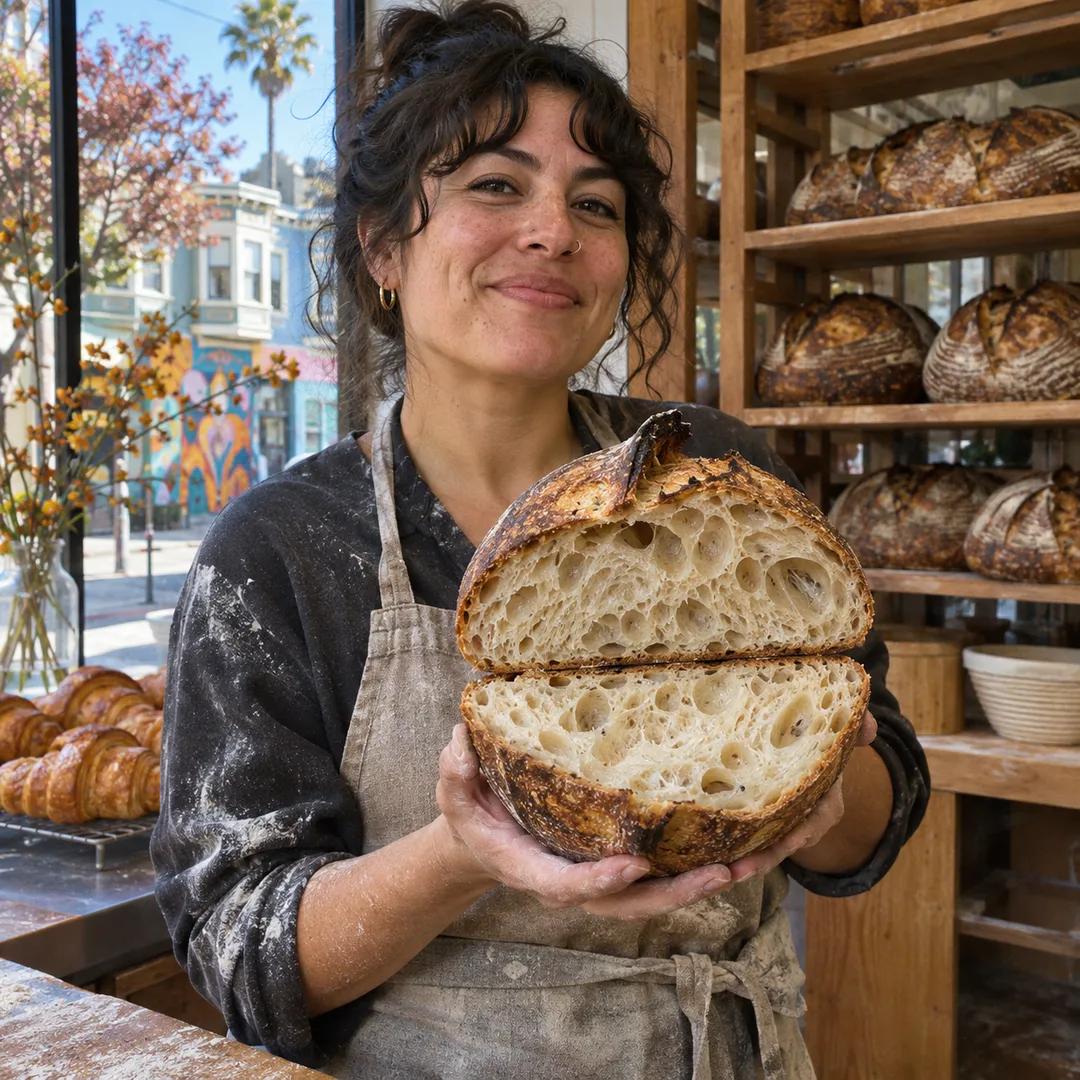
The first thing Maya studies is colour. A deeply baked crust, close to mahogany at the ridges, tells her the baker is not afraid of heat, and that usually means a nutty, slightly bitter edge that balances the sour inside. She compares the ear, the curled flap where the score opened, and notes whether it stands tall or lies flat. A proud ear points to strong shaping and good oven spring.
Then she listens. A loaf that crackles faintly as it cools on the rack is still releasing steam, which is why many bakers prefer you wait before slicing. She gently taps the base of a boule when the staff hand one over to look at. A hollow knock suggests a full bake. These are small details, but they are exactly the ones she struggles with at home.
Asking the Counter Good Questions
Mission bakers are busy, so Maya keeps her questions short and asks them when the line is thin, usually mid-morning after the first rush. How long does this dough rest overnight? Is there whole wheat or rye in the levain? What flour gives this loaf its colour? Most staff are happy to share a sentence or two, and some will tell you which loaf they take home themselves.
She avoids asking for exact recipes, which feels like asking a chef for their house sauce. Instead she asks about feel: how wet the dough is when shaped, whether it is cold-proofed and how dark they like the bake. Those answers travel well. Back home, a single tip about a longer cold proof did more for her crumb than a dozen online videos.
Pacing the Route Along Valencia and 24th
The neighbourhood is flat and walkable, so Maya plans a loop rather than a straight line. She starts near Valencia Street, where bakeries, coffee bars and independent shopfronts sit close together, then cuts east toward 24th Street, where panaderias, produce stands and taquerias set a different rhythm. The walk between stops is part of the lesson, because it gives each loaf time to cool in the bag.
Three bakery stops is her limit. More than that and the tastes blur, the bag gets heavy and the bread starts to feel like homework. She also skips any shop with a line wrapping around the corner, since a long wait means less time to talk at the counter. If the queue looks endless, she simply notes the shop for a quieter weekday morning.
Tasting Side by Side Without Wasting Bread
Buying three whole loaves for one person sounds excessive, so Maya asks for halves wherever they are offered, or brings a friend who splits the haul. She tastes each bread plain first, with nothing on it, because butter hides the details. She is checking for sourness at the back of the tongue, sweetness from the crust and how chewy the crumb feels after a few bites.
Her one honest judgement after many crawls: skip the flavoured loaves on a learning day. Olive, walnut or cheese breads are lovely, but they mask the fermentation she came to study. A plain country loaf, a seeded loaf and something with a portion of whole grain make a far more useful trio. The flavoured ones can wait for a dinner party.
Murals, Alleys and a Slower Middle Hour
Between bakeries, Maya walks through Clarion Alley, where murals change every few years and reflect whatever the neighbourhood is arguing about. Further south, Balmy Alley carries some of the Mission's oldest mural work, painted by local artists in the 1980s around Central American themes. Both alleys are short, quiet and a good place to let your palate rest before the next tasting.
She treats this middle hour as a pause rather than a detour. A coffee in hand, a loaf cooling in the bag and walls covered in colour make the crawl feel like a Saturday rather than a training session. It is also where she writes a few lines in her phone about each loaf while the taste is still fresh.
Ending on the Dolores Park Lawn
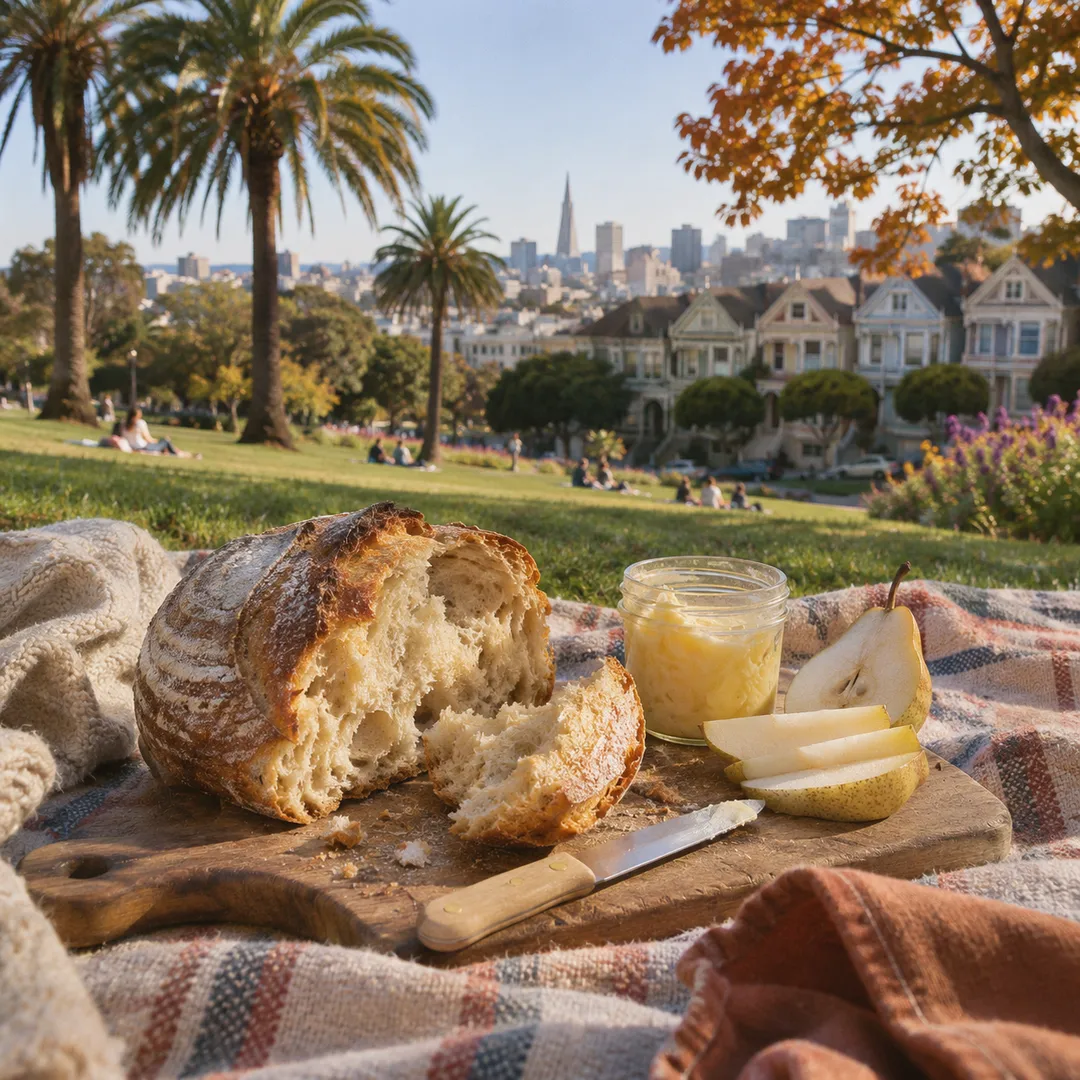
Every Mission crawl Maya plans ends at Dolores Park. The upper slopes look out over the city toward the downtown skyline, and on a clear afternoon the grass fills with picnics. She spreads a blanket, lays the loaves on a small board and tears them open with friends. Tearing rather than slicing shows the crumb structure beautifully, which suits a baker who came to study it.
Pack a few simple partners for the bread: soft butter, a wedge of cheese, sliced pears or a jar of olive oil. Leave strongly flavoured spreads at home. The park is busy on warm weekends, so bring a jacket for when the afternoon wind arrives from the west and everyone suddenly reaches for a sweater.
Taking the Lessons Back to Your Oven
The real test of a sourdough bakery crawl is the next bake. Maya picks one change per weekend: a darker bake one week, a longer cold proof the next, a little rye in the levain after that. Comparing her loaf against a memory of the counter bread keeps the experiments focused. When she wants to find a new bakery for the next study session, she opens the Karpo APP, describes a quiet neighbourhood bread counter with crusty country loaves, and Karpo suggests places nearby to explore.
Leftover bread never goes to waste in her kitchen. Day-old slices become toast, stale ends become croutons and breadcrumbs, and the final heel goes into a pan of ribollita on Sunday night. For a home baker, a crawl like this is less about eating and more about calibrating. The Mission simply happens to be one of the friendliest places in the country to do it.
Ask Karpo for more information.
Keep reading
- Inner Richmond Egg Tart Bakery Crawl: Clement Street Pastry
 Portola Egg Tart Bakery Crawl: San Bruno Avenue Pastry
 Outer Sunset Egg Tart Bakery Crawl: Ocean Mist and Custard