San Francisco is a seafood city with genuinely strange operating hours, and almost every complaint about eating seafood here traces back to that rather than to the food. The most celebrated counters close in the middle of the afternoon. Several are shut two days a week. Almost none take reservations. This looks like inconvenience and is actually logic: these are fish businesses first, and they open when the delivery arrives and close when it runs out.
The fish decides the hours, not the diner. Ask Karpo which seafood counter near you is open now and how long the line looks.
The counters that close before dinner
The single most useful thing to know about San Francisco seafood is that the best-loved counters are lunch operations. They open mid-morning, they close somewhere in the late afternoon, and by the time most people think about dinner they have been shut for two hours. There are usually fewer than twenty stools, there is no booking, and the queue on the pavement starts before the door opens. On a weekday you will typically wait; on a weekend you will wait considerably longer.
The way to eat at one of these without losing an afternoon is to arrive twenty minutes before opening on a weekday, or to go in the last hour before closing, which is the reliably quiet window and gets overlooked because it feels like the wrong time for a meal. Going alone helps enormously — a single stool opens up constantly, a party of four does not.
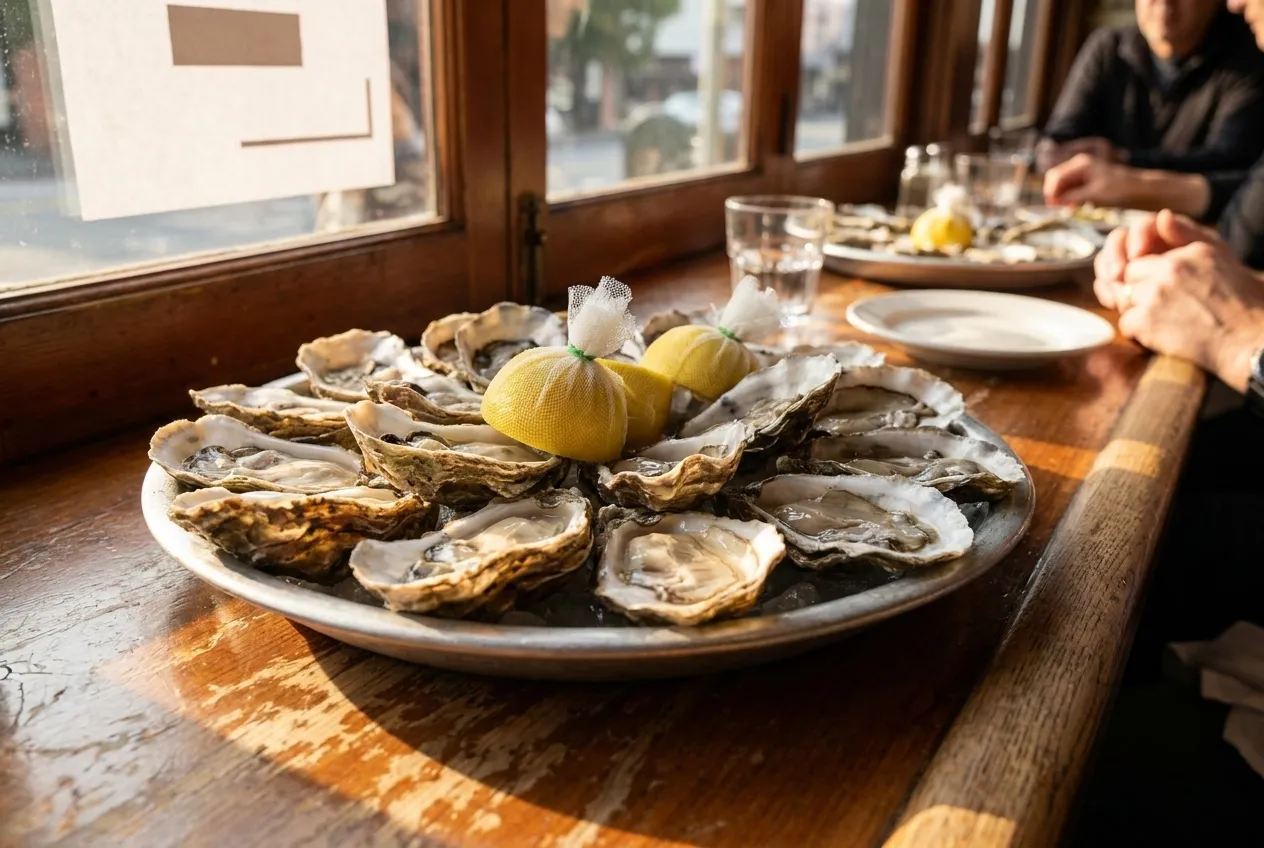
Weekday oyster hours, which are the actual value in this city
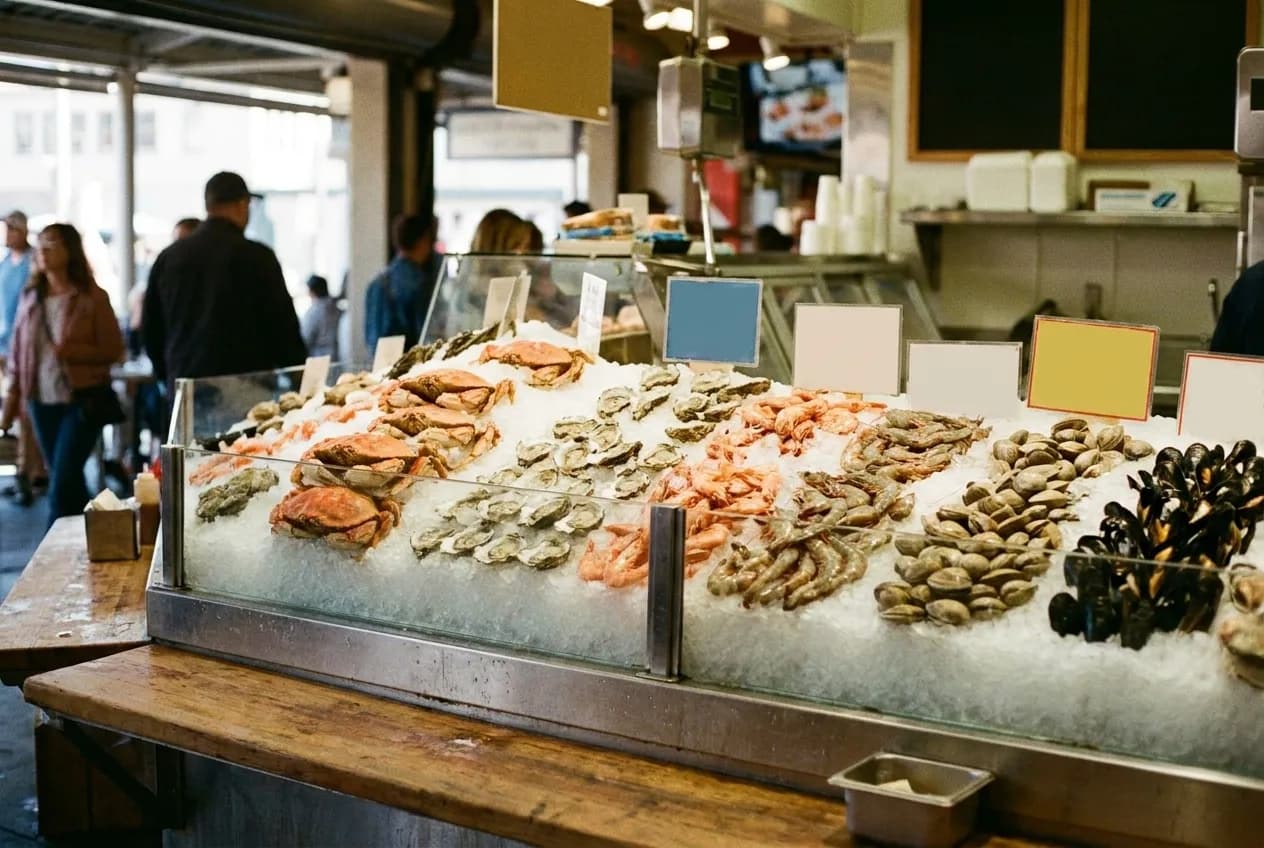
Several serious oyster bars run a weekday early-evening or late-afternoon price on a limited selection, usually the local farmed oysters rather than the whole list. This is where San Francisco seafood becomes genuinely affordable, and it is almost entirely a Monday-to-Thursday phenomenon. The details change often enough that the only sensible advice is to confirm the day and the hour before you go rather than trusting a listing from two years ago.
One rule holds throughout: the discounted oyster is the one they have most of, which usually means the freshest and most local. This is not a compromise. Local Pacific oysters from up the coast are the reason people eat oysters here in the first place, and the imported list is more about variety than quality.
Crab season, and what actually changes
Dungeness crab is the seasonal event of the San Francisco food year. The commercial season traditionally opens in the middle of November but has repeatedly been delayed in recent years for whale-entanglement protection and toxin testing, and delays of weeks or even months are now normal rather than exceptional. What this means practically is that crab on a menu in November may be from further north rather than local, and the price sits well above what people remember it being.
If crab is the point of your meal, ask two questions: whether it is local, and whether it is fresh or previously frozen. Nobody at a serious counter will be offended, and both answers are usually given straight. Outside of a confirmed local season, whole crab is an expensive way to eat something that will be better in two months.
The older dining rooms, which run on different rules
Alongside the counters, San Francisco keeps a set of long-established seafood dining rooms downtown — grill-and-sourdough places with white tablecloths, waiters who have worked there for decades and a menu that has not fundamentally changed in a very long time. Several of these take no reservations either, but for a different reason: they are lunch institutions for the financial district and they turn tables fast. Cioppino, the tomato-and-shellfish stew that was invented in this city, belongs here rather than at the modern counters, and it is a genuinely enormous dish.
Their weakness is the weekend. Several close on Sunday, some on Saturday too, because their trade is office lunch. Downtown seafood is a weekday plan.
The neighbourhood option, which most people skip
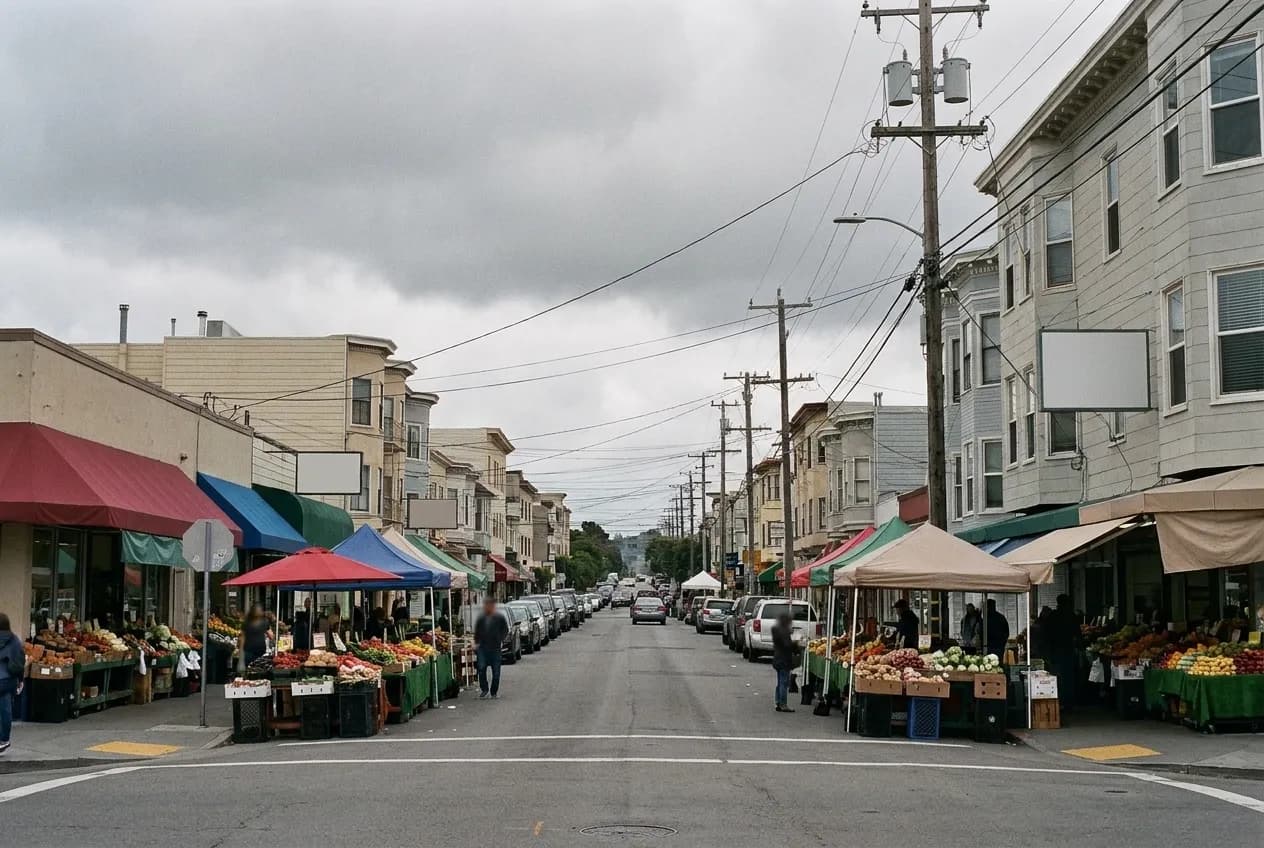
Away from the tourist waterfront and the downtown institutions there is a quieter tier: small neighbourhood fish restaurants in the Castro, the Richmond, the Sunset and along the western avenues, usually thirty seats, usually family-run, frequently better value than anything closer to the water. These take reservations, keep normal dinner hours, and are the answer when what you want is simply to eat good fish on a Wednesday without a queue or a plan.
The Richmond and Sunset also give you the city's Chinese seafood restaurants, where the live tanks are the menu and the pricing is by weight at market rate. Ask the price before you point, because market rate means exactly that, and a large fish can be a serious bill.
A workable plan
For the famous counter, go alone, on a weekday, either at opening or in the last hour. For value, find a weekday oyster hour and confirm it that week. For a proper sit-down dinner, go to a neighbourhood room and book normally. And for crab, wait until the season is genuinely open and local, then go once and do it properly. Trying to do all four in one visit is how people end up eating disappointing fish at the waterfront.
Tags: #SeafoodNearMe #SanFrancisco #Oysters #DungenessCrab #SFRestaurants #Cioppino #SFFood #WhereToEatSF #RawBar #BayArea #SFEats #FishCounter #HappyHour #SeafoodSF
All trademarks are the property of their respective owners.
Ask Karpo first
Want to know which oyster counter near you is open right now and whether the weekday price is running today? Ask Karpo before you join a queue.