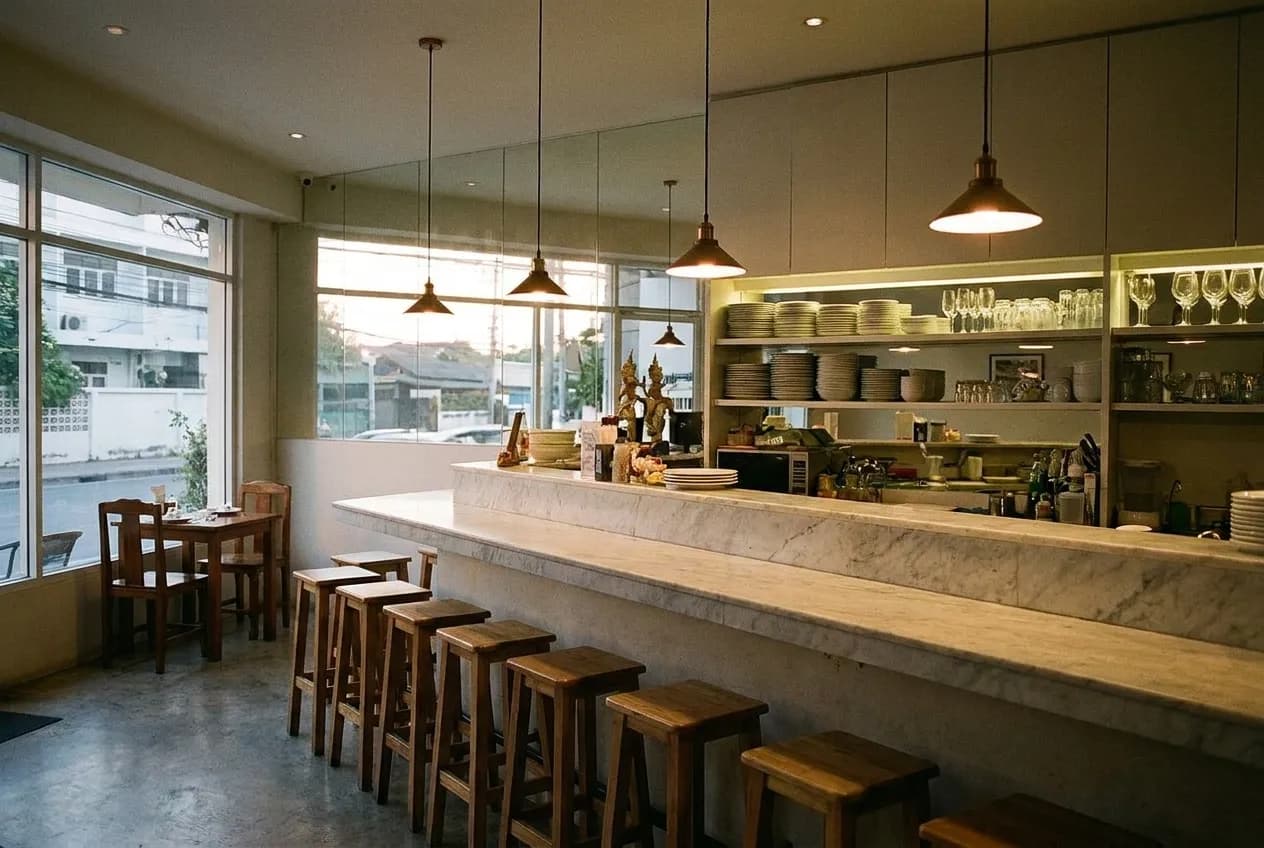
Almost every seafood restaurant is built around the largest fish it can sell. A seafood near me search returns halibut, salmon and whatever the market price is tonight. The Anchovy Bar at 1740 O'Farrell Street, from the team behind State Bird Provisions and The Progress, is built around the opposite end of the spectrum: anchovies, sardines, oysters and sustainably farmed shellfish, on a menu organised around the things most kitchens treat as an afterthought.
Ask Karpo whether there is a seat at the counter tonight, what is on the raw list this week, and what else near Fillmore runs later.
Small fish is a serious argument
There is an environmental case and a flavour case, and they point the same way. Small oily fish sit low in the food chain, reproduce fast and carry far less accumulated contamination than large predators; they are also intensely savoury in a way that a mild white fillet is not. A kitchen that builds a menu on them is making a point about both.
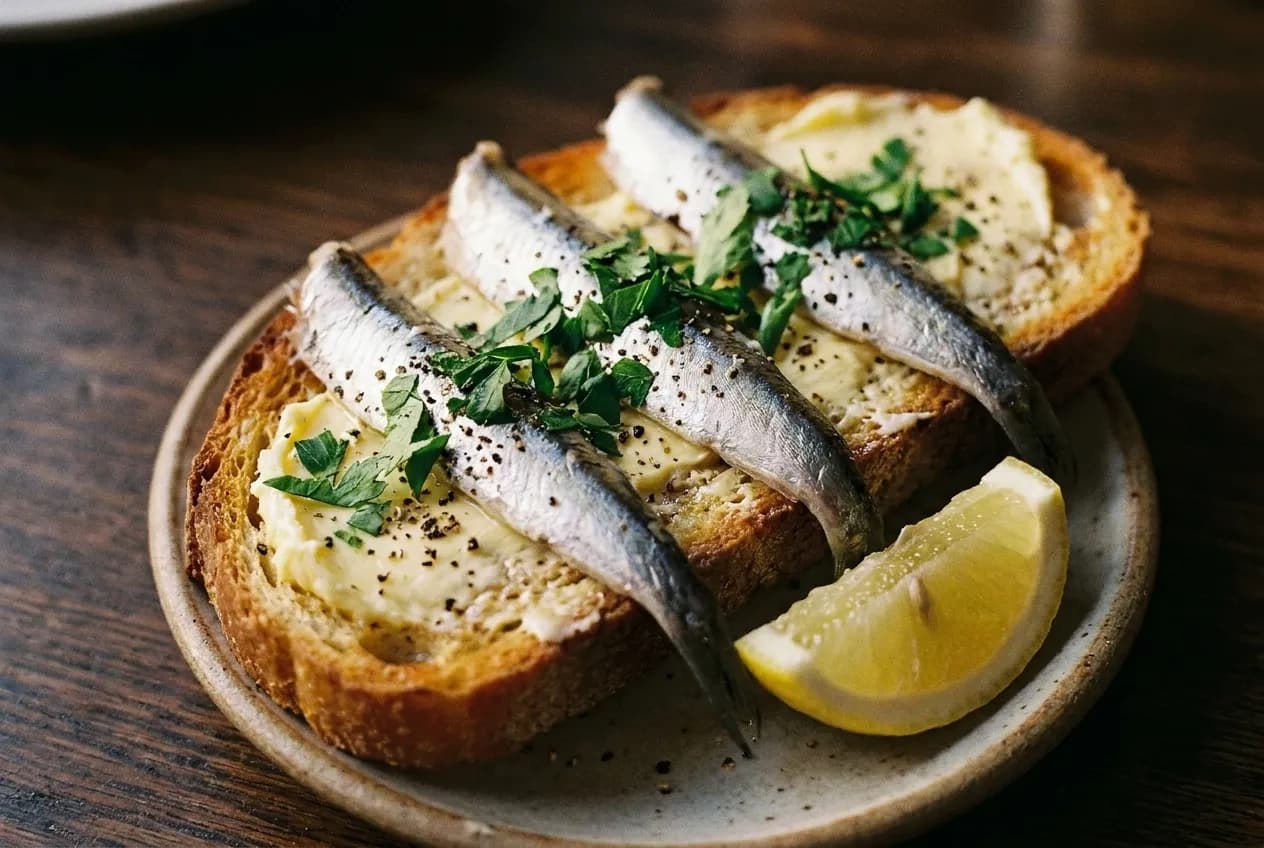
The practical consequence is that you should order things you would normally skip. Cured anchovies on bread with butter is the clearest demonstration — cold fat, salt and acid in three ingredients — and it is the dish to judge the place by. If you think you dislike anchovies, this is where to test the assumption, because the cured fillets here bear no relation to the shredded brown ones on a chain pizza.
The oysters are West Coast, and that matters
Pacific oysters run creamier, sweeter and more mineral than the briny Atlantic varieties most Americans have been trained on, and the farms in Tomales Bay and up the coast are close enough that what arrives here is a local product rather than a shipped one. Ask what is on and ask where it is from; the answer is usually a specific bay rather than a region.
Order them plainly to start. The liquor in the shell is part of the flavour and a heavy mignonette flattens it. If you want to understand the difference between two farms, take a half dozen split across both and taste them against each other before touching any condiment.
Five to nine, every night
The room runs 5pm to 9pm, daily. Four hours is a short service window and it means there is no lunch, no late option and no flexibility — arriving at half past nine is arriving after the kitchen has closed. The upside of a four-hour service is a kitchen that does not have to coast through a dead afternoon.
The five o'clock opening is the slot worth taking. A counter-led seafood room at five on a weekday is quiet, the raw bar is fully stocked, and you can ask questions without competing with a full room. By seven-thirty the same room is busy.
The Fillmore around it
O'Farrell Street sits on the edge of the Fillmore and Japantown, a district with a complicated history: this was the centre of Black San Francisco and one of the great West Coast jazz neighbourhoods before mid-century redevelopment demolished much of it, and the Japanese American community that preceded and followed it was forcibly removed during the war.
What survives is worth walking. The Fillmore Auditorium is a few blocks away and still books shows; Japantown's malls and the Peace Pagoda are immediately north; Alamo Square and the Victorians are a short walk west. Parking is easier here than in most of the eastern city, and there is a garage on Fillmore Street a block or two away.
Tinned fish deserves its own note, because it is on more menus now than it has been in decades and people still treat it as a joke order. Good conservas — Spanish and Portuguese tinned sardines, mussels, cockles, octopus — are a preserved product made at peak season and aged deliberately, not a cupboard fallback. They arrive in the tin, with bread and something sharp, and the whole point is that you are eating something made carefully two or three years ago.
Ordering one alongside the fresh oysters is the most instructive pairing available here: the same category of animal, one raw and immediate, one cured and stored, with completely different flavours. It is also the cheapest interesting thing you can put on the table.
How to use a four-hour restaurant
Treat it as the first half of an evening rather than the whole thing. Oysters, a couple of small plates and a glass of something cold at five-thirty leaves you out by seven with the night ahead, which pairs well with a show at the Fillmore or dinner somewhere that serves later.
It also works as a solo meal in a way a dining room does not. A counter with a raw bar and a short menu is the best possible format for one person eating well without a book to hide behind, and nobody at this kind of bar will make a single diner feel like a problem.
Practical notes
The Anchovy Bar is at 1740 O'Farrell Street near Fillmore Street in San Francisco, open 5pm to 9pm daily. It comes from the State Bird Provisions and The Progress team. The menu is built on small oily fish, West Coast oysters and sustainably farmed shellfish — order cured anchovies with bread and butter, and take oysters plain before adding anything. The five o'clock opening is the quiet hour. The Fillmore Auditorium and Japantown are a short walk.
Tags: #SeafoodNearMe #Fillmore #AnchovyBar #Oysters #SanFranciscoFood #SFEats #SFNeighborhoods #WhereToEatSF #SFFoodGuide #TinnedFish #Japantown #SFDinner #RawBar #SustainableSeafood
All trademarks are the property of their respective owners.
Ask Karpo first
Want to know whether there is a seat at the counter tonight, what is on the raw list this week, and what else near Fillmore runs later? Ask Karpo for current hours, an order that covers the small-fish half of the menu, and a second stop for after nine.


