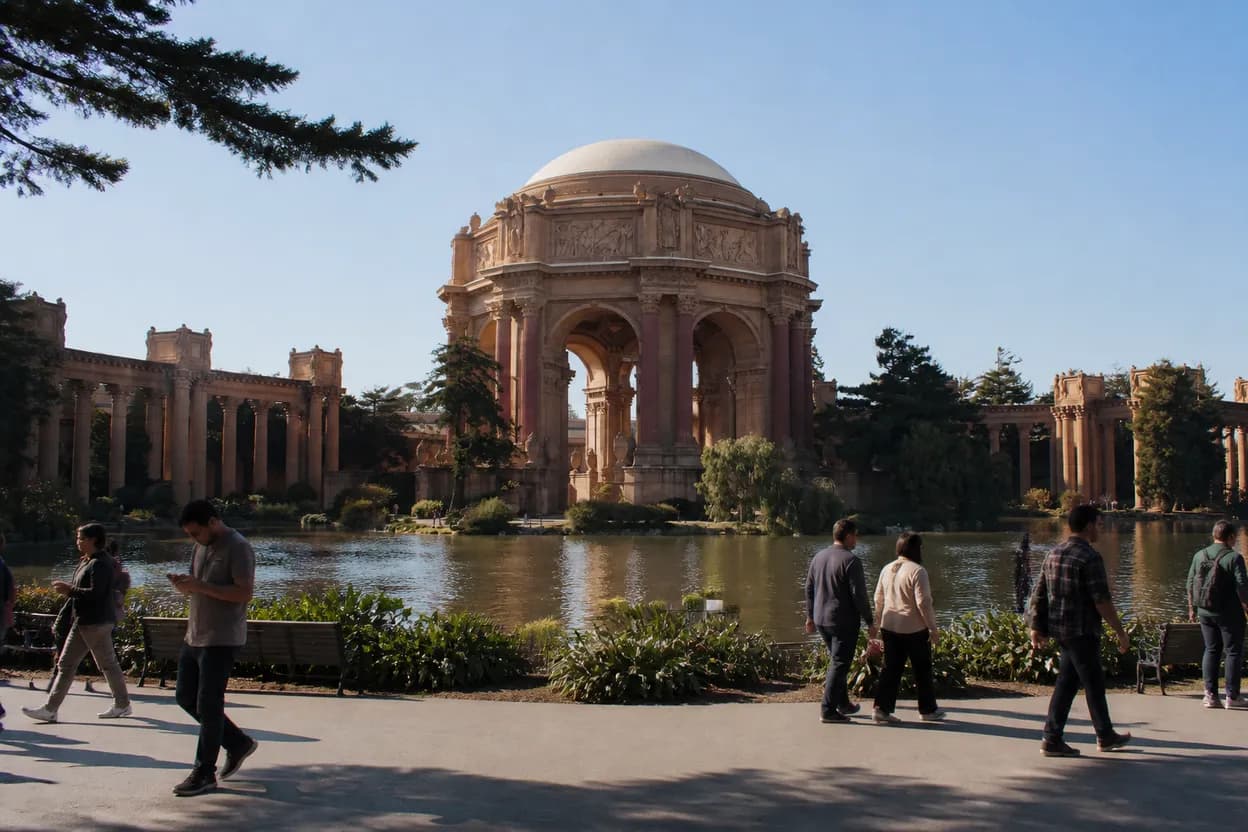
A foggy afternoon at the Palace of Fine Arts can make the lagoon look still, dramatic, and newly interesting, especially when a family stop turns into a question about whether the water feature is being properly maintained. The useful answer is not a guess from a photo. San Francisco Recreation and Park lists the Palace of Fine Arts at 3601 Lyon Street, with park hours from 5 a.m. to midnight, restrooms, parking, and a site maintenance reporting link. The city Park Code also sets basic public rules around park waters. Use this as a calm, on-site verification workflow before deciding whether to linger, reroute, or report a problem.
Want a faster read while standing in the Marina fog? Text Karpo for a San Francisco-specific check on Palace access, nearby transit, and what to verify before you tap a report link.

Palace of Fine Arts Lagoon at 3601 Lyon Street
Start with the official site identity: San Francisco Recreation and Park lists the Palace of Fine Arts at 3601 Lyon Street, in the Marina District, and describes the lagoon as part of the public park setting. That matters because casual posts may call it a reflecting pool, a pond, or a fountain, but the practical question is the same: is the visible condition normal, temporary, or worth reporting through a city channel?
Use a slow lap rather than one viewpoint. Fog, shadow from the rotunda, wind ripples, and floating leaves can make clean water look darker than it is. Stand back from the edge, compare the windward and leeward sides, and look for repeat evidence: strong odor, widespread debris, unusual discoloration, blocked paths, exposed equipment, or posted work notices. A single cloudy patch is weaker evidence than a pattern across the lagoon.
Rotunda Signs and Intermittent Work Notices
Do not treat an old screenshot as current access information. The Recreation and Park facility page notes intermittent closures for angel statue cleaning and repair from January 2 through March 31, but that window is earlier than Monday, August 10, 2026. If temporary fencing, cones, or a crew notice is present now, read the posted sign on site and follow it before relying on archived or shared closure language.
The Palace can remain popular even when a small maintenance area is restricted. Wedding permits, photos, and visitors may occupy the rotunda while the broader park remains open, so crowds alone do not prove a maintenance issue. The tradeoff is pacing: give yourself ten extra minutes to check the lagoon edge, the rotunda approach, and the path toward Little Marina Green before deciding whether the visit still fits your family’s afternoon.
San Francisco Park Code Rules for Park Waters
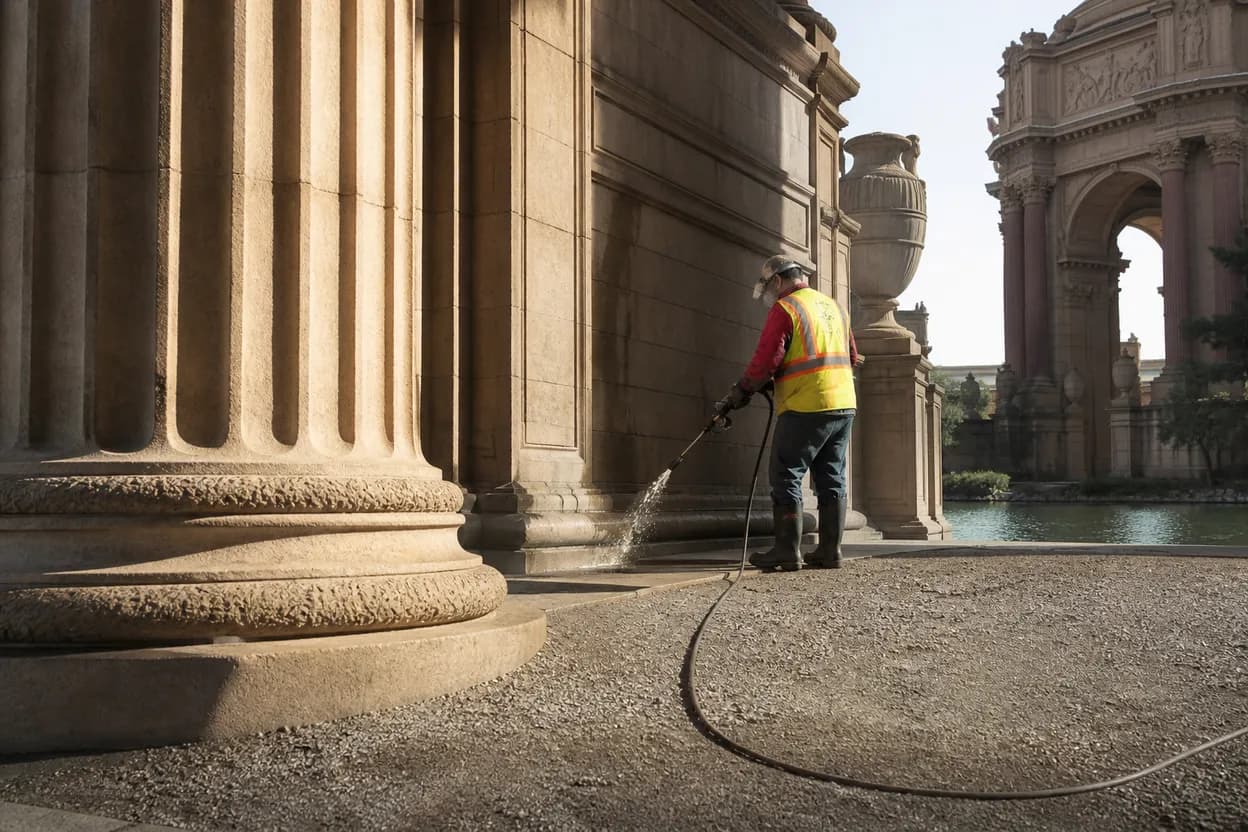
The city Park Code is the strongest source for what visitors should not do around public park waters. It restricts entering, wading, or swimming in park lakes, ponds, pools, tanks, fountains, and reservoirs unless Recreation and Park has allowed it by regulation or special permission. For the Palace lagoon, the practical rule is simple: observe from public paths and do not test the water yourself.
Another Park Code section prohibits placing garbage, trash, refuse, paper, containers, or offensive matter into any pool, pond, tank, or fountain in a park. That means a verification visit should never become an intervention. Do not retrieve objects from the water, feed wildlife to move them, pour anything in, or step over barriers. The right public-service action is documentation from a lawful spot, then a maintenance report.
SF311 Maintenance Report Button at the Palace
The Palace facility page links directly to reporting a maintenance or vandalism issue at the site, and SF311 remains the city’s customer service path for non-emergency service requests. Use it when the condition is specific, observable, and actionable: debris in the lagoon, damaged public property, graffiti, unsafe path obstruction, broken fixtures, or a posted maintenance problem that appears unresolved after the stated work area.
A strong report is boring and precise. Include Palace of Fine Arts, 3601 Lyon Street, the nearest landmark such as the rotunda or lagoon edge, the date, the approximate time, and a plain description of what you saw. Avoid guessing causes, chemicals, staffing, or standards you cannot confirm. If the condition involves immediate danger, fire, medical need, or an active emergency, stop using the maintenance workflow and call 911.
Muni 28, 30, 43, and 45 to the Marina
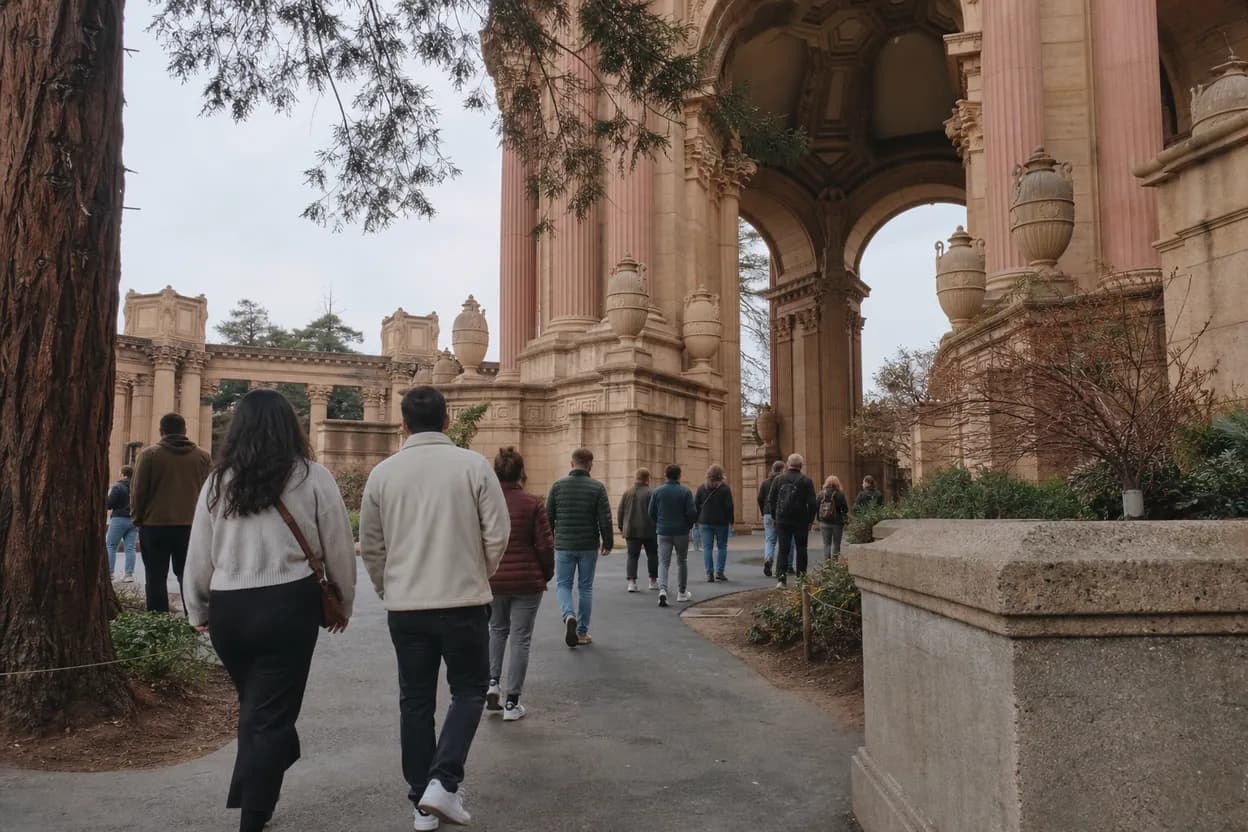
SFMTA’s Palace of Fine Arts place page lists Muni service by the 28 19th Avenue, 30 Stockton, 43 Masonic, and 45 Union/Stockton routes. For a low-friction family visit, that gives you several ways to avoid circling for parking near Lyon Street and Marina Boulevard. Check live arrivals before leaving, because a foggy afternoon can still bring traffic, event demand, and uneven headways.
Transit is also your backup logic if the lagoon area feels crowded or partly fenced. Arrive by Muni, inspect the Palace first, then keep the afternoon flexible: continue toward Crissy Field, Fort Mason, or the Presidio if the site is less comfortable than expected. The failure mode is assuming the Palace is the whole plan. A nearby transit exit keeps the trip easy without forcing a questionable stay.
Presidio Transit Center as the Accessible Backup
The Presidio’s official transportation guidance points visitors toward public transit, paid parking, biking, and the free Presidio GO Shuttle, with construction around the Main Post from July 2026 through Winter 2027 causing possible noise, detours, and increased traffic. That is not the Palace itself, but it affects nearby backup planning. Build in extra travel time if your afternoon route crosses the Presidio.
For accessibility planning, the Presidio Transit Center is useful because official Presidio materials identify accessible parking, accessible restrooms, wheelchair-accessible picnic tables, Muni 43 service, and Presidio GO Shuttle connections there. If the Palace paths feel too exposed to wind, crowded photography traffic, or temporary work zones, this nearby hub gives families a more structured pause point with restrooms and onward transportation options.
Reader Action at the Lagoon Edge
Make the final call in this order: confirm you are within posted public access, observe without touching the water, compare multiple lagoon viewpoints, check official pages for current hours or notices, and decide whether the issue is reportable. A report is warranted when the condition is location-specific and likely fixable. A personal impression that the water looks different from social media is not enough on its own.
Before leaving, take one last verification action: open the official Palace of Fine Arts facility page or the linked maintenance report path and confirm the site name, address, and current city channel. If you cannot confirm a changing fact, such as an active closure, staff schedule, or maintenance standard, say that plainly in your decision. In San Francisco public spaces, uncertainty should trigger verification, not speculation.
Tags: #SanFrancisco #PalaceOfFineArts #MarinaDistrict #ReflectingPool #ParkMaintenance #SF311 #SFMTA #PublicSpaces #FamilyOuting #FoggyAfternoon #Accessibility #TransitTips #AskKarpo #BeforeYouGo
Sources consulted: Source 1: sfrecpark.org · Source 2: codelibrary.amlegal.com · Source 3: sfmta.com · Source 4: presidio.gov · Source 5: sfrecpark.org
All trademarks are the property of their respective owners.
Ask Karpo first
Tell Karpo your date, group size, budget, and starting point. We’ll check current access, timing, transit, and the cleanest San Francisco plan for Palace of Fine Arts before you head out.