This version of the guide is built for friends fitting the plan around a workday. Reduce cross-city travel and protect the first thirty minutes. The headline may be timely, but the useful part is a plan that still works when a venue changes hours, a schedule moves, or the group chat wakes up late.
Text Karpo what matters most—timing, budget, neighborhood, noise level or accessibility—and use the reply to narrow the city to a small number of workable choices.

The Premier League season opened August 22, and West Coast viewers again face breakfast-hour kickoffs. NBC, Peacock and USA remain the core United States viewing ecosystem, but a successful San Francisco morning depends just as much on doors-open time, kitchen service and supporter-club patterns.
Start with the neighborhood, not the venue list
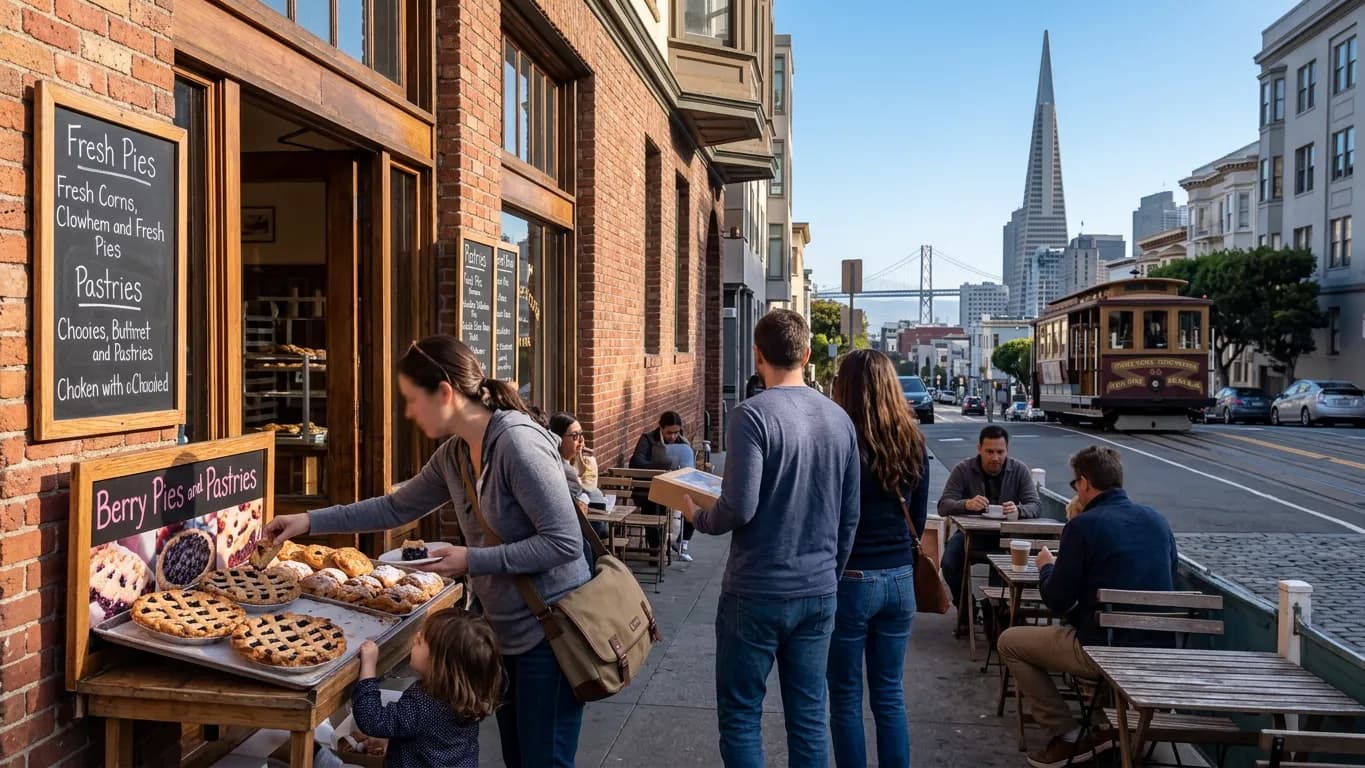
San Francisco's compact neighborhoods make an early match surprisingly social when the venue is chosen well. North Beach, the Mission, SoMa and Lower Haight offer different combinations of transit, breakfast, pub energy and post-match options.
For friends fitting the plan around a workday, the highest-value decision is usually the first one: where the plan begins. Once that is fixed, arrival time, food, transportation and the backup become much easier to coordinate. The opposite approach—collecting a long list before choosing a neighborhood—creates options without creating a plan.
Use a two-option rule. Pick one primary choice that best matches the group's energy and one backup that solves the most likely failure mode. The backup should be close enough to use without restarting the day. It should also be genuinely acceptable, because a theoretical backup rarely survives real traffic, weather or a full room.
North Beach offers walking density and post-match breakfast options that work for groups heading to Financial District or downtown offices. The Mission provides more casual energy and easier parking if anyone is driving in from the Peninsula. SoMa puts you closest to Caltrain and commuter routes. Lower Haight splits the difference with good transit and a neighborhood that feels awake early.
The verification pass
Time-sensitive city guides age quickly. Verify operational details on the day you go, and distinguish an announced date from a confirmed reservation, ticket, seat, broadcast feed or medical recommendation. Screenshots and old social posts are useful clues, not guarantees.
- Confirm the venue opens before kickoff and is showing your exact match.
- Ask whether the kitchen and coffee service start when the doors open.
- Check supporter-club posts for special events or capacity warnings.
- Use transit or rideshare timing that works before normal weekend frequency.
- Choose a nearby breakfast spot or walk for after the final whistle.
Supporter clubs often reserve sections or entire venues for marquee fixtures. That can mean guaranteed atmosphere or no available seating, depending on your affiliation. Check club social accounts the week of the match, not the morning of.
Kitchen timing matters more than menu size. A venue that opens at 6:45 a.m. but doesn't serve food until 8 a.m. creates a planning problem if your match kicks off at 7 a.m. and you promised the group breakfast. Confirm both door time and service time.
Reduce cross-city travel and protect the first thirty minutes.
Build the plan in three chapters
Chapter one is arrival. Decide when the group should actually meet, not merely when the event begins. Give the earliest person a useful task such as checking the room, confirming the table or finding the correct entrance. That turns waiting into information for everyone else.
A 7 a.m. kickoff means a 6:40 a.m. arrival target if you want to settle in, order, and catch the lineups. That means leaving home by 6 a.m. for most San Francisco residents, earlier if you're coming from the East Bay or Peninsula. Weekend transit runs less frequently before 7 a.m., so check real-time schedules the night before and build in buffer time.
Chapter two is the main experience. Protect it from avoidable friction by agreeing on one communication channel and one decision-maker for last-minute changes. If everyone independently calls venues, checks maps and forwards updates, the group gets noisier while the information gets worse.
Designate one person to handle venue communication and one group text thread for coordination. When someone texts at 6:30 a.m. that the primary spot is full, the decision-maker activates the backup and sends one message with the new address and arrival time. No debate, no voting, no forwarded Yelp links.
Chapter three is the exit. Decide whether the group wants food, a walk, a second venue or a clean trip home. In San Francisco, the post-event move often determines whether the day feels complete or exhausting. A short next step is usually better than an ambitious cross-city detour.
A 90-minute match ending at 8:30 a.m. leaves time for a neighborhood coffee walk before work, but not much else if first meetings start at 9:30 or 10. If half the group is remote and half is commuting to offices, the post-match plan should accommodate both without requiring a second round of logistics.
What this angle changes
A guide for friends fitting the plan around a workday should not pretend that every reader wants the loudest, cheapest or most famous option. It should make the tradeoffs visible. Comfort can matter more than spectacle; certainty can matter more than novelty; and a ten-minute walk can be more valuable than another five-star listing across town.
The best venue is the one that makes it easy to say yes. That might mean the spot with the most reliable door time, the one closest to your office, the one with the quietest room, or the one your group already knows. Optimize for showing up, not for completeness.
Budget also shapes the plan. A $15 breakfast and two coffees before 9 a.m. adds up across a season. Some venues expect table orders; others allow standing room with a single drink. Clarify the spending floor before you commit the group, especially if this becomes a weekly ritual.

The working checklist
- Choose a neighborhood based on where most people start their day, not where the best venue might be.
- Pick one primary venue and one nearby backup that solves the most likely failure mode.
- Verify door time, kitchen hours, broadcast availability and supporter-club events the day before.
- Set a group arrival time that protects the first 30 minutes of the match.
- Assign one person to handle venue calls and one communication channel for the group.
- Decide the post-match move before kickoff: walk, coffee, food or direct commute.
- Save the plan in one place: primary venue, backup venue, arrival time, one confirmation detail.
Save the primary choice, the backup, the arrival time and the one detail that must be reconfirmed. Then stop researching. The goal is not to prove that you found every possible option. The goal is to make it easy to say yes, show up, and enjoy early Premier League watch plans in San Francisco before the workday begins.
Tags: #san-francisco #sf-premier-league-mornings #cityguide #karpo
Sources consulted: Official information
All trademarks are the property of their respective owners.