 Outer Sunset Cioppino Dinner Picker: Pots by Ocean Beach
Restaurants

Out of Town Guest Dinner Picker: Chinatown Lantern Evenings
Taking visitors to Chinatown for dinner? Enter at the Dragon Gate, walk the lantern-lit alleys at dusk, then sit down to roast duck and Cantonese seafood.
San Francisco's Chinatown is the oldest in North America, and for many visitors it is the reason they booked the trip. That makes it an easy out of town guest dinner picker, but also a tricky one: the blocks closest to the Dragon Gate are built for souvenir shoppers, while the dining rooms that locals love sit a little deeper, on Stockton Street, in the narrow alleys off Grant Avenue and in the second-floor banquet halls you only notice if you look up.
Start Under the Dragon Gate
Begin where every guest expects to begin, at the green-tiled Dragon Gate where Grant Avenue meets Bush Street. Walking north from there, the street turns into a canopy of red lanterns, pagoda rooflines and painted balconies. Most of those ornate facades went up after the 1906 earthquake and fire, when Chinese merchants rebuilt in a deliberately exotic style to draw visitors and to secure the neighborhood's place in the new city.
Tell that story as you walk, because it changes how guests see the street. The decoration is real history, a survival strategy by a community that was almost pushed out entirely. Point out the Old St. Mary's Cathedral at the corner of California Street, one of the few buildings to survive the fire, and the clock tower inscription that has scolded passersby for well over a century.
Duck Into the Alleys Before Dinner
The best part of an evening here is the twenty minutes before you sit down. Waverly Place, a short street west of Grant, holds historic temples on its upper floors, with balconies painted in red, gold and green. Ross Alley, one of the oldest alleys in the city, is home to a tiny fortune cookie bakery where visitors can watch cookies being folded by hand. Guests always leave with a bag.
Swing over to Portsmouth Square, the plaza where San Francisco itself began. In the early evening, older residents gather around card tables and chessboards, and the square feels like the neighborhood's living room. It is a moment that most tourists miss, and it gives your guests a sense of Chinatown as a place where people live, not just a stage set for photos.
Choosing Between Banquet Halls and Small Kitchens
Chinatown's dinner options fall into two broad groups. The banquet halls, often up a flight of stairs, are large Cantonese dining rooms with round tables, carpeted floors and fish tanks along the wall. They are ideal for a visiting family or a group celebrating something, and they handle big parties gracefully. Ask the host for a table by the window over the street, which makes the lantern view part of the meal.
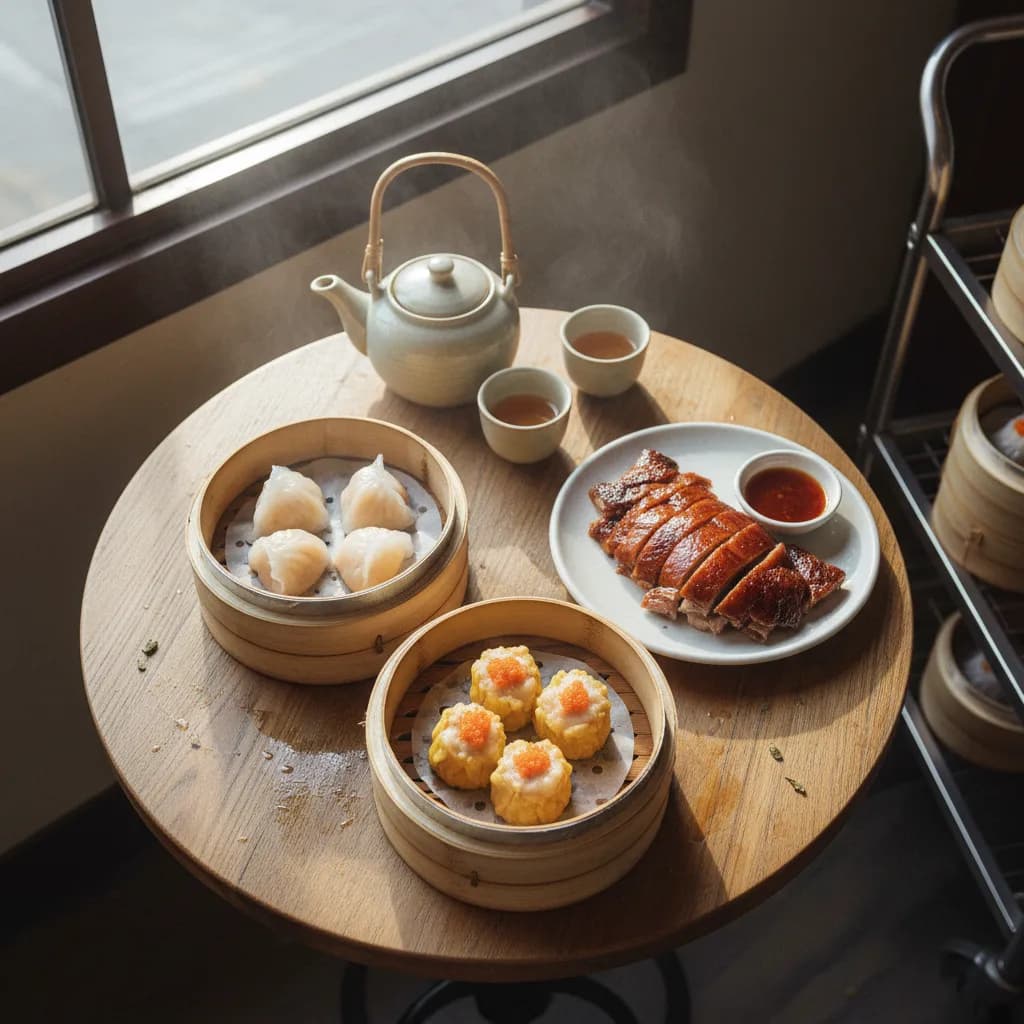
Small kitchens are the other option: barbecue shops with ducks hanging in the window, noodle counters, and family-run spots on the side streets that seat maybe twenty people. They are perfect for adventurous guests or a pair of friends who want something casual and authentic. Order by pointing at the roast meats, add a plate of greens, and you have a meal that tastes like the neighborhood.
Think about who is at the table before you choose. A grandmother visiting from abroad may find a familiar comfort in a quiet family kitchen, while college friends on a reunion trip will love the noise and ceremony of a banquet hall, complete with a lazy susan spinning between toasts. Guests who grew up eating Cantonese food will notice small details, like whether the soup arrives first, so let them guide part of the order.
What to Order for First-Timers
For guests new to Cantonese food, keep the order generous and familiar. Crispy roast duck or barbecue pork, salt and pepper squid, a whole steamed fish with ginger and scallion, a clay pot of rice and a big plate of seasonal greens cover most tastes at the table. Ask the server what the kitchen does best, since many of these restaurants have one or two signature dishes that regulars always order.
Dim sum is usually a daytime affair in Chinatown, so if your guests have their hearts set on dumplings, plan a lunch on the following day rather than expecting carts at dinner. That is also a good reason to bring visitors back. An honest note: the restaurants with English menus taped to the windows on lower Grant are often the least memorable, so keep walking north before you choose.
Pairing Chinatown With North Beach
Chinatown's northern edge melts into North Beach, the city's old Italian quarter, at Broadway and Columbus Avenue. That border makes for a wonderful second act. After dinner, walk your guests a few blocks to City Lights, the Beat-era bookstore, or to one of the old espresso cafes where poets once argued late into the night. Two cultures, two neighborhoods, one evening on foot.
If the group still has energy, look up at Coit Tower on Telegraph Hill, which glows above the neighborhood after dark. A short ride brings you to the top for a sweeping view of the Bay, a fitting close to a night that started under the Dragon Gate.
Backup Plans for Festival Weeks and Rainy Nights
Lunar New Year brings Chinatown's busiest weeks, with a famous night parade, firecrackers and dining rooms booked out for family banquets. If your visit falls then, plan dinner well ahead or eat on the North Beach side and come back for the celebration on the street. On a rainy evening, the lanterns reflect beautifully on wet pavement, so keep the alley walk short, carry an umbrella and head indoors to a steaming bowl of wonton soup without guilt.
How Karpo APP Helps You Choose
Chinatown is dense, and picking the right room for a specific group can be confusing. Open the Karpo APP and describe the evening: eight people, one guest who is allergic to peanuts, wants a round table and Cantonese seafood near Grant Avenue. Karpo suggests Chinatown restaurants that fit the group, and you can ask whether a banquet hall or a smaller kitchen better suits the night before you head out.
Practical Notes for Hosts
Parking is scarce, so take the cable car on California Street, which runs right along the neighborhood's southern edge, or use the Chinatown-Rose Pak Muni station on Stockton Street. Bring cash for small shops and bakeries, and contact banquet halls directly if your group is larger than six so they can set up a round table. Chinatown is hilly in places, so plan a route that stays on Grant for guests who prefer gentler slopes.
Ask Karpo for more information.
Keep reading
- Outer Sunset Cioppino Dinner Picker: Pots by Ocean Beach
 Marina Cioppino Dinner Picker: Bistros After Bay Walks
 Embarcadero Cioppino Dinner Picker: Pots by the Bridge